
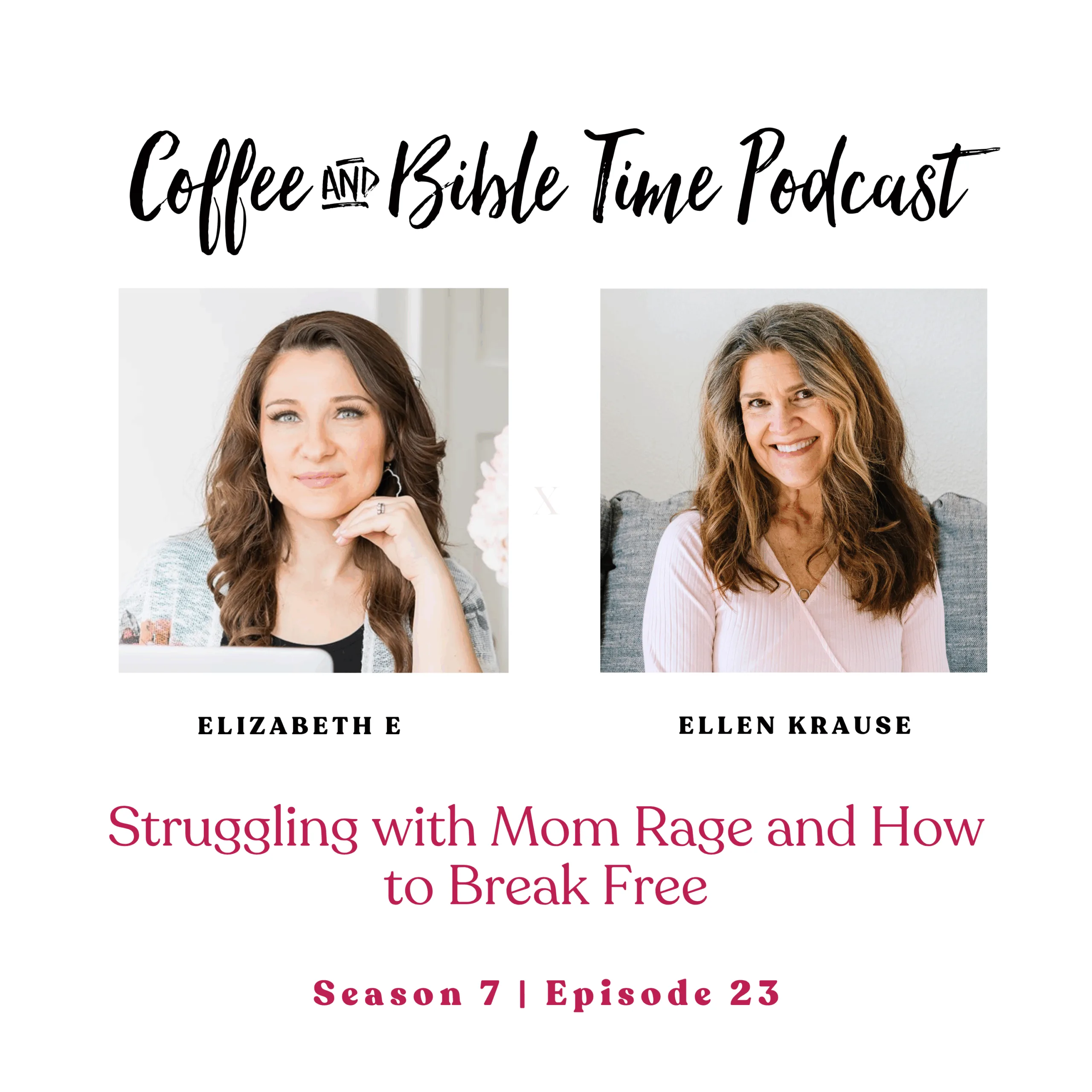

Hosted by Ellen Krause
Is mom rage taking over your relationships with your kids? Do you feel like your anger is out of control? You’re not alone. In this episode, Ellen talks with Elizabeth—Christian anger coach and host of the Emotionally Healthy Legacy podcast—about her journey from uncontrollable anger to emotional healing through practical tools and the grace of God. Learn how to break the cycle of reactive parenting and find peace in your motherhood.
Subscribe & Listen on:
 Apple Podcasts
 Spotify
TIMESTAMPS:

0:00 — Introduction to Mom Rage
8:36 — Elizabeth’s Personal Struggle
17:55 — Understanding Anger vs. Rage
24:11 — Faith’s Role in Anger Management
31:56 — Breaking the Cycle of Reactive Parenting
37:30 — Biblical Perspective on Anger
41:15 — Practical Tools and Next Steps
47:36 — Closing and Resource Recommendations
Full Transcript
Ellen 0:04
At the Coffee and Bible Time podcast. Our goal is to help you delight in God’s Word and thrive in Christian living. Each week, we talk to subject matter experts who broaden your biblical understanding, encourage you in hard times and provide life-building tips to enhance your Christian walk. We are so glad you have joined us. Welcome back to the Coffee and Bible Time podcast. I’m Ellen, your host, and I’m so glad that you have joined us today.Ellen 0:37
You know, if you’ve ever found yourself struggling to control your anger, lashing out before you even notice you’re mad, or reacting in ways that you later regret, today’s conversation is especially for you. We’re talking with Elizabeth, a believer wife, mom of four, anger management coach for Christian moms and host of the Emotionally Healthy Legacy podcast. Her story is both powerful and relatable, from parenting through emotional overwhelm and reactive anger to finding freedom through God’s grace, therapy and practical tools, and she now helps others do the same. In today’s conversation, we’ll explore the topic of mom rage, how to break the cycle of reactive parenting and how scripture can guide us in becoming emotionally grounded moms who leave a healthy legacy for our kids. So grab your coffee and let’s dive in. Welcome, elizabeth.Elizabeth 1:45
Thank you so much for having me here.Ellen 1:48
It’s a delight, and I know this is a topic that resonates with so many people, and maybe even shamefully so right, why don’t you start out by telling us a little bit about yourself and your work in anger management?Elizabeth 2:04
Yeah, thank you, I appreciate that. So I’m Elizabeth. I am a mom of four. My oldest right now is 13 and my youngest just turned four last week. So I have three boys and then a girl. I’ve been married for 16 years to my husband.Elizabeth 2:20
We live in Northeast Florida and I felt like I was a pretty patient person. Then I had kids. Then these sides of me started to come out that I never realized I had my first experience with. I mean, there’s anger and then there’s rage. I would say there’s a difference. We’ll talk a little bit deeper in that.Elizabeth 2:45
But my first experience of actual like mom rage where I felt really out of control was when I had my second child. I had my second boy and he was colic actually and he cried a lot and my oldest was three at that time and I remember I finally put him to sleep and I put him in the swing and he cried a lot and my oldest was three at that time and I remember I finally put him to sleep and I put him in the swing and he fell asleep and my oldest son, who was three years old, came up to him, picked up his little finger and like bit his brother’s finger and I just lost it. It wasn’t just like, oh, I feel angry, I felt rage, like almost like an out-of-body experience. It’s like something comes over you and it’s like almost like you’re not yourself and I just screamed at him and I physically hurt him because I felt so like almost like wrath in that moment at my son that he woke up the baby, because I spent hours trying to calm the baby down, who’s been crying for hours, and immediately filled with so much shame and remorse and feeling like I’m a terrible mom. How could I ever have done that to my son, like what’s wrong with me? And all those, you know, really shameful thoughts. And that was my first experience and that felt really, really scary, because oftentimes we do feel angry but we can still remain somewhat in control right, we can still kind of control ourselves. But that felt completely out of control, like I could not, I felt like I couldn’t control myself in that moment and that felt really, really scary for me.Elizabeth 4:33
And then, when I had my third son and my husband was a flight attendant at that time and he was traveling a lot and I had three young boys, five and under him, being gone for days at a time. That’s when things really started to turn the corner, where I started to notice a lot more of episodes like that, like a lot of reactive anger and spanking my kids out of rage and anger, just because I felt out of control, that things were not going my way and I was taking I wasn’t spanking it in a biblical way, I was just taking my anger out at them, and so it just got to a point where I just started to feel really bad about myself as a mom. There was just so much guilt, shame, remorse, and I hated the way that I was showing up for my family. I was one way in church you know, put together, mom a Christian was part of Bible studies, and then I felt like I was a completely different person at home and there were times where I was great and then all of a sudden, like this, anger takes over and I was just not myself at all and I ended up seeking help. I was just not myself at all and I ended up seeking help.Elizabeth 5:48
One of my Christian mentors at that time. She recommended for me to go to parenting counseling and even though it wasn’t faith-based, I did learn a lot of helpful tools, except I had a hard time implementing them because I was trying to do it all on my own, without the Holy Spirit and God’s help. And so when I figured that out that I can’t just do this on my own strength like, yes, these tools are super helpful and I need God to help me on this journey. And one of the biggest changes that I made at that time that was super transformational for me was my kids were sleeping through the night at that time and I started to get up in the morning before my kids and spend through the night at that time and I started to get up in the morning before my kids and spend time with the Lord on a regular basis. I read the Bible journal, do some Christian meditations and like move my body not nothing major, but I had a solid hour to myself in the mornings before my kids got up, and that was actually very transformational for me.Elizabeth 6:47
It allowed me to have the capacity to start implementing the tools that I was learning in counseling at that time in parenting counseling and once I started to see that there was such a big breakthrough, I’m the type of person where I learned something and I just can’t keep it to myself. I’m like I have to share it with my friends and other people that I know, and I did. I would share a lot with my friends and then I shared everything with all the friends I had to share with and I had an idea to start a podcast. I ended up starting a podcast four and a half years ago called Emotionally Healthy Legacy, and it was about having that emotional connection with your kids and managing your emotions well as a mom to set that positive, christ-like example for your kids. And now it’s four and a half years old and it has come a long way and that is my story, how I got where I am today.Ellen 7:47
Oh, elizabeth, thank you so much for just sharing that and I really appreciate your honesty and authenticity, because it is hard. I know I experienced a little bit as well During a time when my children were very, very young and you’re just. You’re learning how to navigate this whole new experience of mothering that you’ve never experienced before and, like you said, it brings out things inside you that you never even knew were there. Well, you said that you shared it with so many people. Is that sort of when you realize that this is something that other women really needed too?
Elizabeth’s Personal Struggle
Elizabeth 8:29
Yeah Well, rage is not something women typically share with one another, even in Christian circles, and even if they do, oftentimes other women feel too shameful to admit that they struggle with it too, and then you feel like an outsider. So it’s very uncommon for women to find other moms that struggle with the same thing and they’re transparent and open enough to share about it. And so how I started to realize that it was an issue was I’m a very you know, authentic, transparent person is having deeper conversations with close people in my life. And as more deeper conversations happened, you know, things started to open up. And my sister-in-law she was on my podcast as well and she shared how her first daughter also cried a lot. She had a bunch of tummy issues and she said I remember like picking her up and just feeling so mad that she would not stop screaming and like her mind is telling her all these stories. She’s making my day hard, she’s ruining my you know sleep at night. Why is she doing this to me? And you have all these negative thoughts that are contributing to your frustration and anger. And as I started to openly share my story and being transparent how God has transformed my life, more women felt comfortable to open up and share their stories.Elizabeth 10:01
But it’s very uncommon for somebody to just openly say, hey, I struggle with mom rage, just because it’s such a shameful topic. You literally feel like something is wrong with you, like you’re like why, what’s wrong with me? Why do I do this? I’m a Christian, I pray, I read the Bible. Like why do? Why is this keep happening to me? And so that’s kind of like how I got into this topic, because I noticed that there’s a lot of practical things that contribute to rage as well. It’s not just a spiritual thing, like that is part of it, but there’s a lot of practical things that also lead up to it.Elizabeth 10:37
And as more conversations I’ve had with women in my circle, the more I realized mom, our moms are struggling with it. They just don’t want to talk about it. It’s just too embarrassing. It’s too embarrassing what you did. And I remember one of my friends has even shared with me. She’s like I can never tell people what I’ve done, like with the moments that I had rage. I just I cannot tell others the way that I treated my daughter at that time when her son was a baby. He was colicky, he was screaming, and then your toddler comes up to you and your toddler wants you and needs you and you’re just in this stress state that you just react Like you don’t respond. You react in very unkind, harsh and mean ways and then you’re like what just happened? This isn’t even me. What’s wrong with me? So it’s a very hard topic. It’s a really hard thing to vulnerably share with other people, because you’re not sure if somebody’s going to say, oh, I understand, because they might say I don’t Not. Every mom is dealing with this Right.Ellen 11:46
No, that makes so much sense, and thank you for listening to that need that you saw in other women and sort of digging deeper to get to that and stepping in to help people get the support that they need. I want to talk a little bit about how your faith influences how you approach this issue, because we have this Christian worldview, and so I’d love to hear how your faith plays into it.Elizabeth 12:17
Yeah, and it plays a huge role because, yes, there’s a lot of practical things that you can do to lower your stress, to work on your mindset, to rewire your responses, and if we just try to do everything on our own strength, we might see some improvement, but we’ll hit a wall. We cannot have a true heart transformation without God. And so when women come to me in my coaching program, I have a true heart transformation without God. And so when women come to me in my coaching program, I have a 12-week Calm Christian Mom coaching program that is specifically for Christian moms that struggle with out-of-control anger, that try the podcast, the books, talking to a friend praying, and they still feel like they’re stuck in reactive, destructive anger. I support them and we have a step-by-step process, but in the beginning we start with connecting with the Lord, and if we want to be like Jesus, if we want to show Christ to our children, if we want to be loving and kind and forgiving and tender and warm and soft like Jesus, we need to spend time with him. You cannot become like him if you don’t spend time with him. And so if we want to be like Jesus towards our children and be Christ-like, we need to start with him and because there’s going to be certain circumstances and situations where, yes, you can implement the tools that you’re learning, the practical things to calm your nervous system, lower your stress, your mindset, and you’re still going to hit a wall, because we are humans, we are sinners and we need God to truly help us in those hard, tricky situations, because sometimes you’re like I literally don’t know what to do, like I cannot think of something to handle the situation well, and you’re like Jesus, please help me.Elizabeth 14:14
This feels really, really hard, and I have moments like that with my kids too. I have four kids. Sometimes, you know, it’s a little bit chaotic. All four of them need me. At the same time, I have a toddler right now who has very big emotions. You might know you have girls. They have really big feelings oftentimes when they’re toddlers, especially if you’re. You know you’re not just suppressing their feelings, you’re teaching them how to deal with them in a helpful way. And some moments feel really, really hard and I literally say it out loud, like Jesus, this feels really, really hard and I literally say it out loud, like Jesus, this feels really, really hard. Please help me in this moment. Give me the wisdom and discernment and patience that I need in this moment because this feels so hard. Even with all the practical things and tools that I know and have learned, I still need God to truly help me in those difficult, challenging moments. Because I’m a human, I still have a sinful flesh and the true heart. Transformation only happens with the Lord.Ellen 16:03
I couldn’t agree more and I just love how your faith shapes your approach to tackling this and just bringing God into the picture, because if we think about God as being you know, all, knowing God, he’s there with you. I think sometimes we lose sight of just the impact of the Holy Spirit working inside of us to be able to help us through situations. Well, let’s talk a little bit about understanding and managing mom rage. You use the phrase mom rage a lot. What do you see as the difference between mom rage and just regular anger?
Understanding Anger vs. Rage
Elizabeth 16:49
Yeah, that’s a great question Because as humans, we all experience anger at some point, and it’s a normal human emotion that God created us with. Except there’s normal anger and then there’s destructive anger, the one that’s actually damaging your relationships with people around you. So I teach that there’s like different levels. There’s, oh, I feel irritated, kind of like annoyed. Things are not going the way that you thought they were going to go. Then you start feeling a little bit more frustrated that things are not going your way and then you start getting to the point of anger. Okay, so when we feel frustrated and even like transitioning to anger, anger is feeling a little bit more intense. At that point it’s still coming out through our words.Elizabeth 17:36
When we start getting dysregulated and our nervous system is getting out of whack, the part of our brain that helps us think clearly and helps us make good, rational choices, the thinking part of our brain right here it turns off, and that’s why, when we hit to rage, we do things that feel completely out of control. So we have our thinking brain, then we have our feeling brain in the center and then we have our brainstem in the back, which is like our survival part of the brain. And so when we’re starting to feel kind of like frustrated and a little bit annoyed, we’re still in our thinking brain, we can still make good choices. It’s like, yeah, I feel frustrated, things are not going my way, but I can still make good choices for the most part. When we’re starting to feel angry, we shift to that emotional part of the brain and when we’re there, the thinking brain starts to turn off and we start noticing that it comes out in our attitude and it’s like disrespectful. We only see our perspective, how we are right and everyone else is wrong. We start raising our voice but we’re not being mean or harsh or destructive yet. We’re just kind of like mean or harsh or destructive, yet we’re just kind of like I feel angry, I’m feeling intense, but it’s not destroying with our words or our actions. And then, when the stress builds up enough, if we don’t recognize, hey, I’m feeling angry right now and I need to do something to calm myself down. It’s praying, it’s taking deep breaths, it’s walking away or releasing your anger in some helpful way like the physical intensity.Elizabeth 19:06
If we don’t recognize that and we continue to stay in that stressful state, we will shift to the survival part of the brain and then it completely turns off our thinking brain and in survival part of the brain it’s fight, flight or freeze. So some people just like freeze, like they pretty much shut down. Some people say you know what? Everything is too much, I can’t deal with this, I’m just going to walk away. This is just all too much.Elizabeth 19:32
And then some people go into fight mode and the fight mode is I describe it it’s like a train going a thousand miles an hour and you just cannot stop it. You have this aerial view of yourself. It’s almost like you, almost it almost feels like an out-of-body experience. You have this aerial view of yourself. You know what you’re doing is wrong, sinful, destructive, damaging, and you almost like, cannot stop yourself. It’s like you’re saying really damaging, hurtful things.Elizabeth 20:06
Your mouth just feels so out of control and you start to physically want to release that anger by throwing things, by slamming things, by twisting your kid’s ear, yanking their arms, spanking them, in rage.Elizabeth 20:20
And it’s almost like your mind is like I know this is wrong, but I do not care, like that is rage.Elizabeth 20:27
When you’re like I know what I’m doing is wrong, but in the moment I don’t care, I’m just gonna keep on doing it.Elizabeth 20:34
That is when you are in that rage and the reason you feel so out of control is because the part of the brain that helps you make good logical choices is completely offline.Elizabeth 20:45
And so when I work with moms in the coaching program, I help them recognize like, hey, there are signs that your body is telling you and showing you when you’re starting to shift from frustration to anger.Elizabeth 20:57
We need to recognize that and catch you there so you can shift back to the thinking part of the brain, so you don’t end up in the survival part of the brain, because once you get there, is it possible to still stop? With God’s help it is, but I can tell you it feels a thousand times harder than if you are in that frustration, anger, and you can catch yourself there and use, like the scripture and the tools to help you shift back to your thinking part of the brain. So rage, that is like destructive, damaging. It’s ruining your relationship with your husband, it’s ruining your relationship with your kids. You’re literally hurting your kids and you will know if you have rage because you will be filled with so much remorse and shame and even convicting guilt, because convicting guilt is actually a good thing, because it’s from the Lord. It’s convicting you that what you did was wrong and sinful and you need to change.Ellen 22:01
Yes, thank you so much for just helping us make that distinction and sort of that process. You know that your body goes through so that you can try to catch it before, like you said, your brain shuts off and it makes it much, much, exponentially harder to be able to do that. That’s so important, I think, to understand just how your body is working in the process. And you know, I was just gonna make a little plug here just for coaching and I’ve been through coaching for ADHD and, like you said, it’s so different Like I could read everything about it but it’s so helpful when you have someone walking you through daily life doing it, so I can appreciate how that must be so helpful for people.
Faith’s Role in Anger Management
Ellen 22:56
Why do you think rage is something that moms tend to even struggle with? I think so many young people. I’m in an age where my youngest or my kids are starting to have their own kids and you’re having baby showers and you think it’s all going to be just so wonderful and great. You can’t possibly even imagine that you could end up with mom rage.Elizabeth 23:21
Yeah. So what I have found is majority of the people that come and work with me are moms that definitely have kids 10 and under, if not mostly toddlers and babies and here’s what I have found contributes to rage. You get to the point of rage when you have enough stress that builds up in your mind and body. And, yes, there’s a spiritual aspect about it where we need to bring this to the Lord. We need to pray, we need to spend time with the Lord. That’s a huge part of it. But also, when you sit down and you read and you pray and you journal, all of that is so calming to your nervous system. It massively lowers your stress levels. That’s like even the practical aspect. If you wake up and your stress level is a nine out of 10, and you spend your first half an hour with the Lord, you can bring your stress level down to a two Based on just like reading, praying and journaling like all of those are so helpful to lower your stress level and journaling, like all of those are so helpful to lower your stress level. Stress level is huge. What I have found is that moms with young kids are often just very depleted and burnout, and that contributes to the rage. So I always start out with my mamas with basic needs. If you are feeling sleep deprived and you skipping meals, meals, and you’re constantly dehydrated, your body will perceive all of that as a threat and it’s not going to take the energy to learn how to emotionally regulate and calm you. It’s going to focus all the energy to like hey, I’m hungry, I feel tired, I need to sleep. Like your body’s taking the energy wants to focus on that. Like I’m sleep deprived, I need to sleep. I need to sleep. Like your body’s taking the energy wants to focus on that. Like I’m sleep deprived, I need to sleep, I need to rest, I need to eat meals. So I always start with the basics, with mom Constantly just outputting, outputting, outputting and not doing anything to support yourself and input, even like we talked about spending time with the Lord.Elizabeth 25:23
That’s huge, that’s input. If you want to serve your family better, if you want to have more capacity for them, you need to start with inputting and supporting yourself first. Jesus had plenty of times where he literally left the crowd and his disciples to just be by himself and spend time with the Lord. It is not selfish for you to tell your husband hey, I feel really depleted and I feel overstimulated, overwhelmed and I need to get out of the house for a couple hours while you do the bedtime routine with the kids. Can we figure out once a week where you can do that and I can leave the house, go to a coffee shop, get together with a friend heck, go walk around Target for a couple hours just looking at all the pretty decor that they have that you’re probably not going to get because you have toddlers. That’s what I like to do, like feeling depleted just because you’re constantly outputting. The other thing that moms struggle with rage is they have unprocessed emotions. They have unprocessed feelings towards their husband or towards other circumstances or other people and they’re just suppressing those feelings and it comes out and so that reduces their capacity and it just comes out on their family much easier.Elizabeth 26:44
The other huge thing is negative mindset. If you have a lot of negative thoughts and playing the role of a victim in your mind instead of taking responsibility for your own actions, you’re also going to struggle. So an example of that like playing a role of a victim would be. The first example is in the Garden of Eden. So when God came to Adam and he said, hey, did you eat the fruit from the tree? And Adam said, yes, but Eve gave it to me Instead of taking ownership and responsibility. Yes, I did that, I sinned. What I did was wrong, like I disobeyed the Lord. He blamed it. That’s what victim mentality does. And then Eve did the same thing. She blamed it on the serpent.Elizabeth 27:29
And so if we have that perspective that, oh, my kids make me yell, my kids won’t let me do this, they always do this and X, y, z, you’re going to be in a very negative mindset and your negative thoughts will significantly reduce your patience as well. It directly contributes to that, because your thoughts create your feelings and your feelings create your actions. So if you’re thinking, oh my goodness, again, the baby woke up in the middle of the night. She never lets me sleep, why is she doing this? You’re walking to the bedroom feeling tense and frustrated instead of you waking up in the middle of the night and she’s crying because she needs me. I am her safe person and I know what she needs to calm herself down. And so those are different thoughts and they produce different feelings and the way that you carry yourself and the way that you handle the situation.Elizabeth 28:27
The other couple that are probably huge for moms is unmet expectations. They have unrealistic expectations of their kids, especially toddlers. They just expect their toddlers to already know what to do certain things or have certain behaviors, and when the kids don’t, they feel massively triggered and reactive. And instead of doing what the Bible tells us to, you know, focus on self-control they’re focusing on other control. And when you’re focusing on other control, that creates a lot of frustration because that tells us. The Bible says the fruit of the spirit is self-control.Elizabeth 29:04
And when we try to control circumstances and other people, including our kids, we feel really frustrated and easily angered because that’s not in our control. It’s not in our control if the baby cries again for the fifth time in the middle of the night. It’s not in our control. If the toddler throws a fit, it’s not in our control. If the toddler throws a fit, it’s not in our control. If it rains at my son’s birthday party, that’s supposed to be outside.
[Ad] Beyond The Beacon
(Cont.) Faith’s Role in Anger Management
Breaking the Cycle of Reactive Parenting
Elizabeth 29:30
What is in my control is what I’m going to choose to think, say and do. That is what is in my control, and we invite God and ask him to give us the right perspective in those moments instead of just reacting and dwelling on those negative thoughts. So we learn how to take our negative thoughts captive, and I have a really great resource actually that I will share with your audience. I have a training that I put together. It’s called how to Become a Patient Mom so you Stop Screaming Over Spilled Milk and it goes into deeper things, like what are things that are contributing to you feeling reactive and what are the things that you can do, starting today, to start making those changes?Ellen 30:58
I bet that’s so encouraging to someone who’s really struggling with this that there are some practical things that you can begin to do today, which is incredible. We’ll make sure we have a link for that in our show notes. I really appreciate you acknowledging those underlying pressures that cause moms to have rage, and there’s a lot of different reasons, as you mentioned. How would you then define reactive parenting? Because we’re looking at behaviors of kids that we don’t have control of, and how do moms sort of break that cycle?Elizabeth 31:40
Yeah, that’s a wonderful question. So reactive parenting, I would say, is you just react to what your kids are doing. You’re not thinking it through, it’s not intentional. Your child screams and you just react by screaming back or, you know, spanking them quickly or just telling them to be quiet right away. That is a reaction. You’re not thinking it through, it’s not an intentional response.Elizabeth 32:08
I would say reaction is typically negative and when you react you don’t really feel good in the way that you showed up. It doesn’t align with the person God is calling you to be and a response is intentional. You typically pause, you think through what you’re going to think, say and do in that moment and it is aligned with scripture. It’s aligned with who God is calling you to be and when you respond you feel good about the way that you showed up as a mom. You’re not filled with guilt, shame or remorse. And so reactive parenting happens oftentimes if you’re not thinking, you’re just doing it. And then you’re like oh, what did I just say? Why did I just do? Why did I do it? It doesn’t necessarily mean that you’re enraged, it’s just, it’s like an automatic reaction. You have pathways in your brain that have been created over time over years, to have a certain reaction to a certain situation. When somebody does something, you just react a certain way. When your kid does this, you react a certain way and in order to respond, you need to create literally a new pathway in your brain how to respond in a God honoring way. So have you. You know Wendy speak and Amber Leah. Do you know who they are? I don’t know. So they’ve been on many podcasts and they have a book called triggers and it’s triggers in motherhood and it’s on anger, and they have a really great phrase in that book and it says figure out what you mean to say before you say something mean. And I love that.Elizabeth 33:47
And what I do with my clients I actually have them proactively journal what they’re going to think, say and do in these triggering situations. For example, I have one of my clients back in the fall. She had a two and a half year old daughter that wanted to buckle herself in the car and the mom thought that the toddler would not be able to do it and so every time she would put her in the car, she would try to buckle her and the toddler would resist, scream, yell, and it would create all this tension, frustration. She would have to, like, pin her toddler down, try to get her, you know, buckled and end up in a lot of frustration and tension between the two of them. And so we started to do some proactive journaling.Elizabeth 34:32
I call it vision writing with my clients and creating a vision how you want to handle it, that same tricky situation, in a responsive way. Because right now you know you don’t want to yell, you know you don’t want to scream, you know you don’t want to yell, you know you don’t want to scream, you know you don’t want to hurt your kid, you know you don’t want to react in rage. What, what do you want to do? We got to train your brain what you do want to do, how you do want to respond in a God honoring way. We actually put it in a journal and you journal like in present tense tense, and it’s a positive response.Elizabeth 35:07
So when we get to the car with my toddler, I remind myself it is normal for a two-year-old to want to learn to do things herself. I let my toddler get into the seat and I tell myself I have time to let her buckle herself, or at least try I can create time for this no-transcript If it looks like she’s struggling, I ask her do you want mommy to help you? And she says yes, and then I help her and I remain calm and grounded and peaceful and, however, we finish the scenario, but you teach your brain what you’re going to do positively in that moment instead of reacting.
Biblical Perspective on Anger
Ellen 35:52
I love that proactive journaling. I love that proactive journaling that’s so smart, because, having witnessed now I have one grandchild who’s one, and even at one they’re already pushing your buttons, so to speak, and I love that we can be proactive because we can to some degree sort of predict they get into repeating patterns, and I love that you can change your pathway of thinking to a more positive one. That’s awesome. Well, let’s talk a little bit about a few more practical tools and some spiritual support. How can scripture help reframe our view of anger?Elizabeth 36:38
I love that question. It’s such a great question and I was like thinking about, I’m like how can I respond to this question in a good way? And so one of the first things that happens a lot when I work with moms is they feel that anger is sinful and it’s just wrong like that. They are not allowed to feel anger and that’s not what the Bible says. The Bible says, well, first of all, god experiences anger, but it’s righteous anger and Jesus experienced anger and that was righteous anger. Our human anger oftentimes well, majority of the time does not produce the righteousness of God. The human anger sometimes that we feel towards injustice that makes sense, right when somebody did something that hurt another person, like sex trafficking or something like that.Elizabeth 37:28
That is definitely good anger because it motivates us to do something about it. We get so passionate about it then we actually end up doing something about it. But anger itself on its own is not sin. It’s what we do in that anger. So in Ephesians it says in your anger, do not sin. Ephesians 4.26. So be angry and do not sin. It’s not that anger on its own is wrong and sinful, it’s what we do in that anger.Elizabeth 37:55
Listen, I have four kids. There’s constantly something that somebody is doing on a daily basis that I don’t like, that maybe feels frustrating and maybe even sometimes angering. And with all the things that I’ve learned along the way, I have learned to allow myself to feel frustrated and even angry at times. But it’s not destructive, it’s not sinful. I’m not hurting my kids, I’m not hurting my husband, I’m not saying or doing anything damaging. I say, hey, I feel really frustrated right now because of X, y, z and I’m just going to go take a break, calm down, and then we can come back and talk about this later. And so anger on itself is not sin.Elizabeth 38:38
You just had an episode with your daughter on July 3rd, you guys talked about being slow to speak and you talked about being slow to anger, and one of the things that she mentioned in there that was so great. She said anger is a messenger. It’s a secondary emotion. Anger is a messenger. It’s a secondary emotion. It’s telling you something is going on, and so in Ephesians it says that what it says like here, ephesians 4, 1 through 2, it says what causes fights and quarrels among you? Don’t they come from your desires, that battle within you?Elizabeth 39:12
And so something is underneath that anger, and our job is to be curious. I wonder what’s going on that’s contributing to my anger. Instead of what’s wrong with me, that’s more like a shameful statement. I wonder what’s going on that is contributing to me feeling angry. So God felt anger and he created us with human emotions. We need to learn how to still allow emotions instead of suppressing them, but we need to process them and release them in a healthy way that’s non-destructive and not sinful and not damaging our relationships with our loved ones and, yeah, hurting people around us with our loved ones.
Practical Tools and Next Steps
Ellen 39:56
And yeah, hurting people around us. That’s so incredibly important and I love that you’ve been able to articulate that in a way that I think people will really be able to resonate and understand that one thing leads to another. You know you mentioned the importance of just staying in scripture and understanding God’s design for our life, and it really goes hand in hand in understanding our bodies and how they work, so I love that you have pointed that out. Well, as we start to wrap things up here, elizabeth, I just want to talk about you know someone’s listening to this here today what would be some real practical things that you could recommend to help women learn to control their anger.Elizabeth 40:46
We first need to start with awareness and recognizing hey, this is a problem, this is destroying my relationships, this is sinful, this is hurting God. We need to start with awareness, because it’s hard to work on something if we don’t admit that it’s a problem. So first we need to recognize hey, this is a problem and I need help. And sometimes just listening to podcasts is enough. Sometimes reading a book along with the Bible is enough. Sometimes we need to spend more time with the Lord and that is enough for us to lower our stress levels and to learn the tools of self-control. And sometimes we need a little bit more guidance. And so I would encourage you, ladies that are listening to this and you resonate with a lot. You can go listen to my podcast. I have a lot of helpful free resources over there. I go through certain topics and like, let’s say, you’re running late with the kids and you feel frustrated, angry. How do you respond in those moments? How do you take your thoughts captive in that moment? How do you which? Which thought do you change and how do you change it to? And I teach you that in like certain episodes, so you can start there.Elizabeth 42:06
My podcast is called Emotionally Healthy Legacy. So, first of all, is recognizing that you have an issue and then recognizing you need to do something about it. So is it listening to a podcast? Is it reading a book? Is it going to counseling? Is it like spending more time in the word with God? Is it actually reaching out for support and accountability? Because sometimes we’re in a place where we actually do need that handholding and that guidance. Sometimes we feel really stuck, we’re so lost we just don’t even know where to start. Everything feels too much, too overwhelming, and we are in a place where, like somebody, just like, hold my hand, tell me a step by step process what to do. And that is where I come in, where I help women with that.Elizabeth 42:53
But I would say, for recognizing that you have an issue and then taking the first step, spending time with the Lord and asking God show me and guide me what I need to work on. What is the root of my anger? Is it overstimulation, that I’m constantly spending so much time on my phone and feeling so triggered by my kids because I am just escaping the reality, because everything feels like too much? Is it the constant mess in the house that is contributing to me feeling super triggered? Is it unprocessed trauma that I need to go to counseling and get help for Asking the Lord to guide you, to show you what is the root of your anger so you can actually take steps moving forward, because it’s not a one thing for everybody. There’s different things. That’s contributing to that.Ellen 43:48
Absolutely. I couldn’t agree more. Those are such practical and just empowering tools. Thank you for giving women just real steps that they can take to walk in healing and self-control. Elizabeth, where can people find out more information about you and your work?Elizabeth 44:08
Yeah, so I have a website called emotionallyhealthylegacycom. It will tell you about my coaching program there, about my story, and then my podcast is where you can connect with me the most. I show up there regularly, week after week, also called emotionally healthy legacy podcast, and I don’t really hang out on social media. It’s not an area where I devote much time to at all. So the podcast and my website are the two places. And then I have the free resource for your listeners how to become a patient mom, so you stop screaming over spilled milk.Ellen 44:48
Very good, very good, all right. Well, we will make sure we include links to all of those things in our show notes. But before we go, all of those things in our show notes, but before we go, we have to ask you some of our favorite questions here what Bible is your go-to Bible and which translation is it?Elizabeth 45:04
It is the ESV Study Bible. That is the one that I really like, and sometimes I use the New Living Translation, a one-year Bible. I like that one too, but the Study Bible is the one that I really like the most.Ellen 45:20
Excellent. Okay, yes, that’s an excellent Bible. Okay, do you have any favorite Bible journaling supplies you like to use?Elizabeth 45:29
No, I thought about that, but I really. It’s just a journal and a pen. It’s nothing massive, and I was thinking on that question when I got the email the other day and I’m like I don’t have anything fancy to share it’s just a journal and a pen, and that’s it.Ellen 45:46
That works Absolutely Okay. Last one what is your favorite app or website for Bible study tools?Elizabeth 45:53
So I don’t do much on like apps and like online stuff. I like like the physical. But if I had to choose an app, I do like to listen to podcasts, and so the ones that I really like is the Big Life devotional podcast and A Year in the Bible. So if I listen to some sort of like study online, that is the ones that I listen to.
Closing and Resource Recommendations
Ellen 46:21
All right, very good. Thank you so much, elizabeth. We appreciate you being here sharing your stories, and just the wisdom oozes out of you from seeing how God has worked in your life in this way, and we’re just so grateful that you were willing to come in and share your message and help others.Elizabeth 46:41
I appreciate the opportunity to come and serve your audience. Thank you Very good.Ellen 46:45
If you’re listening and you resonate with Elizabeth’s message, be sure to check out her podcast Emotionally Healthy Legacy and explore her coaching and resources for moms. And, as always, if this episode blessed you, would you take a moment to leave a review or share it with a friend? It helps more women find these honest, Christ-centered conversations. Well, we love you all. We thank you for joining us on the Coffee and Bible Time podcast. We’ll talk to you next time.
Struggling with Mom Rage and 3 Ways to Break Free: A Conversation with an Anger Management Coach
Hosted by Ellen Krause
0:00 – Elizabeth’s Personal Struggle with Mom Rage
Elizabeth opens up about her first terrifying experiences with mom rage:
- Yelling and shouting
- Hitting
- Reacting from exhaustion
- Feeling crushed by guilt and shame afterwards
She shares how this pattern deepened when her husband was traveling often, and how she finally sought help through parenting counseling and daily time with God…but soon realized there was more to learn.
8:36 – Isolation and Faith in Anger Struggles
Elizabeth discusses why anger is such a taboo topic among mothers, even (or maybe especially) Christian moms, and how she realized that anger coaching for mothers was a need in the Christian community.
Ellen and Elizabeth discuss the need to imitate Jesus as a parent.
“If we want to show Christ to our children, if we want to be loving and kind and forgiving and tender and warm and soft like Jesus, we need to spend time with him. You cannot become like him if you don’t spend time with him.”
Elizabeth, Emotionally Healthy Legacy
17:55 – Understanding Anger vs. Mom Rage
- The Brain in Rage: During intense anger or rage, the logical, decision-making part of the brain (the prefrontal cortex) shuts down. You’re operating from the survival brain, making it much harder to respond with control and calm.
- Importance of Early Intervention: Catching yourself at the frustration or irritation stage—before hitting full-blown rage—is crucial. Using tools like scripture, breathwork, and mindset shifts can help reset before losing control.
24:11 – Faith’s Role in Anger Management
Elizabeth disccuses how spiritual practices like prayer, scripture reading, and journaling not only connect moms with God but also physiologically reduce stress, helping them regulate emotions more effectively and stop mom rage before it starts. Elizabeth reminds moms that even Jesus took time away to rest and reset, modeling that self-care with God’s guidance is both necessary and biblical.
31:56 – Breaking the Cycle of Reactive Parenting
Elizabeth defines reactive parenting as:
- instinctive
- unthinking
- often leaves us feeling regret.
In contrast, responsive parenting is thoughtful and rooted in biblical values.
Elizabeth encourages proactive strategies like vision journaling to retrain the brain and prepare godly responses for common triggers.
37:30 – Biblical Perspective on Anger
Anger itself is not a sin; it’s a secondary emotion and a signal that something deeper needs attention. Elizabeth draws from scripture to highlight that God allows for anger but calls us to manage it in a non-sinful, constructive way.
41:15 – Practical Tools and Next Steps
Elizabeth and Ellen share some practical next steps for the mom dealing with rage.
- Admit there’s a problem.
- Spend intentional time with God. Let scripture, prayer, and journaling be both spiritual and physiological resets.
- Determine what support you need:
- A podcast or book
- More quiet time and reflection
- Counseling or trauma work
- Coaching or mentorship for accountability and strategy
- Ask God for clarity: What is the true root of your anger? What small step can you take today?
Resources
Want to learn more about Elizabeth’s work at Emotionally Healthy Legacy? Visit her website to listen to her podcast, see more of her story, or check out her anger coaching services.
Scripture referenced:
- Matthew 14:22-23
- Luke 5:15-16
- Genesis 3:12-13
- Galatians 5:22-23
- 2 Corinthians 10:5
- James 1:19
- Ephesians 4:26
- Ephesians 4:1-2
Elizabeth’s Faves:
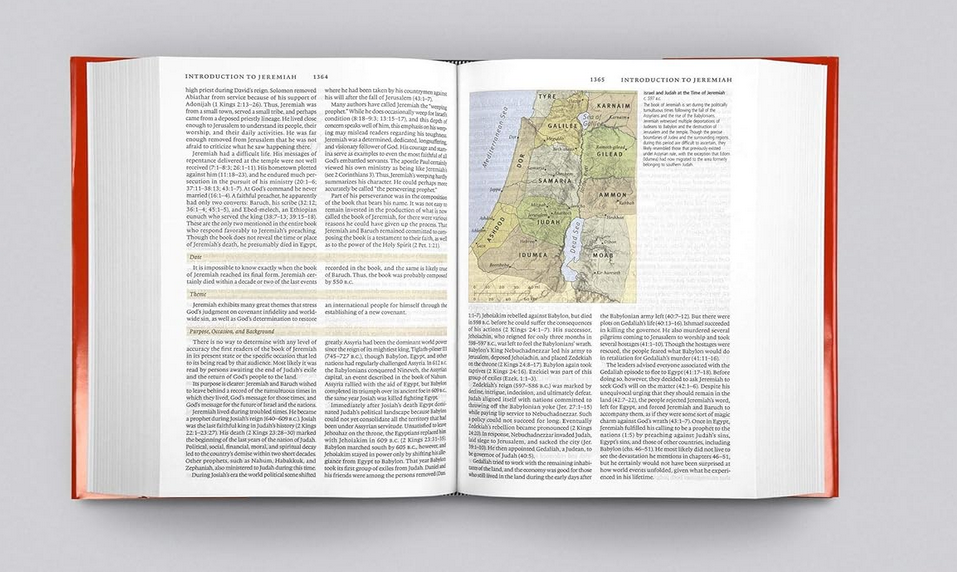
ESV Study Bible
The ESV Study Bible was designed to help you understand the Bible in a deeper way. The ESV Study Bible features a wide array of study tools, making it a valuable resource for serious readers, students, and teachers of God’s Word.
The One Year Bible NLT
The One Year Bible NLT delivers on the promise that as you read its daily Scripture selections you can read through the entire Bible in one year. To provide variety, each daily reading includes selections from the Old Testament, New Testament, Psalms, and Proverbs.

Leave a Reply