


About this episode:
When you’re tired of measuring up, discover the freedom of resting in God’s love—a love that can’t be earned or ranked,but welcomes you just as you are. Ellen talks with Bible teacher Oghosa Iyamu about the impartiality of God’s love and how understanding it reshapes the way we see ourselves and love others.
Subscribe & Listen on:
 Apple Podcasts
 Spotify
TIMESTAMPS:

00:52 Discovering God’s Impartial Love
02:05 Seeing Beyond Status to the Heart
04:15 Faith That Rejects Favoritism
05:45 Receiving Love, Not Earning Worth
07:30 Rediscovering Our God-Given Dignity
08:20 Trusting God’s Love in Difficult Seasons
13:20 Living Out God’s Welcome Daily
17:35 Finding Belonging in the Church Family
20:30 Being Seen by the God Who Sees
25:28 Resources and Guest Faves
The Conversation Continues in our Community:
31:17 God’s Welcoming Love: Paul’s Example
32:59 What Impartial Love Looks Like in Community
35:38 Resisting the Urge to Compare
Full Transcript
SPEAKER_00 0:00
I believe that the depth to which we dare to believe that we are impartially loved by God becomes a depth to which we are able to open our arms wide and welcome the proclaiming truth that God’s love is impartial. And so I believe it’s us immersing in God’s impartial love and reminding us, especially in a culture that wants us, you know, to exalt someone’s influence or someone’s status or someone’s wealth, but to go, you know what? I can see myself as God sees me, and I’m free to love others in that same way and to welcome them in.SPEAKER_01 0:35
The Coffee and Bible Time Podcast. Our goal is to help you delight in God’s word and thrive in Christian living. Each week, we talk to subject matter experts who broaden your biblical understanding, encourage you in hard times, and provide life-building tips to enhance your Christian walk. We are so glad you have joined us. I’m Ellen, your host, and I’m so glad you’re joining us today as we dive into an aspect of God’s character that is both incredibly comforting and, if we’re honest, often overlooked. We talk a lot about God’s love, but how often do we sit with the truth that his love is impartial, that he doesn’t play favorites, isn’t swayed by status or success, and doesn’t wait for us to measure up before welcoming us in. Our guest today, Ogosa Iamu, is here to help us understand what it means to be forever welcomed. Ogosa is a Bible teacher and author who is passionate about making scripture both accessible and deeply transformative. She has been tracing the beautiful thread of God’s impartial love from Genesis to Revelation. And today she invites us to not only receive that love, but to reflect it. If you’ve ever felt unseen, unworthy, or unsure if you truly belong, this conversation is for you. So grab your coffee, open your Bible, and let’s dive in. Ogosa, welcome. Thank you for having me. I am so excited to be here. Yes, and we are so honored to have you here. Um, this topic is just a breath of fresh air right now in our society that we so desperately need. We often hear about God’s love, but not always about his impartial love. Where do you see that theme show up clearly in scripture? And why do you think it’s so often overlooked?SPEAKER_00 2:49
Yeah, that’s an excellent question. So we see it all throughout scripture, from the Old Testament to the New Testament, but I want to start off kind of giving us a definition of impartiality and what we mean when we say that. And so we’re saying is that God does not judge based on a person’s visible status or lack thereof, that God sees beyond wealth, that he sees beyond influence, that he sees beyond merit, and God evaluates every human heart with perfect justice and righteousness. And that is a character and an attribute of God that we see from the Old Testament to the New Testament. But one of my favorite places to really see this then is with Isaiah. So Isaiah 55, 1, Isaiah says, Come, everyone who is thirsty, come to the water, you without silver, come buy and eat, come buy wine and milk without cost. And one might wonder, okay, how is Isaiah able to speak so confidently about God’s welcome? And when we turn back to Isaiah 6, what we see is that Isaiah had a tangible, life-altering encounter with God Himself that really transformed how he saw God’s welcome, how he embraced God’s love and how he was able to extend it. And so I just want to encourage us who are listening that oftentimes it can be hard or easy to overlook because we ourselves are not being rooted in God’s impartial love. We are not spending time rehearsing what is true about God’s impartial love. And I believe that the depth to which we dare to believe that we are impartially loved by God becomes a depth to which we are able to open our arms wide and welcome the proclaiming truth that God’s love is impartial. And so I believe it’s us immersing in God’s impartial love and reminding us, especially in a culture that wants us, you know, to exalt someone’s influence or someone’s status or someone’s wealth, but to go, you know what? I can see myself as God sees me, and I’m free to love others in that same way and to welcome them in. And so our welcome becomes much more bold, much more clear when we have immersed ourselves because it overflows into our life.SPEAKER_01 4:57
Absolutely. And that is the tactic of the enemy, right? Is to use comparison and how we, you know, uses that to divide us or make us not feel like we’re worthy. Right. Well, let’s let’s start with James 2 because I loved your story about how that inspired you writing for other welcomed. What makes this passage such a powerful lens for understanding God’s heart and what surprised you as you follow this theme through the Bible?SPEAKER_00 5:28
Yeah. So as I read James 2 and I read it in a group of women, what I saw was one of God’s most often overlooked attributes, which is his impartiality. James says, do not hold the faith in our Lord Jesus Christ while also showing partiality. Those two do not coexist. And so as I read that and I thought about the culture that we live in today, how easy is it for us to judge or measure someone’s worth, status, or dignity based off of their Instagram following, based off of, you know, how well they seem eloquent or appearance-wise. And what you see in James is a culture that was steeped into something called the Patreon and client culture, which means that there were people who had a lot of status and a lot of influence, and then there were people of low status who didn’t have that. And they had to kind of depend on these people with status and influence. And so there was a big temptation to treat those who had influence, who had the seats at the table, who had the invitations to treat those better than people who didn’t have it. And what James says is, hey, no, no, no, no, no, no. That does not hold true with the faith in our Lord Jesus Christ, because that is not the way that God sees us. And so as I really began to trace this thing throughout scripture, I saw, wow, Deuteronomy 10, 17, for the Lord your God is a God of gods and the Lord of Lords, the great, the mighty, and the awesome God who is not partial and takes no bribes. And then we see it again in Acts 10, 34 with Peter. And so we see it all throughout scripture over and over and over again, what we see in James, which is this often overlooked attribute of God’s impartial love towards his people, but also as he is welcoming non-believers in to say, no, I’m not gonna overlook your sin. I’m still gonna hold you accountable, and I’m still gonna require you to repent and to return, but I’m not calling you because of your status. I’m not calling you because of your worth. I’m not calling you because you can work your way and be good enough. I’m calling you because of my character and my grace, which is undeserved favor towards you.SPEAKER_01 7:31
You know, aren’t you so glad that God isn’t star-strucked like we parents are? I mean look at look at how we are with celebrities or singers or athletes, like yeah, God sees us and just loves us each. Yes, all impartially. And um I I hope when people hear that they feel like just a warm sensation in their hearts. Absolutely. You’ve described God’s welcome as something that is received, not earned. Why do you think it’s so hard, especially for believers, to fully embrace that truth?SPEAKER_00 8:16
Yeah, I believe that there are so many cultural filters that we have today that often it’s easy for us, even as believers, to put it on. Like you are what you achieve. How often do some of us or have we heard that growing up? Or have we had certain groups of people make us feel as though we are what we achieve, right? They love us when we’re doing really well. You are as valuable as your influence or your appearance or your possessions. How often have we experienced being treated differently because maybe we have a certain look or we are able to possess a certain quality or a certain gifting, right? And so we also have this other cultural filter that you are loved only when you prove yourself worthy. So I have to prove that I am worthy to receive your love in order for me, excuse me, to be loved. And I believe these culture filters are the same thing that, you know, you see people struggling with in scripture. You see that with the Pharisees, where they’re boasting in their ability to fast or they’re boasting in their ability to not be like someone else. And so there are always this temptation for humanity to put on the cultural filters that exist in our day. But to embrace the impartial welcome of God, we must lay down those metrics and measures of worth and status. And we need to receive what is true about our dignity and our identity and our worth in Christ. That from the beginning, God made Adam and Eve, and they were dignified, they had inherent value before they did anything. God endowed this dignity upon them. And so our dignity, our worth is not from striving, it’s not from being better than someone else. It’s not because we’re working so hard. It is because this has been ordained from the very beginning. And so God’s impartial love is really counter to our culture. And I don’t think sometimes we often realize that that how often we are fed these messages, whether on social media or at our jobs or even within our families, that you are good when you prove yourself. You are worthy when you prove yourself, or you have to have these things in order to be worthy. And God’s word says, no, no, no, no, no, no, no. You have inherent worth and dignity and value from the beginning of creation.SPEAKER_01 10:26
So absolutely. And God shows us that over and over again when He uses the least of these in the Bible to help us understand His profound truths. Um I love like if looking at Rahab or these characters that you would never imagine being able to impact God’s kingdom.SPEAKER_00 10:56
That’s right. When you open up Matthew 1, you’re like, whoa. I mean, the different people that is listed, the different kinds of women, you know, not only are many of them outside of the covenant, but you also realize, wait, they have a different uh background that I probably wouldn’t assume you would want in your genealogy, which was kind of like the Jewish resume at the time. So this is what show that you are the one worthy, you know. So that is kind of even how Jesus chose to display that was by having these women who you’re like, wait, this woman and that woman? And so you’re absolutely right. And you know, Paul says that too about, you know, God choosing the foolish things of the world.SPEAKER_01 11:33
Yes, absolutely. Well, let’s talk a little bit about you, Ogose. You shared that this message reshaped you and how you relate to God and lead others. Tell us a little bit about how that’s transformed your own spiritual journey.SPEAKER_00 11:50
Yeah, well, one of the ways that I really, really see this is in difficult seasons, seasons where there is hardship or loss, or even like now, where I’m like, okay, God, what is this season really about? Like I’m having to walk by faith. And if I’m honest, I rarely ask or struggle with God’s impartial love on the mountaintops. Like when things are going great, when everything seems to be fine, you know, that’s when it’s easy for me to know, okay, God, God loves me. But I feel like it’s when I am in the valley, when things feel uncertain or unfair that I find myself asking, does God really love me? Has his love lessened for me because of what I’m walking through? Is he partial towards other people who are experiencing great blessings in this season? So for me, I have really seen God’s impartial love transform how I see difficult seasons. And it’s challenged me to remember that God’s impartial love is steadfast. His impartial love can fully exist, it can fully coexist with being in a difficult season, or with being in a hard season, or with being in a season where I feel, you know, distant from God. I love Psalm 136, verse 1. It says, give thanks to the Lord, for he is good, for his steadfast love endures forever. And that just reminds me that God’s love is not measured by the timing of my circumstance or the details of my circumstance. His steadfast love endures forever. I also love Lamentations 3, 22 to 23. The steadfast love of the Lord never ceases, his mercy never come to an end. And that steadfast love represents this covenant loyalty of God that is anchored in his nature, not our circumstance, not our situation. And so I believe that revelation of God’s steady, transformative love has been transformative as it has allowed me to go, okay, I can bring my full self, my doubts, my questions, my fears before God in this difficult season because I know that his steadfast love for me is not shifting, it’s not changing, it’s not any different. And so that is one of the ways I’ve seen God’s impartial love really transform. It’s walking through seasons that are difficult and that are hard and that feels like God is being partial towards everyone else, and I am on the outside of that.SPEAKER_01 14:04
So right, right. You know, I’m currently doing a study on lamentations, and it’s interesting that you mentioned those verses because you know, Jeremiah, and I love how this ties together in that it’s okay that Jeremiah was honest and laid those, you know, feelings of discouragement and horror and everything he just let out, but at the same time brings it back to God’s mercies being and that’s right.SPEAKER_00 15:23
And if there’s anyone listening today, I think that that’s always such a beautiful place to start, is to be honest with God. Like if you don’t feel that God’s impartial love has met you or that you’re able to embrace that, I think you’re absolutely right. That’s a wonderful place to start. Say, God, I need help believing that this is true, believing that your impartial love can find me where I am because I don’t believe that you impartially love me. And I do believe that maybe you’re being partial. So I think that honesty, you’re absolutely right. I think we serve a gracious God who allows us to come to Him and be honest.SPEAKER_01 15:55
Absolutely. Let’s talk a little bit about Jesus’ model of impartial love. You talk about how uh Jesus challenges barriers, cultural, theological, relational.SPEAKER_00 16:08
Yeah.SPEAKER_01 16:09
Share us an example where you see this clearly and tell us what it teaches us for today.SPEAKER_00 16:15
Yeah. Well, this gets me so excited because the parables, the parables, the parables, Ellen. I love the parables. One, they make up one third of Jesus’ teaching. And as you read them, you really notice how Jesus consistently turns this honor and shame culture of his day upside down. Jesus is so intentional, even down to the characters that he uses in the parables. So in the first century, a rabbi’s choice of people in the parables was often your way of saying, This is who I’m welcoming, this is who I’m inviting to learn. And so for Jesus to use women who were not often, you know, used in parables. Not only that, he uses this persistent widow where widows were people of low status. They they did not have the power to really defend themselves. And so here you see Jesus, excuse me, using someone of low status. And that’s just really radical for a rabbi to do. You also see Jesus using the younger son in the parable of the prodigal son. And during that time, a younger son did not even get inheritance from their father. And so you’re like, okay, but Jesus uses this to show how the father is welcoming and compassionate. And then again, with the Samaritan, right? They were despised and rejected. And yet, this is the example that Jesus is using to show how his gospel has come, even in the midst of these ethnic and religious boundaries. And so the parables are so beautiful and they are so just turning this honor and shame culture upside down and say, you know, who you think is worthy of being invited, who you think should be invited, is actually not always who God is inviting. Oftentimes He is inviting those who we we think are undeserving and unworthy. And Ellen, that’s such good news because none of us are worthy. None of us are deserving. So the fact that God can use people in that society that would not have been looked upon as worthy is just such a testimony and should be an encouragement to all of us that God can call me. God can use me. And that’s exactly what Jesus was portraying and communicating through the parables.SPEAKER_01 18:24
You’re so right. What are some tangible ways that we can reflect God’s welcome more faithfully if we really sort of get into the nitty-gritty of how are how are we going to live this out?SPEAKER_00 18:39
Yeah. So I think there’s so many different ways. One of the things that I think that are, you know, just a couple simple ways that come to mind. Um, I think even of being intentional with our neighbors. You know, there’s so many little holidays that come up that we can even plan something where we say, hey, you know, what if you come over and we can extend this hospitable love of God? It doesn’t always have to be this elaborate thing. We can do something around the fall time or something around Christmas time that is very small, but it it begins to welcome others into this presence of God. I think even when we’re walking into the room and we have this urge to maybe go towards a person who’s popular or go towards the person who has a lot of influence. And again, we don’t want to be, you know, um, we don’t want to not give them attention, but what if we drew to the person who was alone? What if we walked into a room and said, How can I love other people? instead of how can I get, you know, um further along, who can help me get further along? What if we switch that narrative and say, who can I serve? Who seems like they’re by themselves, who seem like they could use some encouragement. I think even when we go to places like the airport or when we go to Starbucks, are we looking people in the eye? Are we addressing them by their names? I think there’s so many ways to show people that they have dignity, that they are seen and loved and known by the creator of the universe before we ever even get to the gospel. Yes, we share the gospel, but there are so many tangible moments when we’re going into the store, when we’re interacting with our neighbors, when we’re interacting with the kids that are friends with our kids, you know, how are we being intentional to show this hospitable love of God to say, you matter, and I see you today?SPEAKER_01 20:25
Right, right. And I feel like, you know, we’ve kind of gotten into our own little boxes. I think about just going to church, we go, we sit in the same seat. That’s right, you know, we may say hi to a few people and then we leave. You know, okay. So one experience that I had that I will take to my grave is we were out of town and on a trip and decided to go to a church that we’d never been to before, a small church. But I’m telling you, the simple act of people who didn’t know us coming over and saying, Hi, I’m so and so. I don’t recognize you, but welcome. That that doesn’t cost anything. That’s right. A smile, that’s right. Making you seen and heard and it was so beautiful. And I think that that sometimes get lost in big churches, perhaps, or just just not being intentional. Right. So I try to remember that.SPEAKER_00 21:27
Yes, and often that opens the door for more conversations. You know, often those little just encounters that say, I see you, I notice you. You know, if you go to the same Ho Foods or Sprouts or Walmart or Target, wherever you’re going, if you’re going all the time and you’re seeing that cashier all the time, and you’re always intentional to remember their name, you’re always intentional to ask them, I guarantee you, sooner or later, you’re gonna have an opportunity to share the gospel. You’re gonna have an opportunity to maybe even invite them over. You’re gonna have an opportunity to tell them about this love of God that has first pursued you, remember like Isaiah, and that you are now extending to other people. So you’re absolutely right, Ellen.SPEAKER_01 22:06
Let’s talk a little bit further about the church community. How would you encourage someone who’s maybe feeling like an outsider in their church community, even though they know intellectually that God welcomes them?SPEAKER_00 22:20
Yeah, I would encourage them to press into community. And I’m gonna give an example of how. But the reason why I start with that because there are so many people who are discouraged to stop and to not press in and to pull out. So I want to encourage to continue to press in to find intentional ways to connect with people. One of the ways that I have found that, because I haven’t lived in Atlanta that long, I’m kind of new to the city, is by serving. So if you can’t do it maybe with like, The formalized way is there other organic ways that you can meet people? And I think serving has been one of the biggest blessings for me because it kind of forces you in the crowd in the mix. Because if you’re serving with people over and over and over again, eventually you’re going to know their names, you’re going to begin to form relationships. So I would also suggest like, what are other organic ways with serving, with maybe events at the church that you can begin to form these connections? Because I know sometimes it can be hard to get more in a formalized group or a community group or to feel, but I but I think how can you put yourself in situations where you’re going to naturally and organically meet people? And I think that serving is one of the best ways.SPEAKER_01 23:31
I could not agree more. I could not agree more. And just thinking about putting somebody else first, yes, during that experience and you’re doing that together. It will bless you just as much as it will bless whoever it is that you’re serving. That’s absolutely right. Yeah. Well, when someone finishes reading your book, Forever Welcomed, your Bible study, what do you hope that they carry forward? Not just in head knowledge, but in their hearts for everyday living.SPEAKER_00 24:07
Yeah. I would love for them to have a right view of God and in return a right view of themselves and others. I mean week one of the study I talked, I touched briefly on Hagar in Genesis 16. I just am so encouraged by her story. But the angel of the Lord finds her by spring in the wilderness after she has fled from Sarai, her maidservant. And God said something that I just believe is so profound. He um asked Hagar, Hagar, servant of Sarai, where have you come from and where are you going? And God doesn’t call her Egyptian or girl or just servant. He called her by her name and he knew the specifics of her situation, that she was Hagar and that she was a servant of Sarai. And then we see a few verses later in Genesis 16, 13, Hagar’s response that says that she gave the name to the Lord who spoke to her, Elroy. You are the God who sees me. For she said, I have now seen the one who sees me. And I love that Hagar didn’t call God a name that meant you are the God I see. She named him Elroy. You are the God who sees me. And so I believe that Hagar’s witness reminds us that God isn’t just concerned with us seeing him rightly. God wants us to know that he sees us, he sees our specific situation, he sees our fight against sin. He sees our unspoken desires. And I just want to encourage your listeners that God sees us more fully than we could ever see him. And that kind of revelation transforms us as it did with Hagar. And so I believe that Hagar’s story reminds us that every true thing that we behold about God begins with his pursuit of us. And he is the God who sees and his impartial love makes room for the undeserved. And so a right view of God, and in return, a right view of ourselves. That’s what I hope that the readers will get. That’s what I hope that they will take away with. And I hope that they would be challenged by.SPEAKER_01 25:59
Thank you so much. Well, Ogosa, as we wrap up here, I just want to let our listeners know that your Bible study is incredible. It truly is. And like already, like I almost made the phone call before I had this interview, and I was like, no, you can wait. But I am, I’m going to tell the the women’s ministry person was actually looking for a good study. And this study is so awesome. And you know what I love about it? Is as I was working through it, even I’ve been doing Bible studies for over 20 years. Yeah. I love that you pull out such interesting, fascinating, you enrich with the context and the cultural background so much that it’s really, really incredible. So I’m very excited to recommend this study for our listeners. It’s called Forever Welcomed. Where can people go to learn more about you and the study?SPEAKER_00 26:56
Yeah, so my website is my first name and last name. So agosaeyamu.com is my website. The book is available wherever books are sold. So everywhere it’s on Moody, it’s on Amazon, Christian Bookstore, Target, it’s everywhere. And um also I’m on Instagram. So uh Aghosa is my first name with an I, which is my uh middle initial, and then it’s Iyamu. So it’s Agosa I and then Iamu my last name.SPEAKER_01 27:20
So and I can spell that out if you need me to for listeners, but maybe we will have all those links in our show notes. That will make it very easy just to click right through. So before we go though, I have to ask you my favorite questions. What Bible is your go-to Bible and what translation is it?SPEAKER_00 27:38
Yeah, so I really, really love the NIV Cultural Background Study Bible, which I’m sure you picked up on because I am so into Ellen, you get it on the nail. I’m so into the cultural context and the historical context of the Bible. It’s just it’s so rich. And that is one of my and then I I also enjoy the ESV study Bible.SPEAKER_01 27:57
So that’s it, that’s another favorite. Both awesome recommendations. Okay. Do you have any favorite Bible journaling supplies that you like to use?SPEAKER_00 28:05
Yeah. So I’m a big note cards person. So any kind of note cards, I really love them because what I do, Ellen, is I’ll write down prayers or verses of them, and then I’ll fold them up and put them in a jar. And then a month later, or in a different season, I kind of keep them like Ebenezer’s and I’ll look at it and I’ll revisit and I’ll say, wow, thank you, Lord. I was asking for faith during that time, or I was seeking you for you know grace in this particular situation. And so I’m able to look back on the ways that God has just been faithful and how he’s answered stuff. So I love to jot things down on a note card, put it in a jar, and then revisit them in a later season to just see how faithful God has been and kind of as the eboniser to say, this far the Lord has brought me.SPEAKER_01 28:50
Such a fun idea. Awesome. What is your last question? What is your favorite app or website for Bible study tools?SPEAKER_00 28:59
Yes. So I really enjoy the blue letter Bible, and it has all kinds of commentaries and you can look up different words, and it’s free. So I really like that. And then I’ve also been enjoying her Bible, which uh is just different women’s voices that are reading the Bible. And you can read any book of the Bible and hear from different women. And so I just think it’s super encouraging to be able to study the Bible through different women’s voices. So those are two things I’ve been super encouraged by.SPEAKER_01 29:26
That’s cool. I haven’t heard of that one. We’ll have to check that out. Okay. Well, we will put links to all those in our show notes. I just want to say, Ogosa, thank you so much for being here and sharing your heart and your wisdom with us today.SPEAKER_00 29:39
Yeah. Thank you for having me, Ellen. It’s such an encouragement. Thank you for all you’re doing. You are raising up just people who love God’s word. And so I honor what you do. I’m grateful for what you do. You are making such a difference. And I know that there are people who love the Bible so much more because of what you’re doing. So thank you for having me.SPEAKER_01 29:57
You’re awfully kind. Thank you to our listeners. I just hope today’s episode has encouraged you to rest in the truth that you are already loved, already invited, and already welcomed just as you are. And as we live in that truth, may we become people who extend the same radical welcome to others. We’ll see you next time here at the Coffee and Bible Time podcast. Until then, may you walk in the confidence of God’s unfailing love and the joy of knowing that you are forever welcomed.
God’s Love: The Antidote to Comparison
In a world that weighs our worth based on achievements, image, and influence, it’s easy to question whether we are truly loved for who we are. Yet the Bible invites us to rest in a truth that never changes—that God’s love is impartial, steadfast, and free.
In a recent episode of the Coffee and Bible Time Podcast, Ellen (our very own Mentor Mama) is joined by guest Oghosa Iyamu, to explore this powerful reality: that God’s love welcomes everyone without favoritism.
“We talk a lot about God’s love, but how often do we sit with the truth that His love is impartial? That He doesn’t play favorites, isn’t swayed by status or success, and doesn’t wait for us to measure up before welcoming us in.”
Ellen Krause
Because ultimately, it is only when we rest in God’s love that we are also able to reflect that same impartial love to others.
God’s Love Is Just, Impartial, and Welcoming
Oghosa began by defining what it means for God to be impartial:
“God does not judge based on a person’s visible status or lack thereof. God sees beyond wealth, He sees beyond influence, He sees beyond merit, and God evaluates every human heart with perfect justice and righteousness.”
From Isaiah 55:1, where God calls, “Come, everyone who is thirsty,” to Deuteronomy 10:17, where He is declared as “not partial and takes no bribes,” Scripture reveals a consistent truth — God’s love is not earned by position, wealth, or perfection.
Oghosa beautifully summarized:
“The depth to which we dare to believe that we are impartially loved by God becomes the depth to which we are able to open our arms wide and welcome others.”
Oghosa Iyamu
Because when we are convinced of the truth of God’s love, our hearts naturally overflow with that same love toward others.
Reflect:
- Who around you needs a reminder of God’s unconditional welcome?
- How might you extend God’s love beyond your comfort zone?
God’s Love Is Received, Not Earned
But being a believer doesn’t mean it’s not a struggle to truly rest in God’s love. Oghosa explains:
“There are so many cultural filters that we have today… like you are what you achieve or you are loved only when you prove yourself worthy. But to embrace the impartial welcome of God, we must lay down those metrics and measures of worth and status.”
Oghosa Iyamu
In a culture that teaches us that we have more (or less) value based on how we look, who we know, and what we do, it can be difficult to believe that God is any different from the people we know and fear.
But from the very beginning, before Adam and Eve did anything, they were fully loved and dignified by their Creator. We learn from them that our worth flows not from what we do: but from Whose image we bear.
“Our dignity, our worth does not come from striving. It’s not from being better than someone else… It exists because this has been ordained from the very beginning.”
Oghosa Iyamu
Reflect:
- When have you felt tempted to earn God’s love?
- How can you rest more fully in His grace today?
Jesus Modeled God’s Love Through Radical Welcome
When Ellen asked how Jesus demonstrated impartial love, Oghosa shared with joy:
“The parables, Ellen! I love the parables. One-third of Jesus’s teaching was in parables, and He consistently turned this honor and shame culture of His day upside down.”
Jesus held up the outcast—the persistent widow, the prodigal son and the father who forgave him, the Samaritan—as people we should imitate. Each story reveals that God’s love reaches for those who the world overlooks.
“Who you think is worthy of being invited, who you think should be invited, is actually not always who God is inviting… Oftentimes He is inviting those who we think are undeserving and unworthy.”
Oghosa Iyamu
This is the gospel: none of us are worthy, yet all of us are welcomed through God’s love in Christ.
Reflect:
- How can you follow Jesus’ example of radical welcome this week?
- Who might need to be reminded that they are seen and loved by God?

3 Ways to Reflect the Truth of God’s Love
Oghosa offered simple, heartfelt ways to reflect God’s love daily:
- Be intentional with neighbors — a smile, a kind word, or a shared meal.
- Notice those who are alone in church or at work.
- Remember names. Look people in the eyes. Remind them they are seen by God.
Even small acts of kindness become sacred reflections of God’s love.
“There are so many ways to show people that they have dignity, that they are seen and loved and known by the Creator of the universe before we ever even get to the gospel.”
Oghosa Iyamu
Final Reflection: God Sees You and Loves You
Oghosa closed with a reminder rooted in the story of Hagar:
“God isn’t just concerned with us seeing Him rightly. God wants us to know that He sees us… God sees our specific situation, our unspoken desires, and our fight against sin.”
Like Hagar, we can proclaim, “You are the God who sees me.” (Genesis 16:13)
Friend, no matter your story, your struggle, or your season—God’s love sees you, welcomes you, and calls you His own. You are forever loved, forever seen, and forever welcomed.
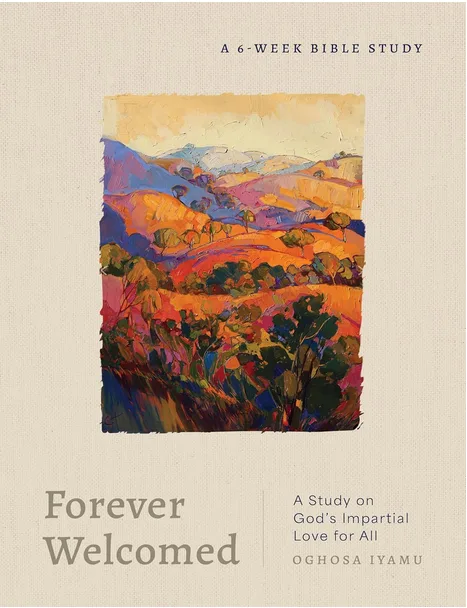
Forever Welcomed: A Study On God’s Impartial Love For All
Our world loves power and status, wealth and beauty. But God does not resemble us in giving special preference to those in elite roles or coveted positions. He is not influenced by the influencers. His love is impartial.
Forever Welcomed, a six-week Bible study by Bible teacher Oghosa Iyamu, traces the rich tapestry of God’s impartial love throughout the Bible—a love grounded in His character, not our abilities or status.
Enjoyed this Conversation? Go Deeper with the Coffee and Bible Time Community
If you love the Coffee and Bible Time Podcast, you’ll love what’s waiting for you inside our online Christian Community—a welcoming space where women like you are growing in faith, friendship, and love for the Word of God.
As a Community member, you’ll unlock exclusive podcast bonus features available only to members.
But that’s just the beginning. Here’s what you’ll experience when you join:
- Exclusive Podcast Content
Enjoy members-only extras from our podcast: bonus segments, deep-dive discussions, and faith-building resources to help you live out what you’re hearing each week. - Weekly Women’s Online Bible Studies
Gather with Ashley, Taylor, and Ellen on Google Meet for mentor-led studies that bring Scripture to life. Share insights, pray together, and grow alongside a supportive, Christ-centered community. - 12-Course Bible Study Academy
Access our entire library of guided in-depth Bible study courses—perfect for growing in individual study, small groups, or mentoring relationships. Each course is designed to help you learn how to read God’s Word and apply it with confidence. - Christ-Centered Community & Encouragement
Connect with women who share your heart for Jesus. Through prayer requests, discussion threads, and regular check-ins, you’ll find lasting friendship and spiritual support. - 1-on-1 Mentoring with Ellen
Receive personal, prayerful guidance for your current season—whether you’re seeking direction in faith, purpose, or prayer life. (Scheduling details available inside the Community.)
Let’s learn and grow together. Join the Coffee and Bible Time Community today!
Leave a Reply