
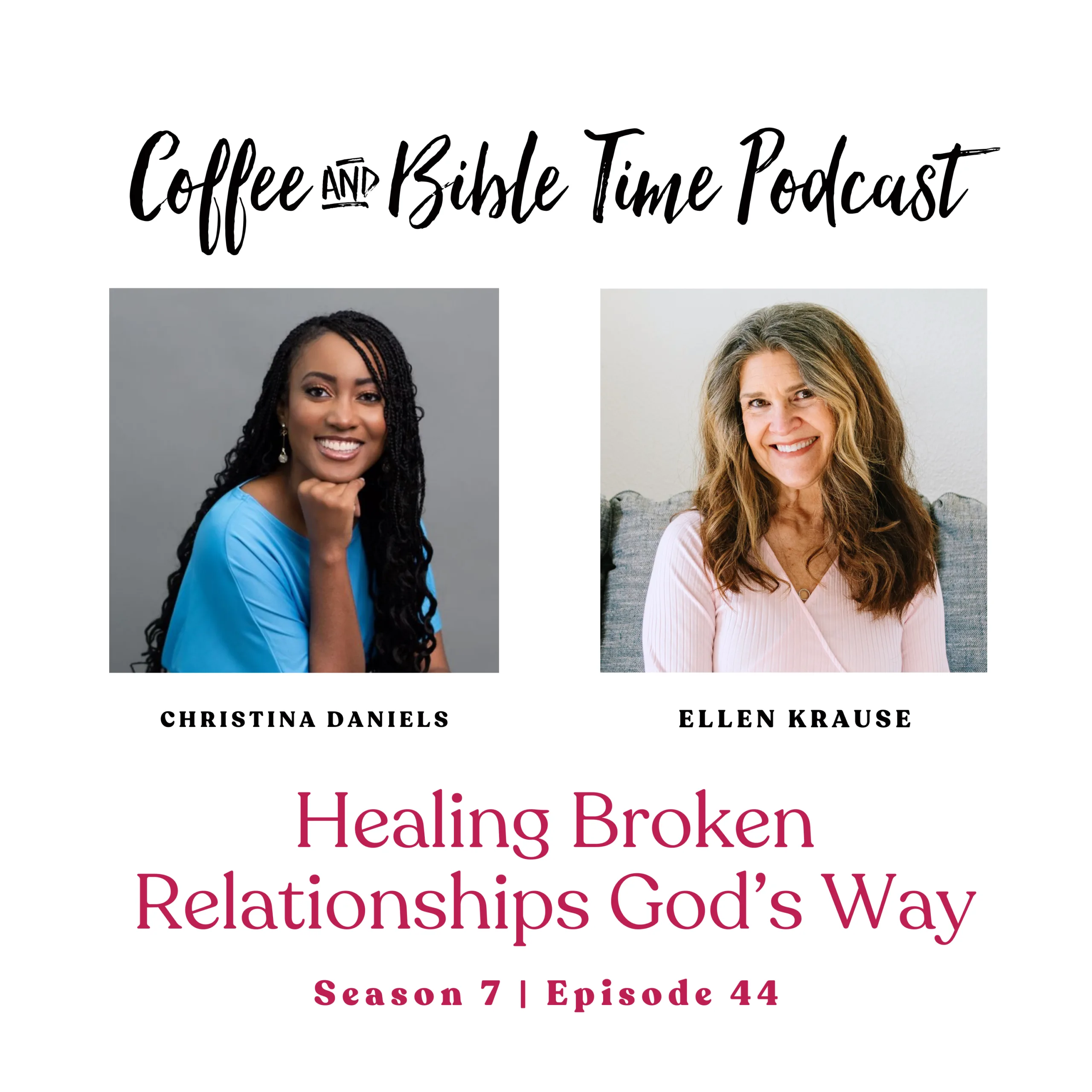

About this episode:
How can you find healing from a broken relationship? In this episode, Christina Daniels joins us to explore how to recognize unhealthy patterns, set God-honoring boundaries, and walk through the hard but freeing process of forgiveness. Discover how to let God transform your heart, guide your steps, and bring His healing into the places that feel most broken.
Subscribe & Listen on:
 Apple Podcasts
 Spotify
TIMESTAMPS:
00:02 Introduction: God’s Gentle Approach to Healing
02:05 Welcome & Episode Overview
04:12 What Makes a Relationship Unhealthy?
07:10 Judas vs. Peter: A Biblical Picture of Brokenness
10:40 Red Flags & Why Christians Must Notice Them
14:52 Why We Miss Red Flags
18:25 The Holy Spirit’s Nudge: Listening to the “Icky Feeling”
20:40 What Faith-Based Healing Looks Like
24:55 Transformation Through Truth, Accountability & Boundaries
28:50 Forgiveness: The Key to Lasting Healing
31:40 Guest Favorites & Closing
The Conversation Continues in our Community:
33:43 Christian Discernment in Relationships
Healing From a Broken Relationship: How God Restores What’s Been Wounded
Intro (Christina Daniels):
“God gives people chances, and He sees where our hearts are. He’s not just this God that’s excluding people. So I would tell any woman listening right now: be gentle with where you are. Be gentle with the people in your life. The truth can just be simple truths like, ‘Hey, I see this in your heart, and it’s hurting me or concerning me.’ And then giving the person time to really sit with God and wrestle with that, because everyone deserves the opportunity to repent, to grow, and to sit at the feet of Jesus.”
Ellen:
“Welcome back to the Coffee and Bible Time podcast. I’m Ellen, your host, and I’m so glad that you’re joining us today. If you’ve ever wrestled with broken relationships, emotional wounds, or wondered if faith can truly bring healing to the places that hurt most, then this episode is for you. Our guest today, Christina Daniels, is the founder of Adorned Heart, a ministry dedicated to helping women embrace their God-given identity and transform pain into purpose. We’re diving into what it looks like for women of faith to heal from unhealthy relationships, overcome trauma, and embrace the wholeness that God intends for us.
We’re going to talk about how to recognize those red flags, what truly defines a godly relationship, and how emotional healing can transform not just our hearts, but our families and communities too. So whether you’re walking through heartbreak, seeking spiritual growth, or longing for deeper, healthier relationships, our prayer is that this conversation will speak life and hope into your journey. Christina, welcome to the Coffee and Bible Time podcast.”
Christina Daniels:
“Thank you so much for having me, Ellen. I’m so honored and grateful.”
Ellen:
“Well, I’m thoroughly delighted that you are with us today. Why don’t we start by having you tell us a little bit about what is an unhealthy relationship? Let’s clearly define that so we can begin to look at the red flags people should be on the lookout for.”
Christina Daniels:
“Absolutely. In my opinion, when we’re looking at an unhealthy relationship, I think a lot of people like to think it means someone’s imperfect—but it doesn’t mean that. It’s simply someone who has chosen to give over to their feelings and is refusing to change—whether that’s due to pride, unawareness, sin, whatever it is. They refuse to take any steps forward.
And I love looking at the Bible. There are so many stories that show this. Jesus, Judas, and Peter—they were His disciples. He kept them in His inner circle. We don’t see the Pharisees in His inner circle, but we see Judas and Peter. They were committed to His mission, but there were things stirring in their hearts, and God called it out. He told them, ‘This is what’s in your heart. Can you deal with it, please?’
I think they let it fester. Eventually, the demon went into Judas because he was entertaining those festering thoughts and unhealthy actions. And after he betrayed Jesus, he didn’t truly repent. He died—right? He unalived himself.
Then we see Peter—he had things stirring in his heart too. But there was a moment where he noticed he needed to deal with the root. He repented. He’s one of the first people to preach a message of the gospel, showing he was genuinely repentant and genuinely wanted to change.
So I love those two stories because they show that an unhealthy relationship is an unrepentant heart. Same with Saul—he started festering jealousy toward David, and eventually an evil spirit came upon him, and he started to betray his friendship.
So that’s how I would define an unhealthy relationship.”
Ellen:
“So given that, why is it important for Christians to be equipped to recognize the red flags? What are those red flags they should look for?”
Christina Daniels:
“I think it’s important to know the red flags so we can pray for people, because people have a choice in how they act when a thought or emotion comes up, and praying for them is very important. That’s why God gives us a peek into people’s hearts—not so we can say, ‘You’re a sinner,’ but, ‘You’re carrying the potential to sin, and I’m giving you options; I’m giving you love.’
Second, spotting red flags protects our hearts. The Bible says, ‘Guard your heart, because everything flows from it.’ When we don’t guard our heart, a friendship or relationship can take us out. Most people I’ve seen who are deeply depressed or have mentioned suicide—there was a relationship or connection that took them out.
I love Samson and Delilah because of the symbolism. Our strength has a secret—the Holy Spirit, our connection to God. But when we let people into our lives whom we discern are not healthy for us, they’re going to cut that connection to God. They’ll distract us. They’ll turn our eyes to worldly pleasures. And worldly pleasures can look simple—watching reality TV, hanging out more than being in the Word. Those little things slowly suck out our life force.”
Ellen:
“Yes, and I think that sometimes we’re oblivious to these red flags, or we don’t want to see them. From the women in your ministry, what have you seen people do when it comes to red flags?”
Christina Daniels:
“My gosh, that is such a good question. We don’t want to see it. In my book about healing from toxic relationships, there’s a chapter—I forget the name—but a friend once looked at me after I told her about some bad situations with men and friendships. She said, ‘It’s you, sis.’ And I said, ‘Me? What do you mean?’ And she said, ‘You are allowing people into your space for a reason.’
For me at least—and I think it’s a little different for everyone—I wasn’t able to see red flags because something was off with me. One, my identity. I wasn’t able to see it because, let’s say I cared too much about what people thought. Someone would say something, and because I was so scared, I’d spiral: ‘Well, if they said it, it must be true.’ I took ownership of their words.
And then there’s the sense that our reality is going to shift. If all of us truly acted like peacemakers and addressed the broken things in our relationships, it would cause disruption—and that disruption is scary. I was trying to come up with some fancy words, but really, the disruption is scary.
In my last chapter, ‘Spiritual Awakening,’ when you wake up and see the behaviors, it can be the scariest thing in the world.”
Ellen:
“Right. And a lot of times there’s a shift in someone’s character and demeanor after the initial onset. There are no seemingly red flags until there are. And we try to rationalize them and—”
Christina Daniels:
“Bingo. Can I add a little thought? You made a strong point—there are no seeming red flags, but we had a feeling. We always have that little icky feeling that something isn’t right, which is the Holy Spirit groaning with us.
But often—at least for me—we need proof of what that icky feeling is. I’m not going to cause disruption just because I had an icky feeling. I think, ‘I’m not a nice person. I’m being judgmental.’
It goes back to identity—we don’t want to just trust God. I don’t mean stop being friends with the person—I mean keeping our radar up as we engage with them. ‘Hey, there’s something God is trying to tell me, and I’m going to take my time. I’m going to guard my heart. I’m going to keep my secrets and vulnerability inside the love of God until what God is trying to tell me becomes clear.’
That way, we’re not in too deep before we’re aware of what’s happening.”
Ellen:
“Right, that makes complete sense. Can you describe what healing from emotional pain or trauma looks like for women of faith? And how might that be different from someone who doesn’t have a faith-based approach?”
Christina Daniels:
“That’s so good. Honestly, being vulnerable with you, sometimes I get intimidated being in the healing space because everybody’s doing it now. And something I sat with God about is: there is a big difference.
When we’re looking at emotional pain, therapists are amazing, I’m a coach, coaches are amazing—but without the Spirit of God, there’s nothing. Perfect love casts out all fear. Most mental health struggles are rooted in fear and lack of love. And that’s what God brings.
Only God can take someone from a bad background and place them in a better marriage, casting out the fear that they’ll be just like their father or mother. Only God’s love can take an orphan and place them into a loving family, breaking down walls. Only God can take a father from ten generations of addiction and dysfunction and turn him into a strong father.
When we see those stories, we think, ‘Wow,’ but it’s only the strength of God. I believe the enemy comes after each person’s weakness, but God gives us vision and strength when we get stagnant in our mindset.
A coach or therapist without the Spirit of God only has a limited vision of what love is and what casting out fear looks like in a scary world.
In my own healing work, I’m constantly confronted with my fears. I help move people forward in this desert of life where it feels dry, the air is hot, and we want to go back to Egypt. I’m just a couple of steps ahead with God, seeking His face, asking how I can bring people along.
No one can do that real soul-level work—where they confront everything, die to themselves, and then use that death and resurrection to pull others along—without the Spirit and power of God.”
Ellen:
“You said something that really touched me. It reminded me of something I told my daughter yesterday when I was in Puerto Rico before I left. I said, ‘God is so good,’ because I look back—I was given up for adoption as a baby during a time when it was a closed adoption. You couldn’t find out who your birth parents were.
Years later, the laws changed, and I did find out. The difference between my adoptive parents and my birth parents—their relationship with Christ—was night and day. Yes, I experienced trauma, as many who are adopted do, but I see how God worked through that and blessed me with parents who loved the Lord.
That, like you said, truly is a gift from God. And seeing the dominoes—my children wouldn’t be here, my husband, my life would have been completely different. I love that this healing process you’re talking about includes recognizing how God has been at work through the hard things and the good things.
Christina, what steps can women take to see real transformation and healing in their current relationships? Maybe someone’s listening thinking, ‘Well, what do I do now?’”
Christina Daniels:
“Wow. You’re so right—that’s exactly what it feels like.
I think the biggest step toward transformation is honestly being honest—letting the truth set us free and set others free. We often avoid honest conversations about things we see that the other person might not see. Letting them know—creating that tension—can be healthy. Jesus wasn’t afraid of tension, because He knew that through that tension, iron sharpens iron and people grow.
For example, Peter sitting at the table saying, ‘Please don’t die. Don’t be resurrected. Don’t let the buildings and temples break.’ And Jesus responds, ‘I rebuke you, Satan. Get behind me.’ I’m sure Peter thought, ‘What? I’m not Satan.’ But the posture of his heart was.
Peter didn’t fully understand until the day he denied Jesus. Same with Judas. Jesus wasn’t afraid to tell the truth because He knew there would be a moment when they could see the truth and deal with it.
I’ve noticed that the more truth we tell, the more some people just leave your life. It hurts, but that’s the best discernment practice. The demons get unsettled. If someone chooses to stay in brokenness, they’ll be like Judas—leaving and forfeiting their destiny. His death symbolizes not just physical death but forfeiting what God had for him.
So I would say: be honest. Hold people accountable. The Bible says if your brother sins against you, go talk to him. If that doesn’t work, bring a counselor. If that doesn’t work, bring a witness. It gives us steps to help the person see.
But when we’ve exhausted accountability and the person refuses to repent or acknowledge the truth, we need to shake the dust off and walk with those willing to carry their cross. That hurts—it really hurts—but the quicker we do that work, the fewer years we spend dragging those things with us, adding more variables that make cutting that relationship even harder as we move forward into our destiny.”
Ellen:
“Yeah, so it really takes being intentional and being honest with ourselves. One of the things you talked about—you have so many great reflection activities in your book that help you self-reflect and figure out next steps—is starting with, ‘Okay, what’s real right now?’ Right?”
Christina Daniels:
“And I love that you said that, because what’s real for us right now—God is gentle. Looking back at the Peter and Judas situation, He didn’t say, ‘You don’t get to be my disciple,’ because He saw what was there. They had an opportunity. And as Christians, I think we’re afraid to give people opportunity. We’re afraid to give people access to our hearts—even when God has told us they’re a good person or given us the green light. We’re afraid to give them access because the relationship or friendship might not work out based on something we see.
No, I think once again, God puts the broken in families. God cares about the orphans, the widows—everybody. And we all have free will. And I don’t like free will, Ellen, sometimes. But free will means we have to love people the way God loves people.
You know the story—I always forget the name—but the one who married the prostitute who slept with many different people. It was embarrassing and shameful. I look at that symbolically as well: God gives people chances, and He sees where our hearts are. He’s not a God who excludes people. So I would tell any woman listening right now: be gentle with where you are. Be gentle with the people in your life.
The truth can be simple truths like, ‘Hey, I see this in your heart and it’s hurting me or concerning me,’ and then giving the person time to sit with God and wrestle with that. Everybody deserves the opportunity to repent, to grow, and to sit at the feet of Jesus.”
Ellen:
“Yeah, I think you’re referring to where God commanded Hosea to marry a woman named Gomer—yes, who was known to be promiscuous, if you will. Yes, yes—no worries.”
Christina Daniels:
“Yes, yes—Hosea. Yes. It sounds kind of like Hagar. Exactly, exactly. Thank you—my memory these days.”
Ellen:
“There’s such power in what you said there—when we allow God to work in someone’s life. God can do huge transformations and resurrect broken relationships, and that—”
Christina Daniels:
“Yeah.”
Ellen:
“—shows God’s power, because there can be times when you don’t feel it’s possible.”
Christina Daniels:
“Yeah, that—Ellen, that’s the word. You hit it. It’s not possible. And that’s why I put a chapter in my book on change: Can toxic relationships change?
When God had me write that, He said, ‘Christina, this is the difference between secular and God-centered.’ Because God-centered is: change is possible.
I hear the popular phrase that people can’t change, they’re always going to be the same. People don’t realize that’s a seed from the enemy—a straight-up seed. I grew up hearing it. But when I started digging into the gospel, I realized: that’s anti-gospel.
The gospel is: I can help you change, because in your own strength, you are toxic. We are toxic. We were all saved from the same sin. We can’t make liars out of Him—we all desperately needed salvation.
So back to Can people change? Yes. Yes. They need to cling to the love of God, cling to a church community. I’m big about church communities. I’ve been reading a lot about neuroscience, Ellen, and you know—a hug, singing, dancing, praising with people—all of that rewires our brains from depression and loneliness.
Everything the Bible tells us to do is backed by mental science, by the physiology of the brain. When we do what God asks us to do, we change.
So it’s possible. Anybody right now can be in a relationship or friendship—and they can change. And back to Peter and Judas: Peter changed. We don’t see anything in the Bible about Peter denouncing the gospel. He had his moments, but he always let God confront him. And every time he was confronted after that, he became softer to the confrontation.”
Ellen:
“Right.”
Christina Daniels:
“He’d say, ‘Something might be off with my heart—the Gentiles. Okay. I am looking at the Gentiles like they’re less than, but God’s giving me a word.’ Before, he didn’t check what was off in his heart. So he became quicker to do that.
When we talk about triggers and all those things, we can get quicker at fighting our traumas and emotions if we trust God—because He’s showing us. He shows us through dreams, through iron sharpening iron, through the Holy Spirit groaning with us, and so many other ways. We just have to be open to that change. That’s it.”
Ellen:
“Yes—open, and forgiveness. You talk a lot about forgiveness being a big part of healing. Tell us a little about how forgiveness plays a role in healing past wounds without excusing harmful behavior.”
Christina Daniels:
“Oof. That’s so good! In my book, I think the second chapter goes straight to forgiveness. The book doesn’t mention Bible verses as much as my other work, but I still followed the Bible’s prescription for healing a relationship.
I wanted readers to go straight into forgiveness because we cannot move forward if we don’t forgive—not only in our lives but also in our relationship with God, because our hearts won’t be pure. And it says, ‘Blessed are the pure in heart, for they will see God.’
Forgiveness allows the person we’re holding accountable to move forward, because they’re going to mess up. People will mess up. And when they receive forgiveness, it helps them take off shame and the shackles. It allows them to say, ‘I was really trying—I’m so sorry.’ And you can see them making different choices if they’re truly being accountable.
Forgiveness also brings the love of God into our own hearts. It’s like, ‘That’s what God was doing with me. That’s what that person was doing with me.’ It rewires our brains. We think, ‘I wasn’t deserving of forgiveness either, but this happened, that happened…’
It makes us more like Christ—and isn’t that the goal?
People often say forgiveness is good for them, or for us, but really, the Bible says we’re supposed to be a spotless bride at His return. Forgiveness makes us look more like Christ. It makes us beautiful. It gives us an aroma in a world that wants to be petty and seek revenge.
We are set apart. We say, ‘It hurt really bad, and I’m going to forgive you—with tears running down my face.’ I could go on.”
Ellen:
“Mmm, yeah, absolutely. And that forgiveness releases bitterness that will eat you alive if you don’t let it go.”
Christina Daniels:
“And the enemy uses that as access. I’ve noticed in my heart that when I haven’t fully let something go, different things will come poke at that pain. Things will show up in real life to confront it. And if I want to hold onto bitterness, I usually get a chance to hurt someone else.
I see it on different platforms—people talking down to someone. And I say, ‘God, don’t ever let me talk down from my platform to someone who hurt me. I’m supposed to lift them higher. How am I better than them if I’m speaking down to them?’”
Ellen:
“Right, right. I heard a great quote once—I don’t remember who said it—but they said, ‘The only time you should be looking down on someone is when you’re offering them a hand to help them up.’ And yeah, I love that.”
Christina Daniels:
“There we go. Wow.”
Ellen:
“Well, where can our listeners go, Christina, to learn more about you and your ministry, Adorned Heart?”
Christina Daniels:
“Beautiful. They can go to AdornedHeart.com. You can also visit mylinktree.com/ChristinaEmpowers, and that has a list of my books, joining my mailing list—I have a prayer group once a month— and I give out everything free, honestly, Ellen. Everything except the book, because I can’t produce physical copies for free. But I give it all for free, ladies, because I’m passionate about God raising this army of women. And yeah!”
Ellen:
“Well, Christina, it’s been a joy. We’ll make sure to include all those links in our show notes. Before I let you go, though, I need to ask you a couple of our favorite questions.”
Christina Daniels:
“Thank you.”
Ellen:
“Do you have any favorite Bible journaling supplies you like to use?”
Christina Daniels:
“I’m so old school, Ellen. I have a notebook—one of those little spiral notebooks—or a diary. I use pens, pencils, sometimes colored pens, and highlighters. I just write. And then I’ll highlight in the Bible. Sometimes I use sticky notes if I have some nearby. I really want to get into Bible doodling and art—that’s my next goal.”
Ellen:
“Okay. Hey, hey—there’s a really good video you need to watch on Coffee and Bible Time for that. I’ll tell you after. Or we’ll put the link in the show notes if anyone else is interested. It’s such a fun topic.
Lastly, what is your favorite app or website for Bible study tools?”
Christina Daniels:
“So I use Bible Gateway online. I love using GotQuestions—I think it’s .com or .org. I love looking at that. And Bible Reference—BibleRef.com. Once again, I’m old school. I love just the Bible there.
Usually when I’m looking online, it’s because I’m thinking, ‘I wonder what this verse says in a different translation,’ or, ‘I wonder what this theologian thinks.’ I was raised with, ‘You need the hermeneutics, you need to look at the culture.’ So I’m just very black and white, Ellen.”
Ellen:
“Well, I love your heart for really wanting to discern what the Bible says. It’s such a great foundation for all the work you’re doing. Christina, thank you so much for this powerful reminder that true healing begins when we allow God to shape our hearts and guide our relationships.”
Christina Daniels:
“Thank you so much, Ellen. I’ve really enjoyed this. Once again, your platform is amazing. That’s what really attracted me to you—I thought, ‘These ladies love the Bible.’ And you know what? When you love the Bible like that, all things are added, right?”
Ellen:
“Amen. Yeah. Well—such a blessing. All glory to God. And thank you, Christina. And to our listeners: keep seeking God, keep growing in His grace, and keep letting your heart be adorned with His truth and love. We’ll see you next time right here on the Coffee and Bible Time podcast.”
When you’re walking through the ache of relational hurt, the journey toward healing from a broken relationship can feel overwhelming, confusing, and at times deeply lonely.
But as Christina Daniels, creator of Adorned Heart Ministry, reminds us, God walks with us gently, truthfully, and lovingly as we navigate these spaces.
“God gives people chances, and He sees where our hearts are. He’s not just this God that’s excluding people.
So I would tell any woman listening right now: be gentle with where you are. Be gentle with the people in your life. The truth can just be simple truths like, ‘Hey, I see this in your heart, and it’s hurting me or concerning me.’
And then giving the person time to really sit with God and wrestle with that, because everyone deserves the opportunity to repent, to grow, and to sit at the feet of Jesus.”
In this warm and deeply honest conversation on the Coffee and Bible Time podcast, host Ellen and Christina explore how Christian women can identify toxic dynamics, walk in truth, and embrace God’s restoring work. Together, they offer biblical insight and compassionate guidance for anyone seeking healing from a broken relationship.
Recognizing Red Flags Helps Us Guard Our Hearts
Unhealthy relationships are not about imperfection—none of us are perfect. Rather, it’s when someone refuses to repent.
“A lot of people like to think [a toxic person] means someone’s imperfect—but that’s not true. It’s simply someone who has chosen to give over to their feelings and is refusing to change.”
Christina Daniels
She points to the contrast between Judas and Peter as a powerful biblical picture: both struggled, but their responses were different—one hardened and left the relationship, and the other repented.
Why is this so important for believers?
Christina shares:
“The Bible says, ‘Guard your heart, because everything flows from it.’ When we don’t guard our heart, a friendship or relationship can take us out.”

4 Red Flags To Recognize In Relationships:
4 Red Flags to Recognize in Relationships
- Refusal to acknowledge or address hurt they caused
- Patterns of blame, denial, or manipulation
- Emotional instability that repeatedly harms the relationship
- A consistent lack of repentance or willingness to grow
Often, we sense something is “off” before we can name it. Christina adds:
“We always have that little icky feeling that something isn’t right, which is the Holy Spirit groaning with us.”
Recognizing these signs is the first step toward healing from a broken relationship—because clarity empowers us to seek God’s direction and protection.
Healing Requires Truth-Telling, Courage, and God’s Spirit
When asked what real healing looks like for women of faith, Christina emphasizes that Christian healing is profoundly different from secular approaches:
“When we’re looking at emotional pain, therapists are amazing… but without the Spirit of God, there’s nothing. Perfect love casts out all fear.”
Christina Daniels
This perfect love is what transforms generational patterns, softens hardened hearts, and gives women courage to face the pain they’ve avoided.
One of the most important steps? Honesty.
“I think the biggest step toward transformation is being honest—letting the truth set us free and set others free.”
Truth creates healthy tension—the kind that brings growth, clarity, and direction. Jesus modeled this in His own relationships, lovingly confronting even His closest friends when needed.
Christina explains that when we begin speaking truth:
- Those committed to growth will soften
- Those who refuse to repent may distance themselves
- Discernment becomes clearer
- Healing accelerates
This process may be painful, but it is essential for healing from a broken relationship and walking in emotional wholeness.
Forgiveness Frees Both You and the Other Person
In Christina’s words:
“We cannot move forward if we don’t forgive—not only in our lives but also in our relationship with God.”
Forgiveness doesn’t excuse harmful behavior—it releases bitterness and makes room for God’s restorative work.
Forgiveness helps us:
- Refuse bitterness and revenge
- Release shame—for ourselves and others
- Become more like Christ
- Break spiritual strongholds
- Walk with a pure heart
Christina explains:
“Forgiveness makes us look more like Christ. It makes us beautiful. It gives us an aroma in a world that wants to be petty and seek revenge.”
Christina Daniels
Scripture affirms this truth:
“Blessed are the pure in heart, for they will see God.” —Matthew 5:8
Final Encouragement
Healing from a broken relationship is not linear, and it’s rarely simple. But God meets us with truth, grace, and unwavering love. As Christina beautifully reminds us, every person—including you—is worthy of redemption, growth, and gentle compassion as you walk toward wholeness.
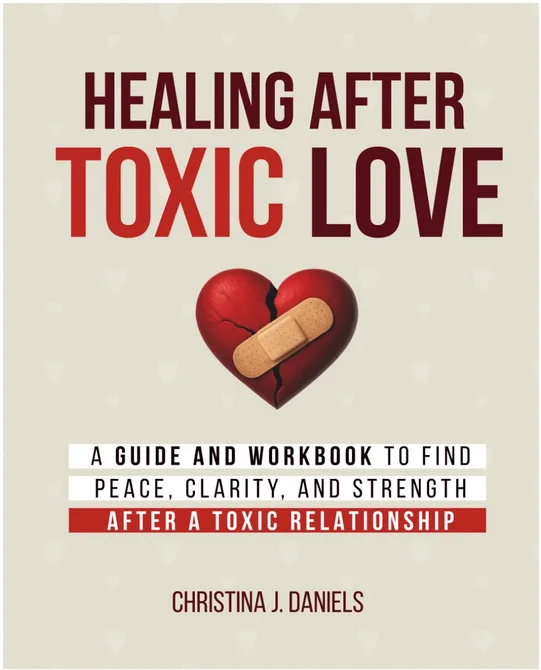
Healing After Toxic Love: A Guide and Workbook
Healing After Toxic Love is for anyone who has ever asked: “Why does this keep happening?” “Was it really love?” “Will I ever feel like myself again?”
If you’re replaying the past, questioning your worth, or feeling stuck in cycles of pain and confusion, this therapeutic guide and workbook is here to help. Through honest reflection, mindfulness practices, and step-by-step healing tools, you’ll begin a journey of spiritual awakening—moving from heartbreak to clarity, and from survival to true transformation.
Enjoyed this Conversation? Go Deeper with the Coffee and Bible Time Community
If you love the Coffee and Bible Time Podcast, you’ll love what’s waiting for you inside our online Christian Community—a welcoming space where women like you are growing in faith, friendship, and love for the Word of God.
As a Community member, you’ll unlock exclusive podcast bonus features available only to members.
But that’s just the beginning. Here’s what you’ll experience when you join:
- Exclusive Podcast Content
Enjoy members-only extras from our podcast: bonus segments, deep-dive discussions, and faith-building resources to help you live out what you’re hearing each week. - Weekly Women’s Online Bible Studies
Gather with Ashley, Taylor, and Ellen on Google Meet for mentor-led studies that bring Scripture to life. Share insights, pray together, and grow alongside a supportive, Christ-centered community. - 12-Course Bible Study Academy
Access our entire library of guided in-depth Bible study courses—perfect for growing in individual study, small groups, or mentoring relationships. Each course is designed to help you learn how to read God’s Word and apply it with confidence. - Christ-Centered Community & Encouragement
Connect with women who share your heart for Jesus. Through prayer requests, discussion threads, and regular check-ins, you’ll find lasting friendship and spiritual support. - 1-on-1 Mentoring with Ellen
Receive personal, prayerful guidance for your current season—whether you’re seeking direction in faith, purpose, or prayer life. (Scheduling details available inside the Community.)
Let’s learn and grow together. Join the Coffee and Bible Time Community today!
Leave a Reply