
About this episode:
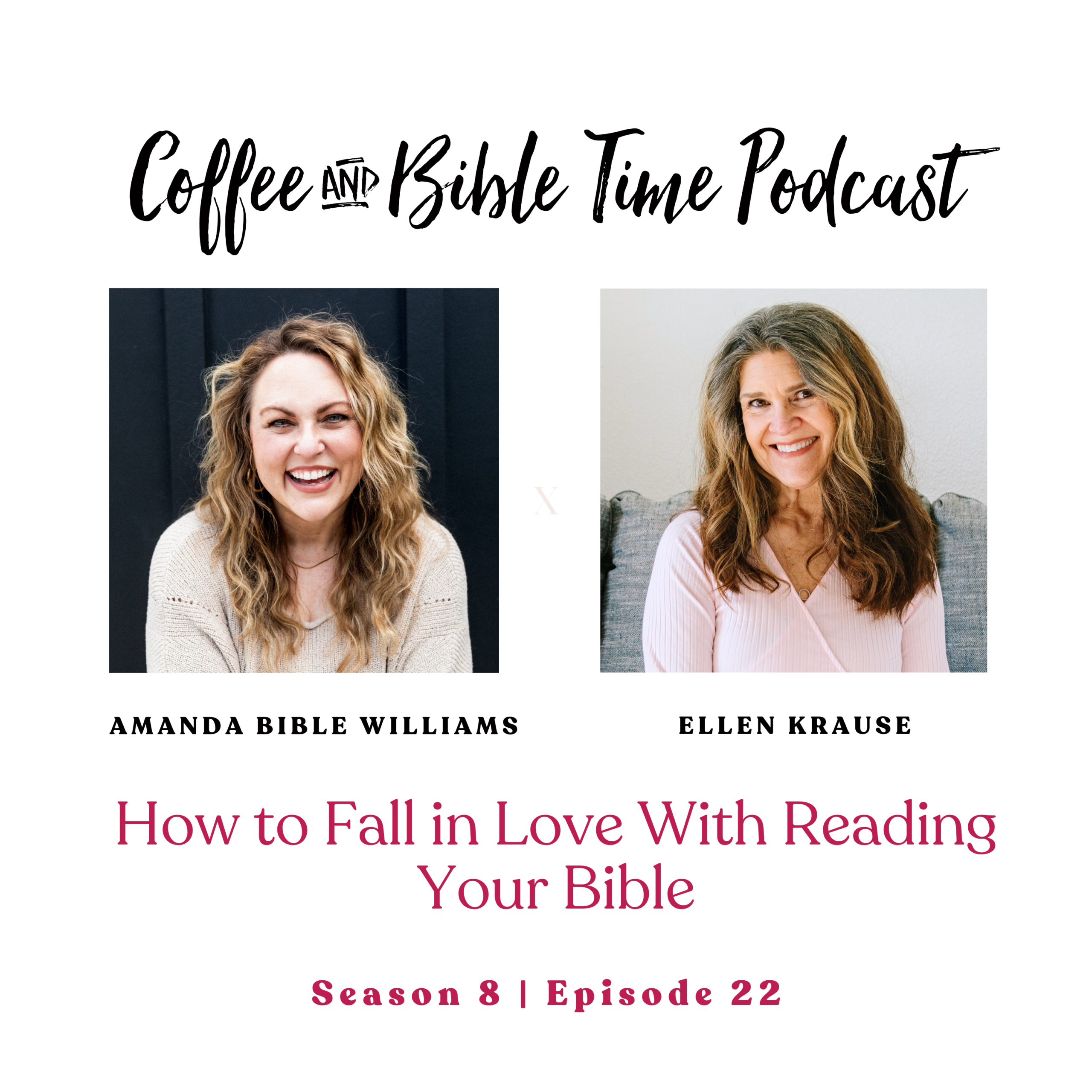
If you’ve ever felt intimidated by the Bible, inconsistent in your quiet time, or unsure how to truly enjoy reading scripture, this is where to start. Ellen Krause and Amanda Bible Williams discuss:
- how to stay consistent in Bible reading (without perfectionism)
- what to do when scripture feels intimidating or overwhelming
- practical ways to engage more deeply with God’s Word
- Why Bible journaling can be a helpful practice (even if you’re not a journaler)
Whether you’re brand new to reading the Bible or trying to reconnect after feeling discouraged, our prayer is that this episode helps you feel equipped, encouraged, and invited back into God’s Word with fresh joy.
 Apple Podcasts
 Spotify
TIMESTAMPS:
00:01 Introduction: Our Longing For Connection
02:10 Why We Struggle to Read the Bible
07:05 What We’re Really Longing for When We Open Scripture
11:41 How to Stay Consistent in Reading the Bible
16:35 Reading the Bible More Deeply
21:20 Bible Journaling Made Simple (Even If You’re Not a “Journaler”)
26:10 Tools, Resources, and Closing Encouragement
Amanda Bible Williams [introduction]: This thirst for God’s word, I think it’s actually a thirst for God. We’re made to know him. We’re made to be in his presence. And so, as we begin to read it, I believe that we begin to experience that connection. It’s real. In scripture, God makes me feel seen and known. I really think that it is that connection that we’re longing for.
Ellen Krause: Welcome back to the Coffee and Bible Time podcast. I’m Ellen, your host. If you’ve been struggling to stay consistent with your time in God’s Word, today’s conversation is for you.
I’m joined by Amanda Bible Williams to talk about how we can engage in scripture in a way that truly changes our hearts while building habits we can sustain. Amanda is the co-founder of She Reads Truth, a global community helping women read God’s Word every day. She’s a writer, editor, podcaster, seminary student, and mom of four. And she brings such a grounded, grace-filled perspective to spiritual growth and life in the Word.
Amanda, welcome to the podcast.
Amanda Bible Williams: Ellen, I’m so thankful to be here. Thank you for inviting me.
Ellen Krause: Well, what a joy to have you with us. For someone who’s just now meeting you, would you describe yourself and really the heart behind your ministry?
Amanda Bible Williams: Mm-hmm. That’s a good question. I really feel like I am just a lifelong student at heart. I’m currently in the middle of a seminary program to get my master’s in biblical and theological studies, which sounds very impressive, but really it just means I get to continue to be a student, and I love it.
I especially love to be a student of God’s word. I’ve found it to be one of the most impactful things that I can do with my time and just so formative. I also just really love to invite women into the Bible—people in general, but women specifically.
Ellen Krause: Yes.
Amanda Bible Williams: I have found that there are so many women who want to read the Bible but feel that there are sort of perceived or real barriers keeping them from that.
And so I’m just really passionate about helping to remove those barriers and invite women to the table to open their Bibles together.
And then, yes, being a mom of four is a huge part of my life. But yeah, that’s who I am!
Ellen Krause: I couldn’t agree with you more on, just once you have that thirst, it’s just unquenchable. You want to start digging deeper and deeper. And reading the Bible is like reading nothing else because you can read it one time and glean something completely different the next time.
So God’s word is active and alive. And I hope that, for those of you listening maybe that have been intimidated or scared or whatever, that we’re going to try to break down these barriers.
So what are some of the biggest barriers that you see women facing when it comes to studying the Bible?
Amanda Bible Williams: Yeah. Yes. You know, I think one of the things that we have consistently heard over the past 14 years, as we have read the Bible together in the She Reads Truth community, is that we are often intimidated just by the sheer size and existence of scripture.
And I don’t think that’s anything to be ashamed of. The Bible, like you just said, it’s unlike any other book in that it’s actually a library of books. It’s a collection of 66 books. It is not short. It is a lot of words.
Ellen Krause: [laughs]
Amanda Bible Williams: It’s an ancient text, so it was written in the context and to people who lived thousands of years ago. So there just are a lot of ways that I think we can really struggle to know how to approach God’s Word.
It’s not even for lack of desire. That is not what I’ve seen. I have seen that there is a desire and that it is for just kind of lack of knowing how and where to start.
Maybe this is another barrier that I see that I think maybe sometimes we can’t necessarily or don’t articulate, but it’s that we feel like there is a certain formula that we have to figure out if we are going to read God’s word correctly, whatever that means, right?
And so we, you know, even down to the environment, like we talk about quiet time and, well, I live in a home of six people. It’s not quiet in my house. Almost never is it quiet.
Now it has gotten quieter as three of our kids are teenagers and as they do the retreat thing, you know, where they just go into their rooms. And I’m like, okay, now this is not the quiet I was looking for.
But you know, we can even psych ourselves out by thinking, I’m supposed to only read my Bible in the morning, only read as part of like a formal Bible study. It’s supposed to be quiet. There should be coffee. There should be coffee, Coffee and Bible Time, or tea or candle or music or whatever.
And those things are not bad. That’s great. Like, you can have all of those things. But I think sometimes the barrier really is, as it is with so many things that we will do in life, just starting and allowing ourselves to be new at it.
Like, just allow yourself the luxury of being new to reading the Bible. I actually think that’s an exciting place for you to be because that means you have this whole journey ahead of you.
If you’re a follower of Jesus and you have the Holy Spirit, then you are opening the Bible with, sometimes we call it like the director’s commentary. This word is living and active because the Holy Spirit is real. And the eternal Father and Son and Holy Spirit, the triune God, is real, and he wants to be known by us. And we have scripture as a means of knowing him.
And so I think that a lot of our hesitation forms around just being unfamiliar and just not really knowing how to proceed, and yet knowing that this is a holy text.
Ellen Krause: Absolutely, absolutely. Those are excellent barriers you’ve pointed out that so many people have.
Just was thinking of a couple more in that, well, I have ADHD, so kind of squirrel brain, lack of focus—that can be one. But there’s even tools that work for me, like listening and reading at the same time, both.
Amanda Bible Williams: Yes.
Ellen Krause: It focuses the brain really in.
Amanda Bible Williams: Yeah, that’s good. I think you’re right. Even on those more practical notes, just not knowing where to start, what to read next, maybe not having anyone to read with you—I mean, those are very real barriers.
Ellen Krause: Right. What do you think women are actually longing for underneath that desire to read the Bible?
Amanda Bible Williams: I think we want to be known. We want to belong.
I have found that it’s actually a gift—you called it an insatiable thirst earlier—kind of thirst for God’s word. I think it’s actually a thirst for God. And as we begin to read it, I believe that we begin to experience that connection. It’s not perceived, it’s real. It’s real.
I believe that there is a living God who created us in His image and who wants to reconcile and restore us back into the family of God. And not just later in heaven. You know, we think like, “This is so that we know where we go when we die.” Yes. And this is so that I have a real relationship with my creator right now.
Ellen Krause: Right.
Amanda Bible Williams: I think a lot of times we use language in our culture about, like, finding ourselves or kind of knowing who we are. And when I am left to myself, I really flail with knowing not just who I am, but who I’m created to be.
But in scripture, God—I see His character. I see how He has created us to reflect Him and to carry His name into the world, to love others the way that He loves.
And I also read these stories of humans who are like me and really have limitations and struggles and sorrow and pain and grief and joy—all of the human experience. I see it reflected back to me in scripture. It makes me feel seen and known.
And it’s the way that I see and know God. And so I really think that it is that connection that we’re longing for.
Ellen Krause: Yes, yes. I couldn’t agree with you more. And until you really dig into scripture, you maybe don’t have that bigger picture of how intimately God actually knows you, you know, until you read Psalm 139 and learn how you were knitted together in your mother’s womb and God knows everything about us.
Sometimes I think people hold Him at a distance or think, “God’s up there,” or “I believe there’s a God up there because of evidence I see around me,” but maybe not having that personal connection.
Amanda Bible Williams: Yeah.
Ellen Krause: And that’s why the more I read, the more in love I am with God and His creation.
Well, Amanda, you’ve helped so many women engage with scripture daily through She Reads Truth. What have you learned about what actually helps people stay connected to God’s Word long-term?
Amanda Bible Williams: I mean, I think it’s really essential to have a rhythm of reading God’s word.
Now, my daily rhythm doesn’t have to look like yours. It doesn’t have to look like the other people that I’m studying or reading alongside in my community. It also can change from season to season. So just because maybe reading in the morning works for me for a season may very much not work for me in another season, and that’s okay.
Ellen Krause: Absolutely, yeah.
Amanda Bible Williams: I think a lot of times we can really get hung up on some of those things when the invitation is just to come.
And like you talked about, listening and reading, I love that. I love that we have so many ways in the present day to engage with God’s word. Let that be a gift to you and allow yourself to grow and change and respond to the season that you’re in.
But just don’t close off scripture reading as something that we just don’t have time for. We make time for a lot of things all the time, and we don’t do them perfectly, but we keep doing them.
I mean, as a parent, I can think of a dozen things that I don’t do perfectly every day, but I still show up and do them because they’re important to me and they’re important to the people that I love.
And so I have, by God’s grace, begun to understand Bible reading that way, where it is less important that it looks a certain way. It’s more important that I am engaging with God in His word and engaging in prayer.
Ellen Krause: Right.
Amanda Bible Williams: He’s not shocked that your baby has kept you up all night or that you are in this really intense work season where you’re pulling, you know, 14-hour days. Your God knows this, and He invites you to pause and to sit with Him.
We allow our Bible reading to be a journey, just like the rest of our life. And I think if you will let it, it will become part of the fabric of your life in a way that, while it might be hard to imagine now, I believe that there is a day in your future where you will go, “I can’t do without this. It’s water and bread to me.”
Be encouraged because every single woman who is reading scripture has felt the way that you feel.
Ellen Krause: Right. And honestly, I’m living proof of this exactly because at the beginning of the year, I started out on my annual reading plan that I was excited about doing.
Amanda Bible Williams: Which is great.
Ellen Krause: But—it is great, and I’m truly not ashamed to say I’m on day 106 and I’m supposed to be on day 139 because there were days—right, there were days where there were other things I was doing.
And I try to incorporate some aspect of God in my day, but it took me a while to let go and say, “You know what? God wants my heart.” It’s not, “Check off getting this read quickly,” or “Make sure I do it,” you know? No.
Amanda Bible Williams: Yeah.
Ellen Krause: So I do try to make sure I save those daily readings for time where I can make sure that I’m really comprehending. I’m not just letting it go.
Amanda Bible Williams: That’s right.
Ellen Krause: That was actually the next thing I wanted to talk to you about, which is the difference between simply reading scripture—you know, I’m pressing the plan, it’s reading it to me—versus truly engaging with it. What would you say to help people in that area?
Amanda Bible Williams: Mm, mm-hmm. You know, I would say both of those things you described are very important.
I really believe in the value of reading chunks of scripture in one sitting, just in the same way that we might read a book or a letter. It works on a different level of comprehension, right? It helps us see sort of like the bigger picture of what’s happening or what’s being said.
But I also do think that to dig in and go more slowly is also extremely valuable and to press in.
There are things—I mean, every time I read, at least almost every time I read—there is something that makes me go, “Wait, what?” Maybe I don’t understand a word, or I feel like this is contradictory to something else I’ve read where I’m like, “Wait, how is this here? But then there was also that.”
And so I believe that God’s word is truth and that it can withstand my questions. So I am learning to be unapologetic about my curiosities and to actually value that and to press in.
And I also think that’s one of the ways that you know that you’re not just going through the motions, which again, there is something to be said for going through the motions. We do that all the time in a lot of very important areas of life.
So I think even if I’m not feeling like this spiritual experience, or however you want to word it, when I’m reading the Bible, I believe God’s still working through His word.
And also, I think when you slow down and start to dig in, that there’s a reward there.
Even, I would say, one of the things that I’ve learned—and this is hard for me because I have some perfectionist tendencies, specifically when it comes to writing—but I am learning just to put my pen in my hand and to mark it up and write questions and write notes. Or if I see something that’s repeated, I’ll start circling it.
It just engages different parts of my brain, and it helps me to go beyond that kind of just reading for the sake of getting it read and really going a level deeper into, okay, understanding and comprehending what I’m reading.
It’s one of the things I’m excited about. We recently took the She Reads Truth Bible and made it into five volumes that are spiral bound, larger type, large margins, and larger space between lines so that you can really just go for it. You can highlight, you can circle, you can write notes between lines. I mean, you can just super engage with the words on the page.
And I think that is one of, in my experience, one of the most impactful ways to really make scripture my own, like my relationship with scripture to come alive and to kind of get past this barrier of, “This is not for me,” or “I’m not meant to read it.”
Ellen Krause: Yeah.
Amanda Bible Williams: Because when you start getting in there and marking it up and like starting to see these dots connect, it is invigorating.
Ellen Krause: It is.
Amanda Bible Williams: It just is. It’s just—and when we layer on top of that the fact that this is not just a well-written text, like this isthe living word of God. And so, as we are learning and engaging our brains, He is shaping our affections.
Ellen Krause: Yes.
You know, Amanda, one of the things that sort of impacted my life is that when I was younger, I went to Christian grade school. Back in that day, we were using the King James Version. So I remember thinking as a youngster, “I have no idea.” Like, these words are all so big. I don’t know what they mean.
Amanda Bible Williams: Yeah, yes.
Ellen Krause: And that experience actually really sort of tainted me and pushed me away.
But what I’ve learned along the way—and you mentioned journaling—is that I think journaling is something that can be very different than what maybe people in their minds think. Because I think sometimes people think, “I’m not a journaler.”
Amanda Bible Williams: Right. Yeah, yeah.
Ellen Krause: But I want to give you an example that one of the things I love to do when I journal is to highlight, circle, underline words that I don’t know and look them up in a dictionary.
And I think that Bible journaling can be—it’s not just always writing out a letter or writing out a prayer.
Amanda Bible Williams: Yeah.
Ellen Krause: It can also be dissecting it, which, as you said, helps internalize it, move the information from our head to our heart.
Amanda Bible Williams: Yes.
Ellen Krause: I want to hear about you. For someone who feels intimidated about Bible journaling, how would you recommend that they start?
Amanda Bible Williams: Yeah. I mean, I feel that way too. I still feel that way. Because when I say that I am learning to allow myself the freedom to write in the margins of my Bible, I’m talking the last few years I’ve done that more than I ever have. I’ve been reading the Bible for a while.
And so I would just say, first of all, I think this is a super common feeling.
Also, it’s not prescribed in scripture. There’s no “Thou shalt Bible journal.” So here’s what I want to say: I believe that we are all created differently on purpose, and so it can look like whatever you and God want it to look like.
For me, there’s something that’s really practical that I do that I have come to appreciate as the years go on. A lot of us probably have more than one Bible. In my primary Bible that I have and take to church with me, etc., I have started using a different color ink for every year.
This is probably not new to anybody. Like, I’m sure a lot of people do this. But I have a little key in the front of my Bible, and I just have a color key. So, you know, 2021, 2022, 2023, 2024—and I’m going to have to get creative with my colors here or start to double up.
It even helps me to see, as I’m reading and I see that, like, man, I was really engaging with this particular passage, and I can go back and see what year that was and kind of remember what was going on or maybe what I was working through at the time.
Another reason I really love doing that is that something I love to do is to write names or events or dates in the margin of my Bible next to passages.
Ellen Krause: Yes, me too.
Amanda Bible Williams: Oh, you do too! So maybe I’m reading something that really feels like a passage that I want to hold and pray for one of my children. Or maybe, you know, it’s a passage about saints going to be with the Lord, and one year we had lost somebody. And so since then, I just will continue to write down loved ones that we’ve lost.
Or maybe there have been seasons of She Reads Truth where there’s been a really exciting season or a really difficult season, and I can see that reflected in the margins of my Bible.
This, I guess, is my pep talk for finding a type of—you don’t even have to call it journaling.
It is such a meaningful way to see the hand of God throughout your life, the way that He uses scripture to carry us.
I’m always thankful when I read what I’ve written in my own Bible. I’m always really glad it’s there. I don’t ever look back and go, “Well, that was dumb,” or “That was silly.”
That’s my pep talk, is don’t do it to be impressive, even to yourself. Just allow yourself the freedom to engage with God’s word in that way and see how He uses that because I believe that He will, and I think you’ll be surprised.
Ellen Krause: Yes. Yeah. And Bible journaling can, like you said, Amanda, be what you want to make of it.
I love your idea of the different years and different colors. I never would have thought of that. This shows you how my brain works. It’s like every day I can use a different color.
Amanda Bible Williams: I love that.
Ellen Krause: I mean, like, God, I always do in purple.
Amanda Bible Williams: See, I love that. That’s so organized, and my brain is like—but yeah, having different colors that you use different ways, I think that’s amazing. I love that.
Ellen Krause: Well, thank you.
Also, if I don’t know what’s going on in a passage, I love to look up a commentary and then maybe write the notes in the margin in the journaling area.
Amanda Bible Williams: One hundred percent.
Ellen Krause: I love to do art in the journaling area, and I love to pray. If a certain scripture passage brings somebody to mind, like right then and there, I’ll just write out a prayer right there.
Amanda Bible Williams: Yep. Yes, I love that. Yes.
Ellen Krause: You can do journaling your way. There’s no one way. And it really will move you just internalizing God’s Word.
Well, Amanda, as we start to close out, your incredible new Bible—where can people find it and get more information about it and your ministry?
Amanda Bible Williams: So the She Reads Truth spiral note-taking Bibles—which, that’s another good word. If journaling scares you, just call it note-taking or writing. You don’t have to call it journaling.
You can really find those anywhere. They’re in five volumes, and so you can get them as a set or you can get them one at a time.
And I would say too, if the concept of engaging with a pen and scripture feels intimidating to you, something like this might be a great way to start because, you know, if you don’t want to write directly in your go-to Bible, I understand. I felt that way for a very long time.
But you can really find them at any bookstore, anywhere books are sold.
There’s, of course, the She Reads Truth Bible, which is just the more traditional full-text scripture. There are lots of beautiful covers and different colorways on that one.
And then, if you are someone who wants to read the Bible and you don’t know where to start, come to SheReadsTruth.com. We’re there every day reading the Bible.
We do not read the full Bible in a year, but we do read the Bible every day in the year. And we want to be a resource for direction and community and accountability for the woman who wants to be a Bible reader. And that’s what we do.
So you can come find us at SheReadsTruth.com, on any of the socials at SheReadsTruth. You can find me at Bible Williams. Bible is my maiden name. My dad was Rex Bible. He would have really gotten a kick out of the fact that this is my day job.
So yeah, come read the Bible with us. We would love to have you.
Ellen Krause: Amazing. Yes! I love that!
Well, we will make sure we include links to all of those in our show notes.
Before I let you go, though, I have to ask our favorite questions here for our guests. And the first one is: What is your go-to Bible, and what translation is it?
Amanda Bible Williams: Amazing. Okay, I have two.
So I have an ESV note-taking Bible that I’ve had for many years. I have a CSB that is another go-to. And then I mentioned my seminary go-to, and it’s really been helpful to me: an NIV Biblical Theology Study Bible.
Ellen Krause: Awesome.
Amanda Bible Williams: It’s fantastic. I think it was like $27. It’s wonderful, really helpful in there.
Ellen Krause: All right. Well, great recommendations.
Do you have any favorite Bible journaling supplies in addition to your spiral notebook? Do you have any favorite things?
Amanda Bible Williams: Yeah, I do.
So I mentioned the different color pens. I love Muji pens, and I specifically like the 0.5. And they don’t bleed through most Bible pages.
Ellen Krause: Very cool.
Okay, last question. What is your favorite app or website for Bible study tools?
Amanda Bible Williams: Yes. Well, I mean, She Reads Truth, honestly. I mean, I’m very biased, but I joke that one of the reasons that God had me help steward She Reads Truth is because He knew that’s what I needed to be in the Bible every day.
I really love our daily reading guides and reading plans. They changed my life and the way that I engage scripture.
Ellen Krause: Cool. Okay, well, thank you for sharing all your favorites here. We will include links to those as well in our show notes.
And Amanda, thank you so much for joining us today, for sharing just your practical wisdom. I know this conversation will bless so many women.
Amanda Bible Williams: Yes, you’re welcome. Thank you for having me. I enjoyed it.
Ellen Krause: Well, you’re most welcome.
And to our listeners, if today’s episode encouraged you, be sure to let us know using the link in our show notes and share this podcast with a friend who could use a little, maybe, you know, oomph to get started reading their Bible.
And thank you so much for listening to the Coffee and Bible Time podcast. We’ll see you next time. God bless.
Your desire for Scripture is often a deeper desire for God Himself.
But even though we long to read God’s Word, it’s easy to open your Bible and feel overwhelmed, distracted, inconsistent, or unsure where to start.
In a recent episode of the Coffee and Bible Time podcast, Amanda Bible Williams—co-founder of She Reads Truth— shared encouraging wisdom for anyone longing to make reading the Bible a more meaningful and sustainable part of everyday life.
If you’ve struggled to stay connected to Scripture, these five practical shifts can help you approach reading the Bible with less pressure and more purpose.
1. Stop Waiting Until You “Feel Ready” to Read the Bible
One of the biggest barriers to reading the Bible is the belief that we need to somehow “do it right” before we begin.
Many people assume they need:
- the perfect morning routine,
- a quiet house,
- a structured Bible study,
- or a deep understanding of Scripture
…before they can engage with God’s word.
But here’s what’s more important: to simply begin.
The Bible is a collection of 66 books written across centuries and cultures. Feeling intimidated is a normal response.
So instead of pressuring yourself to become an expert overnight, allow yourself to be new at reading the Bible.
That mindset changes everything.
Curiosity creates space for growth. Perfectionism usually shuts it down.
If you’re just getting started:
Consistency grows more naturally when pressure decreases.
2. Create a Bible Reading Rhythm That Fits Your Real Life
One of the most refreshing parts the conversation with Amanda was her honesty about how unrealistic many “quiet time” expectations can feel.
She laughed about raising four children in a noisy home and reminded listeners that reading the Bible doesn’t require a perfect atmosphere.
Your Bible reading rhythm does not have to look like someone else’s.
Some seasons allow for peaceful mornings with coffee and journaling. Other seasons may look more like listening to Scripture while driving, reading a Psalm during nap time, or reading the Bible late at night after a long day.
What matters most is not perfection — it’s continued connection.
A sustainable Bible reading habit is one that can adapt to your actual life.
If traditional routines haven’t worked for you, consider:
Grace-filled consistency will always take you further than rigid routines.
3. Reading the Bible for Relationship, Not Performance
It’s easy to turn Bible reading into another task to complete.
Check the box. Finish the reading plan. Stay on schedule.
But Scripture was never meant to become a performance metric.
Amanda beautifully explained that reading the Bible is ultimately about relationship — not productivity.
“I think we want to be known. We want to belong. A thirst for God’s Word… I think it’s actually a thirst for God.”
Amanda Bible Williams
That perspective changes how we approach Scripture entirely.
Instead of asking:
“How much did I finish today?”
Try asking:
“How did I encounter God today?”
The goal isn’t simply information. It’s transformation.
As Amanda shared in the episode, Scripture helps us see both God’s character and our own lives more clearly. Through the stories, prayers, struggles, and promises in the Bible, we begin to understand that we are fully seen and deeply known by Him.
That connection is what so many people are truly longing for.
4. Engage With Scripture Instead of Just Skimming It
Sometimes reading the Bible quickly helps us see the big picture. But deeper growth often happens when we slow down enough to interact with the text.
Amanda talked about how transformative it has been to physically engage with Scripture through note-taking, circling repeated words, writing questions in the margins, and journaling prayers beside passages.
This kind of interaction helps move Scripture from your head to your heart.
And Bible journaling doesn’t have to look artistic or complicated.
It can simply mean:
One especially meaningful practice Amanda shared was using different colored pens each year in her Bible. Looking back through those notes allows her to see how God has been faithful through different seasons of life.
If you’ve ever felt intimidated by Bible journaling, remember: the goal is not to create something impressive. The goal is to pay attention.
5. Don’t Read the Bible Alone
One of the most powerful ways to stay consistent in reading the Bible is through community.
Studying Scripture alongside other believers brings encouragement, accountability, perspective, and support — especially during seasons when motivation is low.
Amanda and the She Reads Truth community have spent years helping women read the Bible together daily, and their mission is rooted in removing barriers that keep people from engaging with Scripture.
Reading the Bible alongside others teaches us how to live it out, and helps us stay rooted when life feels overwhelming.
Reading the Bible Is a Lifelong Journey
If you’ve struggled with consistency, distraction, or discouragement in your Bible reading, take heart: you are not behind.
Every believer grows in seasons.
Some days your time in Scripture may feel deep and emotional. Other days it may simply feel faithful and steady. Both matter.
The invitation is not perfection. The invitation is simply to come.
And over time, reading the Bible becomes less about obligation and more about connection — daily bread for your soul.
As Amanda said so beautifully:
“There is a day in your future where you will go, ‘I can’t do without this. It’s water and bread to me.’”
Listen to the Full Podcast Episode
In this encouraging conversation, Amanda Bible Williams shares practical wisdom for:
Be sure to listen to the full episode of the Coffee and Bible Time podcast for even more encouragement.
Frequently Asked Questions About Reading the Bible:
• How can I start reading the Bible consistently?
Start small and keep your expectations realistic. Choose a simple reading plan, a specific time of day, and a manageable goal you can sustain consistently.
• What if I don’t understand what I’m reading?
That’s completely normal. Use a study Bible, commentary, trusted podcast, or reading guide to help provide context and explanation as you learn.
• Is listening to the Bible as effective as reading it?
Yes. Many people engage more deeply by listening and reading simultaneously, especially those who struggle with focus or learning differences.
• What’s the best Bible translation for beginners?
Many beginners find translations like the NIV, CSB, or NLT easier to understand while still remaining faithful to the original meaning.
• How do I make Bible reading feel less overwhelming?
Focus on connection over completion. You do not need to master the entire Bible quickly. Approach Scripture with curiosity, patience, and grace.
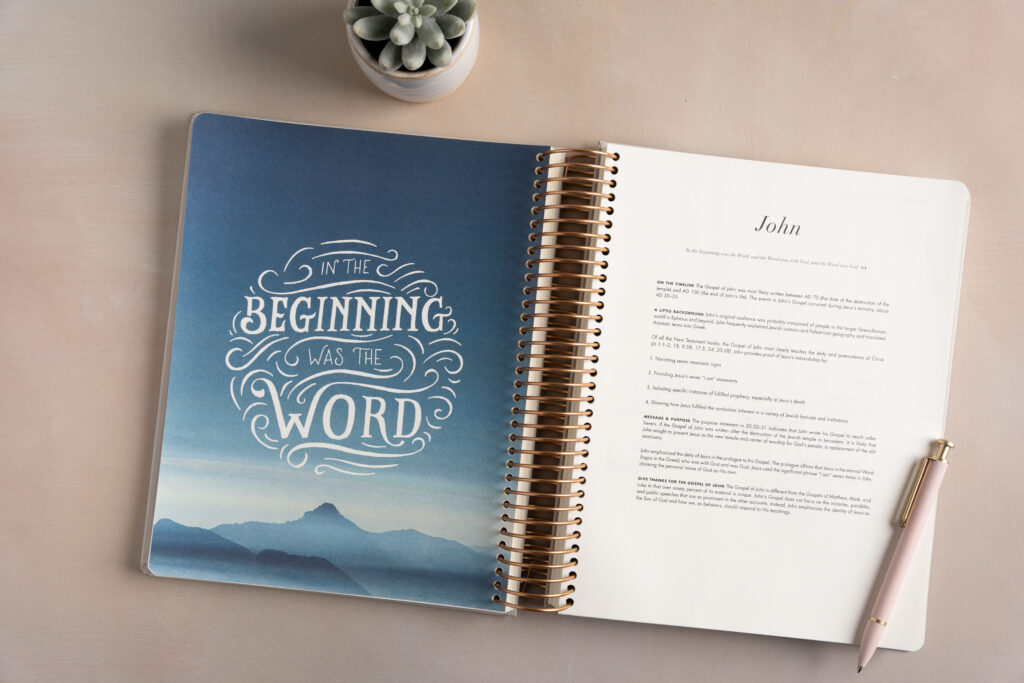
She Reads Truth Spiral-Bound Notetaking Bible
Join over 5 million women in the global She Reads Truth community who open their Bibles daily to know God and His Word.
This innovative spiral-bound notetaking Bible lays completely flat, has extra-wide margins for creative journaling, and an inductive study layout that helps you read and understand Scripture for yourself. Perfect for daily devotions, Bible study groups, or personal reflection.
Leave a Reply