


About this episode:
What happens after you die? In this episode, we explore heaven, eternity, grief, and how Christians can live with hope in Christ.
Ellen Krause talks with Randy Kay about what Scripture teaches about life after death. From a near-death experience to powerful reflections on prayer and grief, this conversation points back to one central truth: eternity changes how we live today.

 Apple Podcasts
 Spotify
TIMESTAMPS:
00:02 Introduction: An Eternal Perspective
02:19 A Skeptic’s Supernatural Encounter
04:36 Encountering Jesus Face to Face
06:57 What the Bible Says About Heaven
11:20 We Have Underestimated the Love of God
13:34 Prayer and the Power of Intercession
15:32 Grieving with Hope
24:51 Closing Encouragement: Living with Eternity in View
Randy Kay [introduction]: I think Jesus was trying to teach us to live from that perspective of eternity. And that changes the paradigm entirely. If our investments in what we do today are to reap those rewards in heaven, then we can start now as though this life is not an end but a continuation. Look at those opportunities to serve God in your workplace, wherever it is, because you’re going to meet that person you prayed for. And they may very well say to you, “I’m here today because you prayed for me,” like that little boy that prayed for me.
Ellen Krause: Welcome back to the Coffee and Bible Time Podcast. I’m Ellen, your host, and today we’re talking about a topic that every single one of us comes to with a sense of wrestling, perhaps a sense of excitement, a sense of just not knowing enough, and that is heaven, eternity, and the hope we have in Christ.
Joining us is Randy Kay, an author, speaker, pastor, and someone whose life was dramatically changed by a near-death experience that led him into a deep understanding of God’s love and the reality of eternity.
So whether you’ve recently lost someone you love or you just want to know what the scripture teaches about what comes after this life, I think this conversation will greatly encourage you and point you back to God’s word.
So Randy, thank you for being here with us today.
Randy Kay: Thank you for having me, Ellen. I really appreciate being on your show.
Ellen Krause: Well, for those who haven’t seen and watched all the videos that I’ve watched since I found you, let’s go back maybe a little bit to the beginning. Tell us just a little bit about you now and your life before God got a hold of you.
Randy Kay: Yes. Ironically, Ellen, I did not believe in near-death experiences until I had my own. I was the CEO of a biotech company. I led operations for the fastest-growing pharmaceutical company, or biopharmaceutical company, at the time. So I was very heavily involved in the scientific realm.
You know, I’ve led clinical teams and minimally invasive cardiovascular surgeons. So that’s been my domain. And I thought through that mindset. And so these stories—I really had a critical mindset. And that was my background.
And of course, when I had my own experience where I clinically died—that is, the heart stopped for a little over thirty minutes in the hospital—that’s when all of that changed, and that’s when I had my own encounter.
Ellen Krause: God really used that experience in your life. It kind of just completely turned your world upside down, so to speak, from what your life was like before.
Tell us a little bit then about your experience and your journey getting to know Christ.
Randy Kay: Yes. Well, I’d taught in church. I was a Christian going into this experience, but I had a crisis of faith. Our daughter had suffered strokes. We were on the front cover of Time magazine introducing a potential cure for Alzheimer’s, and that was withdrawn by the FDA.
So I woke up in the middle of the night with a soreness in my calf. And I went bicycling up the coast. We live in San Diego. And I thought I’d just, you know, do what I usually do. And I should have known better, but I let a lot of time go by, and then I collapsed.
I was ushered to the ER. That is where I flatlined. I had seven blood clots, including my pulmonary artery, the major blood flow to the lungs, the third leading cause of death, and it was exacerbated by MRSA, which had caused septic shock.
And so all of that caused my demise. And then I was pulled by a light. I saw my body on the bed still, which was an odd experience, to say the very least. And then eventually I found myself cheek to cheek with our Lord and Savior, Jesus, and this is where I get emotional. I knew instantly it was Him.
Ellen Krause: Mm-hmm.
Randy Kay: And He picked me up and turned me face to face, and I looked into those eyes. And then He whispered into my ears, “Trust me.”
And I’ve learned after the fact why He said those two words to me.
And then subsequently we went on what is also a typical near-death experience. We went on a life review of my life where I saw how the Lord had redeemed various places in my life, because I had turned into an agnostic at some point, and He showed me how He pulled me toward Him throughout my life.
Ellen Krause: While you were there, did a lot of questions come into your mind when you saw that God was drawing you even though you weren’t really receiving? What kind of questions did that make you have?
Randy Kay: Well, ironically, Ellen, I didn’t have questions. You know, I’d been doubting Thomas, so to speak, and so one would think that I had a lot of questions because I didn’t believe in these experiences, but I really didn’t because I knew implicitly that I did trust Him and that my only desire was to be in His presence.
And so that’s really defined my life subsequent to this experience.
Ellen Krause: You know, that really reminds me of the passage in Philippians where Paul says, “My desire is to depart and be with Christ, for that is far better.”
So you can really feel that same thing that he experienced as well.
Randy Kay: Yes, and to your point, Ellen, also in Philippians 3:20, it talks about our being citizens of heaven.
So that longing that Paul had was a longing I feel that most people who know Jesus Christ share, because that’s home. And the feeling of being at home in heaven is pervasive for all of those who return, even to a greater degree, because having then been home, returning to this place is quite a shock and an ever-longing kind of mourning, if you will, or desire to go back.
Ellen Krause: Yeah. I can’t even imagine what that’s like.
Well, perhaps someone’s listening now and wondering how all of this ties into the scripture that points to heaven. So, some of those things that you started to tell us—can you just maybe share with us a little bit more?
Randy Kay: Well, the experience that Paul relayed in the third heaven is probably the most often cited case. Now, he did not share that, by the way, for fourteen years. And I didn’t share my experience for fourteen years.
So that is probably the most often cited case, and we think that Paul, as he was stoned in Lystra, may have had an experience that was triggered from that stoning.
But I think the first near-death experience probably is Stephen, when he was being stoned, and he saw heaven opening up and he saw Jesus at the right hand of God in heaven.
There are those experiences that testify that these are indeed in the Bible, but my favorite, Ellen, is actually Jesus Himself. And this goes back to Luke chapter 16, verses, I think, nineteen through thirty-one. He tells of a rich man, a former rich man, who was in Hades, hell, desiring a drop of water. And by the way, I write about those in my book who had been to that place that desired the same.
And then He references a former beggar who was in what references Abraham’s bosom, this place of the afterlife. Jesus told this story Himself. He used the name Lazarus, which is also interesting because in other parables He did not reference anyone by name, but He did in this case.
And Jesus testified of the consciousness of these two individuals.
And then another instance where heaven came to earth was actually the Transfiguration. When Jesus was with Moses and Elijah, He took John, James, and Peter with Him to the mountain. And they were witnessing this conversation that Jesus was having with the two.
Of course, we can reference John in Revelation, Ezekiel, with very detailed accounts of heaven, and there are some others as well. But those are some of my favorites.
Ellen Krause: Yes.
Ellen Krause: Yeah, yeah, absolutely. One of the scriptures that I was thinking about in preparing for this was 2 Corinthians 5:10, when he says, “For we must all appear before the judgment seat of Christ, so that each one may receive what is due for what he has done in the body, whether good or evil.”
And that verse, I think, can really scare a lot of people. But I loved your chapter in Heaven Encounters about God’s grace and how that really lent some interesting insights into that. Can you tell us a little bit about—
Randy Kay: Yes, and I have a chapter called Grace That Defies Logic. So these are people that I reference in their stories who were in jail or had done something that was quite horrific, and yet they experienced Jesus and the grace of Jesus Christ.
It’s only God’s providence that He would know who gets that second chance and who does not. But there are numerous stories of people who are undeserving in terms of their having to have an experience, including yours truly, but are there for a reason.
Understanding that all of us returned with basically two overriding and uniform reasons. One, God was returning us to declare that God is real, Jesus Christ is real, and that heaven is real. And also, hell is real as well.
And these true stories have increased faith like nothing, certainly, I have ever seen. And so I think that’s, you know, a main message.
But also, to your point, there are many who actually went before the court. Diane Perez, for example, when God said, “Do you have ought against someone?” she knew exactly who it was. It wasn’t in a condemning fashion; she was a believer. But she went back and she forgave that person.
And Jojo Morris was in a very strict religion, one that was defined by always being absent from any influence of the world, I’ll put it that way. And he went before God, and he was expecting to be condemned. And the God he met in heaven was delighted to see him and was very pleased with Jojo, a young man, for what he had done.
So he realized the love and grace of God Almighty is far broader and more extensive than we might imagine.
Ellen Krause: Absolutely. And in so many heaven encounters that I’ve learned about through people telling their story, just the fact that people would be so incredibly amazed at God’s grace and forgiveness, and the desire to go back and make that right, I think is an encouragement to all of us to be thinking while we’re here, right, to make amends.
Randy Kay: Absolutely. I think one who goes through 140 of these—and by the way, these are validated by our team. So we look at all kinds of things. We do pre-interviews, we look at records and what have you, and we look at the integrity of the individual.
So pervasively, each of us would say that we have grossly underestimated the love of God, and that He wants to save us more than we want our loved ones to be saved. He wants to forgive us even more than we want to be forgiven.
And so I think the theme that emerges from all of these experiences is that going before God Almighty—and we know the fear of God is healthy, and that’s very appropriately, I think, interpreted as awe—and there is a great deal of awe being before the Lord God.
But also, the Holy Spirit is defined as the Comforter. And that’s the first thought that I had, and some others as well. And that is that this is love. So this is love. This is the person of love.
Ellen Krause: And it really becomes almost mind-blowing because when you start to think about all the people that have already been here, and God making them all unique, and how much He loves each one of us, it starts to, you know, make your mind—zzz—you know.
And I always tell myself when I get into that state of, “Wow,” I’m glad that I have a God like that.
Randy Kay: Yeah, that’s something that the mind can’t comprehend. Because He’s there in a way that is more real than any experience in this world, more real than if you were to hug your closest loved one. And yet, at the same time, He’s also with others in the same way.
Ellen Krause: Yes. One thing you just touched on there for a second was prayer. And I’m wondering if you could maybe just elaborate on that a little bit more for our listeners, because that’s one of the areas I think is probably the top thing that was my takeaway from all of these encounters—
Randy Kay: Yes.
Ellen Krause: Is that I do have the ability to pray and that God hears our prayers.
Randy Kay: There’s one instance, Ellen, if I may quickly mention.
So I was a teenager, as an agnostic, serving a boy who was dying of cancer in the hospital, about six or seven years old. And he said to me—this is during the life review when I was with Jesus—he said, “I’m going to heaven.”
Well, I was an agnostic, so I said to him, “Well, if there is a heaven, I’m sure you’ll be there.”
And he picked up on the fact that I wasn’t with him in that way. And he said, “I’ll be praying for you.”
And I was seeing this in heaven, and the Lord expressed to me that the prayer of that one little boy who didn’t know me, who indeed died three days later, had been heard by God. And this agnostic that you’re listening to right now became a believer from the prayer of that one little boy who didn’t know me.
Ellen Krause: Well, if that doesn’t encourage you to want to pray more, I don’t know what will.
I know just ever since I’ve started listening to more of these heaven encounters, it’s really, really brought me to prayer. So I thank you and all the others who’ve been willing to share because that’s such an encouragement.
I want to ask you, Randy. The prayers that people have many times are related to the death of someone that they’re grieving. Let’s talk just briefly about the time that you’ve spent with someone who’s been grieving, and how this can encourage them as well.
Randy Kay: Of course, most of us have lost loved ones, at least if we’re on the older side of life.
And I would say to the person who’s going through grief, from your perspective, you are missing that person, and it seems like there’s a void that lasts for a long, long time, perhaps. But from the perspective of the loved one in heaven, they’re expecting you within a moment of time in the scheme of eternity.
So we know, as the Bible talks about, a day is a thousand years, and vice versa. There’s no time in heaven.
However, here’s something that kind of, I think, puts it in perspective. A friend of mine who was grieving the loss of his son and daughter—he had lost both—came and talked to me. And he said, “Randy, I had this beautiful dream of my daughter running through an open field.”
And he said, “This dream just gave me comfort.”
And I said, “Joe, you got a postcard from heaven.”
He said, “What do you mean by that?”
I said, “The people in heaven are walled off from this world for a reason. However, they have constant communication with our Lord. So what if your daughter was speaking to Jesus in a field, and she said, ‘Jesus, please. Please give my daddy—tell him that I’m doing great’?”
And he had this vivid dream. I mean, it was more vivid, as he explained it, than anything else.
I’ve got to think that Jesus took that from his daughter, gave him a dream, and that gave him comfort.
So when we’re grieving, we’re looking and having those pleasant memories, looking through photo albums, dwelling on things that give us peace and the memories. I call those postcards from heaven.
Don’t underestimate what God is doing in those impressions. If you have a vision, for example, of your loved one just having a wonderful time in heaven, I believe those are what I call postcards from heaven that the Holy Spirit imputes to us to give us that comfort and a knowledge and a hope that, indeed, our loved ones are more alive than they’ve ever been before.
They are having a better day than those of us left behind. And they don’t want to come back because they don’t love us. They don’t want to come back because they’re with Jesus full time.
And you’re gonna see them.
Ellen Krause: You’re right.
Randy Kay: And you’re gonna be more in love with them in heaven than ever before.
Ellen Krause: That’s so encouraging, Randy.
You know, it’s funny the way you describe that because I kind of think of myself as being just a little bit crazy sometimes. But I’m like, hey, nothing’s impossible for God.
And there’s been a few moments where I’ve been like, “Jesus, would You please just give my mom or my dad a hug today and just tell them I miss them?”
So sometimes I hope it goes in reverse too. But I’m like, why not? You know, nothing’s impossible for God.
Randy Kay: Well, I believe it does.
You know, “Trust me,” that I mentioned first, is the trust that God will take that and there will be a hug that He gives because He loves us so much.
I mean, we underestimate the love of God.
So when we ask Him to give a hug to our loved one, He’s gonna give a hug to our loved one. He loves us that much.
He doesn’t ignore our desires. He gives us the desires of our heart in the book of Psalms. And it’s true.
We have grossly underestimated what He will do and wants to do because He loves us so very much.
Ellen Krause: Well, Randy, I know we could just—I could talk to you all day, and I know you have other things you need to do.
But I kind of just wanted to close on living in the light of eternity.
And in chapter three, one of your survivors said, “Don’t wait on your deathbed to discover your true soulmate.” She had experienced the powerful presence of the Holy Spirit.
So, how does someone go about doing that today?
Randy Kay: I think Jesus, through parables and what He was teaching, was trying to teach us to live from that perspective of eternity.
And that changes the paradigm entirely in how we can live.
So, for example, if our investments in what we do today are to reap those rewards in heaven—and they are—and the greatest reward is closeness to God in heaven, then we can start now as though this life is not an end but a continuation into the afterlife.
So how we live today—do as Colossians 3:23 instructs us—to do everything as unto the Lord.
When we do everything as unto the Lord, it shifts because every moment then becomes, “What can we do?”
Can we pray for the person in the grocery store? Ask the Holy Spirit, “How should I pray for that person?” What can I do in helping someone to show the love of Christ?
And so, look at those opportunities to serve God in your workplace, wherever it is, because in those moments you’re going to meet that person you prayed for.
And they may very well say to you, “I’m here today because you prayed for me,” like that little boy that prayed for me.
Our moments count, and those moments are treasured in heaven.
And if we live that way, from an eternal perspective, that everything we do now will be rewarded in heaven and we will never die, then it will be a continuation of our life, not an ending of this life.
Ellen Krause: Thank you, Randy, for that.
So remember, if you’re one of our listeners, if you see an emergency vehicle flashing down the road, pray. We can always be praying for anyone, like you said, at the grocery store, anywhere.
I love that story of that little boy and how he changed your life through his prayer.
Well, Randy, is there anything else you’d like to share about specifically Heaven Encounters, which is your incredible book about over a hundred and forty encounters that people had of their experience in heaven before we go?
Randy Kay: Well, I think one testimony—and in this I’m speaking to the church now—so one testimony might be questioned, even ten. But a hundred and forty, I think that’s a testament.
You know, the Lord spoke to me, and the reason I did this, He said, “I want you to take back the narrative.”
The narrative had been stolen, I believe, largely by those experiences that were not God-honoring.
Ellen Krause: Right.
Randy Kay: And so that’s why we did what we did.
And I think that’s the power of these testimonies, because they all met the same person.
And that’s impossible from a statistical standpoint. I can tell you from being in biotech, it just is undeniable, I believe. And that’s, I think, the takeaway.
Ellen Krause: And you know, just like in the Psalms, there are so many things that God revealed about heaven—about how the trees and the flowers sing and the waves clap their hands.
And there’s so much that was told back then, but God continues to reveal Himself through encounters that are happening since then and all the way up until now, and probably will continue to do so until He comes back.
And I would say we can truly be blessed by accepting those messages and seeking Jesus fully. And as I know even you mentioned as well, making sure that stories line up with God’s Word when you encounter one.
But this has just been such an encouragement to me, and I know many that are listening.
Are there any other places that you would like people to go, Randy, to find out more about you and your books?
Randy Kay: Well, we have a website, randykay.org. But I would say my biggest hope is that people start thinking more about heaven and heaven as home.
Ellen Krause: Absolutely, absolutely.
All right. Well, before I let you go, I just gotta ask you these rapid-fire, last-minute questions here.
Randy, what is your go-to Bible, and what translation is it?
Randy Kay: I think my favorite is NIV, just because of the plain speak.
Now, I do read the King James. It’s hard for me to say, you know, “haveth” and things like that. So, you know, it’s—yeah. [laughs]
Ellen Krause: [laughs] Good!
Okay, do you do Bible journaling? And if you do, do you have any special tools that you like to use for that?
Randy Kay: My Bible journaling is on the computer or laptop, and I have a notebook to reference those.
So Bible journaling, I think, is important. I know this from my corporate days and training corporations and people in them, that there’s a connection between what we write down and what our mind actually assimilates.
So I think that’s very important.
Ellen Krause: Mm, such a great point.
Okay, lastly, Randy, what’s your favorite app or website for Bible study tools?
Randy Kay: Well, BibleStudyTools.com is a good one.
So I use a lot of different apps, Ellen.
Ellen Krause: Well, Randy, thank you so much for being here today to share your story and your insights. I appreciate you so much.
Randy Kay: Well, I appreciate you, Ellen. You do phenomenal work, and I love your program.
And thank you. Thank you so much for hosting me.
Ellen Krause: Thank you, Randy.
Ellen Krause: Friends, scripture reminds us that because of Jesus, death is not the end of the story for those who belong to Him.
We can grieve with hope, we can face the future with confidence, and live today with eternity in view.
If this episode has encouraged you, we would love for you to share it with a friend who might need to hear it.
And make sure you’re subscribed so you don’t miss a conversation.
Thank you so much for spending time with us today, and we’ll see you next week on the Coffee and Bible Time Podcast.
What happens after you die?
In a recent conversation on the Coffee and Bible Time Podcast, author and speaker Randy Kay joined Ellen Krause to explore heaven, eternity, and what Scripture teaches about life after death.
Randy had an experience of being declared clinically dead for thirty minutes, during which he had a supernatural experience that led to him encountering Jesus and changing his life forever.
But more than the experience itself, the discussion centers on what it reveals about God’s heart, eternity, and how believers are called to live today.
Listen to the episode to hear the full conversation.
What happens after you die according to Scripture?
Christians have different perspectives on what happens after you die—but universally agree that there is life after death, and that should change how we live today.
Randy emphasizes this point:
“I think Jesus was trying to teach us to live from the perspective of eternity. And that changes the paradigm entirely.”
In Philippians, the apostle Paul speaks of being with Christ in heaven as something he longs for:
For to me to live is Christ, and to die is gain. If I am to live in the flesh, that means fruitful labor for me. Yet which I shall choose I cannot tell. I am hard pressed between the two. My desire is to depart and be with Christ, for that is far better.
Philippians 1:21-23 (ESV)
A few chapters later, he goes on:
But our citizenship is in heaven, and from it we await a Savior, the Lord Jesus Christ…
Philippians 3:20
These verses frame a foundational Christian belief about what happens after you die.
Death is not annihilation, but rather a defanged curse that will bring those who belong to Jesus into the presence of God.
A testimony of eternity and encountering Jesus
In the interview, Randy describes a near-death experience that reshaped his understanding of faith. Though once skeptical, he recounts a moment where he says he encountered Jesus personally:
“I saw how the Lord had redeemed various places in my life…and He showed me how He pulled me toward Him throughout my life.”
He explains that after this encounter, his perspective on life and eternity changed completely.
For believers wrestling with what happens after you die, the takeaway is not just curiosity—it is transformation. Scripture repeatedly calls Christians to live in light of eternity, not just the present moment.
Heaven, eternity, and the hope of believers
A central passage referenced in the discussion is the reality that believers are citizens of heaven. This leads to a deeper question: if heaven is real, how should we live now?
Randy explains:
“If our investments in what we do today are to reap those rewards in heaven, then we can start now as though this life is not an end but a continuation.”
Randy Kay
This echoes Jesus’ teaching in Matthew 6:20:
“Do not lay up for yourselves treasures on earth, where moth and rust destroy and where thieves break in and steal, but lay up for yourselves treasures in heaven, where neither moth nor rust destroys and where thieves do not break in and steal.”
If we truly believe in eternal life, then everything changes—our priorities, our relationships, and even how we handle suffering.
Where are our loved ones?
For many of us wondering what happens after you die, the question is often deeply personal: What about the people I’ve lost?
Randy reflects:
“From the perspective of the loved one in heaven, they’re expecting you within a moment of time in the scheme of eternity.”
He also shares what he calls “postcards from heaven”—moments of comfort, dreams, or impressions that grieving people experience:
“If you have a vision… of your loved one just having a wonderful time in heaven, I believe those are what I call postcards from heaven that the Holy Spirit imputes to us to give us that comfort and hope.”
While Christians may differ in how they interpret such experiences, Scripture affirms God as a Comforter:
“Blessed are those who mourn, for they shall be comforted.”
Matthew 5:4 (ESV)
For those grieving, the hope of heaven is not abstract. It is meant to be deeply personal and sustaining.
Living today in light of eternity
Perhaps the most practical takeaway from the entire conversation is this:
understanding eternity should change how we live today.
Randy summarizes it this way:
“Our moments count, and those moments are treasured in heaven.”
He encourages believers to live intentionally, seeing everyday opportunities as eternal investments:
If we truly believe in eternity, our priorities of what matter will shift in surprising ways.
Final thoughts: what happens after you die?
The Christian answer to what happens after you die is ultimately rooted in hope. For those in Christ, death is not the end, but the beginning of eternal life in the presence of God.
As Ellen Krause summarizes in the episode:
“Scripture reminds us that because of Jesus, death is not the end of the story for those who belong to Him. We can grieve with hope, we can face the future with confidence, and live today with eternity in view.”
This is the heart of the Christian message: eternity is real, God is loving, prayer matters, and this life is only part of a much larger story.
If you are wrestling with questions about what happens after you die, Scripture offers both clarity and comfort: eternal life is not just a future hope—it is a present invitation to live differently today.
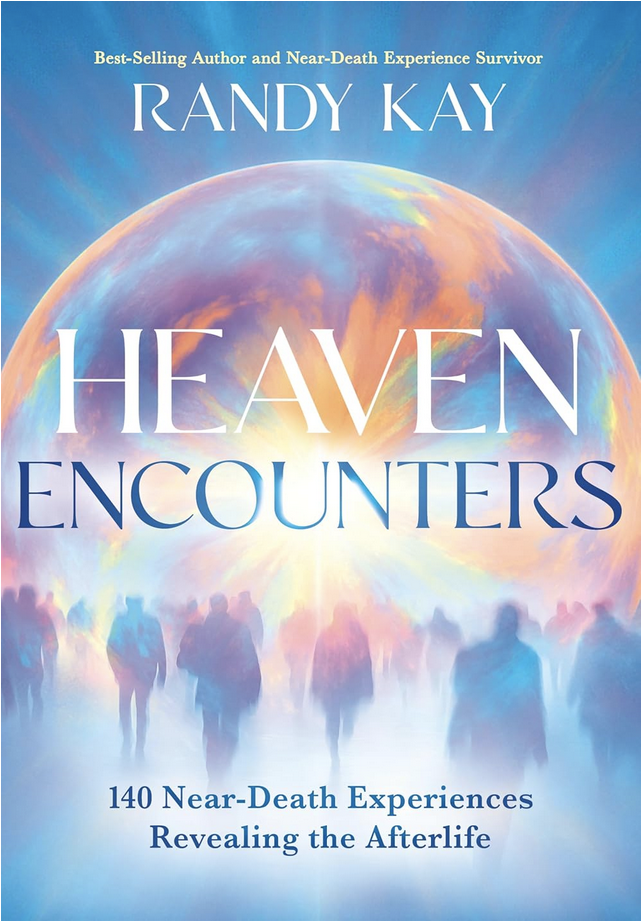
Heaven Encounters
Heaven is real. This book makes it impossible to keep treating that as optional information.
Randy Kay was a biotech CEO and a committed agnostic. He trusted data, not divine encounters. Then, in 2005, he clinically died for thirty minutes and found himself with Jesus in heaven. He did not want to come back.
What followed was years of rigorous investigation – the kind only a former health care executive with scientific training could conduct. His team reviewed thousands of accounts and accepted fewer than 30 percent.
Leave a Reply