


About this episode:
What if the things you’re doing every day—your work, your responsibilities, your relationships, even the parts no one else sees—matter far more than you realize?
Paige Allen joins Ellen Krause on the Coffee and Bible Time Podcast to share what the women of Genesis can teach us about recognizing God’s purpose in our lives and faithfully responding to what He’s asking of us today.

 Apple Podcasts
 Spotify
TIMESTAMPS:
00:00 Your Life Matters to God
02:03 God’s Purpose for Your Life
04:54 God Uses Imperfect People
06:20 What Rebekah Teaches Us About God’s Calling
09:33 How to Wait Faithfully on God
13:42 Finding Purpose in Ordinary Life
17:38 The Power of Saying Yes to God
20:00 How to Pursue Your Dreams Without Making Them an Idol
22:00 Trusting God When You Can’t See the Whole Story
24:29 How Your Faithfulness Can Impact Future Generations
Ellen Krause:
Hi friends, before we dive into today’s topic, I want to read part of a message one of you shared about my conversation with Ike Miller last week.
A listener in Montgomery, Alabama, writes:
“This was a perfect message for me today. I just entered my first relationship after a very toxic one, and I have found that there are actually many things from my past relationship that are still hurting me…and as a result, hurting my new relationship because I haven’t healed.
Today’s episode made me realize that I really need to sit down and actually acknowledge all the hurt I experienced and work through it so that I can respond in a healthy way when I feel hurt or triggered.”
Well, I just want to thank that listener so much for sharing that with us.
And I’m thanking God for what He is doing in your life. And I just pray that you will experience more freedom as you continue on your healing journey.
And if you have a thought, comment, or testimony of what God is teaching you through this podcast, please let me know by leaving a comment, review, or sending a message through the fan mail link in the show notes.
I love hearing from you and would love to share your message with other listeners too!
By the way, we’re doing another book giveaway this week for Paige Allen’s book. It’s amazing, and I know you’ll love it.
Keep listening to the end to find out how to enter. Okay, back to the podcast.
Ellen Krause: Welcome back to the Coffee and Bible Time podcast. I’m Ellen, your host.
Have you ever found yourself intimidated by what God has placed on your heart?
Well, today we’re discovering how to embrace God’s promises, live your purpose, and transform your world through the women of Genesis.
Their stories are filled with faith, waiting, disappointment, hope, and God’s incredible faithfulness. And as we’ll see, they have so much to teach us about trusting God with our own lives.
Helping us dive into this topic is our guest today, Paige Allen. Paige is a Bible teacher, church leader, speaker, and podcast host who is passionate about helping people encounter Scripture in fresh and meaningful ways.
Welcome, Paige!
Paige Allen: Thank you, Ellen. I’m so excited to be with you today.
Ellen Krause: Well, what a joy to have you with us! Let’s just kind of jump in here, because I think so many of us are familiar with some of the matriarchs of the Bible—Eve, Sarah, Rebecca, Leah, and Rachel.
But you’ve spent countless hours really sitting with their stories. What drew you back to these women, and what do they have to teach us?
Paige Allen: I love starting off our conversation this way, because I think you’re right. Sarah, Rebecca, Rachel, and Leah, and Eve—they’re familiar to people, whether you’ve grown up in church or not, especially Sarah and Eve.
I was really familiar with their stories, so much so that kind of just discounted them, I think.
But I was reading through Genesis, and I just felt compelled to get to know these ladies a little bit more.
And then later, I kind of discounted it, honestly. And then I was reading in Exodus, the famous story where God encounters Moses at the burning bush, and God calls himself the God of Abraham, Isaac, and Jacob.
And he’s referred to that way throughout Scripture. And I thought, man.
There’s something powerful about that name. It speaks to us about who God is, that He’s a God of covenant and of family and of generations.
But then the first thing that came to my mind is, well, but you can’t have generations without the women. You gotta have someone to birth those babies.
Ellen Krause: Yeah.
Paige Allen: And then I was reminded of that invitation I’d had just a few weeks prior: study the matriarchs.
So I just, I just went back and said, Lord, what do you want to teach me about these women? And I started studying them with a lot of excitement.
Ellen Krause: Yes. Well, one of the things that that I love about these women is that Scripture presents them as they are, right?
Paige Allen: Yes.
Ellen Krause: They’re real people with flawed characters.
Why do you think God chose to tell their stories with such honesty?
Paige Allen: You know what, Ellen? That is probably one of my favorite things, too, is this is not the highlight reel of these women at all.
Really, I think we read more about their flawed moments. There are these beautiful, faithful moments as well, but I mean, there’s no holding back. We see them scheming, manipulating, lying, lamenting, kind of throwing temper tantrums on occasion, honestly.
And yet, how amazing is it that the God we serve, He chooses to partner with these flawed women and men, too, you know?
Ellen Krause: Mm-hmm.
Paige Allen: When Scripture was written, He didn’t just give us the cleaned-up version. He really shows us all of it, which I think for us, as we’re reading it, it should really give us some hope that God wants to partner with us, too.
We do not have to come to Him perfect. We don’t have to think we are disqualified as soon as we mess up. What we can learn from these women is they stick with it.
And even when they mess up, they still respond to the Lord. And it also shows us so much about God’s character, you know, that He’s so faithful to continue to just say, “Hey, that promise I gave you back in Genesis 12, I’m gonna reiterate it for you today,” you know, all these years later.
Ellen Krause: Yes, that does give us so much hope. Was there a woman that you’ve found yourself particularly relating to the most?
Paige Allen: It was actually Rebecca that I personally related to a lot.
There’s an entire chapter devoted to when Rebecca is chosen to be Isaac’s wife. It’s in, I think, Genesis 24.
And as I began to study it, I just began to realize that there’s so much detail in this portion of Scripture about what a capable woman she was.
Like, even as a young woman, and we get this glimpse into her character, her servant’s heart, and even her bravery in her willingness to go with a stranger, you know—
Ellen Krause: Yes, yes.
Paige Allen: To marry someone she’s never met.
And there’s also this part where then her parents declare a blessing over her, which at this time we don’t really see this happening, especially over women, you know?
And so there’s this picture that, in a time where, you know, women at times were treated like property, this family really honored and loved their daughter. And they trusted her.
But also, there was kind of a burden put on her, I think. Of, “You’re a capable woman. We’re gonna speak blessing over you, but we’re gonna send you out.”
I’m not trying to read into it, but I kind of just had this sense of expectation put on her, and I think for me, at least, I really resonated with that the more I studied her, because I’m a pretty capable woman.
And actually, most women I know, especially in the world we live in today, like, we have a lot of things on our shoulders, you know? A lot of responsibilities, a lot of burdens, expectations of other people.
Then, as we study her more, kind of the story that she’s more well known for is manipulating her husband in conjunction with her son, so that Jacob gets Esau’s blessing.
I just related to, you know, the Lord almost teaching me as I was studying her, there’s a fine line, Paige, when you do carry a lot on your shoulders, that you don’t step over into my territory and that you don’t use your gifts to manipulate or to do things out of my timeline or out of my order.
I think Rebecca, yeah, is who I really related to.
Ellen Krause: Wow, that’s so interesting.
You know, I love when I read—I love entering into the story and, just as you’ve said, trying to understand, you know, what were their emotions about circumstances and such.
Well, Paige, you came up with such an interesting way to describe this idea of helping people get, you know, promises that God’s laid on their heart, sort of birthing a God idea into the world.
And I kind of want to dive a little bit deeper into some of these. Let’s start with waiting, because as you say, it’s something we all have to do at one time or another, or multiple times in our lives.
And I think every Christian woman knows, you know, what it’s like.
So Sarah lived in that tension for years.
Paige Allen: Yeah.
Ellen Krause: And when you studied her life, what encouragement, maybe even cautions, do you take away from the way that she waited?
Paige Allen: Yeah, you know, Sarah is kind of the epitome of looking at waiting and the cautions in that time.
Most people are familiar with the famous story of her waiting for a little while and then saying, “You know what? I’m gonna come up with another plan.”
And so she goes to her husband Abram and says, “Hey, I want you to take my servant Hagar and sleep with her and have a child with her.”
There are so many truths in that portion of Scripture. One that really stands out to me right now is that it’s so interesting about just kind of what she would have understood about the birthing process and even having children at that time.
For one, most scholars—and both religious scholars, but also just people that study cultures at that time—say there was an understanding of reproduction with the seed of a man, but not necessarily that women provided the egg for reproduction.
And so, because maybe she didn’t fully understand who God had created her to be, it was easy for her to believe the lie that she was replaceable or interchangeable.
And I think for some of us in seasons of waiting, the enemy loves to come and point out all of the reasons why we are not cut out for that idea that God has given us.
Especially as women, we can see all of our shortcomings and why God should use someone else.
A beautiful thing about the waiting season is God is really beginning to develop and show us who He’s created us to be, you know?
And then the second element is in this of giving of Hagar. The whole idea of giving her slave or servant to her husband, that was not just her good idea. That actually appears in the Code of Hammurabi.
And when you begin to study that time, ancient, ancient times of Abraham and Sarah, there were two great powers on the earth, Mesopotamia and Egypt.
Mesopotamia was known as the culture of wisdom and intellect in that time. And Egypt was known as the culture of power in that time.
So she takes an idea from Mesopotamia to give this girl to her husband. And the girl is Egyptian, the power of the time.
And I think it really teaches us that she was looking at the tools of her time, what the world said was wisdom, what the world said was power. And she went to those things instead of trusting the Lord.
And for years, Ellen, I would read—I honestly would read the story and I just quickly, like, bypassed it because I was like, “I’m not gonna suggest that my husband takes a sister wife,” you know? Like, that’s not on the radar, you know?
Ellen Krause: Right.
Paige Allen: But when I began to dive into Scripture, the Lord was like, “I know you’re not gonna suggest that. But what things have you suggested that were you using the intellect of the world or the things that looked like the power of the world because you didn’t want to wait on my timing?”
So I think that’s a real caution for us to take from Sarah.
Ellen Krause: Yeah, it sure is. It really, it stops you right in your tracks and says, “Okay, let’s learn from this so that we don’t have to learn the hard way.”
So, for women right now who are waiting on God, what does faithful action actually look like? And how do we avoid going to that extreme of taking the matters into our own hands?
Paige Allen: Yeah, yeah. Waiting is hard on the best of days.
But it’s really impossible if you believe it’s a waste. And I think that’s when we begin to basically make a mess or try to control or manipulate.
It’s when those lies begin to creep in, that this time is a waste. I need to speed things along.
So I think faithfulness just looks like realizing, even if I’m not seeing the full fruition of this idea, this promise, this thing in my heart, there is still purpose for me today.
And God is amazing and showing us in even the small things of, “You know what? Today, faithfulness is gonna look like, you know, calling that friend. Today, faithfulness looks like cleaning your house. Today, faithfulness looks like spending five extra minutes in worship with me today.”
And as we say yes to those small things that He shows us, He’s building something inside of us in that season of waiting.
Ellen Krause: He sure is.
You know, as Christians, when we hear this word calling, it’s easy to think that it only applies to these extraordinary things, you know?
How would you define calling for the woman who is faithfully living just an ordinary life?
Paige Allen: Yeah. I love that question, Ellen, because I think you’re exactly right.
And I know for years I was that woman who was like, “I want to do something so big.” And then I defined what big looked like.
You know, the word calling, it’s like communication. Someone is calling you, and that means all that’s required of you is your response.
And I talk in the book a lot about the power of our yes. And I think for the ordinary woman, really calling comes down to this: are you saying yes to whatever God is asking for you to do today?
Remember, I finally started working at a church, which is a dream of mine. And I was in my 20s, and I was working in our missions department.
And honestly, most of my days looked like an Excel spreadsheet, you know? And I was so frustrated because when I got that job, I was like, “Yes, I’m gonna step into my calling.”
And then when I got there, I realized, like, even that thing that I had defined as calling, there was just a lot of ordinary parts to it, you know?
It was a lot of spreadsheets. I was organizing mission trips, and so I was making phone calls and setting up flight itineraries and reminding people they owed money. It wasn’t actually all that fun.
And one day, though, the Lord just said, “Paige, all of these small things are a part of the big thing.”
And I think that really helped me. And also realizing the big thing is His thing.
Ellen Krause: Yes.
Paige Allen: He’s the one that’s the main character. He’s the one that gets the glory.
And when I was able to kind of reframe that, I realized, you know what? My spreadsheet has purpose today, you know?
Ellen Krause: It absolutely does. And as a person who’s been on those missions teams, boy, the people that coordinate and do all of that, like, the trip would not happen without them, right?
It’s you faithfully working behind the scenes to help put into motion. And God draws us into being part of that process, which I absolutely love.
Well, one of the yeses that you talk about in your book is something that I just never even considered before.
But I love how you compare Eve and Mary, how their yeses changed the world, but in very different ways. What can we learn from those two women of faith?
Paige Allen: Yeah, you know, the ultimate matriarchs, so to speak, on two totally different ends are Eve and Mary.
And both of them, because they say yes to a voice, they both usher in the greatest changes our world has ever known.
So, Eve, we all know the story in Genesis. She says yes to the temptation of the enemy. And with that yes, she sins, and sin changes the course of human history.
Like, all of human history changes because of one woman’s yes.
But then, on the flip side, the beginning of the New Testament, we see Mary. The angel Gabriel comes to her and says, “Hey, you are chosen and highly favored.”
And she also is basically invited to say yes. And her yes is, “I don’t understand, but let it be according to your word,” you know?
And with her yes, she ushers in the other greatest thing that changes the course of history.
They both hear these two voices that are unexpected: a serpent and an angel.
They were extraordinary moments, but I think in a way they were almost ordinary moments in their life. They just had a choice to make in that moment.
And what we see with their yes is yes is more than a word. Yes is a choice to align ourselves with something or someone.
And when Eve says yes to the serpent, she’s literally bringing alignment with the enemy. And it ushers in, you know, sin.
But when Mary says yes to the angel Gabriel, and ultimately she’s saying yes to the Lord, she’s getting into alignment.
And when I started to think about our yeses that way, it changed things for me.
So sometimes when I’m having a difficult time deciding how to respond, I will literally ask myself, “What am I aligning with if I say yes to this?”
You know? Am I aligning with truth? Am I aligning with love? Am I aligning with the Lord? Or does this yes bring alignment with a lie?
Ellen Krause: Yes, that’s so powerful and really gives us something to think about—the weight of the decisions that we have to make.
Paige Allen: Yeah. Mm-hmm.
Ellen Krause: I want to encourage anyone who’s listening here. Many women carry desires that haven’t come to fruition.
Perhaps, you know, it’s a marriage or having children or healing, meaningful work, whatever it might be. How do we nurture a God-given desire without letting it just become everything, become an idol?
Paige Allen: Yeah, that’s such a good question. I will tell you, I think if our matriarchs teach us anything, we have to really stay on guard.
But it’s hard to do when you haven’t seen that thing that you’ve been believing for, you know?
There’s probably someone watching, and you’ve been praying to the Lord for a husband. Or I’m thinking about a friend of mine who has really battled infertility for years, and she knows that there’s this promise in her heart from the Lord to be a mother.
I think, though, the key is not just looking to the Lord, but bringing those hurt, difficult places to Him and just saying, “Lord, this is so hard, but I believe You’ve given me this promise. And therefore, I’m gonna try to continue to believe. If You’ve said it, He who promised is faithful.”
This is Scripture in Hebrews. “You promised, and therefore I know You will be faithful.”
I think, too, the matriarchs teach me that it’s really important who we surround ourselves with. And so, in those seasons when we feel overlooked and forgotten, who are the voices you’re listening to?
Do you have some fellow sisters in the faith that you can tell them, “Will you just speak truth to me? Will you remind me I’m not forgotten?”
And then I think, too, really guarding against comparison and knowing that the promises for you may look different for the promises for someone else, but that doesn’t mean you’re forgotten.
Ellen Krause: Such words of wisdom that really are so hopeful.
The women of Genesis, it’s interesting that they never got to see the full story of God that He was writing through them.
Paige Allen: Mm-hmm.
Ellen Krause: How does remembering that encourage us today?
Paige Allen: Yeah.
As I was studying, probably one of the things that encouraged me so much was I discovered that there’s an entire chapter about the death of Sarah.
And it kind of surprised me, but there’s an entire chapter devoted to Abraham going out and buying land to bury her, to have a tomb for her.
And as I was reading it, what I realized is that actually becomes the first portion of legal territory that the new nation of Israel will have of the promised land.
And how interesting.
Because Sarah never actually gets land of her own. And that was one of God’s promises to them. “This will be your land.”
They’re nomadic until she dies.
She’s a wonderful example of, like, getting part of the promise, Isaac, but not getting all of the promise. She didn’t get, you know, an actual home until she’s died.
And yet, here’s the beautiful thing: is with her death, God makes a way for future generations.
And so the lesson is this: you may not see every part of it, but it doesn’t mean that God is a liar or that His promise is not true. It just means His timeline might be a little bit different than ours.
And that your life is bigger than just you.
I think sometimes we get so caught up in just what life looks like today. But if we would come up with the Lord and say, “Lord, would You expand my vision to see that my life really isn’t just limited to this earth, but it’s so much greater?”
And the things that You are doing in me and through me now, they are taking territory from the enemy, maybe for my children, from—or my grandchildren, for future generations.
And that is powerful, and that is lasting fruit.
Ellen Krause: Right. It sure is. And I can’t even imagine, like, what it must have been like for these women to get to heaven to understand, at some point, you know, that their stories have been written and billions of people have read it and know and learned and gleaned and saw how God worked—
Paige Allen: Mm-hmm.
Ellen Krause: —through them, and that it has helped other people in their lives. And so, how amazing.
Well, if a woman listening, as we wrap things up here, feels uncertain whether her life is making any difference in God’s kingdom, what would you want her to remember from the lives of these matriarchs?
Paige Allen: I would want every woman listening to hear this: that your life matters.
And it doesn’t just matter on a microscopic scale. Like, it matters, like, in the kingdom of God.
And your life matters. I really do believe for generations to come.
And I would just say, it’s normal on some days to feel overlooked, but you were created, you were handcrafted by God, and He handcrafted you with a purpose and destiny in mind.
And the ideas that you have in your mind and those little bitty seeds that are in your heart that you maybe have thought about since you were a child, those are not there by accident.
Those were placed there lovingly by God because He knows what you’re capable of.
Ellen Krause: How beautiful is that.
Well, Paige, your book is so beautifully written. It sparkles like your personality. And I would just love for you to let listeners know where they can go to find it and more information about you.
Paige Allen: Yeah. So my book, it’s called Matriarchs, and it’s available pretty much everywhere books are sold.
You can find it on Amazon, Barnes and Noble, ChristianBook.com, or you can go to my website, which is just pageallen.net, and find more information there.
And I’ve created six teachings that kind of go with the introduction and the five stages. So if you want to study it as a group and get some fellow matriarchs or sisters along, you know, to encourage one another as we all try to say yes together to God.
Ellen Krause: Absolutely. And you have such amazing questions at the end of the chapter, like, that really get you thinking, you know, applying it to your heart, your life, and good discussion questions for groups, too.
So amazing.
Paige Allen: Thank you.
Ellen Krause: Well, before I let you go, I have to do our rapid-fire questions here that we always ask our guests.
Paige Allen: Yes, yes.
Ellen Krause: What is your go-to Bible, and what translation is it?
Paige Allen: I have it with me right next to me.
My go-to Bible right now, and actually, it has been for about three years, it’s actually a large-print, thin-line New Living Translation.
Ellen Krause: That’s awesome. Okay, do you have any favorite Bible journaling supplies? Do you like to journal?
Paige Allen: I am a big journaler, yes.
What I do is, as I’m reading, there will be certain Scriptures that the Lord just really highlights. And so I love to just, in my blank journal, I just write those Scriptures word for word.
And I find that as I write them, it helps me to meditate on them and really get them into my heart.
So my, my basic journal and my special pens.
Ellen Krause: Great idea. Awesome.
Okay, lastly, what is your favorite app or website for Bible study tools?
Paige Allen: I have the Logos Bible software. So I use that for a lot of my deeper studies.
Ellen Krause: Yes.
Paige Allen: But then I also really love the Blue Letter Bible that’s online and it’s free. I think those are my favorites.
Ellen Krause: Awesome. Well, very much loved both of those here.
And if anyone listening is interested in exploring Logos, we will have a link in the show notes, too, that they’re giving, I believe, it’s a free 60-day trial to anyone interested in testing it out, and it’s pretty phenomenal.
Well, Paige, thank you so much for being here and for pointing us back to God’s Word.
Paige Allen: Thank you, Ellen. It’s been, it’s been so much fun.
Ellen Krause: And to our listeners, I hope this conversation has encouraged you to remember that God sees your faithfulness, even in seasons when you can’t see the bigger picture that He’s writing.
Thank you so much for joining us today, and we’ll see you next time on the Coffee and Bible Time podcast. Have a blessed day.
Ellen Krause: One last thing, we are doing another book giveaway this week for Paige’s new book, Matriarchs. It is such an amazing resource, and I know you’ll get so much out of it.
To enter, leave a comment on the YouTube video, or send a message through the fan mail link in the show notes.
We’ll reach out to the winner next week.
Thanks for listening, and God bless.
God’s Purpose for Your Life: How to Find Meaning in the Ordinary
Have you ever wondered if your life is really making a difference? Maybe you thought you’d be further along by now. Maybe your life looks different than you imagined, or your everyday responsibilities feel too ordinary to be part of something meaningful.
You may find yourself asking:
Does God have a purpose for my life? Am I doing enough? Am I making a difference?
The good news is that God’s purpose for your life isn’t limited to big, impressive moments. God can use your everyday faithfulness, your ordinary responsibilities, and the small decisions you make to say yes to Him.
In a recent episode of the Coffee and Bible Time Podcast, Paige Allen shared what the women of Genesis can teach us about God’s purpose, calling, faithfulness, and trusting God when we can’t see the whole picture.
What Is God’s Purpose for My Life?
When we think about God’s purpose, it’s easy to assume it must be something big.
Maybe God’s purpose means becoming a Bible teacher, starting a ministry, writing a book, having an influential career, or doing something that impacts thousands of people.
But Paige Allen offers a different perspective.
She explains that calling is ultimately about responding to God:
“Are you saying yes to whatever God is asking for you to do today?”
That’s a much more approachable way to think about God’s purpose.
Instead of constantly asking, “What am I supposed to do with my entire life?”, we can ask:
“What is God asking me to do today?”
Sometimes the answer may be something significant and exciting. Other times, it might be calling a friend, caring for your family, doing your work with integrity, cleaning your house, or spending a few extra minutes in God’s Word.
Those things may feel ordinary, but that doesn’t mean they are meaningless.
God’s Purpose Is Often Found in Everyday Faithfulness
Paige shared that she once thought her calling needed to look much bigger than it actually did.
When she began working at a church, she expected to finally be stepping into her calling. Instead, much of her job involved spreadsheets, organizing mission trips, making phone calls, arranging flights, and reminding people to pay what they owed.
It wasn’t exactly what she had imagined.
But God began to change the way she viewed those ordinary tasks.
“All of these small things are a part of the big thing.”
That is an important reminder when you’re trying to understand God’s purpose for your life.
Your everyday responsibilities aren’t necessarily distractions from God’s purpose. They can be the very place where God is teaching you faithfulness.
Your ordinary life can be meaningful to God.
Paige puts it this way:
“The big thing is His thing. He’s the one that’s the main character. He’s the one that gets the glory.”
Paige Allen
When we stop measuring our lives by how impressive they look, we can begin to recognize how God is working through our faithfulness.
What If Your Life Doesn’t Look Like You Thought It Would?
One of the hardest parts of understanding God’s purpose is accepting that God’s plan may not look like the plan we imagined for ourselves.
You may have thought you’d be married by now. You may have expected to have children, or a different career, or a ministry.
When life doesn’t unfold according to our expectations, it’s easy to wonder whether we’ve somehow missed God’s purpose.
But the women of Genesis remind us that God can be working even when we can’t see the full story.
Paige discovered this while studying Sarah.
Sarah experienced God’s promise, but she didn’t live to see every part of it fulfilled. In fact, Paige points out that Sarah never actually possessed the Promised Land in the way she may have imagined.
Yet even Sarah’s death became part of God’s larger story: in Genesis 23, we see that the very first piece of the Promised Land that Abraham receives is the land he buries Sarah in.
Paige explains:
“You may not see every part of it, but it doesn’t mean that God is a liar or that His promise is not true. It just means His timeline might be a little bit different than ours.”
Paige Allen
That truth is important when you’re struggling to understand God’s purpose.
Not seeing the whole picture doesn’t mean God isn’t working.
Your Life Can Impact Generations You May Never See
We naturally tend to think about the impact of our lives in terms of what we can see.
Did I make a difference today? Did anyone notice? Did I accomplish anything important?
But God’s perspective is much bigger than ours.
The women of Genesis didn’t get to see the full story God was writing through their lives. They couldn’t have known how their stories would eventually encourage generations of believers.
Paige says:
“Your life matters. And it doesn’t just matter on a microscopic scale. It matters in the kingdom of God.”
Your faithfulness today may influence your children, grandchildren, friends, church, community, or future generations in ways you’ll never fully understand.
You may not see the fruit…but that doesn’t mean there isn’t any.
Don’t Compare God’s Purpose for Your Life With Someone Else’s
Comparison can make it especially difficult to recognize God’s purpose.
It’s easy to look at another woman’s life and think:
God is doing something bigger with her.
She’s further ahead than I am.
She has found her calling.
Her life seems more meaningful than mine.
But Paige reminds us:
“The promises for you may look different from the promises for someone else, but that doesn’t mean you’re forgotten.”
Paige Allen
God’s purpose for your life does not have to look like someone else’s.
You don’t need someone else’s marriage, career, ministry, family, platform, or opportunities to live faithfully.
Instead of asking, “Why doesn’t my life look like hers?”, try asking:
“What has God placed in front of me?”
5 Practical Ways to Live Out God’s Purpose Today
Understanding God’s purpose shouldn’t leave us with more questions about the future. It should help us become more faithful today.
Here are five practical ways to start.
1. Stop measuring your life by how impressive it looks.
God isn’t asking you to make your life look impressive. He is asking you to be faithful.
Ask yourself: Am I being faithful with what God has already given me?
2. Ask God what your next “yes” should be.
You don’t have to know God’s entire plan.
Ask: “Lord, what are You asking me to do today?”
Then take the next faithful step.
3. Don’t overlook the small things.
Paige encourages women to recognize that ordinary acts of faithfulness matter.
She says:
“Today, faithfulness is gonna look like, you know what, calling that friend. Today, faithfulness looks like cleaning your house. Today, faithfulness looks like spending five extra minutes in worship with [God].”
Don’t dismiss something simply because it feels small.
4. Guard your heart against comparison.
Someone else’s life isn’t your measuring stick.
God’s purpose for your life may look completely different from His purpose for someone else.
5. Remember that you may not see the full story.
You may never know exactly how God uses your obedience.
Sarah didn’t see everything God would accomplish. The women of Genesis couldn’t see how their stories would impact future generations. But God was faithful.
As Scripture reminds us:
“Let us hold unswervingly to the hope we profess, for he who promised is faithful.”
Hebrews 10:23
Your Ordinary Life Matters to God
You don’t have to wait until your life looks bigger, more exciting, or more significant to start living with purpose.
Your life matters right now.
The work you do matters. Your obedience matters. Your prayers matter.
And you don’t have to see the whole picture to trust that God is working.
Paige encourages women to remember:
“You were handcrafted by God, and He handcrafted you with a purpose and destiny in mind.”
So if you’ve been wondering about God’s purpose for your life, start here:
Ask God what faithfulness looks like today.
Then say yes.
You may not understand what that yes is for, or understand its significance for eternity. It may feel like it didn’t matter all that much.
But God sees it.
And your life matters in His kingdom.
Frequently Asked Questions About God’s Purpose
What is God’s purpose for my life?
God’s purpose isn’t necessarily one specific career, ministry, or accomplishment. As Paige Allen explains, calling can be understood as saying yes to what God is asking you to do today. God’s purpose is lived out through faithful obedience in both ordinary and extraordinary circumstances.
How can I know God’s purpose for my life?
Start by asking God what He is asking you to do today. Pay attention to Scripture, prayer, the gifts and responsibilities God has given you, and the opportunities to faithfully serve the people around you. You don’t have to know your entire future to take your next faithful step.
Does my ordinary life really matter to God?
Yes. Scripture repeatedly shows that God values faithfulness, obedience, and service—not simply things that appear impressive to other people. Your everyday responsibilities can be opportunities to live out God’s purpose.
What if my life doesn’t look like I expected?
A life that looks different from what you imagined isn’t necessarily a life outside of God’s purpose. The women of Genesis demonstrate that God’s timeline and purposes can extend far beyond what we are able to see. Trusting God means learning to be faithful with where He has you today.
Listen to the Full Conversation With Paige Allen
Want to hear more about God’s purpose, calling, faithfulness, and what the women of Genesis can teach us about living faithfully today?
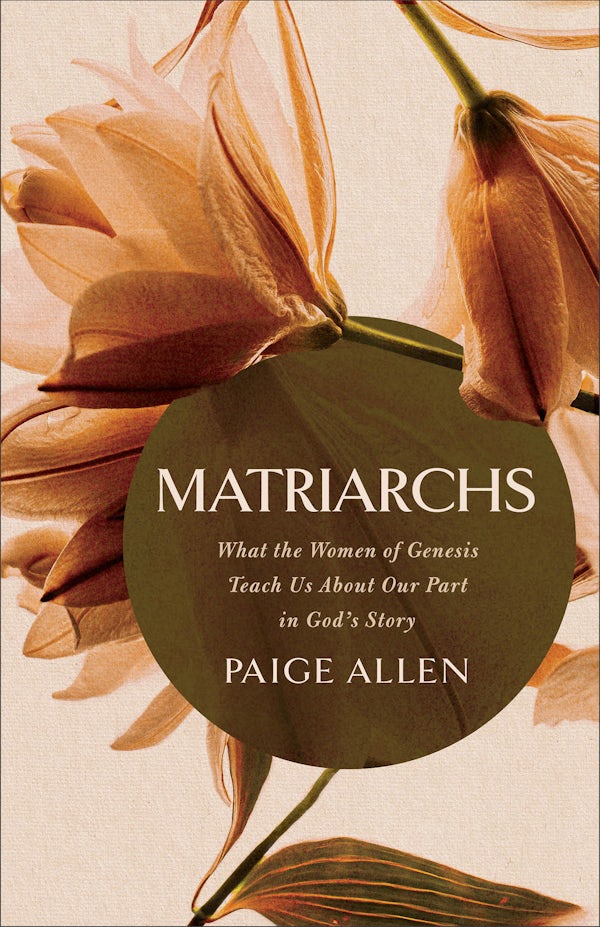
Matriarchs: What the Women of Genesis Teach Us About Our Part in God’s Story
Written for women who sense a calling they haven’t yet acted on—a business, a ministry, a family legacy, a dream they keep setting aside—this study explores what the Matriarchs of Genesis can teach women today about fear, faith, and following through.
This study by Paige Allen—executive pastor, MDiv graduate, and author of He Knows Your Name—examines the lives of the four Matriarchs of Genesis: Sarah, Rebekah, Leah, and Rachel. Drawing on these women’s stories alongside her own, Allen makes the case that women have always been central to how God’s promises are fulfilled on earth—not secondary characters, but essential co-authors of the story
Leave a Reply