
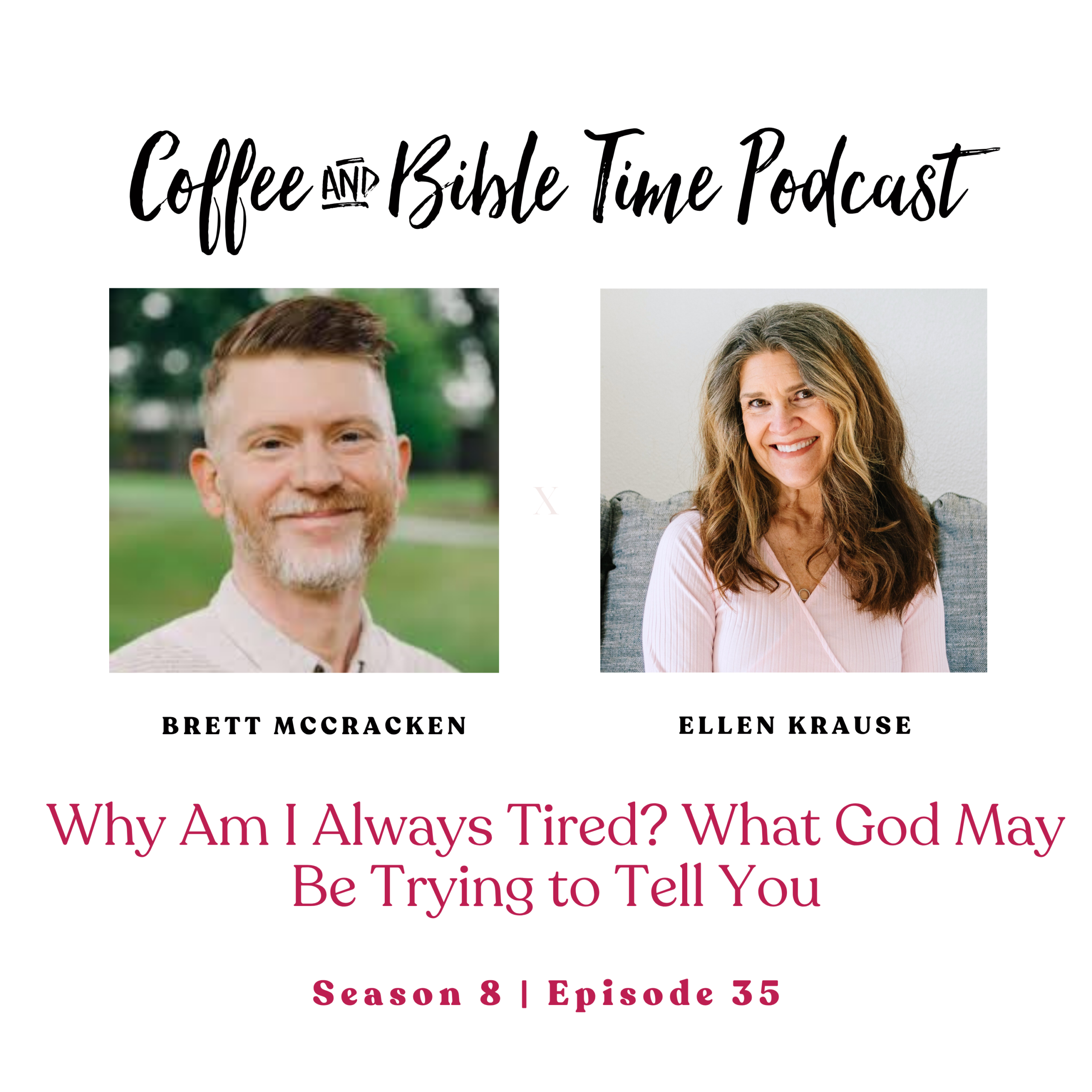

About this episode:
What if your exhaustion is revealing something deeper about you?
Brett McCracken joins Ellen Krause to offer a fresh perspective on why God created us to rest—and what our need for sleep can teach us about surrender, trust, and dependence on Him.
If you’ve been running on empty, or wondering, “why am I always tired?” this conversation will encourage you to see rest in a whole new way.

Subscribe & Listen on:
 Apple Podcasts
 Spotify
TIMESTAMPS:
00:00 Sleep Is a Gift From God
01:02 Why We Feel Guilty for Resting
02:55 What Exhaustion Can Teach Us About Our Limits
06:21 Why Sleep Is Essential for Your Health
09:33 What Your Dreams May Be Telling You
13:06 What the Bible Says About Sleep and Rest
16:53 How Sleep Helps Us Let Go of Control
21:30 What to Do When Sleep Feels Impossible
23:24 Finding Hope in God’s Promise of Perfect Rest
24:27 Brett McCracken on Sleep, Faith, and Trusting God
Brett McCracken [Introduction]: Something like sleep, we should think about it as a profound gift from God.
God is the one that you want building your life and your house. God is the one who keeps watch. And we are going to be crushingly burdened and anxious in life if we go about life in our own strength and kind of relying on our own provision and our own watchfulness.
God is the perfect watchman, keeping watch over your life while you sleep. And you can sleep easier, actually, being reminded of that truth.
Ellen Krause: Welcome back to the Coffee and Bible Time podcast. I’m Ellen, your host. If you’ve ever felt guilty for needing rest, or you’re starting to feel like exhaustion might just be your new default, this conversation is for you. In a culture that celebrates productivity, full schedules, and always being available, sleep can feel like one more thing we don’t have time for.
But what if God designed our need for rest to remind us of something we desperately need to remember? That we are not in control. We have limits, and we were never meant to carry everything on our own. Well, today I’m so excited to talk about the spiritual significance of something we all do, but may rarely think about: sleep.
And I’m joined by a very special guest. Brett McCracken is a senior editor at the Gospel Coalition and a writer who explores the intersection of faith and culture. He’s here to help us see how a closer look at sleep can deepen our dependence on God, renew our weary souls, and ultimately point us to the rest that we have in Christ. Brett, welcome.
Brett McCracken: Yeah, thank you so much. Thanks for having me, Ellen.
Ellen Krause: Well, I am so excited about this conversation because after spending so much time thinking about sleep and really digging into your book, I just found it incredibly fascinating.
Brett McCracken: Mm-hmm.
Ellen Krause: I’d say, though, that most of us aren’t really thinking about sleep very much unless we didn’t get enough of it last night, which happens.
Brett McCracken: Right. Yes. Yeah. Yeah.
Ellen Krause: Why do you think it’s important for us to talk about?
Brett McCracken: You’re right. It’s not one of those topics that you like think about deeply much, if ever. But it’s something we do every day of our lives. It’s something we do a third of our lives in total. If you live to be 90, you will have spent 30 years sleeping. So I think that fact alone is reason enough for us to contemplate a little bit, like, “Huh, why would God create us to do this thing so much?” Like, he’s an intentional designer. It wasn’t an accident, it’s not this mistake. He intentionally designed us to sleep a third of our day, a third of our lives. And that question alone, I think, makes this a worthy topic to think about on a deeper level. Like, what is the wisdom of God in creating us to sleep?
And I also think we live in a society that’s more resistant to sleep and rest than ever.
We don’t like to stop. We don’t like to be forced to be laid flat and not optimized for eight hours. We resist that with every fiber of our being.
Ellen Krause: Yes, absolutely. How about for you, Brett? Was there a moment in your own life where God used exhaustion to teach you something?
Brett McCracken: Mm-hmm. I would say, like, just the stage of life I’m in now as a dad of little kids. We’ve had four kids, four babies in the last eight years, my wife and I.
That stage of life is a huge blessing, of course, and we’re so grateful.
Ellen Krause: Yes.
Brett McCracken: But your relationship to rest and sleep changes quite a bit, and you realize your limits. When you become a parent, you realize, “I can’t do that thing that I used to do. I can’t stay up late and read or watch a movie because I’m just so dead tired, you know, by like 9:30, once I get the last of the four kids to sleep, all I want to do is sleep.” And I’m—I have a full-time job as well. My wife works. So we have a very full life, and it’s good to be reminded that you have limits to your capacity.
You can’t do everything you want to do. I can’t make it through all of the shows on Netflix that I’m interested in. I can’t read all the books that I have on my Amazon wish list. Like, and that’s okay. It’s okay to choose to just rest rather than fill all of your time with more content or more things to do, which maybe in my flesh I have wanted to do, but I think God is teaching me that it’s good for you to relinquish your need to do, do, do all the time and produce and to consume.
And just to choose to enter into my sovereignty as you sleep. That’s a spiritual act of worship. And it’s been a really enriching thing for me spiritually in this season.
Ellen Krause: I couldn’t agree more…
Ellen Krause: Hey, everyone, I’m giving away a free copy of today’s book, The Wisdom of Sleep by Brett McCracken. If you want to ponder the purpose behind why we sleep a third of our lives and reflect on the higher view of this essential and holy part of life, then follow the directions in the show notes to enter today.
Ellen Krause [episode continued]: You know, there’s this science of sleep, which I want to talk about for just a minute, because everybody needs it, right? Across the board, there’s no exceptions. And you said something really interesting: that God created us such that the single most effective thing we can do for our biological flourishing is not something we can work at or earn.
Brett McCracken: Yeah. Right.
Ellen Krause: What are some of the biological benefits to sleep? But yet, how do they pale in comparison to simply receiving the grace of a good night’s sleep?
Brett McCracken: Yeah, yeah, yeah.
Yeah, this was one of the kind of mind-blowing things as I researched this topic. I was trying to connect it to my faith.
The consensus is clear that sleep—regular, good sleep every night—is probably the single best thing you can do for your overall health. It’s not that exercise is unimportant. It’s very important. Eating a good diet, very important. But the benefits of sleep in terms of all the systems of your body that are kind of recalibrated as you sleep, that are restored as you sleep, the cognitive health that is so tied with good sleep, what dreaming is doing in kind of like organizing information in your brain and even like healing some emotional damage while you sleep,
All of these benefits for us are received as we sleep, as we’re passive, right? Like, we don’t have to do anything for them.
And for me, that really unlocked a connection to the gospel because the gospel of God’s grace, the spiritual benefit of that, which is the best thing we could ever receive, that comes to us as a gift received, right? It’s not a gift that we work to achieve.
Like, every part of our body gets a new lease on life when you wake up in the morning after a good night’s sleep. And that’s a little image, I think, of kind of resurrection and the new life spiritually we have through the death of Christ, right? Out of the death of Christ, we get new life. Out of the death of sleep, so to speak, we get new life every morning, new mercy, right? Every morning.
It’s such a window into the majesty of the gospel itself.
Ellen Krause: You know, it really is. And I thought it was so interesting. It’s one of those things that we just take for granted. Right? I mean, just how God—
Brett McCracken: We take it for granted, and we shouldn’t take it for granted.
Ellen Krause: Yes, and how the universe is just so perfectly working and the fact that we do wake up in the morning to a new day and—
Brett McCracken: Yeah.
Ellen Krause: It’s kind of mind-blowing when you start to dissect it. One of the most interesting things that you said was kind of mind-blowing to you was the fact that our imagination works in overdrive while we sleep and—
Brett McCracken: Yeah.
Ellen Krause: That, you know, dreaming is part of this sleep experience. So when you look at both what science and Scripture teaches us about dreams, what did you find?
Brett McCracken: Yeah. Hmm.
Yeah, I mean, the research in the two chapters in my book on dreams were, like, totally mind-blowing because what science has discovered about what dreams are doing for us cognitively is quite amazing. Like, basically, while you are sleeping, your brain finally has space. It’s not focusing on anything else. It doesn’t have to focus on, like, walking or talking or, like, doing any motor skills. So your brain finally has time to focus on kind of mental organization.
So all of the inputs that have come into your brain on that day that you just lived, a waking day, your brain needs to sort through that and figure out, okay, where does this experience fit? Like, what file cabinet does it need to be placed in? How does it connect with this experience from two years ago or ten years ago?
But it’s also thinking about the future. There’s some brain researchers, dream researchers, who think that a lot of what is happening in dreams is, like, your brain mapping out future possibilities, kind of trying things out, if you will, in a space that is risk-free. So your brain can kind of go wild with, like, possibilities.
And there’s also creativity that happens while you sleep in your dreams. I think Paul McCartney said that some of his songs came to him in his sleep. In your dream, your brain is not passive; it’s very active and being creative and testing out possibilities.
And then, of course, in Scripture, we also see that dreams are a realm where God tries to get our attention sometimes. Like, there’s so many examples in Scripture of people who have dreams that are in some way God directing an action or warning someone about something.
And that isn’t just something that only happened in Scripture. I think that you can see that still happening today. One example that’s well documented is in the Muslim world in the Middle East, especially a high percentage of Muslim converts to Christianity, I think it’s like 25%, say that they had a dream where Jesus showed up to them in a dream, or there was something in a dream that led them to Christianity.
And so God still is sovereign over our dreams, and I believe he still can use that space to get our attention. And what’s interesting is that we forget the vast majority of our dreams instantly. That’s, I think, a fascinating part of God’s design for dreams. Most of them are not actually for us to remember; they’re for whatever is going on mentally as we’re dreaming.
But occasionally, there’s, like, a dream that sticks with you, right? We all have dreams where we can’t shake it. If we think about it all day, even, like, weeks later, we remember that dream.
And those are the ones that I think you should pay attention to and just ponder, like, “Hmm, is there something there that God is trying to get my attention with? Perhaps?” I’m not saying every dream like that is, like, God speaking to you, but I think it’s interesting when you do remember a dream. I think it’s an interesting exercise to kind of ponder, like, “I wonder why that dream has stuck with me, and is there anything I should do about that in my actual life?”
So we could talk all this podcast just about dreams—
Ellen Krause: Yes!
Brett McCracken: But I’ll stop there because it’s such a topic I can geek out about for sure.
Ellen Krause: Yes, I find it incredibly just fascinating as well.
Brett McCracken: Yeah.
Ellen Krause: Well, this conversation reminds me of a passage from Psalm 127 that I would actually like to take a second and just read verses one and two. It says:
“Unless the Lord builds the house, the builders labor in vain, unless the Lord watches over the city. The guards stand watch in vain. In vain you rise early and stay up late, toiling for food to eat, for he grants sleep to those he loves.”
So when we hear this passage, what do you think the psalmist is inviting us to see about God and ourselves?
Brett McCracken: Yeah, I mean, Psalm 127 is probably, like, the best sleep passage in Scripture. There’s a couple of good ones, but I love Psalm 127 too. And I think just that phrase, “He gives sleep to those he loves,” right? That communicates to us that God is a gracious giver. That’s—it’s in his character to give extravagantly out of love for us. And so right there, I think it’s a reminder from Scripture that something like sleep, we should think about it as a profound gift from God. God gives his beloved sleep.
And then I think the other part of Psalm 127, one through two, is the whole, like, reminder that the one who builds in his own strength, right? The one who keeps watch in the night in his own strength, it’s—that’s toil, right? Because God is the one that you want building your life and your house. God is the one who keeps watch. And we are going to be just crushingly burdened and anxious in life, eating the bread of anxious toil, if we go about life in our own strength and kind of relying on our own provision and our own watchfulness.
It’s not that we should be totally, like, passive. You know, if you’re a human being, you are called to work that by God’s design and to work hard. If you’re, like, a dad like me, like, part of your responsibility is to keep watch over your family and to make sure that, like, they are protected.
But the greater truth that these verses remind us is that God is the perfect watchman. He is keeping watch over your life while you sleep. And you can sleep easier, actually, being reminded of that truth. We sleep easier knowing God is awake, right? And we can work harder knowing that God is the ultimate builder of my life, my house, so to speak, and I’m not—I don’t have to rely on my own strength for all of this.
That’s a liberating truth. And I think for me, with sleep, it’s actually made me sleep better, going to bed, like, rehearsing the truths of Psalm 127 and other passages like Psalm 121. “He who keeps you neither slumbers nor sleeps. He keeps your going out and your coming in from this time forth and forevermore.” Like, God is the keeper of my life. I don’t have to go to bed anxious that I didn’t do enough, that I left my to-do list too incomplete.
I can go to bed knowing that God keeps the universe going in his hands. Like, he’s got the world under control. He doesn’t need me to always be awake doing all the things I think that I need to be doing. He actually wants me to rest in his sovereignty, in his watchfulness. And that’s just a beautiful reminder with so much spiritual wisdom for us.
Ellen Krause: Yes, absolutely. And control, I think, is something that I know I struggle with. So many people struggle with, and just the fact that we have to give up control of a third of our life to allow God to use that time. But his ways are better than our ways, and he knows why he created us that way.
So help us understand how something just as ordinary as going to bed at night can actually help us with this letting go of control, trusting, worshiping.
Brett McCracken: Mm-hmm. Yeah. Yeah.
Yeah. I mean, I think we flourish in life when we submit to God’s good authority, and we don’t compete with God for, like, the title creator, right? We don’t compete for the throne. He created us to flourish and to be joyful by being happy under his rule, right? Under his reign.
And the more you fight against that, and the more you try to assume for yourself the authority that is only appropriate for God, the more you’re gonna find grief in life. Sin is ultimately, like, choosing to view my authority as on par with God’s or better than God.
But happiness and joy in life and flourishing comes when we trust God fully enough to obey, right? Trust and obey, for there’s no other way to be happy in Jesus than to trust and obey. I love that hymn because it connects those dots in a memorable way. Like, you trust first, and out of that trust, you obey, and you’re happy.
To obey, you actually become a more joyful, happier person. So I all of that to going to bed each night is a bodily way that we practice that trust, and we communicate to God and to those around us who observe our lives. They see that we trust in God enough to give up the control of our own life.
You know, sleep is a vulnerable thing. And I think that when we go to sleep, we’re entrusting that to God. You know, Lord, keep me through the night, like, in your sovereignty, in your provision.
Give me another day, because I go to sleep and, you know, waking up in the morning is not guaranteed. And I can’t wake myself up. That’s an interesting part of the science of sleep that I learned: you can’t consciously, like, tell your body to wake up as you’re sleeping. Waking up has to happen externally.
So whether that’s, like, the sunlight that peeks in through your windows, or an alarm clock, or a spouse that shakes you, you know, “Time to wake up.” Like, those are all external things. And that’s so true of our spiritual sleep as well. We are hopeless. We can’t wake ourselves up spiritually. We need an external grace to kind of shake us up into new life. And that’s what Jesus does for us. Sleep teaches us all of that.
Ellen Krause: That’s so powerful. Well, as we wrap things up here, Brett, I’m sure there’s a lot of women who are listening who maybe just feel exhausted right now, whether it’s because of insomnia or young kids, as you mentioned, or, you know, stress, anxiety, their job, whatever it might be.
I love that your book also talks a little bit about seeking help if you need it for sleep and then some other practical tips. So what would you say to encourage someone who is feeling like sleep’s just impossible right now?
Brett McCracken: Yeah, I mean, a couple things. I mean, one, if you think you have, like, an actual sleep disorder, which they are very common, millions of people have diagnosable sleep disorders, make sure you’re seeking medical help because there are lots of advances being made, and it’s really exciting. I’ve had friends who have had really bad sleep disorders, and through the wonder of modern medicine, they’ve basically been healed from it.
So that’s one thing. Another thing that I would say is sometimes our sleeplessness and our struggles with sleep are seasonal. Like, I think parenting is a good example of that. Like, when you’re a mom and you have an infant, like, your sleep is not gonna be great. And I think knowing that that’s a seasonal thing helps, maybe. It’s not gonna be the perfect consolation for the pain and the suffering and the weariness that you experience.
But one way you can look at it is you are sacrificing your sleep as an act of love for your child. And for me as a Christian, you know, we’re called to love others, love your neighbor as yourself. Sometimes our stewardship of sleep is going without sleep or sacrificing our sleep so that we can love others better.
Sometimes loving others means getting a good night’s sleep, right? As a dad of four kids, I think about that a lot because I know if I don’t get a good night’s sleep, I’m gonna be grumpy and I’m not gonna love them well. So getting a good night’s sleep, being well rested for my duties as a dad is a way that I serve and love them.
But sometimes sacrificing your sleep is the choice that you need to make as an act of love for others. So think about your sleep, and even your lack of sleep for a season, as an opportunity, as a ministry of sleep, if you will, for others.
And the final thing I would say to those listening who really struggle with sleep and feel weary and feel like this is a good gift of God that I rarely experience as a good gift: first of all, that’s a product of the fall, right? Because of the fall, God’s good gifts are often experienced in a very compromised way.
Whether that’s relationships or, like, marriage, parenting, like, all of those things in a post-fall world, they are rarely perfect, right? We’re dealing with the thorns and thistles of life after paradise, after the fall.
But the good news is there will be a perfect rest for all of us one day, right? We know that. That’s a promise of God. There remains a rest, a Sabbath rest for the people of God, as the book of Hebrews so beautifully puts it.
So I think in our sleepless nights, in our lives where we really struggle with sleep, let it be a reminder, let it inflame your hunger, your desire for that perfect rest that we will one day have in the presence of God for eternity, right? When we have that, we’ll look back and hardly even remember the nightly struggles we had with sleep in this life.
And the more that you can look at the gifts of this life as not things to idolize here, they’re not meant to be ends unto themselves here. All of the gifts God gives us are ultimately meant to point us to Him and to lead us to hunger and long for and worship Him as the giver of the gift.
And that’s the same thing with sleep. Whether you get great sleep or poor sleep, it should all remind you that God is the giver of sleep. He gives to his beloved sleep, and he will give us perfect rest one day in his presence.
Ellen Krause: That’s so encouraging. Thank you, Brett. For our listeners, there’s so much more you can dig in deeper on this in Brett’s book called The Wisdom of Sleep. Brett, where can people go to learn more about you?
Brett McCracken: You can find the book on Amazon or Barnes & Noble or any of the places you would normally get a book. And it’s available on Kindle or audiobook as well if you prefer those formats. And then I have a website, brettmccracken.com, where you can learn about my other books and some of my other writing that I do. So there you go.
Ellen Krause: Well, fantastic. We will include all those links in our show notes. Before I let you go, I have to ask our rapid-fire questions here for our guests.
Brett McCracken: Yes. Okay.
Ellen Krause: What is your go-to Bible, and what translation is it?
Brett McCracken: I have a different Bible every year. I do Bible in a Year reading usually every year, and I try to pick a different translation each year. This year I’m doing NIV, and it’s a beautiful kind of blue design Bible, NIV.
Ellen Krause: Excellent. Okay. Do you have any favorite Bible journaling supplies? Do you like to journal?
Brett McCracken: I do have a journal that’s like a Moleskine journal. You know, I’m not great at it, to be honest. But, like, maybe once every couple of weeks or once a month I’ll find time to, like, journal a little bit in there.
Ellen Krause: Okay, no problem. Lastly, what is your favorite app or website for Bible study tools?
Brett McCracken: I really like the ESV Bible app. I think they do a really good job. They even have a new feature where you can listen to the Bible being read with different voices, like, I think Christian Getty and Jackie Hill Perry and some others. I think that’s a really cool option.
Ellen Krause: Yes, yes. That’s esv.org, I believe. Well,
Brett McCracken: Mm-hmm.
Ellen Krause: We will include a link to that as well. Well, thank you so much, Brett, for being here to talk about this today. I know so many women that are listening are walking away from this conversation with just a fresh perspective on what it means to trust God with what we can’t control, and specifically our sleep. So thank you.
Brett McCracken: Good. Thank you so much.
Ellen Krause: And for our listeners, remember that you don’t have to have everything figured out or carry everything on your own. God invites you to rest in Him, even in the midst of a busy and weary season.
And be sure to let us know in a review or comment what stood out to you from this conversation. There’s a link in the show notes, and we would love to hear from you.
So we’ll see you all next time on the Coffee and Bible Time podcast. Have a blessed day.
Have you ever found yourself yawning at your desk, nodding off during a TV show, or rubbing your eyes at the red light and wondered… “Why am I always tired?”
For many busy women, exhaustion can become so normal that we stop asking what it might be telling us.
But what if our need for sleep is more than a biological necessity? What if God can use something as ordinary as sleep to remind us that we have limits, that we are not in control, and that we were never meant to carry everything on our own?
In a recent conversation on the Coffee and Bible Time Podcast, Brett McCracken, senior editor for The Gospel Coalition and author of The Wisdom of Sleep, offers a refreshing Christian perspective on sleep, rest, exhaustion, and trusting God.
Why Am I Always Tired?
There are certainly practical and medical reasons someone may be asking, “Why am I always tired?”
Lack of sleep, stress, parenting, work, anxiety, and sleep disorders can all contribute to exhaustion.
(As Brett points out, millions of people have diagnosable sleep disorders, and seeking medical help when needed is important.)
But sometimes, exhaustion is exposes something that’s happening in our hearts.
We live in a culture that constantly encourages us to do more, consume more, accomplish more, and stay available. Even when we’re physically exhausted, we may feel like there is always something else we should be doing.
But God created us with limits.
And sleep forces us to acknowledge them.
Sleep Is a Gift, Not Something You Have to Earn
Sleep itself points us toward the grace of God.
Just like salvation, sleep is not something we can achieve, earn, or accomplish. Rest is a biological need, no matter what we do or don’t do.
While we sleep, our body is restoring itself, recalibrating, organizing information, and recovering…while we do nothing to make those things happen.
Brett sees a connection between this and the gospel:
“The gospel of God’s grace, which is the best thing we could ever receive, comes to us as a gift received.”
Brett McCracken
That’s an important reminder if you’ve been treating rest as something you have to earn.
Sleep reminds us that some of God’s best gifts are received rather than achieved.
What Does the Bible Say About Sleep?
One of the key Scriptures discussed in the episode is Psalm 127:1–2:
Unless the Lord builds the house,
Psalm 127:1–2 9 (ESV)
those who build it labor in vain.
Unless the Lord watches over the city,
the watchman stays awake in vain.
It is in vain that you rise up early
and go late to rest,
eating the bread of anxious toil;
for he gives to his beloved sleep.
This passage gets directly to the heart of the question, “Why am I always tired?”
Sometimes we are tired because life is genuinely demanding. But sometimes we’re tired because we live as though everything depends on us.
“We sleep easier knowing God is awake.”
Brett McCracken
When you lie down at night, the world doesn’t stop functioning because you’re no longer working.
God is still working. God is still watching. God is still in control.
And you don’t have to stay awake trying to hold everything together.

Psalm 23 PDF Guide
Download this FREE beautiful Psalm 23 PDF guide for Bible study, prayer journaling, and encouragement.
What If Your Exhaustion Is Connected to Control?
If you’re constantly asking, “Why am I always tired?”, it may be worth asking another question:
What is keeping me from going to bed at night?
Maybe it’s the pressure to be the perfect mother. Maybe it’s the work notifications pinging on your phone.
Maybe you’re afraid that if you stop, everything will fall apart.
Think about what happens when you go to bed: you voluntarily stop working. You stop producing. You stop managing. You stop watching.
For several hours, you have no choice but to surrender control.
That can be uncomfortable—but it can also become an act of worship.
As Brett puts it:
“God is the perfect watchman. He is keeping watch over your life while you sleep.”
What would change if you actually believed that?
What About Sleepless Nights?
Of course, this doesn’t mean every person who struggles with sleep simply needs to “trust God more.”
Brett acknowledges that sleep disorders are real and that people should seek medical help when necessary. He also recognizes that seasons of life can naturally disrupt our sleep. Parenting an infant, for example, can make consistent sleep nearly impossible for a time.
So if you’re asking, “Why am I always tired?”, it doesn’t automatically mean you struggle with trust or control…but you can still ask God what He might be teaching you in the middle of your exhaustion.
Brett offers a helpful perspective on seasons when we’re sacrificing sleep for someone we love.
Sometimes, getting enough rest helps us love others better. Other times, temporarily giving up sleep can be an act of love and service.
The goal isn’t to idolize sleep or neglect it.
The goal is to receive sleep as God’s gift and recognize what it teaches us about Him.
Your Sleep (Or Lack Thereof) Can Point You to a Deeper Rest
Ultimately, this conversation isn’t just about getting better sleep. It’s about learning to rest in God.
Brett points to Hebrews and the promise that:
“…there remains a Sabbath rest for the people of God, for whoever has entered God’s rest has also rested from his works as God did from his.”
Hebrews 4:9-10
Our sleep in this life is imperfect. Some nights are peaceful, and others are restless. Some seasons allow for plenty of sleep, while others leave us desperately tired.
But all of it can point beyond itself.
Brett says:
“All of the gifts God gives us are ultimately meant to point us to Him and to lead us to hunger and long for and worship Him as the giver of the gift.”
That includes sleep.
So whether you’re getting eight peaceful hours or lying awake at 2 a.m., you can remember that your ultimate hope isn’t found in perfect circumstances. It is found in Christ.
And one day, we will have perfect rest in God’s presence.

5 Practical Ways to Respond When You’re Always Tired
If you’re still asking, “Why am I always tired?”, here are five ways to reflect on what this episode teaches.
1. Pay attention to your limits
You are not designed to accomplish everything. Instead of treating your limitations as an inconvenience, receive them as part of God’s good design.
2. Ask what you’re trying to control
Before going to bed, consider what you’re carrying mentally and emotionally. What are you trying to manage that you could entrust to God?
3. Accept sleep as a gift, not as something you have to earn
You don’t have to finish everything before you’re allowed to rest. Sometimes the most faithful thing you can do is stop.
4. Rehearse God’s promises before you sleep
Brett recommends remembering passages such as Psalm 127 and Psalm 121.
5. Let imperfect rest point you toward Christ
If sleep is difficult right now, don’t let that become another reason to feel guilty. Instead, allow your longing for rest to remind you of the perfect rest that is ultimately found in God.
Maybe the Question Isn’t Just “Why Am I Always Tired?”
If you’ve been asking, “Why am I always tired?”, it may be worth looking beyond your sleep habits and asking what your exhaustion is revealing.
Sleep reminds us of something we desperately need to remember: we are not God.
We have limits. We need rest. And God is still in control when we stop.
That truth can change the way we approach bedtime—and perhaps even how we approach our entire lives.
Listen to the Full Conversation
Hear Brett McCracken unpack the science and spirituality of sleep, what Scripture teaches about dreams and rest, and how surrendering control can become an act of trust and worship on the Coffee and Bible Time Podcast.
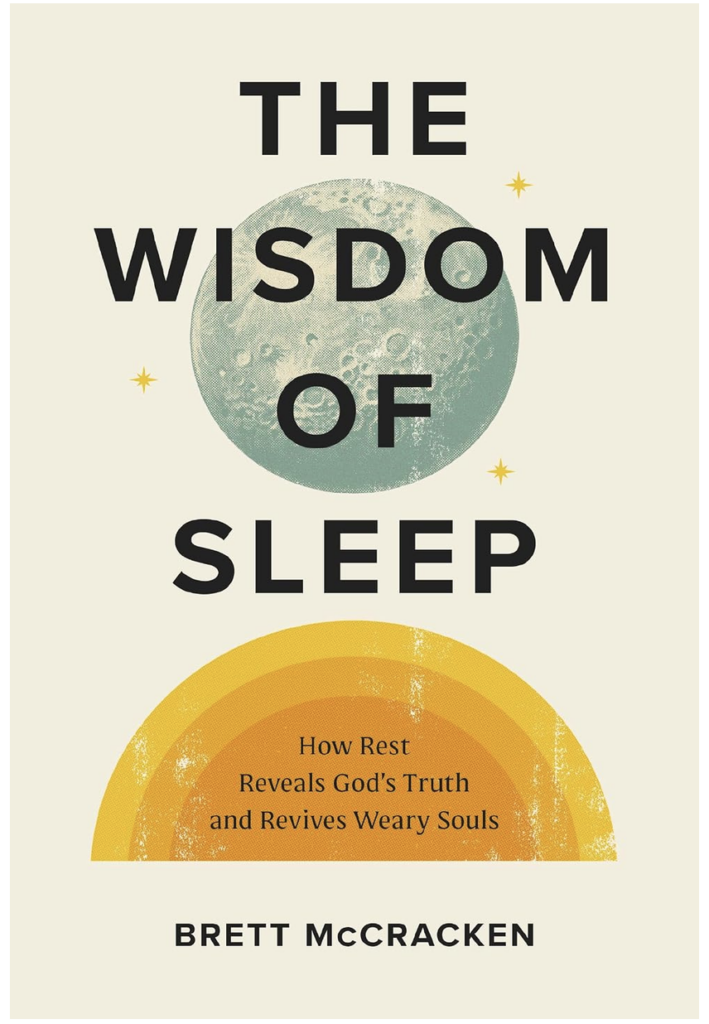
The Wisdom of Sleep
Eye-opening revelations from Scripture and science about why we sleep, dream, and rest—and why they are such gifts.
Drawing from Scripture, science, cultural commentary, and personal reflections, Brett McCracken shows how sleep, rest, and Sabbath are not just necessary downtimes or missed opportunities to be productive—they are sacred practices that deepen our relationship with God, nurture our love for others, and bear witness to his grace.
Leave a Reply