


Sponsored content: Gently Tended by Tyndale
I’ll never forget my freshman year of Bible college. I was nervous that everyone would expect me to know the Bible inside and out before classes even began. The truth was, I couldn’t remember half of what I’d read, and I needed someone to walk through the basics with me. God gave me that person in Mrs. Tung. She spent the semester teaching our class about spiritual disciplines and even set aside precious class time for us to practice them. That time helped me see that growing in my faith wasn’t only about learning more, it was also about making room to be with God.
I was surprised by how simple they were. Prayer, time in Scripture, silence, gratitude: none of these sounded groundbreaking. But making room to practice them helped me see how much of my daily life I could bring to God.

Spiritual disciplines are practices that help us pay attention to God and respond to Him in everyday life. They don’t earn us His love or guarantee that we’ll feel close to Him every time. They give us ways to receive His Word, talk with Him, and live out what we’re learning.
A Bible Study on Spiritual Disciplines: Gently Tended

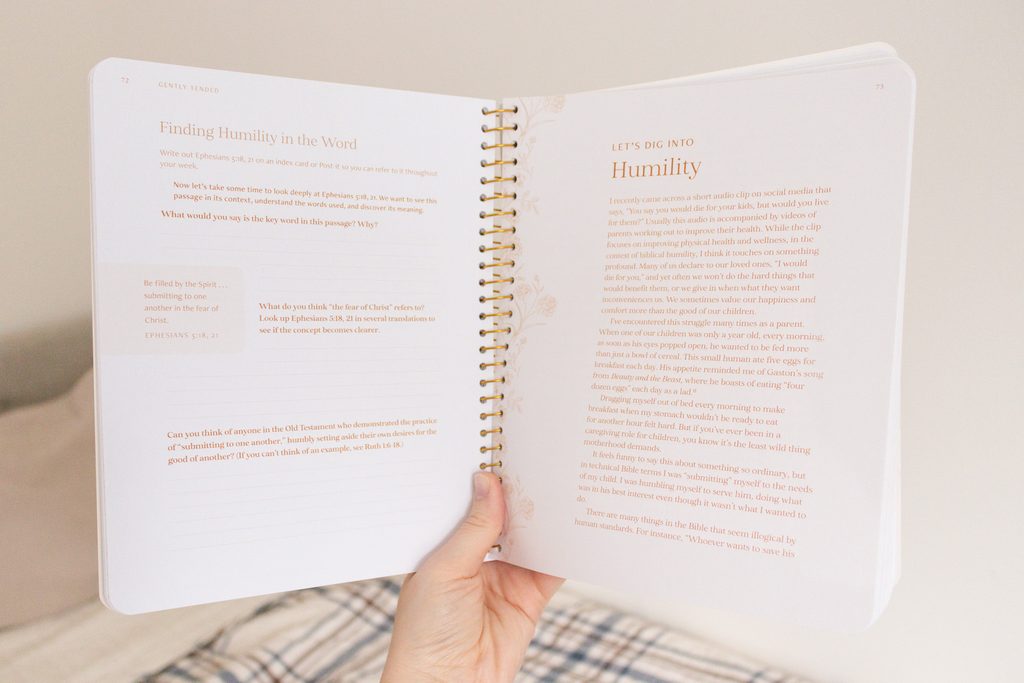
If you want to dig deeper into spiritual disciplines, an absolutely wonderful resource I want to encourage you to look at is Gently Tended: A Grace-Filled Bible Study for Practicing the Spiritual Disciplines by Elizabeth Santelmann. What I love about its approach is that Elizabeth doesn’t present these practices as a set of rigid routines you have to get right. She helps us see them as invitations to spend time with God, even in the middle of a busy or overwhelming season.
I think many of us know what it feels like to want to pursue God but feel unsure where to start—or to feel like we’ve already fallen behind. This study speaks to that tension with a gentle reminder: spiritual growth isn’t about trying to do more to earn God’s approval. We can come to Him right where we are. That’s the kind of encouragement I want someone to hear when they’re tired and still longing to be close to Him.
The study has twelve sessions, so it goes beyond the seven disciplines we’ll talk about in this post. Along with Bible study, prayer, gratitude, meditation, service, silence, and worship, Elizabeth explores humility, simplicity, confession, stewardship, and celebration. I love that those topics invite us to consider how our relationship with God can impact everyday choices, relationships, and even the way we receive joy.
Each session gives you Scripture to engage with, teaching to help you think it through, and questions that make room for honest reflection. There’s space to pause and consider what a practice might look like in your life, rather than trying to copy someone else’s routine. The book also includes access to teaching videos, plus discussion questions and a leader’s guide. You could study on your own, work through it with a friend, or use it with a group.
If you’ve been wanting to learn about spiritual disciplines but are afraid another Bible study will feel like one more thing on your to-do list, I think this is a lovely place to begin. Take one session at a time. Let the Scripture sink in, be honest about the season you’re in, and try one small practice. God is patient with us as we grow.
Take a look at Gently Tended here.
7 Spiritual Disciplines to Practice in Everyday Life
And if you’re wondering what these practices could look like before you begin a study, here are seven places to start.
1. Bible Study
2 Timothy 3:16–17: “All Scripture is God-breathed and is useful for teaching, rebuking, correcting and training in righteousness, so that the servant of God may be thoroughly equipped for every good work.” (NIV)
Paul explains that Scripture teaches, corrects, and equips God’s people for good works, and that includes you and me! Bible study is more than reading to finish a chapter. It means slowing down to understand what a passage says, what it shows us about God, and how it fits into the larger story of Scripture.
Try it: Read a short passage, write down one thing you notice about God, and bring one question from the passage into prayer.
2. Prayer
Matthew 6:6: “But when you pray, go into your room, close the door and pray to your Father, who is unseen. Then your Father, who sees what is done in secret, will reward you.” (NIV)
Jesus reminds His followers that prayer is about coming to their Father, not impressing the people around them. It’s an honest conversation with God that can include praise, confession, requests, and whatever is on your heart. You don’t need perfect words or an audience to begin.
Try it: Talk with God while you make breakfast, pray for someone as soon as they come to mind, or spend a few quiet minutes with Him before bed.
3. Gratitude
1 Thessalonians 5:18: “give thanks in all circumstances; for this is God’s will for you in Christ Jesus.” (NIV)
Paul calls believers to give thanks in all circumstances, which doesn’t mean pretending every circumstance is good. Gratitude helps us notice God’s gifts and remember His faithfulness, even during a difficult season. Our struggles are real, but they aren’t the whole story.
Try it: At the end of the day, write down one specific gift and thank God for it. It could be a friend’s encouraging text, a meal you enjoyed, or the strength to get through a hard day.
4. Meditation
Philippians 4:8: “Finally, brothers and sisters, whatever is true, whatever is noble, whatever is right, whatever is pure, whatever is lovely, whatever is admirable—if anything is excellent or praiseworthy—think about such things.” (NIV)
Paul urges believers to pay attention to what fills their minds. One way to practice biblical meditation is to spend unhurried time thinking about a truth from Scripture, allowing it to shape how you see God and your circumstances. Instead of rushing on to the next passage, you can return to one verse throughout the day.
Try it: Choose a verse you want to remember and write it on a sticky note. Place it somewhere you’ll see it often, like your bathroom mirror, and pause to think about its meaning each time you read it.
5. Silence and Solitude
Luke 5:16: “But Jesus often withdrew to lonely places and prayed.” (NIV)
Even in the middle of His busy ministry, Jesus made time to step away and pray. Silence and solitude give us space to put aside other voices and bring our thoughts honestly to God. They can also help us notice when we’ve been turning to distraction before turning to Him.
Try it: Put a short “date with God” on your calendar. Find a quiet place, put your phone away, and begin by praying, “Lord, I’m here.” If worries, questions, or confessions come to mind, bring those to Him too.
6. Service
1 Peter 4:10: “Each of you should use whatever gift you have received to serve others, as faithful stewards of God’s grace in its various forms.” (NIV)
God has given each of us something we can use for the good of others. Service means offering our time, attention, or abilities with love, whether or not anyone notices. It’s one way to put what we’re learning from Jesus into practice.
Try it: Bring a meal to a friend, volunteer at church, take care of a chore for someone else, or give your full attention to a person who needs to talk.
7. Worship
John 4:23–24: “Yet a time is coming and has now come when the true worshipers will worship the Father in the Spirit and in truth, for they are the kind of worshipers the Father seeks. God is spirit, and his worshipers must worship in the Spirit and in truth.” (NIV)
Jesus shows us that worship is about responding to the Father in Spirit and in truth. Singing is a wonderful way to do that, regardless of how you think your voice sounds! Worship as a whole is about reflecting on the truth of what we know about God revealed in Scripture, and allowing the Holy Spirit to move our hearts to praise Him with intention and humility.
Try it: Sing along with a worship song, pray through a psalm, or pause after reading Scripture to tell God what you love about His character.
How to Start Practicing Spiritual Disciplines
You don’t need to start all seven disciplines this week. Choose the one that speaks to where you are right now, and make a small, specific plan to practice it over the next few days. You might write, “After I make my morning coffee, I’ll read five verses and write down what they show me about God.”
Then notice what you learn. Some days may feel meaningful; others may feel ordinary. Either way, you can keep coming to God as you are and make room to know Him more deeply.
Leave a Reply