


About this episode:
Loving others is easy—until someone hurts us, challenges us, or tests our patience. How do we respond with Christlike love when we just don’t feel it?
In this episode of the Coffee and Bible Time podcast, Dr. Winfred Neely joins Ellen Krause to share what the Bible teaches about agape love and how we can love others through the power of the Holy Spirit, even when it’s hard.

 Apple Podcasts
 Spotify
TIMESTAMPS:
00:00 We Really Do Have to Love Everyone
02:50 Why the Church Needs This Message
03:27 Loving God Means Loving People
04:14 Understanding Agape Love
09:27 Love Is a Choice, Not Just a Feeling
10:34 Loving Your Enemies
14:10 Putting Agape Love into Action
16:24 Loving Difficult People (With Boundaries)
20:53 Overcoming Bitterness and Moving Forward
22:19 Practical Steps to Grow in Christlike Love
Dr. Winfred Neely: No human being is exempt from our love. Now, this does not mean that we approve of everything, that we go along with everything, but it does mean that hatred of any person is off-limits for the child of God.
I think I said on another podcast that there was someone whose name I was not able to say, let alone pray for, for a couple of years.
I couldn’t even say his name. I prayed for the person this morning.
Do I agree with what they’ve done? No.
Have they hurt a lot of people that I know? Yes.
But I’m praying for their repentance. I’m praying that God will touch their heart because I want to see the best for them.
And in all transparency, it was still a struggle this morning. I wrote a book on this topic because the struggle is me. The struggle is fundamentally my own heart.
Ellen Krause: Welcome back to the Coffee and Bible Time podcast. I’m Ellen, your host.
Is there someone in your life that you know you’re supposed to love, but honestly, you just don’t want to?
Well, Jesus’ command to love one another sounds simple, but when we put it into practice in our families, our friendships, our churches, and especially with people we strongly disagree with, it can become incredibly challenging.
But this isn’t just a nice suggestion from Jesus. It’s a command. So what does it actually look like to live out Christlike love when our feelings aren’t there, when we’ve been hurt, or when someone is just really difficult to love?
Well, today, I am so honored to have with us Dr. Winfred Neely.
Dr. Neely has spent decades serving the church as a pastor, professor, and ministry leader. He served for more than 20 years at Moody Bible Institute and is the retired vice president and academic dean of Moody Theological Seminary.
Dr. Neely, welcome to the Coffee and Bible Time Podcast!
Dr. Winfred Neely: Well, thank you, Ellen, for extending the invitation to me. I’m honored to spend some time with you this morning.
Ellen Krause: Well, I’m just so glad to have you. Before we really dive in, I’d love to hear your heart behind this topic.
In your years of ministry, was there a moment when you realized just how desperately the church needs this message?
Dr. Winfred Neely: You know, I think it has been on my mind for many, many years, but it became more acute, more pronounced during the pandemic, interestingly enough.
And it’s continued to grow and expand in my mind in terms of the urgency of this biblical message.
Ellen Krause: I see. And we’re living in a time now when Christians can disagree very strongly. How do we pursue biblical unity and love when we genuinely disagree with one another? How do we transcend that?
Dr. Winfred Neely: Well, no matter what we do, if we carry out everything that God has called us to do without love, we are not acting Christianly.
So, to answer your question, the way we navigate this is to begin in love, to continue in love, and to end in love.
If we are not doing that, we’re not acting Christianly, irrespective of what the issue is.
Ellen Krause: Yes, honestly—and truly, it makes so much sense when you think about it like that.
There are so many beautiful passages in Scripture about love. Let’s talk about agape love a little bit.
What would be one of those Scripture passages that you would refer to about what it means for Christians to love one another?
Dr. Winfred Neely: Well, here is one text, and we don’t quote this one much in the life of the church. It’s tucked away in 1 John 4:20. I beg your pardon—chapter 4, verse 20. This is what it says:
“If someone says, ‘I love God’”—now, keep in mind, that’s a big claim, I love God—”and yet hates his brother or sister, he or she is a liar. For the one who does not love his brother and sister whom he has seen cannot love God whom he has not seen.”
So, the claim to love God carries with it another reality: that we love people.
And if we hate people, or we’re not concerned about people, or we don’t love people, according to 1 John 4:20, we, in reality, do not love God.
And this is where it seems to me, Ellen, that the church is missing the mark right here.
Ellen Krause: Hmm. Dr. Neely, I was reading your book called A Love to Live By, and you emphasized that, and it really made me do a heart self-examination.
Why do you think it’s so hard for us to actually obey Jesus in this area?
Dr. Winfred Neely: We cannot love—in the biblical sense of agape love—in our own strength.
We are desperately dependent upon God, and we need God’s grace, help, strength, and power to live this way.
And so, it seems that the real reason why we have such a hard time practicing this is because we’re not experiencing His power.
It’s not that the power is not available. We honestly are not plugged in.
And loving people is the primary barometer and test for the power of God expressed in a person’s life.
And let me hastily add, when I say loving people, I don’t mean willy-nilly. I mean biblically informed, theologically grounded, holy love lived out in the power of the Spirit.
That is an indicator of whether or not the power of God is being expressed in our lives as individuals and in the church corporately.
Ellen Krause: That’s such a concept that we really need to come to grips with, and I love that you call it out. You use this Scripture, and you challenge us.
Can you explain, for those who maybe aren’t familiar with the term agape love, what that actually means in our lives? How would you explain that?
Dr. Winfred Neely: That’s a very good question, and it is a question that we need to understand because we do have various misconceptions of love.
Now, there were a wide range of terms for love in the Greek language. The Spirit of God takes up the term agape.
We know what agape love is from the way that God acts to show His love to us.
We know, for example, that when we are called to love one another, it is not a call for us to reach out to people for our own advantage, so that we can be enriched.
That’s because God needs no one. He’s complete in and of Himself and could have continued for all eternity in His triune life.
Father, Son, and Holy Spirit could have continued like that forever.
He, however, chose to create so that His love spills over, not for His own enrichment, not for His advantage, but for our advantage.
So, one of the key things about agape love is that agape love reaches out to promote the highest good of the other, without any self-centered advantage being cloaked in the love for someone else.
And another thing, too, Ellen: the only way that we can know what agape love is, is from God Himself.
There isn’t a thing that we can learn about this from people. It’s God Himself who helps us understand.
This is why the Bible says, “By this we know love, that He laid down His life for us.”
But here is the kicker: God wants His triune life dynamics and His love to be reproduced in you and me.
This is what He’s calling the Church to do: to be a kind of embodied expression of God’s triune life in a fallen world.
Ellen Krause: Thank you for that incredibly rich explanation of agape love. And it is something that we really need to wrap our minds around and understand more deeply.
You know, something that stood out to me that you talk about in your book is love being an act of obedience rather than the emotional application that we typically think of.
Why was that distinction important for you to call out?
Dr. Winfred Neely: Well, because emotions come, emotions go, and emotions fluctuate.
My wife and I, for example, have been married for fifty years. We did not stay married for the last fifty years because we were happy every day.
We stayed married because of vows, commitment, and loyal agape love to one another.
This is not to say that our emotions may not be involved, but it is fundamentally an act of the will, carried out in the power of the Holy Spirit, that impacts our emotions and how we feel about others.
But it’s spiritually empowered.
Ellen Krause: Mm. It is, it is.
And I wanted to touch on this a little bit more about loving the people that we don’t like.
You know, Jesus doesn’t tell us just to love people who love us. That’s the easy part. But He tells us to love our enemies.
What does the New Testament teach us about what that kind of love actually looks like?
Dr. Winfred Neely: In the Sermon on the Mount, the Lord Jesus has a discussion that was no doubt a shocking, subversive bombshell for those who first heard it.
Jesus says, “You have heard that it’s been said that you shall love your neighbor and hate your enemy. But I say to you, love your enemy and pray for those who persecute you and despitefully use you,” and so forth and so on.
Then He begins to talk to us about God’s ways and providence to exemplify the commandment. God sends rain on the just and the unjust.
And what Jesus is saying to us is that no human being is exempt from our love. So this is the starting point: no human being is exempt from our love.
Now, this does not mean that we approve of everything, that we go along with everything, but it does mean that hatred of any person is off-limits for the child of God. That’s the starting point.
And He talks about enemies and what’s happened. We spiritualize, you know.
I’ve heard it said in the church world, “Our enemies are spiritual. People are not your enemy.”
Well, that’s true. We do have spiritual enemies, but sometimes these enemies are embodied in persons. Sometimes they may be people in our own family.
I mention family members, and I know a number of Christians who have experienced their sons- and daughters-in-law hurting their children—children they raised in the fear of God.
That son-in-law or daughter-in-law does something absolutely egregious.
The marriage ends, and if you’re not careful, you actually find yourself hating that person who hurt your own adult children and is harming your grandchildren.
You can hate the person. And in these kinds of scenarios, no one is helped.
Ellen, listen, I get it. I do. I can understand.
And one of the things that we have to do when that happens is acknowledge it: “Lord, I hate this person.”
I think I said on another podcast that there was someone whose name I was not able to say, let alone pray for, for a couple of years.
I couldn’t even say his name. I prayed for the person this morning.
Do I agree with what they’ve done? No.
Have they hurt a lot of people that I know? Yes.
But I’m praying for their repentance. I’m praying that God will touch their heart because I want to see the best for them.
And in all transparency, it was still a struggle this morning.
I wrote a book on this topic because the struggle—the struggle is me. The struggle is fundamentally my own heart that must yield to the Spirit of God.
So I prayed for that person this morning.
One other thing I wish I could have said more about in the book is loving unsaved people in general, because God tells us not only to love the church but to love all people, and in particular, our enemies.
God is calling the church to love all people, including unsaved people, and to consider how we respond to them.
We don’t always like what they do and how they live. It bothers us sometimes, but we still have to love them.
Ellen Krause: Yes, and that truly can be so challenging.
I think one thing you said there that I have found helpful is, like in the Psalms, just being completely honest with God, like you said, and saying exactly how you feel, praying, and asking God to move my heart beyond that.
And I know you also mentioned in the book that it’s okay to have boundaries and things like that. But we can also ask God to help us to love that person and pray for that person.
Dr. Winfred Neely: I didn’t mention this in the book, but I served at Lawndale Community Church on the west side of Chicago in the late ’90s and the early 2000s.
And to this day, one of the things that I can say is that this church has loved its neighbors well in the name of Jesus.
You know, Lawndale had an infant mortality rate in that community that was higher than some Third World countries back in the ’70s and ’80s.
The Christians over there started a health center in the name of Jesus: Lawndale Christian Health Center, one of the largest employers in North Lawndale.
They started to love the neighborhood, to love the people, to show the love of the cross to people.
They started Lawndale Christian Development Corporation, helping provide housing and teaching people homeownership.
All of this was done in the name of Jesus. Through the Hope House Ministry, men who were incarcerated or addicted to drugs could get into these programs.
And we’ve seen so many men delivered, and families transformed and reunited through these efforts because they love God and they love people.
We’ve got tangible evidence of this love in the community.
They didn’t invest a lot of money in building huge cathedrals, but they invested their money in efforts to show love and help people in the name of the Lord Jesus. Agape love. It’s all done in love.
Ellen, it’s love. And this is where we’ve missed it. We’ve missed this, right?
Ellen Krause: Mm-hmm.
Dr. Winfred Neely: And I’m hoping that people will embrace love in this crucial, critical time in our history to see God do something fresh in our own day.
Ellen Krause: Yes. And I think it’s that kind of love, too, that turns heads and makes people question, “What’s there? There’s something about that person. I want to know what makes them tick,” you know?
I think we all have at least one person in our lives whom we can find difficult to love.
As a pastor, what’s some practical advice that you would give for someone who’s trying to show Jesus’ love in their real, messy human relationships?
Dr. Winfred Neely: My goodness. You see, here was the problem: God’s people.
Some of them are very difficult to love. One preacher called them “extra grace required” people.
And how do you love them? Well, yeah, you love them, and you establish boundaries.
You know, sometimes you have to be firm with them. There was one person who was coming to see me, quitting their job every two weeks, wouldn’t keep a job, and was very difficult to work with people.
And I told the person, “Why are you coming to see me like this?”
He says, “Well, this is why you’re here. You’re the pastor, so this is why I come to you.”
I said, “Well, I’ll tell you. This is what I would like for you to do.
I need you to keep a job for one year. After you’ve worked at the job for one year, come in and see me and let me see how you’re doing.”
See, I loved the person, but they have to be told. And you know what? That person kept a job for one year.
He came to see me at the end of the year. “Pastor Neely, I did it! I kept the job.”
“Good for you!”
And, you know, sometimes people say things to you that hurt, and we cannot respond to them in kind.
You know, the Scripture says in 2 Timothy 2:24, “The Lord’s servant must not be quarrelsome, but”—listen to this—”be kind to all.”
“Kind to all, skillful in teaching.” Listen to this: “Patient when wronged.”
It doesn’t say that you’re a doormat. It says patient when wronged. That’s got to be love.
“With gentleness, correcting those who are in opposition.” Strength under control. It’s another expression of love. I care.
“If perhaps God may grant them repentance.” Wait a minute. So now, my loving that difficult person becomes the vehicle in God’s hand to bring them to repentance, right?
This is what it says: “leading them to repentance, leading to the knowledge of the truth, that they may come to their senses,” the text says, “and escape from the snare of the devil, having been held captive by him to do his will.”
There is literally too much at stake for us to be impatient and short with people when, in fact, they need our love.
And we love them in such a way that the Spirit of God will take our attitudes toward them and convict them, and hopefully they’ll come to their senses and be delivered from the powers of darkness.
And I think those are the kinds of things that we need to keep in mind as we confront difficult people.
It is fundamentally not about us. It really isn’t. There are larger issues at stake here.
And if we have not done well with this, well, we acknowledge, “God, Lord, I didn’t do well with that one. I dropped the ball on that one.”
But don’t become obsessed with these past missteps that we’ve made.
We have to move forward and say to God in the present, “Lord, by Your grace, going forward, I’m going to do better. I need You to help me.”
Ellen Krause: Yes. I love that you spoke to that person with wisdom and sharpening. And it’s almost like they just needed that challenge.
Dr. Winfred Neely: Yeah.
Ellen Krause: And that’s a beautiful thing, that he worked an entire year. I mean, exactly what he needed.
And I think a lot of times, loving and sharpening at the same time can be hard, but it truly is what we’re called to do, and you did it in a very loving way.
Dr. Winfred Neely: Yeah, and there have been times when I didn’t do it in my many, many years of pastoral ministry.
And when you don’t do it, this is what’s going to happen: generally, the issue will shift from the person.
The issue will shift from their own issues, from their own sin, to you, because you have not been handling things biblically.
So we want to conduct ourselves in such a way that we do not give people the opportunity to shift the focus from what’s really, really critical to our own attitudes about their shortcomings.
Ellen Krause: Yes. And I think, too, bitterness can surface when we bypass that loving approach. We only end up hurting ourselves more.
Dr. Winfred Neely: And the bitterness is a real thing. The bitterness is a real thing, and we become obsessed with that.
Again, I talk to my wife a lot about my own spiritual things that I’m going through.
I was in prayer the other day and kept going back over something that happened 30 years ago, kept going back over something that happened 40 years ago.
And I looked at her and said, “How am I still doing that?”
And, you know, we had a conversation, and I realized once again that we do have to move on.
It’s not that we don’t remember. That’s a whole other area of development in the life of the child of God: how we remember redemptively. It’s just a whole other issue.
But it’s water that’s gone under the bridge. We’ve learned lessons from that.
Now we have to reach for that which is ahead and press on toward the mark for the prize of the upward call of God in Christ Jesus, asking God to help us learn from the missteps and victories of the past so that we’re not paralyzed in the present, so that we’re able to walk with God and do what He calls us to do.
Ellen Krause: That’s a tremendous way of pointing us in the direction of loving others with the love to live by, agape love.
Dr. Neely, as we wrap this up, if you were sitting across the table from someone who is listening to this right now and she said, “Okay, I want to become more of a loving Christian,” where would you tell her to start?
Dr. Winfred Neely: Well, I would tell her, first of all, to have a little old talk with Jesus. I would have a conversation with Him.
I’m reading the book of Deuteronomy: “You shall love the Lord your God with all your heart, with all your mind, and with all your strength.”
The deep, deep devotional life that God desires for His covenant children. This is where I would start.
I would say, go deeper in God first. You know, deepen your prayer life. Increase your intake of Scripture.
And then talk to somebody in your immediate sphere of influence for accountability purposes. Let them know what your desire is.
Be prepared for resistance, though, because once we start letting people know that this is what we’re going to do, this is what our commitment is, the flesh is going to rebel.
It’s not that you’re asking for it; it comes unbidden because it does not want to yield to the Spirit of God. I have a chapter in the book about that.
And I would say, start living in your home, with your own family.
Now, you may be doing what you do already, but ask God, “Lord, let me do it in love,” so that I’m not just going through the motions. Begin at home.
Ellen Krause: Yes.
Dr. Winfred Neely: Then expand that to the church. It may just be writing a handwritten note to somebody: “I appreciate you, and I just want to say thank you.” Because it’s tied to gratitude.
You’re looking at things that God is doing, and you’re grateful for that.
And you express love to people by letting them know that you are grateful and thankful for what God is doing in his or her life.
This is what Joni Eareckson Tada calls small, drastic steps of loving obedience expressed to others.
It’s just little stuff. It’s these little things: the smile, the agape hug, that word of encouragement that will linger in the hearts and minds of people until the day that they die.
That’s where I would start.
Ellen Krause: And just imagine if everyone took even that one small step. How radically changed the world would be!
And for our listeners, one small step could also be reading your book, Dr. Neely.
How can they find more information about you and your book, A Love to Live By?
Dr. Winfred Neely: Well, A Love to Live By is available wherever books are sold: Amazon, Moody Publishers, Walmart, Barnes & Noble, and so forth.
People can also find out about me primarily through Moody Bible Institute and YouTube.
Ellen Krause: Fantastic. Well, we will make sure we include all those links in our show notes so listeners can find them very easily.
Before I let you go, I have to ask our favorite questions here at Coffee and Bible Time. I’m sure you have many Bibles, but what is your current go-to Bible, and what translation is it?
Dr. Winfred Neely: My current go-to Bible is the NASB, but I do have a lot of the ESV, the New King James Version, and the NLT. My current go-to is the NASB.
Ellen Krause: Okay. Do you have any favorite Bible journaling supplies? Do you do Bible journaling?
Dr. Winfred Neely: Well, my writing is where I’m doing that. I’m writing devotionals now. I just did one for Moody, the YouVersion seven-day devotional. I’m writing a 31-day devotional for Today in the Word that’s going to come out.
So I write not only for scholarly reasons, Ellen, but for devotional reasons, which is very, very important to me.
Ellen Krause: Mm, yes. I love that about the book.
Okay, last one. What is your favorite app or website for Bible study tools?
Dr. Winfred Neely: Logos Bible Software.
Ellen Krause: Yes.
Dr. Winfred Neely: I’ve got about 20,000 volumes of stuff on my laptop, which is kind of nice, and I use it every day, especially when I’m engaged in Bible study. Yep.
Ellen Krause: Yes, it is incredible, incredible. We’ll put a link to that in the show notes as well.
Well, Dr. Neely, what a joy it has been for you to be with us today. I can’t thank you enough for bringing this topic to light and showing how desperately we all need to be showing more love in our lives. So thank you for being here.
Dr. Winfred Neely: Thank you so very, very much.
And do me a favor: say hello to your pastor for me, and say boo to Sally. Tell her I’m sending that to her. She will know what that means.
Ellen Krause: [laughs] All right. I most certainly will. What a joy! Yes, we love Pastor David and Sally. They’ve just been amazing.
If you’re listening to this and wondering, he’s a pastor who served under Dr. Neely and, about seven years ago, I think, became the head pastor at the church that I attend. And so, what a joy!
Dr. Winfred Neely: Yeah. Okay. Awesome. Yeah, yeah.
Ellen Krause: Well, thank you again. And to all of you listening, I hope this conversation encourages you to look for one simple opportunity today to put Christ’s love into practice.
And if something from today’s conversation challenged or encouraged you, we’d love to hear about it. Leave us a comment or a review and let us know what stood out to you.
Thank you so much for joining us. We’ll see you next time on the Coffee and Bible Time podcast. Have a blessed day.
Loving others sounds simple…until someone hurts us, tests our patience, or makes choices we strongly disagree with.
We know Jesus calls us to love one another, but what does that look like when our feelings don’t cooperate?
As Christians, we’re called to a love that goes beyond emotions or personal preferences.
This is agape love—a selfless, intentional love that seeks the good of others and reflects the character of God.
Dr. Winfred Neely, pastor, professor, and former vice president and academic dean of Moody Theological Seminary, joined Ellen on the Coffee and Bible Time Podcast.
He shares what the Bible teaches about agape love and how we can practice it in our everyday relationships—even when it’s difficult.
What Is Agape Love?
Agape love is a selfless love that seeks the highest good of another person without looking for personal advantage.
Not based on how someone makes us feel, agape love is rooted in God’s character and expressed through our actions.
Agape love is about seeking the good of others, without thought of any benefit to ourselves.
This kind of love changes how we approach relationships. Instead of asking what someone can do for us, we begin asking how we can respond to them in a way that honors God and seeks their good.
The Bible shows us that God is the ultimate example of this love.
First John 4:19 reminds us,
We love because he first loved us.
1 John 4:19 (ESV)
Our ability to love others begins with receiving and understanding the love God has already shown us.
We cannot fully understand agape love simply by looking at human relationships. We learn what love truly means by looking at God Himself.
And 1 John 3:16 points us to the greatest example: Jesus Christ laid down His life for us. His sacrifice demonstrates a love that gives, serves, and seeks the good of others.
By this we know love, that he laid down his life for us, and we ought to lay down our lives for the brothers.
1 John 3:19 (ESV)
As followers of Jesus, we’re called to reflect that same selfless love in a world that desperately needs it.
Why Is It So Hard to Love Difficult People?
If agape love is so central to the Christian life, why is it so challenging to practice?
Sometimes people hurt us deeply. Other times, we struggle with a family member’s decisions, a friend’s behavior, or a person whose beliefs are completely different from our own. Even within the church, we encounter people who test our patience.
We may know the right biblical response but still feel anger, frustration, or resentment.
“We cannot love—in the biblical sense of agape love—in our own strength.”
Dr. Winfred Neely
Dr. Neely explains that practicing agape love isn’t something we can accomplish through willpower alone. We desperately need God’s grace, help, and strength.
When we struggle to love someone, the answer isn’t simply to try harder or pretend we aren’t hurt. We need to turn to God, ask for His help, and allow the Holy Spirit to transform our hearts.
Galatians 5:22-23 describes love as the first fruit of the Spirit. As we grow in our relationship with God and learn to depend on Him, He works in us to develop the character that reflects Jesus.
But the fruit of the Spirit is love, joy, peace, patience, kindness, goodness, faithfulness, gentleness, self-control; against such things there is no law.
Galatians 5:22-23 (ESV)
Growing in love is part of our spiritual growth. It involves surrendering our attitudes, examining our hearts, and asking God to help us respond differently.
Agape Love Is an Act of Obedience, Not Just a Feeling
Practicing agape love means we don’t have to wait until we feel loving to choose a loving response.
Emotions change. Some days, we naturally feel patient and compassionate. Other days, we feel irritated, exhausted, or unwilling to extend grace.
Dr. Neely shares that he and his wife have been married for 50 years, but they didn’t remain married because they were happy every single day. Their commitment was rooted in their vows and their faithful love for one another.
“Biblical love is fundamentally an act of the will carried out in the power of the Holy Spirit.”
Dr. Winfred Neely
This doesn’t mean emotions are unimportant. But our feelings shouldn’t determine whether or not we obey God.
Jesus commands His followers to love one another as He has loved us. This command invites us to make choices that reflect His character, even when those choices aren’t easy.
A new commandment I give to you, that you love one another: just as I have loved you, you also are to love one another. By this all people will know that you are my disciples, if you have love for one another.”
John 13:34-35 (ESV)
For example, agape love might look like:
These actions don’t always change our feelings immediately. But they give us opportunities to surrender our responses to God and practice the love He calls us to demonstrate.
What Does the Bible Say About Loving Your Enemies?
One of Jesus’ most challenging teachings appears in the Sermon on the Mount.
“You have heard that it was said, ‘You shall love your neighbor and hate your enemy.’ But I say to you, Love your enemies and pray for those who persecute you, so that you may be sons of your Father who is in heaven. For he makes his sun rise on the evil and on the good, and sends rain on the just and on the unjust.
Matthew 5:43-45
Just as God gives good things to those who don’t obey Him, Jesus calls us to extend love beyond the people who are easy to love.
“No human being is exempt from our love.”
Dr. Winfred Neely
This doesn’t mean Christians must approve of every action, or agree with every decision.
It means we don’t have the freedom to hate people, even when their behavior is deeply wrong or hurtful.
Dr. Neely shares a personal example of struggling to pray for someone who had hurt people he knew.
For years, he found it difficult even to say that person’s name. But eventually, he began praying for that person’s repentance and asking God to touch their heart.
Even now, years later, it’s still a struggle.
Sometimes practicing agape love begins with telling God about our struggle, and asking Him to change our hearts.
We can pray for someone without approving of their actions. We can desire their repentance without minimizing the harm they’ve caused. And we can trust God to work in their lives while allowing Him to work in ours.
Can You Love Someone and Still Have Boundaries?
The short answer is yes.
Biblical love doesn’t require us to ignore harmful behavior, tolerate every action, or avoid difficult conversations.
In fact, genuine love will at times require us to establish boundaries and speak the truth.
Dr. Neely shares an example from his pastoral ministry of a person who repeatedly quit jobs and struggled to maintain employment.
Rather than simply offering sympathy, Dr. Neely challenged him to keep a job for one year and then return to discuss his progress.
The person followed through and later came back to share that he had accomplished the goal.
Love isn’t separate from accountability. And loving someone the way God loves us doesn’t always mean telling them what they want to hear.
In 2 Timothy, we hear a description of what a loving, biblical leader should look like:
And the Lord’s servant must not be quarrelsome but kind to everyone, able to teach, patiently enduring evil, correcting his opponents with gentleness. God may perhaps grant them repentance leading to a knowledge of the truth, and they may come to their senses and escape from the snare of the devil, after being captured by him to do his will.
2 Timothy 2:24-26
Notice that kindness and correction aren’t presented as opposites.
Agape love seeks another person’s good, and sometimes that good requires honesty, accountability, and consequences.
How to Practice Agape Love in Everyday Life
Learning to love like Jesus can feel overwhelming when we focus only on our biggest relational struggles.
Dr. Neely encourages Christians to begin with their relationship with God and then put love into practice in ordinary, everyday interactions.
Here are five practical ways to begin.

5 Ways to Practice Agape Love
1. Deepen Your Relationship With God
Start by spending intentional time in prayer and Scripture. Ask God to reveal where your heart needs to change and help you depend on His strength rather than your own.
As Deuteronomy 6:5 teaches, we’re called to love the Lord our God with all our heart, soul, and strength. Our love for others grows out of a life increasingly devoted to Him.
2. Pray for Someone You Find Difficult to Love
You don’t have to pretend your feelings aren’t there. Be honest with God about your frustration, anger, or hurt.
Then ask Him to help you pray for that person, seek their repentance where needed, and desire what is ultimately good.
You may not experience an immediate change in your emotions, but prayer gives you a place to surrender your heart to God.
3. Practice Kindness and Patience
When someone frustrates you, pause before responding. Listen carefully. Choose words that communicate truth without unnecessary harshness.
These small decisions can become meaningful expressions of agape love.
4. Start With Your Own Family and Church
Sometimes we focus on loving people in the abstract while overlooking the opportunities right in front of us.
Ask God to help you practice love at home, in your friendships, and within your church community.
Dr. Neely encourages these small acts of loving obedience, reminding us that seemingly small gestures can leave a lasting impression.
5. Learn From Past Mistakes and Keep Moving Forward
Perhaps you’ve already responded poorly to someone. Maybe you’ve allowed resentment to grow or missed an opportunity to show grace.
Instead of becoming consumed by regret, acknowledge your failure before God, learn from it, and ask for His help going forward.
Growing in agape love is a lifelong process. God invites us to keep surrendering our hearts to Him and taking the next step of obedience.
Let God’s Love Change the Way You Love Others
When we encounter difficult people, we’re given an opportunity to depend on God’s grace, practice obedience, and allow the Holy Spirit to shape our responses.
We may not always feel loving, and we won’t always get it right. But we can keep turning to God for the strength to love others faithfully.
As Dr. Neely reminds us, the struggle begins in our own hearts. That’s where we can invite God to do His transforming work.
Who is one person you find difficult to love right now? Consider bringing that relationship to God in prayer today. Ask Him to help you respond with truth, patience, gentleness, and a genuine desire for that person’s good.
You don’t have to change your heart through your own strength. Begin with God, take one small step of loving obedience, and trust Him to continue His work in you.
Want to hear more? Listen to the Coffee and Bible Time podcast conversation with Dr. Winfred Neely to explore agape love, loving your enemies, setting boundaries, and growing in Christlike love through the power of the Holy Spirit.
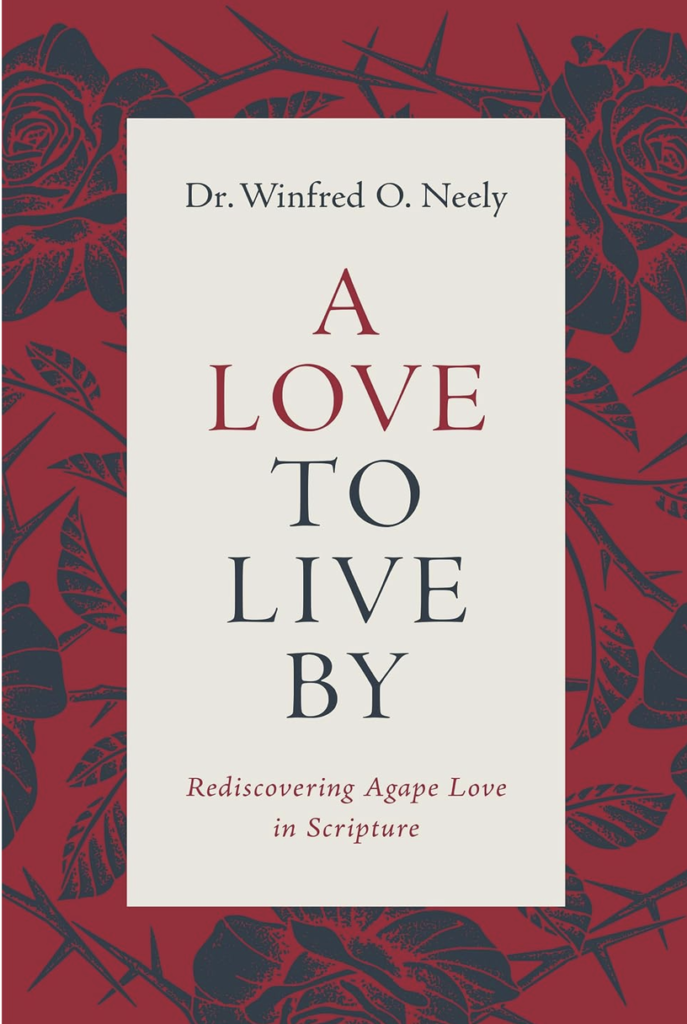
A Love to Live By: Rediscovering Agape Love in Scripture
Love one another.
These three simple, yet weighty, words are not old advice or an old suggestion. They’re a command, a directive, an authoritative word to be obeyed and put into practice.
The ancient commandment to love one another still matters in the ongoing drama of redemption. Yet, divisions and disunity show us that it’s not that simple . . . or easy.
Ministry leaders, pastors, educational leaders, and anyone who wants to understand the biblical grounding of what it means to love—and who wants to grow in Christian love—will be equipped and encouraged by A Love to Live By.
Leave a Reply