
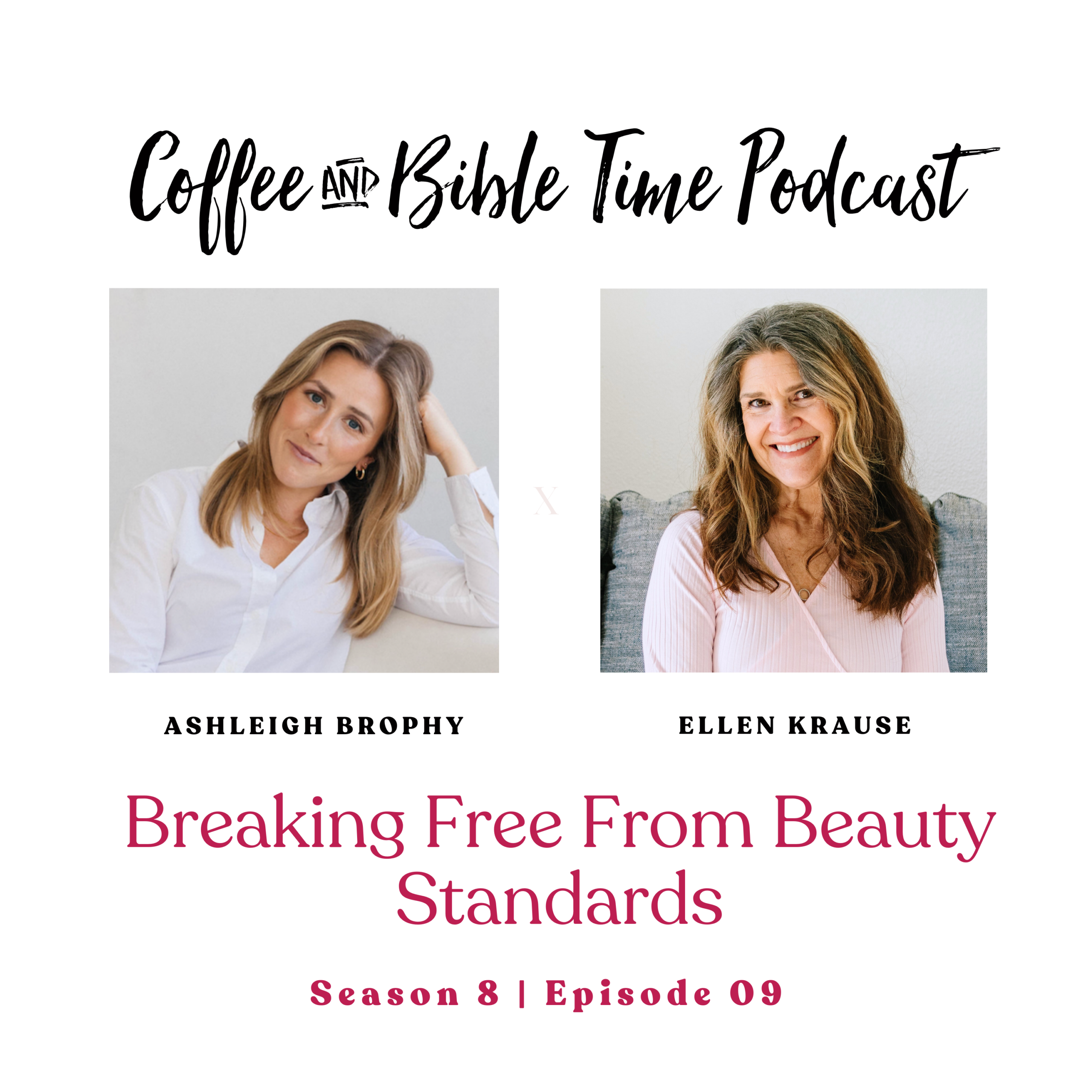

About this episode:
In today’s culture, appearance matters more than ever. From social media to fashion to aging, Christian women are constantly told what to look like, what to buy, and who to become. But what does Scripture actually say about beauty — and how does our identity in Christ reshape the way we see ourselves?
In this episode, Ellen talks with Ashleigh Brophy, creative director of Preserve Magazine, about why true beauty isn’t something you achieve—it’s something that flows from a heart anchored in your identity in Christ.

 Apple Podcasts
 Spotify
TIMESTAMPS:
00:00 Beauty Standards vs. Identity in Christ
02:48 Tension of Faith and Fashion
06:03 Fashion & Lifestyle Flipped on its Head
08:21 Calling, Creativity, and Life Changes
12:16 Inner Beauty & Identity in Christ
15:34 Aging & Leading By Example
20:08 Listening to God While Creating
25:39 Ashleigh’s Bible Study Tools
Ashleigh Brophy (introduction):
There’s always been a standard of beauty that has been pushed. But even more so now, I would say, really pushing this unrealistic idea of what beauty is and being satisfied with yourself if you look like the standard of beauty. The only solution is looking to our identity in Christ. So when those thoughts come in and that pressure from the world to believe we need to do X, Y, and Z to be beautiful, then actually look to Scripture. It’s really when we find rest in our identity in Christ that then the beauty of who God created us to be really radiates out from us.
Ellen Krause:
Welcome back to the Coffee and Bible Time podcast. I’m Ellen, your host, and I am so glad that you are here with us today.
We live in a culture that is constantly telling us what to wear, how to look, what to buy, and even who we should become. But Scripture tells us that we were never meant to be shaped by the world’s definitions, but rather to be transformed by the renewing of our minds. And yet, for many women, that transformation can feel complicated when it comes to things like fashion, creativity, beauty, and calling.
We love the Lord. We want to live faithfully, but we also love beauty, love creating. We love cultivating spaces, style, and stories. And somewhere along the way, many women have been made to feel that those loves are either shallow or spiritually suspicious.
So how can we reclaim the definition of beauty in our own creativity for the glory of God and the good of His people?
Here to help us answer that question is Ashleigh Brophy, the creative director of Preserve Magazine, a faith-driven fashion and lifestyle magazine that’s intentionally telling a different story. So if you’ve ever wrestled with comparison, questioned your value, or wondered where your creativity fits in with your faith, this conversation is for you. Ashleigh, welcome to the Coffee and Bible Time podcast. I’m so excited to have you here.
Ashleigh Brophy:
Thank you. Yeah, it’s great to be here.
Ellen Krause:
Well, I’m going to start by sharing a fun fact that will be especially of interest to you, Ashleigh, and something that our Coffee and Bible Time audience doesn’t know about me. I was a textiles and apparel major at the University of Illinois, and I’m a sewist who loves the Lord.
Ashleigh Brophy:
I love that.
Ellen Krause:
So I have really been looking forward to having this conversation with you because it’s something that’s kind of in my roots too, having a grandmother that taught me how to sew and enjoy that part of life. So what we start out by telling us a little bit about yourself.
Ashleigh Brophy:
Yeah, absolutely. So I was taught by my grandma how to sew and my aunt. I took it up at a really young age and I loved it. And I went to design school. And I actually decided to leave because it was just that toggle between my faith and fashion, style, and beauty, and I just felt like there wasn’t that depth of life that we find in Christ in that world. It was very empty and void.
And so when I started pursuing really my own walk with God, it was later on in my teen years. And I just saw that that emptiness just wasn’t worth it. I set that aside. I decided design and fashion and school, I was just going to leave by the wayside, trust that the Father would bring it back around.
I had really identified with wanting to be a designer and making all those plans since I was younger. So to really put that aside was a— it also was a huge relief, already seeing that God’s plan for my life was going to be so much more satisfying than anything else.
When I put it to the side, I would never ever have thought that it would come back. I really truly was like, it’s fine if I never touch a sewing machine again, if I never do anything with fashion. But God, if You have this for me, if there’s a way where these two things can coexist, not in a way that’s like my faith is an accessory, but actually that it’s transformational and touches people’s lives.
Because people need to know the gospel. They need to know what Christ has done for them. And without that, they’re left wanting. And that’s the heart really for Preserve, is that it would point women towards Christ, a little fire in their heart towards pursuing God in either a new way or just pursuing God altogether. That they could see that God wants us to be creative and to walk with the Holy Spirit and be expressions of Him in all these different areas. It’s not a boring life by any means.
Ellen Krause:
Right, absolutely. We see that all the way back to the Old Testament in the very skilled artisans that God used in the building of the tabernacle and the textiles. And one of the ways that God has equipped us and given us these gifts, these artistic gifts.
Well, Ashleigh, I was absolutely blown away when I got Preserve Magazine, issue number two. And you have done such an incredible job of exactly what you just described. Tell us a little bit about how you’ve kind of taken this concept and fashion and lifestyle and kind of flipped it in your direction for the magazine.
Ashleigh Brophy:
So…fashion and lifestyle flipped on its head. What I mean by that is everything that we see in the fashion industry really is focused on self. It’s contrary to what we see in Scripture. It’s focusing on discovering your truth, on expressing your own definition of your identity, building meaning around what you do, and then finding identity in what you wear, who you align with.
That’s usually the foundation that people are trying to find their identity from. Versus in the kingdom, right, our commonality already exists. All who believe are unified in Christ, first of all. And then our callings and our expression, our creativity, then flow out from the foundation of our identity in Christ.
So even though there’s that individuality, it all works together to build up the body of Christ. Versus in the world, you see a lot of times that uniqueness then divides people. So it’s really just having that different mindset, really a kingdom mindset, of how does God define who we are and what we do and what’s our center so that we really are functioning out from rest rather than striving.
And so for this issue, we’ve grown a lot. The first issue was in 2021. We took a break because we felt like we didn’t have the green light with God. And so we took a break and then we came back and we started issue two. And it’s been just a whirlwind. God said go last year. And then just all the pieces fell into place.
Ellen Krause:
As I was looking at it, I was really struck by the editorial commentary, a lot of the focus in this issue being on moms and their calling and the challenges of that and how people have grown through that. What really stuck with you out of all of the articles that were in this particular issue? Is there one that comes to mind as far as impact that it had on you personally?
Ashleigh Brophy:
Yes, actually. It stands out to me every time. For me, the article that was most impactful, I would say, was Anna Asbury’s article. Hers specifically because the season that she has walked through, I really felt like I had just experienced certain aspects of what she had shared.
She also has some older kids. And my firstborn is getting into the age where she’s not a little anymore. And we’re navigating all these really new things that I’m like, wow. And we had kids earlier than a lot of our friends, so we didn’t have a lot of that kind of walking in the same season.
Talking to her and getting to hear her story and her wisdom and what she’s grown through, having five kids and her oldest being, I believe, 16, and then the youngest being close to a year now, I think. And how she navigated all those different seasons. And she still was able to walk in this area of being creative and allowing God to work in her to create art that was prophetic, that is prophetic and speaks to people’s hearts.
And then just the toggle of that and still walking it, and just different seasons look different, but that didn’t mean that it had to be laid down completely, just that it looked different. So it was really impactful.
And her comment that motherhood was the beginning of sanctification for her—because it’s true. I’m so thankful, honestly, that I didn’t really have a lot of time before having my first. I was married but very young, and we had our first pretty quickly. But I grew so much. And I wouldn’t change it because motherhood is really such a blessing, and it shifts your perspective. And you really have a much more mature perspective, I would say.
Ellen Krause:
Most definitely. Most definitely agreed. One thing I highlighted in that article was just the sweet comment. She said, motherhood was actually the kindest thing God could have ever done for me. That just really touched my heart.
So I love that you’re really highlighting real life of these women. In this particular case, a mom, and sharing the struggles that she felt. I loved how her art too was, I think she described as being a little bit on the back burner and then being able to focus on it now. And her art is incredibly beautiful.
And the fact that you’re able to tell her story—I personally didn’t know it before—and I love that I sort of came to know her and how God’s using her in this artistic way.
So Ashleigh, how does—would you say—the lies about beauty affect Christian women who are still carrying that even inside the church?
Ashleigh Brophy:
What I see—I mean, there’s so many aspects of it. I think there’s a lot of confusion. There’s still a lot of focus on the physical being the primary definition of beauty, which we know in Scripture that it’s not.
I think that we’ve also pendulum swung from suppressing to then overindulgence of all the skincare products and trying to make ourselves look perfect. Really, I think that there is a push in culture to strip us of our uniqueness, to have us all feel like we need to look the same.
I mean, there’s always been a standard of beauty that has been pushed. But even more so now, I would say, really pushing this unrealistic idea of what beauty is and being satisfied with yourself if you look like the standard of beauty.
I don’t want to seem like I have the end-all answer because I think that there’s a lot. But the only solution is looking to our identity in Christ and as we focus on who God says we are. As we look to Scripture and we renew our minds to what God says.
So when those thoughts come in and that pressure from the world to believe that we need to do X, Y, and Z to be beautiful, then we actually look to Scripture to renew our minds and be transformed by that. It’s really when we find rest in our identity in Christ that then the beauty of who God created us to be really radiates out from us, out from what we do.
Beauty the way the world defines it is not satisfying. It’s going to lead us to feeling like we always have to reach something new and that we’re never going to be enough. Whereas when we settle into what God says, we’re going to feel that peace, that joy.
And I also think that the question that we all can ask ourselves and be talking about is, what does God say about beauty? I think there’s a lot for us as the church to unpack of really what God says beauty is. And I think that sometimes we maybe get nervous to ask questions like that because we don’t want to give up what we think beauty is and what we like.
I think so often we’ve been either taught or have the lie in our ear from the enemy that, well, if I ask that question and it’s not about the physical—which we know—then that means I can’t do anything in the physical. Like, I can’t wear makeup or I can’t dress up or I can’t like fashion. It’s bad. And that’s not true.
I think just asking that question and being willing to let the Father in our hearts define it and show us what Scripture really says. And then from there, we’ll really find that we’ll be more creative and more expressive and enjoy fashion and art in a new way. But in a way where it’s not leading us, but it’s really just an expression and it’s coming out from who we are.
Ellen Krause:
So beautifully said, Ashleigh. Thank you. Getting into something that’s a little sticky, right? I mean, because people have different feelings.
And what I’ve discovered, the older I get, the deeper into the aging process and how much the world tries desperately not to become old, I’ve had to really kind of go back to Proverbs 31:30 and really see. You know, it says charm is deceptive and beauty is fleeting, but a woman who fears the Lord is to be praised.
That’s kind of really also what I saw shining through in Preserve Magazine, was the underlying hearts of women who delight in the Lord. Then their beauty radiates from within.
I know my two daughters, I had come to this point where I had started coloring my hair on a regular basis. Our daughters, being the way they are, they were like, just let your hair go natural. It’s a wise woman who has gray hair and this and that.
And so I remember just praying about it and thinking, you know what? I’m just gonna do it. And I have to tell you, there was a part of me that was so freeing, to accept me for who I am. I loved having highlights and I loved that part for a time. But for me, this was a time where I was ready to say, okay, you know what? I am getting older and part of me is gonna accept that.
I want to live fully for the Lord as I go through this process. But definitely all of that comes into effect. I especially notice it more as I get older. Because when you’re younger, there’s—yes, yes, yes—it seems like you can’t age. I mean, I know I’m still young, but I’ve definitely, post-babies and getting into my thirties, realized, wow, what we thought was really far off is not far off at all.
But yeah, it definitely poses a lot of challenges and thoughts in the mind to really think about and determine. Am I really going to believe what God says? And that looks different for everybody.
I love that there’s so much freedom in Christ. God is not extreme, really. He’s not suppressing things and then on this end overindulgence, right? Like that temperance of the Spirit that grows in us because God is really even keel and steady and a firm foundation. We don’t have to go to these extremes of, well, I can’t dye my hair ever again. This is not godly. It could just also be for a season.
Ashleigh Brophy:
I love that. Every season, we don’t know really what it holds, but we just get to follow God and see. And so in this season, like you’re saying, growing out your gray hair, which I think is amazing.
And also if we shift the perspective of we get to be an example for younger women as we go through the different seasons, we get to be an example of what normal looks like, what the kingdom looks like.
And I will just say it is so refreshing when I watch a movie—and I can’t remember what movie it was. It was an older movie. I think it was like in the 90s. But the girl had no Botox at all. And everybody has a choice, so I’m not saying anything against that, but it was refreshing. It was very refreshing to see that she had lines and she had expressions and she had smaller lips and that you could just relate to that. And it felt real.
So when I shift also my mind to that, which is that we get to set an example, and I also am appreciative when I get to see people set an example of being who God made them to be. It’s so settling. It’s so like, I can just rest. I don’t have to go down this path. This still does exist, these examples.
Ellen Krause:
I love that.
Ashleigh, as we start to wrap things up here, share with our listeners who may be thinking, you know what, I really want to check out Preserve. What’s in it for them? How will they be impacted by this magazine?
Ashleigh Brophy:
Yeah. I will say that I believe that we really walked with God in every single piece of it. So I really believe that there is something in there for everyone to be touched by the Spirit of God. Something that they need to hear. Something that is going to encourage them in their walk with God, encourage them in their creativity.
Maybe there was a dulling and they felt like they were not excited about life in Christ anymore, but that it would just reignite that joy and excitement that life in Christ is so fulfilling. It’s eternal life. That’s my prayer. And also, I really believe it.
With issue one, I really learned. There were certain times where I kind of took things into my own hands. Not purposefully, of course, but you just inevitably kind of try to lean that way sometimes. And I still, to this day, there are very specific pieces in that that bother me because I know that it wasn’t God’s best. It’s still incredible and amazing, but it’s just something that I know in my heart with God.
With issue two, I just have this really big confidence. It’s a really special issue for a lot of different reasons, but especially because I really grew in that area. Whenever something felt slightly off, instead of just saying, no, it looks fine, or if somebody else said, no, no, no, that’s what it should be, really standing firm and saying, no, no, no. Everything is so important to us.
Every image we choose, we really think about. We really ask God, is this what it needs? As we flip through it over and over and over again, going through all the details, every word, my heart is looking at it. And it doesn’t have to be something that’s necessarily bad. It’s just maybe it doesn’t need to be there.
So every word, every graphic, the imagery, the layout, how we specifically chose what article and where it was—very prayerful and thought out so that it really would be something that is led by the Spirit. And when it’s led by the Spirit, it’s going to then have the effects of the Spirit toward other people.
Ellen Krause:
I can completely see that. And my heart just bubbles with joy from having had the opportunity. First of all, it’s absolutely gorgeous.
Ashleigh Brophy:
Thank you.
Ellen Krause:
It’s actually fun to hold a magazine. Like, I don’t even get magazines anymore.
Ashleigh Brophy:
Isn’t it? I know.
Ellen Krause:
But to have that, to be able to look at it, to be encouraged by ordinary people’s stories.
Ashleigh Brophy:
Yes.
Ellen Krause:
I love the story about the artist Rowan, just his struggle as being a father. And I ended up going online and watching the video of him tell his story because it does, it prompts you to want to know more about people’s stories and how God has worked in and through their lives.
And there’s no doubt in my mind too that this would be an incredible evangelism tool. If there’s someone that you know who loves fashion and you give this to them, it’s going to be just a breath of fresh air and definitely an outreach tool that will bring people to come to know the Lord. So I’m super excited about it for that as well.
Ashleigh Brophy:
Thank you.
Ellen Krause:
It’s amazing.
Ashleigh Brophy:
Thank you so much. Because life without Christ is just—it’s not worth it. So without Christ, if fashion or beauty or style or any of those things come above that, for me, there’s no point in doing it. Because there are so many people that can make a really cool magazine, but the point of it is to be transformational and, like you said, refreshing.
I think it’s really timely too because people are really starting to get drained with social media and with everything being online. And it’s also only once a year, at least right now. I don’t know if that’ll ever change. We’re just kind of walking with God. But the point of that is that we’re not trying to push out content either. It’s really thought-out content and purposeful.
Even though all these other magazines can push content every month, you’re looking for just the quick—how can we fill this? Versus this is something that’s very prayerful and very thought out, and we want it to be impactful, that you can sit and read.
And we also want it to be something that you can have around your house, that your kids can see it. And it’s not something that is inappropriate for your kids, your husband, whoever it is. We want it to be something that is good quality so that you can go back and reread it over and over again.
I’ve had people message me saying, I just reread this article from issue one and it just really blessed me. And that makes me so happy because that’s really the heart of it and the point of it.
Ellen Krause:
Well, Ashleigh, how can our listeners learn more about you and Preserve Magazine?
Ashleigh Brophy:
Well, you can follow us on social media. We are there, and we are working on our website. So we’ll be able to have more content up on our website where we’re going to have articles that are maybe not in the magazine, but we also still want to have a place for them. So those will be up on our website as well. We’re on Instagram, TikTok.
Ellen Krause:
Wonderful. We will put all of those links in our show notes so that you guys can find her. And you need to. It’s incredible.
Before I let you go though, Ashleigh, I want to ask you your favorite questions. What is your go-to Bible and what translation is it?
Ashleigh Brophy:
I am pretty simple. I love my ESV Bible. It is my first, and I only have one Bible. It’s the first Bible I went out and bought myself, and I haven’t bought any other Bible. It’s kind of a mess. It has a lot of writing all over it and quite a lot of tape from little fingers ripping off pages, but I love it.
It’s my favorite. People have tried to buy me new Bibles, and I’m like, I’m okay. Really, really. It’s really special. I love my Bible.
Ellen Krause:
It sounds like a treasure for sure. Do you have any favorite Bible journaling supplies or anything you’d like to use for that?
Ashleigh Brophy:
Yeah. I have a stack of Mr. Pen highlighters. I really enjoy those. All the notebooks—I love writing everything down and processing everything. So I have a ton of journals. And I would say that that’s really it. I’m pretty simple.
Ellen Krause:
Very good. Well, last question here. What’s your favorite app or website for Bible study tools?
Ashleigh Brophy:
I mean, I’ll use a few different websites if I’m looking up something. But generally speaking, I love books. My father-in-law is usually my resource, and then he has the best library. So yeah, I tend to have to stay in a physical book. Otherwise I get distracted.
Ellen Krause:
That’s quite all right. That’s awesome, Ashleigh. Well, thank you so much for just sharing your heart with us today. I’m just really grateful for the way that you’ve helped us think about beauty and creativity and calling through the kingdom lens.
Ashleigh Brophy:
Yeah, thanks Ellen. I really had a great time, it was so nice meeting you.
Ellen Krause:
Thank you, likewise!
And to our listeners, if there’s one thing I hope you take away from this conversation, it’s that your love for beauty and creativity isn’t accidental. Wherever you’re listening from, my prayer is that you would feel both grounded and free. Free from comparison and free to create from a place of rest.
As always, if you’ve enjoyed this conversation, please let us know by leaving a comment or a review. We would be so grateful. And thank you for listening. We’ll see you next time on the Coffee and Bible Time podcast. Have a blessed day.
In a culture saturated with comparison, filters, and unrealistic beauty standards, more women than ever feel the pressure to measure up. From social media to marketing campaigns, the message is loud: you are what you look like.
But Scripture tells a different story.
If you’ve ever wrestled with insecurity or wondered where beauty fits in your life as a Christian woman, the answer begins and ends with one foundational truth: your identity in Christ.
In a recent conversation on the Coffee and Bible Time podcast, Ashleigh Brophy, founder of Preserve, a Christian lifestyle magazine, shared a powerful reminder:
“The only solution is looking to our identity in Christ. And as we focus on who God says we are, as we look to Scripture and we renew our minds to what God says, then when that pressure [comes in], we actually look to Scripture to renew our minds.”
Ashleigh Brophy
Let’s unpack what that means — and how to live it out practically.
The Problem: Beauty Standards vs. Identity in Christ
There has always been a cultural standard of beauty. But today’s beauty standards are amplified by algorithms, influencers, and constant digital exposure. Even Christian women who deeply love the Lord can find themselves striving to reach something that was never attainable to begin with.
Ashleigh explained it this way:
“There’s always been a standard of beauty that has been pushed. But even more so now… really pushing this unrealistic idea of what beauty is and being satisfied with yourself if you look like the standard of beauty.”
Ashleigh Brophy
Skincare, fashion, and creativity aren’t the problem. The issue is why those things are important to us.
- Is our identity based on who we are in Christ…or having the best outfit?
- Do we define our beauty by what Scripture says is precious to God…or by what we see praised on TV?
- Is our worth rooted in God’s Word, or shifting cultural standards?
When we use beauty standards as a measuring stick for worth, we can’t rest in our identity in Christ; instead, we strive for external approval.
And striving is exhausting.
What Does Scripture Say About Beauty Standards?
The Bible speaks directly to this tension.
Proverbs 31:30 reminds us:
“Charm is deceptive, and beauty is fleeting; but a woman who fears the Lord is to be praised.”
That verse doesn’t dismiss beauty — it reorders it.
Biblical beauty flows from reverence for God. It begins with identity in Christ, not external appearance.
Ashleigh emphasized this shift:
“It’s really when we find rest in our identity in Christ that then the beauty of who God created us to be really radiates out from us.”
Ashleigh Brophy
Notice the order:
- Identity in Christ
- Rest
- Radiating beauty
Not the other way around.
Renewing Your Mind About Beauty Standards
Romans 12:2 calls believers to be “transformed by the renewing of your mind.”
Cultural beauty standards are loud. Renewing your mind requires intentionality.
Ashleigh shared:
“When those thoughts come in and that pressure from the world to believe that we need to do X, Y, and Z to be beautiful, then we actually look to Scripture to renew our minds and be transformed by that.”
Renewing your mind means:
- Examining the messages you consume
- Asking, “What does God say?”
- Replacing cultural lies with biblical truth
- Anchoring your thoughts in your identity in Christ
Without renewing your mind, you will drift toward striving.
With renewal, you step into freedom.
Identity in Christ Leads to Rest — Not Striving
One of the most powerful themes in the conversation was the difference between striving and rest.
The world’s definition of beauty says:
- Improve yourself
- Fix yourself
- Perfect yourself
- Compete
The gospel says:
- You are chosen
- You are loved
- You are redeemed
- You are secure
That is your identity in Christ.
Ashleigh described it beautifully:
“Beauty the way the world defines it is not satisfying. It’s going to lead us to feeling like we always have to reach something new… Whereas when we settle into what God says, we’re going to feel that peace, that joy.”
Identity in Christ produces peace.
Beauty standards produce pressure.
Which one are you living from?
Can You Care About Appearance?
This is an important clarification.
Some Christian women fear that embracing their identity in Christ means rejecting all interest in fashion, makeup, or creativity.
But that’s not what Scripture teaches.
Ashleigh addressed this common misconception:
“I think so often we’ve been either taught or have the lie in our ear from the enemy that, well, if I ask that question and it’s not about the physical… then that means I can’t do anything in the physical. Like, I can’t wear makeup or I can’t dress up or I can’t like fashion. It’s bad. And that’s not true.”
The key difference is this:
Is beauty leading you — or flowing from you?
When rooted in identity in Christ:
- Fashion becomes expression, not validation.
- Creativity becomes worship, not competition.
- Self-care becomes stewardship, not obsession.
Identity in Christ transforms motivation.

Ways to Anchor Your Identity in Christ, Not Beauty Standards
Here are actionable steps you can begin implementing today:
1. Audit Your Inputs
What accounts, influencers, or media increase comparison? Consider muting or unfollowing content that fuels insecurity instead of reinforcing your identity in Christ.
2. Memorize Scripture
Start with Proverbs 31:30. Write it down. Memorize it. Let truth replace cultural messaging.
3. Ask This Question Daily
When you notice thoughts of comparison, feelings of insecurity, or just while you’re getting dressed, ask yourself: “Am I striving — or am I resting in my identity in Christ?”
4. Shift the Order
Instead of asking, “Do I look good enough?” ask, “Am I living from who I am in Christ?”
5. Teach the Next Generation
Ashleigh highlighted how powerful it is to model freedom for younger women. When you rest in your identity in Christ, you become an example of biblical beauty.
True Beauty Radiates from Identity in Christ
There’s something deeply compelling about a woman who is secure in who she is in Christ.
Not because she is flawless, but because she is grounded.
Not because she meets the world’s standards, but because she fears the Lord.
When your identity in Christ becomes your anchor:
- Comparison loses its power.
- Aging loses its threat.
- Culture loses its authority.
- Striving loses its grip.
And beauty becomes what it was always meant to be — the overflow of a heart at rest.
Final Encouragement
If you’ve felt stuck, pressured, or unsure how beauty fits into your faith, the solution isn’t stricter rules or total withdrawal from culture.
It’s deeper grounding.
Your identity in Christ is not fragile.
It is not seasonal.
It is not appearance-based.
It is secure.
And from that secure place, true beauty radiates.
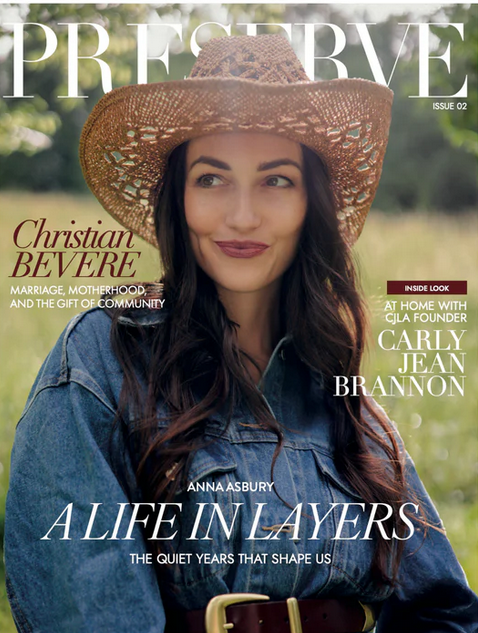
Preserve, Issue 02
Preserve Magazine is a premium print publication that exists to honor what is timeless—faith, family,
creativity, beauty, and calling—through thoughtful storytelling and elevated design. We create space for women to slow down, reflect, and engage with content that is both visually refined and spiritually
grounded. Each issue is curated with intention, inviting readers into deeper conversations around motherhood, creativity, and faith in everyday life.
Leave a Reply