


About this episode:
How can we encourage our husbands, sons, and other men in our lives—without trying to “fix” them?
This episode dives deep into what men are struggling with behind the scenes and how women can provide biblical encouragement for men. Trey Tucker shares actionable insights for supporting husbands, guiding sons, and strengthening men’s faith while creating safe spaces for vulnerability.
Filled with Scripture, real-life examples, and practical takeaways, this conversation equips you to encourage the men in your life with love, wisdom, and grace.

 Apple Podcasts
 Spotify
TIMESTAMPS:
0:51 Introduction: Supporting the Men in Our Lives
2:33 The Core Question Men Carry: “Am I Enough?”
3:55 Why Men Struggle to Talk About Their Inner Lives
7:00 Biblical Strength vs Cultural Masculinity
9:34 How Jesus Demonstrates Strength
11:38 Signs a Man May Be Struggling Internally
14:42 How Women Can Respond in Helpful Ways
16:43 Distraction, Avoidance, and Emotional Numbness
21:41 Raising Emotionally Healthy Boys
33:37 Trey’s Bible Study Tools
Ellen Krause:
Welcome back to the Coffee and Bible Time podcast. I’m Ellen, your host, and I’m so glad that you have joined us. As women, we deeply love the men in our lives and want to help them thrive. But we’re not always exactly sure what that looks like or how to do it. Well, today’s conversation is for women who want to love well, pray wisely, and support the men in their lives with both truth and compassion.
We’re talking about men’s mental health, biblical strength, and how women can encourage growth without shame or pressure. I’m joined today by Trey Tucker, a licensed mental health therapist with over 10 years of experience helping people get to the root of emotional and spiritual struggles. Trey has worked with leaders, families, and individuals across many stages of life, and he’s known for his ability to speak honestly about mental health in a way that’s practical, grounded, and deeply hopeful.
Our conversation today will give you language, clarity, and encouragement as you seek to walk faithfully alongside the men that God has placed in your life. Trey, welcome to the Coffee and Bible Time podcast.
Trey Tucker:
Thank you, Ellen. I’m fired up to be with you. This is gonna be fun.
Ellen Krause:
Absolutely, absolutely. I know even for me personally, I was really excited to dig into this because, yeah, we want to serve the men in our lives well. And so much of that stems from our emotional well-being.
From your work as a therapist, Trey, what are you noticing most about the emotional or spiritual struggles that men are carrying right now?
Trey Tucker:
The biggest thing is they wonder in their own thoughts, am I enough? And you can put whatever word you want to in front of that word enough. Most of the time it sounds like, am I good enough?
In a family context it’s like, am I a good enough husband? Am I a good enough dad? Am I a good enough provider? Am I a good enough protector? But even outside of a family context, we take our roles as an employee very seriously. If we own a business, it’s the same thing. A lot of the guys that are in sports, it’s the same question.
Almost without fail, if you were to give a guy a truth serum and say, “Hey, what is the biggest burden in your thoughts that you’re trying to get rid of or maybe do something about?” it’s that fear that like maybe I’m not good enough. And that leads into all kinds of other different directions.
Ellen Krause:
Hmm. And I can imagine that, like you said, the range of all of those different things that you think you’re not good enough at spans such a broad range of areas in life.
So with that being this predominant weight, why do you think so many men struggle to talk about their inner lives and these things that are weighing them down, even in Christian spaces where faith and community are emphasized?
Trey Tucker:
Yeah, so the good news is it’s starting to change. It is starting to flip to where guys realize the importance of their mental health. I think a survey came out last year where 95% of men say that their mental health is as important as their physical health.
Now that’s the right answer when they’re saying that with their mouth. But as we know just from our own spiritual walks, we can know the right answer in our heads, but if it hasn’t sunk into our hearts yet, we haven’t really gotten there. But it’s progress.
So they know intellectually that it’s important. The things that still hold them back—because the sad stat is men are still four times more likely to pass away by their own hand than women are—so there is still that tendency of like, “I’ve just got to stuff this.”
I personally try not to look at issues like that as 100% like this is an evil problem that we just got to totally eradicate. I try to find what is the positive aspect that’s getting twisted into something negative here. Since men aren’t talking as much as they probably need to, what is it about them that’s good that’s maybe just getting used too much?
So I look at our desire as men. We want to carry weight. We want to be there for people. If you look at almost every little boy when he’s growing up, he wants to be the superhero. He wants to save the day. And so I think as men we still have that desire, and most of the time it serves us well.
But there are so many times when a man is struggling, or maybe doesn’t even know that he’s struggling because he doesn’t slow down enough to really check in with himself. In those moments, I think a couple of factors are at play.
Number one is we don’t want to be a burden. That is far and away one of the biggest reasons a man won’t open up, especially to a wife, because he just doesn’t want to add extra weight to her plate. That’s a noble reason, but it’s not a functional one and it’s not a sustainable one.
Other reasons that a man maybe feels like he’s not free to speak up as much—these are definitely more clearly problems. I think a lot of time in certain churches we are taught, whether it’s explicitly stated or not, that any expression of pain is just a sign that you don’t have enough faith, or that you’re just not thankful enough for all the gifts that God has for you. That’s what we would call toxic positivity.
Even if you look at the Psalms, David is pouring out his heart in the pain and the agony and the fear and the stress that he’s dealing with. Churches need to do a better job—and some of them do, I’m not painting with a whole broad brush—but churches do need to do a better job of letting a man know that expressing what’s happening inside of you is important. It doesn’t have to be through words. It can be through other things.
One more reason I see a lot of men not talking as much as they probably should is, unfortunately, that the people around them—when he has tried to speak up—he’s been made fun of for it or he’s been shamed for it. Those are definitely more minor in percentage, but it still does exist more often than we might think.
Ellen Krause:
Right, right. Wow, that’s really fascinating and some really good insight into the whys there.
I want to talk a little bit about biblical manhood. You talk a lot about redefining strength. When scripture talks about strength, how is that different from our culture and how our culture defines masculinity? And what do we often get wrong as believers?
Trey Tucker:
Yeah. Lately there has been this move towards stoicism and Marcus Aurelius and the idea that we’re just going to not feel anything and we’re just going to keep on soldiering through.
If you look at what true stoicism is, I think it can be helpful. But right now, with the way social media has presented it, it has taught guys that you just need to act like everything’s fine or not feel anything and then just keep on soldiering on because your job is to be the protector and the provider. Life’s going to happen, and if you let it bother you that’s your fault.
That’s not really going to help very much. That can be helpful in certain circumstances and in certain seasons of life, but true strength is letting something actually change you for the better.
You can go through a really tough circumstance—and this is probably a crazy metaphor because of my own crazy mind—but I tell guys a lot that you can go through a circumstance as a tree or as a rock.
If you go through it as a rock, you’re not going to change. You’re just going to be sitting there the same exact product you were on the other side of it. Nothing really happened. You just endured a lot of stuff, but you didn’t let it actually make you better or make you stronger.
If you endure a tough season as a tree, then you are literally absorbing the water. You’re letting the wind push you around. When a literal tree goes through bad weather, the effect is that it forces its roots down deeper into the ground because if not, the wind is going to blow it over.
So I tell guys you can’t avoid the pain. It seems like the strong thing to do is just to put on blinders and ignore everything, but you’re missing the chance to become better.
If you will let the emotions—the tough and unpleasant emotions—actually have their work in you, and let God actually use those as tools to shape you into a better man, then you become like that strong oak tree that has been through so much that it’s like, yeah, I can go through it again. Bring it on.
Ellen Krause:
That’s an awesome analogy. I love that. How does Jesus model for us the strength and masculinity aspects that we often overlook?
Trey Tucker:
Yeah, so my favorite picture of this is when Jesus was in the Garden of Gethsemane and he knows what’s coming with the crucifixion about to happen and his friends about to betray him and the flogging that was about to occur.
He literally stayed up all night praying and agonizing. You can look at the passage—he’s sweating blood, which is a condition where if you’re intensely stressed you don’t just sweat actual water, you’re sweating out blood. I mean, he was not being stoic. He was facing it head on and feeling every bit of it.
I can only imagine, and I have no way to fully even 1% comprehend this, but when the Father was putting the weight of all the world’s and the history of the world’s sin on Jesus, he was literally feeling that. There was no way he was going to go around that and try to numb that out.
I think that’s maybe part of the reason why he refused the wine that the guards tried to give him on the cross. He needed to feel every bit of it. To me, that’s the most—I was going to say the most masculine thing you could do—but Jesus shows us the traits that everybody should have. That’s true strength, whether you’re a man or a woman.
Ellen Krause:
Right, right. What an incredible example for us, just in his human nature, feeling those things. I think too, just him having the feelings that he did in Gethsemane and feeling that stress also showed us the nature of his human emotional side.
I love that that’s not overlooked in the Bible, that that’s shared with us.
Trey Tucker:
Yeah. To display and have your greatest pains recorded for other people to see and learn from—that’s courage and strength right there.
Ellen Krause:
Yes, and God does that over and over again with the things that we have challenges with in our own lives. When we’ve gone through it, then we’re able to help someone else perhaps go through something similar. I love how God sort of repurposes those pains in our lives.
Let’s talk a little bit about what women should look for. For any women that are listening who are dating or married, what are some signs that a man may have that they’re struggling internally, even if they seem like they’re fine—“I’m doing fine”—on the outside?
Trey Tucker:
Yep. First of all, I want to try as best I can to relieve any woman of the burden of reading her man’s mind. It is not only not your job to read his mind, it’s also impossible.
So first of all, I love the heart and the concern behind anybody that does want to look for signs. You can—there are some signs—but I just want to say right off the bat that it is not your job to read their mind or break through whatever wall they might have up. Ultimately, it is their responsibility.
Having said that, some guys are just really good at hiding the fact that they’re struggling. Even me, with the training that I’ve got as a therapist, there are some guys where I never saw any kind of signs of their struggle until way after the fact. I thought, man, you’re either a fantastic actor or you’re just so used to acting like there’s no struggle at all that this has become your normal.
It’s a sad case. Again, please don’t put that added pressure on yourself as a woman to think, “I’ve got to figure him out or fix him,” or anything like that.
Now having said that, the three biggest signs that a guy might be struggling are: if he starts being more irritable, even just a little bit more irritable for a consistent amount of time; if he starts pushing more toward the workaholism side of things; and if he starts to isolate more.
All those things require somebody to know the guy’s baseline—what is his normal amount of irritability or work ethic or level of isolation. But starting to see any one of those signs move toward that extreme is an indication that something is going on.
Most of the time a guy won’t even realize it. And we can get into all the different strategies for that, but until a guy realizes it himself, he probably won’t take much action.
Trying to pressure him from the outside is most likely going to cause him to put even more of a wall up because, in his own head, he feels like something is wrong with him because somebody else is telling him something is wrong. But if he can’t see it himself, then he starts beating himself up thinking, “Well, what am I doing wrong? I don’t even know that I have no clue what I did wrong, and now I’m being attacked.” That’s a lot of times how that gets received. And I know that’s not the intent of those conversations.
Ellen Krause:
No, absolutely. So what is a more helpful way to respond? Because I know that a lot of times we do the things that you said that maybe build more walls or put unintentional pressure.
What is the better way to handle it if you do see one of those signs?
Trey Tucker:
The best way is before there’s ever any sort of hint of a struggle going on, just start laying the groundwork. Say something like, “Hey, whenever I do notice that I feel like you might be struggling, how would you like me to bring it up?”
That way it’s not an intense thing in the moment that you’re having to deal with. It’s like, “Hey, when this does happen in the future, how would you like me to say it?”
In those moments, the best way to address it is to make a simple observation, remind them how much you care about them, and then just let them know, “Hey, you can say anything to me.”
It’s not going to offend me. It’s not going to make me run away. It’s not going to be too heavy of a burden.
Most guys don’t want to say what they’re really struggling with because, again, we don’t want to be a burden on you. We’ll do almost whatever we can to just keep that burden on ourselves so that we can still keep you safe, keep you provided for, whatever their picture in their mind of a good husband is.
So we just need to know from the women in our lives, “Hey, you can say whatever.” And if I feel like it might be too much for me, I’ll stop you and say, “Hey, thank you so much for sharing. I wonder if we could bring somebody else in that has some training in this stuff to really get to the root.”
I’ve seen a lot of marriages be burdened by a husband who does trust his wife and then only trusts his wife, and she becomes the de facto therapist. That’s the other extreme we don’t want to go to either.
Ellen Krause:
Right, right. That’s too much pressure and not the right person to be able to help on the level that, let’s say, someone like yourself could.
One of the things that I was reading in your book that really struck me—you were talking about how distractions can really pull us, or pull anyone, away from having sustained happiness or joy. That might be something contributing to one of these underlying pain points that someone might be experiencing.
One thing that you said really caught my eye. You said that when we’re living in distraction, there’s no room for faith, no space for growth, no foundation for sustained happiness, and no joy.
Tell us a little bit about distraction and how that factors into what might be going on in a man’s life.
Trey Tucker:
Yeah, yeah. I’m so glad you’re asking this because distraction gets a bad rap sometimes. We sometimes demonize distraction as just totally bad all the time. And there are times when you do need to distract yourself. If you’ve gone through something really terrible, you don’t need to just sit in it and feel it and think about it 24-7. You do need some healthy distraction.
The problem becomes when we use the distraction almost all the time and we start using it just to avoid actually dealing with the root of the issue.
For me, even after I became a therapist—when I should have known better—I was basically cut off from the neck down. I was only up in my head. I had totally shut off any sort of awareness of what was happening in my body because anytime I noticed something uncomfortable happening physically that was stress-related or anxiety or sadness or anything like that, I would just go right up in my head and rationalize.
I would think, “Well, I’m just worried about this, so I’ll do this and that.” I always made a plan, and making a plan is great. The problem is God made our bodies in such a way that our bodies and our brains need to be connected and talking to each other. When I cut off that line of communication, I also cut off the ability to really feel anything.
The only time I really felt something was when I was angry about something. I would just alternate between feeling basically numb and feeling angry.
Also, without that line of communication being connected, I couldn’t feel joy. I couldn’t feel a whole lot of laughter. If there was something worth really being affected by deeply—like in a movie or a speech or a show—it didn’t affect me like I thought it should or even like it had in the past.
So I realized that my version of distraction was just rationalizing and intellectualizing and really living in my head instead of connecting with what’s going on in the body.
A lot of guys use things like work or a video game or a show. One of my great friends still comes home from work every day and watches a full movie—like two or three hours. In his case, he’s trying to outrun the thoughts in his head and the fog of thoughts that he keeps trying to press down and avoid.
I keep telling him, “Bro, I love you. Yes, the movies are helping you keep these thoughts out of your head for two or three hours, but you just also need to know that those thoughts are gaining strength as you put them away in the cave. They’re just going to become harder and harder to distract away from in the future.”
We’re not trying to hurt ourselves or anybody else when we distract. We’re doing the best we can to deal with what we know is in there. But maybe we don’t have the tools to deal with it, or maybe frankly we don’t have the courage yet to really face it head on.
Ellen Krause:
Right. One thing I had to laugh to myself about when I was looking at your book—because it’s geared toward helping men—is that distractions of course affect women as well.
I was thinking one of mine is like super deep cleaning. I know I could just get the grout brush out and be scrubbing that grout line. I know that’s a distraction that’s perhaps pulling me away from something bigger.
But we all have different types of distractions that can impact us.
Trey Tucker:
Yeah, we do. That’s a great activity. Usually the activity we’re using to distract ourselves isn’t a bad activity. It’s just how we’re using it. What are we hoping to get from it?
Yes, number one, the house has to be clean. Number two, cleaning can be very stress relieving because you get to put all your focus on this thing in front of you. You get to put your vision and your hearing toward it, and you’re touching it. It can be a great break from the things that are really stressing you out.
So I would tell you to keep doing it—just also deal with whatever it is that’s asking to be dealt with.
Ellen Krause:
Yeah, it’s a good dopamine hit too when you see that section and think, “Okay, I got that section and it looks really good compared to all the other sections.”
Trey Tucker:
Right. We don’t get to see the fruit of our labors very much physically. Everything’s so digital these days. Cleaning the house or cutting the grass—those are things where you can look and see, “I did that. That’s something physical I did with my hands.”
Ellen Krause:
Yep. Well, let’s talk a little bit about raising boys and what Christian moms can do to help raise up young men that are emotionally healthy and spiritually strong.
Trey Tucker:
First of all, I have to commend mothers because so many dads—even if they are in the house—are not really doing much to actually raise their sons.
I also want to acknowledge that there are some great dads out there. I’ve done some social media videos about them and what they’re doing well. But if you look at the stats, one in four households don’t even have a dad present. Then among the rest where dads are present, there’s no real way to measure statistically how involved they are.
It’s probably not a large number of men who are consistently raising their sons and daughters in such a way that they’re just as actively involved as the mom. So thank you to the moms, and thank you to the dads that are really doing a great job, because we need both.
It’s not an either-or. It drives me crazy when social media influencers or people in the media try to say you need one over the other. No, it’s literally both. It doesn’t have to be a competition.
In terms of what a boy needs, one of my favorite books is Fathered by God by John Eldredge. He takes you through the stages of a man’s life—from boyhood to teenage years to the twenties and thirties and all the way through. He talks about the aspects that a dad should teach, which are really more heart aspects rather than practical skills.
He says there’s no perfect dad out there, but there are certain experiences that every boy needs to have with a dad or father figure.
One of them goes back to that question: “Am I good enough?” A dad has to put his son in situations where the son can figure it out for himself that yes, I am good enough.
I showed a video recently where this little boy—probably two years old—can walk decently but doesn’t have great balance. The dad was separated from the boy by a series of ropes, almost like a little jungle gym. The boy had to figure out how to climb through the ropes to get to the other side where his dad was.
The boy was trying, but not very hard. He was mostly standing there waiting for his dad to come pick him up and pull him over the obstacle. So the dad actually walks farther away from the son.
At that point, the son has enough of an internal crisis that he realizes, “I’ve got to take action here. I want connection, so I’ve got to figure something out.” He gets stuck in the ropes and doesn’t know what to do, so the dad picks him up.
You think the dad is going to pull him over onto his side, but instead he picks him up and puts him back on the starting side. About a minute later, the boy finally figures it out and gets through the ropes.
Immediately the dad starts clapping and making a big celebration, praising him for the effort it took. The boy could have just quit. He could have sat down, started crying, and raised his hands like, “I give up.” But he pushed through.
Those are the kinds of experiences that a dad has to push his son into. Generally speaking, moms are great at offering care, safety, and nurturing. Dads can do that too, but dads are often wired a little more to push kids out of their comfort zone.
A dad can say verbally, “You’ve got the strength to make it,” while also showing, “I’m standing right here next to you as you figure this out.”
Ellen Krause:
Right. I think about myself, and you do want to jump in because you don’t want them to feel the pain. But I can see what you’re saying. There’s a sense of “they did it themselves,” and they know they can do it.
You’re almost stealing that from them if you jump in and try to take over.
Trey Tucker:
Yeah, and I get the urge. I hate seeing anybody struggle. It’s just not in our nature to want that to happen. I can’t imagine being a mom and seeing your own flesh and blood struggling and having to hold back and allow them to stay in the struggle.
At the same time, when we rescue them out of the struggle, we’re saying to them, “You can’t handle this. You don’t have what it takes, so I’m going to do it for you.”
There are definitely times when we do have to step in and help them. But if that’s the consistent mode—where they know, “Mom’s going to rescue me, so I don’t have to do it, and I guess I probably can’t do it because I’m not as capable as she is”—that’s not the message we want to be sending.
Ellen Krause:
Mm hmm. Yeah, that actually reminds me—I’m having a flashback here of my mom, who was a teacher. Looking back in hindsight, she’s no longer living, but one of the things I think she did that frustrated me to no end when I was a kid—but now as an adult I can see how it served me well—was I would always ask her, “What does something mean?” or “How do I spell something?”
I just always remember her saying, sort of putting the problem-solving tools back on me, “Well, where can you find that information? Is it the dictionary? Is it the—” you know, she’s a teacher, so we had the whole encyclopedia set there in our living room. “You could look it up here.”
We didn’t have Google back then, but I just think that did similarly serve me well. Now that’s actually one of my favorite things to do—to really try to find something, and I’m not giving up until I find what I need to find.
Trey Tucker:
Yeah, absolutely. Because you built the belief that mom believes in me, because she asked me the question of like, “Yeah, you want to know the answer—where can you find the answer?” She’s communicating to you, “I believe in you.”
So now you got that belief in yourself of like, “Yeah, I’m going to do this. I’m going to figure this out.”
Ellen Krause:
That’s so neat. Well, hopefully a lot of people have some stories like that. And if not, I’d love that you have written such an incredible book—I literally could not put it down, Trey—called Tough Enough.
I’ve already taken some screenshots and sent one to my son, and we had this whole in-depth conversation.
Tell us just your intention with your book called Tough Enough and how you can see us as women. Is this something that we can give as a gift and it would be well received? How do we go about that? What’s the best way? Because I know it would just be such an incredible tool.
Trey Tucker:
Yeah, and thank you for that compliment about the story with you and your son. That right there makes it all worthwhile. When a book that I wrote can have that kind of an impact and create that kind of moment between a mother and son, I don’t need anything else with that. So I appreciate you sharing that.
In terms of how to give a guy this book in a way that he doesn’t feel insulted by it, I purposely wrote it as the guide that every guy in their twenties needs. I wish that I had this guide when I was in my twenties.
The phrase that I’ve kind of stumbled onto that people are resonating with is that every guy deserves to be fathered. Like we’ve talked about, whether your dad was in the house or whether he was a great dad, there’s always going to be gaps with every dad because there’s nobody perfect living on the earth other than Jesus.
Since every dad has some sort of gap or an area where he wasn’t as strong, this book is going to hopefully at least start the process of filling those gaps.
Two benefits here: a mom can read this herself and start to understand, “Okay, this is how my son or the man in my life or my husband works, the things that he needs, and the ways that he thinks.” That can help you interact with him.
Then also, when you hand a guy this book, he’ll see that this is authentic. The publisher and I tried really hard to make it masculine without being corny. Guys can see through the fact when a book is trying too hard to be tough.
The title Tough Enough—I almost didn’t want that as the title because I didn’t want it to come across as over the top. But I think when you hand a guy this book, he’ll see that this is authentic. This is the guide that, if you’ve never had a dad—or even if you had a great dad—this is the companion that would go along with that journey.
Ellen Krause:
Yeah, and what I love too—I was taking some notes—is that you give really good practical tips.
One of the things I wrote down for myself, okay this is it for the women out there: buy the book for yourself, read it, then give it to them.
For me, I was reading your section where you said that minor adjustments can lead to significant rewards. You were talking about how the desire to avoid discomfort is at the heart of all procrastination.
I feel like some of the tips you give are very practical. For example, you suggested making a list of the task and breaking it down. Another suggestion was to do the worst first.
I think it would be a tremendous resource to help someone take the next step. I also love the real-life examples and people’s stories in the book so that if someone is reading it and resonates with that, a light bulb might go off saying, “Gosh, you know what? I think I would like to talk to somebody about that because I want to have a fruitful, joyful life.”
Trey Tucker:
Yeah, that’s the hope.
You talked about the practical tips and the stories. I’m a pretty simple dude, so I don’t like to read a book that’s very abstract and ethereal because that’s going to put me to sleep. I wanted to write a book that I would want to read.
That means I’m going to put as many practical things in there as I can in terms of tips, and I’m going to tell as many stories as I can.
We know this from the way Jesus did ministry. He was primarily telling stories that had lessons within them. That’s how I tried to structure every chapter.
That’s also how I work as a therapist. I don’t waste a lot of time with a bunch of flowery language. I’m kind of straight to the point and a little bit in your face. I’m not for everybody, but I tried to write the book in that same way.
Ellen Krause:
Awesome. What a joy.
We will definitely tell them where they can find the book and also learn more about you, Trey.
Trey Tucker:
Thanks. ToughEnoughBook.com is the easiest place to start. It’s got the links to Amazon, Barnes & Noble, wherever, because you can get it wherever books are sold.
There are also links to my social media on there as well. So ToughEnoughBook.com.
Ellen Krause:
Very well. We will make sure we put those in our show notes so you can access them easily.
Before we go, Trey, I have to ask you our favorite questions here at Coffee and Bible Time for our guests.
What is your go-to Bible, and what translation is it?
Trey Tucker:
My favorite translation is the New Living Translation. For me it’s just the most conversational and easy to read one.
It’s not the one that I would use when I’m studying. I’ll use something more like NIV for that one.
Ellen Krause:
Excellent. Great point.
Do you have any favorite Bible journaling supplies, or do you like to journal?
Trey Tucker:
I brought this just here. I don’t have a fancy journal. It’s just a good old-fashioned one-dollar notebook.
That’s how I journal. I don’t journal every day, but when I do it’s about that length, and sometimes it’s even shorter. I try to do it probably two or three times a week.
I’ve found that if I do the same exact thing every day, no matter what it is, I’m going to burn out on it.
Ellen Krause:
Yeah, great point.
Lastly, what is your favorite app or website for Bible study tools?
Trey Tucker:
I love Blue Letter Bible because I geek out on the meanings of the Hebrew and the Greek.
When I can see the word picture that is meant by a certain verse, I’m like, “Oh, now I see it. I see what I was thinking.”
When Paul tells us to take every thought captive, the word picture there is taking a knife and holding it up to somebody’s throat. So when you have a thought that’s not serving you, I just picture, “Right, thought, this is what—I’m in charge. You’re not in charge. Here’s how it’s going to be.”
That just makes my Bible reading so much richer when I can use that site and see those meanings.
Ellen Krause:
Awesome, that is a great website. We will include that link as well.
Trey, thank you so much for sharing your wisdom with such clarity and compassion.
Trey Tucker:
Thank you. I love what you do. You’re a great host. This has been more of a conversation—I just forgot there was a camera. So thank you for what you do.
Ellen Krause:
Well, it has been absolutely a delight.
I know if you’re listening to this, you really want to see the men in your lives thrive, and I pray that this has been an encouragement for you.
Definitely check out Trey’s book Tough Enough. As always, thank you so much for listening, supporting the show, and being a part of this community.
We’ll see you next time on the Coffee and Bible Time podcast.
Every Christian woman has men in her life who she deeply loves—whether that’s a spouse, brother, child, or friend.
But how can we support them when they’re struggling?
Mental, emotional, and even spiritual health is something that women tend to feel comfortable with opening up about, at least with people they trust—but there is still stigma around men doing the same.
Today we’re discussing what it looks like to offer biblical encouragement for men.
In a recent episode of the Coffee and Bible Time podcast, Ellen Krause spoke with Trey Tucker, a licensed mental health therapist, about the emotional struggles many Christian men face and how women can provide biblical encouragement for men without trying to fix them.
The Root of the Issue: Why Christian Men Struggle
Trey Tucker explains that many men are wrestling with a central question: “Am I enough?” He notes:
“Most of the time it sounds like, ‘Am I a good enough husband? Am I a good enough dad? Am I a good enough provider? Am I a good enough protector?’”
Trey Tucker
Even men outside of family roles experience this pressure in their work, leadership, and personal achievements. These internal struggles are often hidden, even in Christian spaces, because strength is often defined as stoicism.
“One of the biggest reasons a man won’t open up, especially to a wife, is he just doesn’t want to add extra weight to her plate,” Trey shares.
Men may also feel pressure from certain church cultures where expressions of pain are seen as a lack of faith:
“Any expression of pain is just a sign that you don’t have enough faith, or that you’re just not thankful enough for all the gifts that God has given you. That’s what we would call toxic positivity.”
Trey Tucker
This makes biblical encouragement for men crucial: women can provide support that is both compassionate and spiritually grounded, without shaming or pressuring.
What Biblical Strength Really Looks Like
If biblical strength doesn’t always mean stoicism, what is it?
Stoicism—suppressing emotions and pushing through pain—is extremely popular in the current cultural zeitgeist. But Trey contrasts this with the model of Jesus:
“My favorite picture of this is when Jesus was in the Garden of Gethsemane. He knew what was coming — the crucifixion, betrayal, and suffering — and he literally stayed up all night praying and agonizing. He was not being stoic. He was facing it head-on and feeling every bit of it.”
Trey Tucker
Jesus’ example shows that true strength is not the absence of emotion, but the ability to experience pain, process it, and grow through it.
Trey uses the analogy of experience difficulties as a rock or as a tree. A rock hardens stays still through a storm, and when the air finally clears, is unchanged. But:
“If you endure a tough season as a tree, you are literally absorbing the water and letting the wind push you around. The tough experiences force your roots down deeper. True strength comes from letting God use challenges to shape you into a better man.”
Trey Tucker
For women seeking to provide biblical encouragement for men, the first thing we need to understand is that vulnerability is an essential part of godly strength.
When our husbands or friends open up to us and express their fears and insecurities, they are not weak: they are growing.

3 Signs That a Man May Be Struggling
Many men were taught from a young age to hide their struggles, but there are subtle signs women can watch for:
- Increased irritability – small changes in mood over time can indicate underlying stress.
- Workaholism or over-focusing on tasks – an attempt to distract from internal struggles.
- Isolation – withdrawing from relationships or avoiding connection.
However, Trey emphasizes that women should not feel responsible for “reading a man’s mind”:
“It is not only not your job to read his mind, it’s also impossible. Ultimately, it is his responsibility to work through his struggles.”
Trey Tucker
The purpose of biblical encouragement for men is not to do emotional or relational work for him. Instead, we aim to create a safe environment for men to share when they are ready.
Practical Ways Women Can Encourage Men Biblically
Here are actionable strategies from the podcast to provide biblical encouragement for men:
- Lay the groundwork before struggles appear
Ask ahead of time: “If I notice you might be struggling, how would you like me to bring it up?” This approach builds trust without adding pressure in the moment. - Offer a safe, non-judgmental space
Reassure him that it is safe to share feelings: “You can say anything to me. It’s not going to be too heavy of a burden.”
(Note on this one: you should never become someone’s therapist. It is entirely appropriate to express love and then help them find a pastor, elder, or actual therapist to talk to. You also don’t have to stay in situations that are dangerous to you or anyone around you.) - Reinforce biblical identity
Use Scripture and stories as encouragement. Highlight the man’s value in God’s eyes and model healthy emotional processing like Jesus in Gethsemane (Matthew 26:36-46). - Praise effort, not just outcomes
When you see the men in your life making real, genuine efforts to grow, encourage them! Growth is a marathon, not a sprint—and crossing the finish line isn’t the only point that deserves recognition and praise. - Watch for distractions
Distractions are not always a bad thing! Constant introspection can be just as detrimental as avoidance. However, if your loved one is constantly turning to work, video games, or other activities to avoid their pain, it may be helpful to offer opportunities for connection, reflection, and healthy distraction.
Raising Emotionally Healthy Boys
The conversation also addresses parenting: raising boys who are both gentle and strong is a vital form of biblical encouragement for men. Trey emphasizes that mothers play a key role:
“Moms are great at offering care and safety.”
But fathers can help boys build confidence by letting them figure things out themselves:
“The dad can push him out of his comfort zone and verbally tell him, ‘You’ve got the strength to make it, and I’m standing right here next to you.’”
Trey Tucker
Moms can reinforce this by acknowledging effort and growth:
“Just praising him for the effort itself… he pushed through it. And those are the kinds of experiences that a [parent] has to push [their] son into.
Trey Tucker
Providing both nurturing care and opportunities for growth helps boys develop confidence, resilience, and spiritual maturity.
Closing Thoughts
Providing biblical encouragement for men is about understanding, compassion, and action.
Christian women can play a critical role in helping husbands, sons, and brothers process their struggles in a healthy, God-honoring way.
By creating safe spaces, reinforcing biblical identity, and celebrating growth, women can empower the men in their lives to thrive spiritually, emotionally, and relationally.
Practical Takeaways:
- Recognize that many Christian men silently wonder, “Am I enough?”
- Observe subtle signs of struggle: irritability, isolation, workaholism.
- Build trust before attempting heavy conversations.
- Encourage vulnerability as biblical strength, following Jesus’ example (Matthew 26:36-46).
- Use practical tools like praising effort, setting safe spaces, and guiding boys toward resilience.
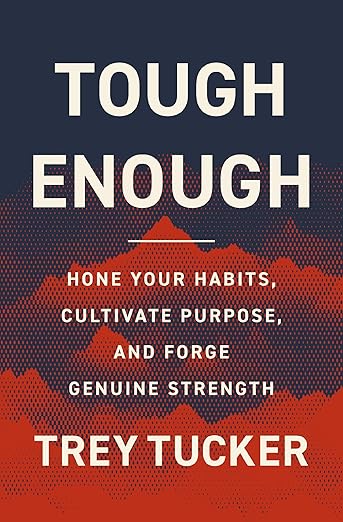
Tough Enough
In today’s world, young men are up against a lot: constant distraction, jabs at self-confidence and self-worth, and pressure to put on a fake appearance and pretend everything is fine.
In his signature no-nonsense approach, Trey Tucker—a counselor and experienced mental health expert—draws on powerful principles from his own life and from client success stories to guide men in creating habits that lead to happiness, to discovering their purpose, to understanding the true meaning of strength, and to stepping into the best version of themselves.
Leave a Reply