
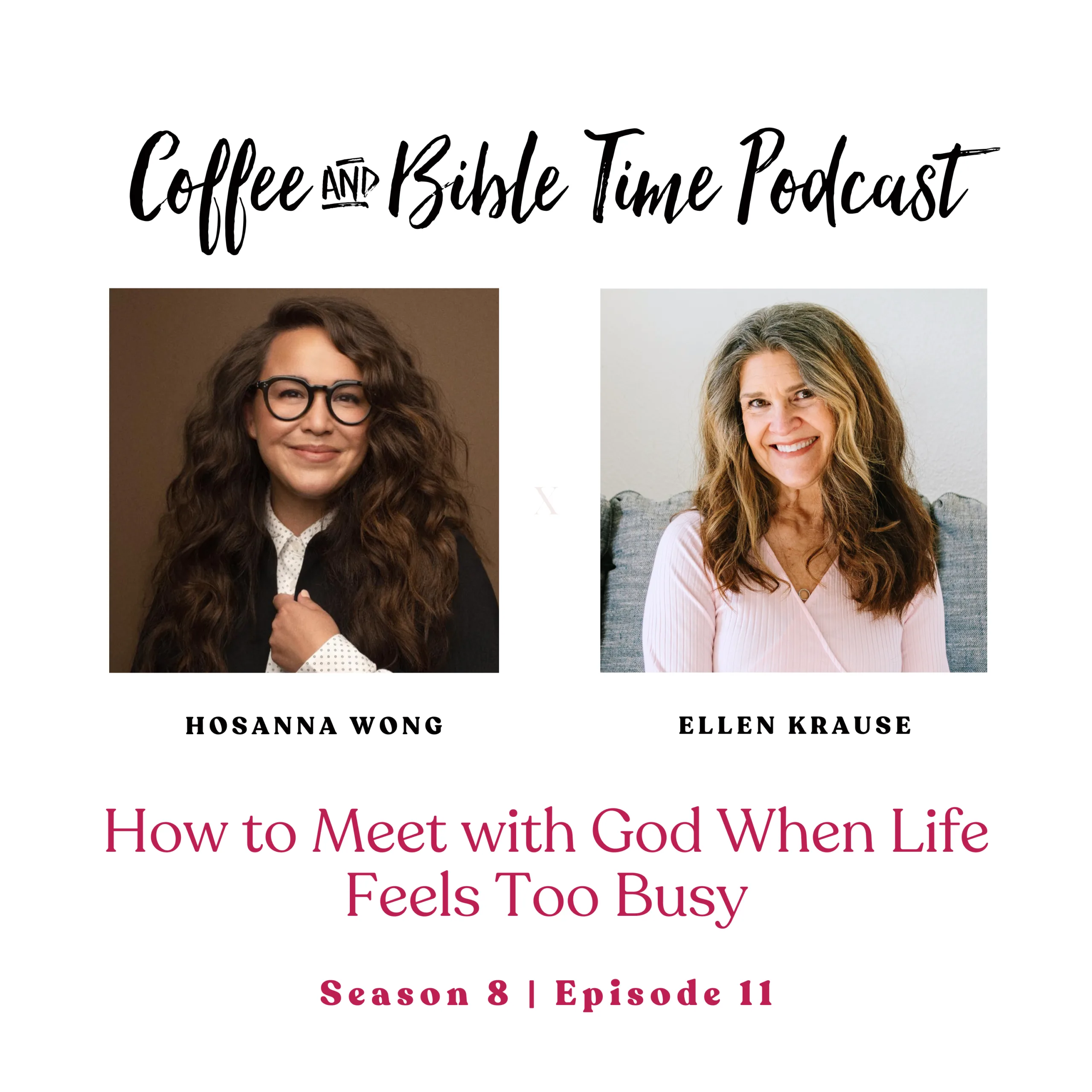

About this episode:
What if the key to a deeper, more joyful relationship with God…was your own personality?
Uncomplicate your relationship with God by embracing your current life season and uncovering your unique spiritual wiring. Hosanna Wong shares practical ways to connect with God amidst busyness, distractions, and emotional struggles, showing how chores, parenting, work, and routines can become opportunities to experience His presence and deepen your faith.

 Apple Podcasts
 Spotify
TIMESTAMPS:
00:03 A Real Relationship with God
02:49 Uncomplicating Our Faith
06:25 Hosanna’s Church Background
08:12 How God Fills Our Spiritual Gaps
11:42 Roadblocks in Relationship with God
15:12 Letting God Into Our Real Lives
21:55 Praise-o-nalities: Unique Ways to Worship
31:23 Worship Centered on Jesus
34:38 Practical Steps to Connect with God
37:56 Hosanna’s Bible Study Tools
Hosanna Wong (introduction): So many of us feel guilt and shame, feeling like we’re not spending time with God the way that we’re supposed to, when we’re simply not spending time with God the way that we used to.
But the truth is that God wanted to have a real relationship with you in that past season, and he wants to have a real relationship with you now in the real season you’re in.
This season you’re in, you might feel like it’s a roadblock, but I promise you, it’s a shortcut. It’s a pathway to deeper connection with God, a catalyst to deeper connection, a way to learn something new from God and experience his love for you in a way you haven’t experienced before.
Ellen Krause: Welcome back to the Coffee and Bible Time podcast. I’m so glad that you have joined us today.
Have you ever noticed how differently people seem to connect with God? For some people, it’s sitting quietly with their Bible in the morning. For others, it might be through worship music or being out in nature or even making art or taking pictures.
Well, what if the very things that make us different are actually part of the way that God designed us to connect with him?
Today, we are joined by Hosanna Wong. Hosanna is an international speaker, bestselling author, and spoken word artist who has spent years helping people experience a real and personal relationship with God. She’s shared in churches, conferences, and ministries around the world.
She is joining us today to talk about the obstacles we face in connecting with God, the unique ways that meets us right where we are, and how we can cultivate a deeper, more joyful relationship with God right in the middle of our everyday lives.
Hosanna, welcome to the podcast.
Hosanna Wong: Thank you for having me. I’ve been so looking forward to it. I’m thrilled.
Ellen Krause: Good, well, I have been as well, and I know our listeners will feel so encouraged on this topic.
Why don’t you start out by just telling us about your experience interviewing over a thousand people across the world about their relationship with God? What a huge undertaking. What inspired you to start asking people questions about their relationship?
Hosanna Wong: I wanted to help people uncomplicate their faith. I wanted to help people stop comparing their relationship with God to other people’s relationships with God, stop striving to reach some sort of spiritual standard that did not come from God, like a man-made expectation that we have been carrying, expectations that didn’t come from God.
And I wanted to help people to stop comparing their season—the season they were in—to even a past season that they used to be in.
Because sometimes I found that some people compare their relationship with God to other people’s, but sometimes we don’t compare ourselves to other people. Sometimes we compare our relationship with God to what it used to be when we were in a different season, when we had a different community, when the kids were a certain age, when we had a certain set of classes, whatever.
And so I really wanted to help people uncomplicate their faith.
But I’ve only ever been Hosanna. Like I only have my background. I’ve only ever had my personality. And I’ve been on a journey for years of uncomplicating my faith and learning what that looks like for my life.
And I want everyone to feel as free as I feel today, which is a freedom I didn’t know I could have 20 years ago.
But in order to do that, I needed to hear other people’s experiences and experience other people’s stories and backgrounds and cultures. And, you know, so many people have family dynamics I don’t have, responsibilities I don’t have.
And so I went on a journey to interview a thousand people around the world in different seasons.
Maybe it was people from different countries and different backgrounds, students who played volleyball, or a couple who was entering their retirement era, or a 30-year-old who’s an entrepreneur—people in all different seasons.
I asked them two questions:
One, what has stood in the way of you connecting with God?
And two, what is a unique way you have found to connect with God?
Through that, I really discovered more than I had ever imagined—really discovering the roadblocks that stand in between all of us and God, and then unlocking some of the unique ways people all over the world have found to connect with God.
It really refreshed my faith and made me realize, well, we really are more free than we’ve ever imagined.
Ellen Krause: That’s so refreshing, and I’m so excited to kind of—we will get into some of those key learnings that you had with people.
Just even, I think there’s things that we haven’t even thought of, right? And that was maybe one of the experiences that you had in just talking to so many different people.
Cause like you said, you’re only Hosanna, I’m only Ellen. We only know kind of our own, but even just hearing what other people, I bet that was pretty incredible.
Hosanna Wong: Yeah, like we’ve only ever been ourselves and we’ve only known ourselves in the seasons we’ve been in.
So I think sometimes when we’re in a new season—in a new town, in a new community, with new responsibilities, with new things we’re grieving, with new tensions we’re navigating—sometimes we can feel like something’s wrong with us or something is wrong with our faith.
And so many of us feel guilt and shame, feeling like we’re not spending time with God the way that we’re supposed to, when we’re simply not spending time with God the way that we used to.
But the truth is that God wanted to have a real relationship with you in that past season, and he wants to have a real relationship with you now in the real season you’re in.
This season you’re in, you might feel like it’s a roadblock, but I promise you, it’s a shortcut. It’s a pathway to deeper connection with God, a catalyst to deeper connection, a way to learn something new from God and experience his love for you in a way you haven’t experienced before.
So for example, for me, I grew up on the streets of San Francisco. My dad battled a heroin addiction for 15 years. He fought in a gang. A woman introduced him to Jesus. Jesus changed his whole life.
He ended up starting an outdoor church to our friends living without homes and battling with addiction. That’s how I grew up.
I grew up in an outdoor church to our friends living without homes and battling addiction. We would have outdoor church services two to three days a week, and people brought their drugs and people brought their alcohol bottles.
And that’s how I learned church.
When I learned later that other people said they were also raised in church, I realized we weren’t talking about the exact same thing.
And that’s where I learned that Jesus could save anyone’s soul and redeem anyone’s story. And the gospel was so simple to me.
And then as I got older and I had other experiences and other Christ-following environments, it started to seem more complicated.
And then I started seeing how other people experience God. Some of the words they use I didn’t understand. Some of the ways they worship I didn’t understand.
Sometimes people would ask me what the Bible said about some things, and I didn’t know.
And I felt like, man, I thought I had a real relationship with Jesus. But now I’m learning that there’s all these hoops to jump through, and I’m learning that there’s all these other rhythms I was supposed to be doing.
And now I feel like I’m on the outside looking in. Maybe is my faith not real? Do I need to get my life together before I can really have a relationship with God? Do I need to check all of these boxes before my faith is the place it’s supposed to be in?
And I’ve just learned that so many of us have overcomplicated it. And when we overcomplicate it for ourselves, we start overcomplicating it for other people.
No wonder so many people don’t feel like they can have a real relationship with God, because we feel roadblocks.
Then I started to see it totally differently.
When I met my now husband, Guy—we’ve been married for almost 13 years now—but when I met him, I’ll tell you something that was very unique in our relationship.
So I grew up without a TV. I didn’t have a TV in my house for the first 17 years of my life, not until I went to college at 17 years old.
And I always felt like these gaps that I had, like these pop culture gaps I had, were something to be quite embarrassed about.
It was hard to know how to connect with my friends in junior high because I didn’t have taste in anything. I didn’t know anything about music. I didn’t know anything about movies.
In high school, it was hard to know how to connect with the boys I dated because they would ask me questions like, “What’s your favorite movie?” And I said, “I don’t know. I’ve only seen two.”
I didn’t have a frame of reference for some of the things that other people had a frame of reference for.
So even now in my adult life, my friends and I, whenever we would have game nights or trivia nights, I’m always picked last because I have all of these gaps when it comes to pop culture.
I always was very embarrassed about that. I saw that as a roadblock between me and my relationships.
And then I met my now husband Guy. Thirteen, fourteen years ago we met, and my husband Guy loves movies.
When he found out that I had all these gaps, he was so excited. He thought it was the coolest thing that he would get to show me all these movies through his lens.
I’ll never forget when he showed me the movie Titanic. Have you heard of it? Have the listeners maybe heard of it?
I’ll never forget when he showed me this movie, and I’m bawling my eyes out. I look at him and I say, “That movie was amazing. Everybody needs to see it.”
And he just hugged me and said, “My love, everyone else has seen it.”
And I just remember the weeks of Googling information about this movie, the real history it was based off of, and listening to podcasts about it.
What I saw as a roadblock was really a shortcut. What I saw as a gap, my husband Guy saw as an opportunity.
What I saw as a roadblock, he saw as a shortcut—a catalyst for deeper connection.
And all that to say, I’ve realized that this is not too different from our relationship with God.
Sometimes we feel like we have spiritual gaps. Sometimes we feel like, man, don’t ask me the trivia questions about what the Bible says about some things. I don’t know everything.
There’s words I don’t know the definition to. There’s ways that people worship that I don’t understand.
Sometimes I feel like I’m at a trivia game and I’m on the outside looking in.
Maybe you feel like you don’t know all the rhythms you’re supposed to have. Are you supposed to have these ones like this person? Do you have to wake up at the same time as this person?
Sometimes we feel like we have all these spiritual gaps, and we have to get our lives together before we can have a connection with God.
And the truth is, what we see as gaps, God sees as an opportunity.
He would love nothing more than to have a real relationship with you where he meets you where you really are, and he gets to be the one to show you all of these things through his lens—what life is like with him through his lens.
And this relationship can be the most fun and vibrant, filled with fun facts. It could just be an adventure like you’ve never had before.
So this is what I’ve really discovered.
In my own life, not having the same background as a lot of my other Christian friends had, and learning not to overcomplicate my faith, and what I learned in the thousand conversations.
I learned that I was not alone, that I was not unique, that I was not crazy for thinking I’m the only person who’s overcomplicated my faith.
But the truth is that so many of us have felt like we’re falling short when really exactly where we are is where God wants to meet us and lead us along the way.
So that’s what I discovered. I can even tell you the six roadblocks I discovered.
Ellen Krause: Yes, please. Yeah.
Hosanna Wong: Maybe around conversation three or 400, I realized that there were patterns—that there were patterns of the six greatest roadblocks that we all faced when wanting to connect with God.
I felt like I got an audit of our world in 2026. And the six were:
One, busyness — I’ve got too much going on.
Two, distractions — I can’t focus.
Three, grief — I’m hurting too much. Everyone’s hurting too much.
Four, shame — I’m not worthy. I’ve done too much wrong.
Five, silence — I can’t hear from God. I can’t hear from God the way others do.
And six, expectations — whether that was expectations that people felt from other people (their parent, their spouse, their friend) or perhaps expectations they put on themselves of what they thought their life had to look like or else, their timeline had to look like or else, or their faith had to look like or else.
And we would be surprised to find out that many of the expectations we carry don’t come from God.
I can’t believe the victory the enemy of our souls has had in our lives by convincing us that we’re too busy, too distracted, hurting too much, haven’t done enough good things, can’t hear from God the right way, and have too many expectations on our lives.
I can’t believe the ways he’s convinced us that God doesn’t want to have a relationship with us right where we are.
And the truth is so much better.
Ellen Krause: Yes. I know for me personally that busyness one can really just suck everything out of you unless I’m intentional about reserving time or blocking out time.
How does that affect you? Were one of these roadblocks—do they change with different seasons of life, I imagine? Tell me about your own experience with these roadblocks.
Hosanna Wong: Yeah, I certainly relate to busyness. I mean, I would say throughout my life I’ve experienced all six of these.
And so I would say in my life, while I was writing the book Uncomplicated, and while I’m talking to you today, there are different roadblocks that I think we can identify in different seasons.
Like today, the hardest—the greatest roadblock standing in between me and God—is this, and being able to identify that.
So you mentioned busyness. I can certainly relate to that. That was one of the most common for people. They felt like their life was too busy to connect with God.
And the truth is, I discovered so many of us have completely divorced our real life from our God life.
And so we feel sometimes like our real life is too busy for our God life.
We see our real life as all of our responsibilities—our family responsibilities, our work responsibilities, our piles of deadlines, our piles of laundry, our notifications, our Netflix, our noisy neighbors, our house projects. We see this as our real life.
And then separately we see our God life as this very serene time that has to be perfectly planned out. It’s totally serene, in a perfectly clean room, your mind isn’t distracted at all, you have perfect art pieces around you, and you have perfect pour-over coffee.
So of course, when we separate our real life from our God life, we feel too busy to have a relationship with God when we’ve separated these two things.
But the truth is that the best way to have a real relationship with God is to have one in the middle of your real life. Your God life is your real life.
And God does not want this segmented time with you that’s totally separate from everything that you’re really thinking, everything you’re really feeling, and everything you’re actually going through.
He wants you to involve Him in what you’re actually going through.
Why do we see the things that God has called us to do in competition with spending time with God?
Why do we see being a loving parent, a loving kid, a loving friend, a good student, someone who’s good at work, an encouraging person—why do we see all these things God has called us to do in competition with spending time with God?
The Word of God says that if you love me, you’ll obey me.
The Word of God says if you love me, you’ll love others.
So how has the enemy convinced us that by obeying God in the places and spaces He’s called us to, by loving the people He’s put into our lives, we are not making time for God?
I want us to expose the truth about what it actually looks like to spend a real life with God.
So here would be my encouragement to anyone who feels too busy to spend time with God.
I would encourage you to come to God and ask these two questions:
God, what am I doing that you have called me to do? You think on those things. You let God bring those things to mind.
And then you pray:
God, what am I doing that you have not called me to do? What am I busy doing that you have not called me to do?
The answer to that is not just to buy a cute calendar on Amazon and try to organize your life to death, trying to create more margin and more capacity than God has called you to have.
The answer is not just to will yourself to have more time to be busy with things God has not called you to do. No. The answer, when you pray “What am I doing that you’ve not called me to do?”, is to repent.
The answer is to surrender to God all the things that you’re busy doing that God has not called you to do. That might be literally stopping doing something you’re doing that God has not called you to do.
That might be stopping trying to aim for a certain level of achievement in an area in your life that God has not called you to aim for.
That might be stopping trying to have capacity for people that God has not called you to have capacity for. I don’t know what that is, but the answer is to surrender those things.
And then everything that God did call you to do, you continue to do what God has called you to do to the glory of God.
You invite God into all of it. You spend time with God in the midst of it. You learn new things from God and learn a new way to be loved by God while you’re in that season.
I’ve learned to reframe my busyness as fullness.
I do not want to be too busy doing things God has not called me to do.
But when I am full doing things God has called me to do, this is what it looks like to spend a real life with God—completely, fully—not with fragmented, segmented time.
But completely spending real life with God.
And that’s the kind of life that you want to live. That’s the kind of life that I want to live. Fullness—spending time with God, obeying God, and loving people well.
Ellen Krause: Absolutely.
You know, this really reminds me of something that impacted my life when I was a young Christian, and that was reading Brother Lawrence’s book called Practicing the Presence of God, where he talks about how he had to wash the dishes, right? But that doesn’t mean you can’t be talking to God.
He was doing what he was called to do there.
Hosanna Wong: Yes.
Ellen Krause: Yet at the same time, he was embracing the moment and being with God right where he was. And that was so transforming for me. And I love how you’ve kind of had that framework.
Hosanna Wong: Yeah, and that looks different for all of our lives.
I love that you referenced that book. I reference it too in Uncomplicate It and just some of the habits that he had and how that can translate to our lives in our seasons.
So, for example, one of the thousand conversations I had was with a mom—a single mom of three.
She talked about how she used to have this perfect segmented time with God. And then she had all these kids, and now she doesn’t have a partner.
And she felt like, “I can’t spend time with God the way that I used to. Am I failing at faith? Am I failing as a mom? Am I failing as a woman? Am I failing God?”
And she said she had to uncomplicate her faith.
She had to unlearn some of the lies she believed of what her faith had to look like or else.
And in learning how to practice the presence of God—similarly to what you mentioned—she said now the time she prays the most powerful intentional prayers, the best time she spends with God, is when she’s folding the laundry.
She said, “Now my time with God smells like lavender fabric softener, to the glory of God.”
She said when she’s folding laundry for each and every kid, she’s praying powerful prayers over them—praying in faith for God to do miracles in their life.
And she said it’s the most real time she has with God.
And it’s the most real because it’s in the real season she’s in.
So I want to encourage everyone listening today:
What would it look like for you to invite God into the middle of the season He has called you to?
With the responsibilities He’s given to you, with the people in your life He’s blessed you with—how can you be faithful and still invite Him in faithfully to give you the grace and the comfort and the peace and the power you need to live out His purposes in your everyday life?
What would it look like practically?
It might look different than it’s looked in the past season, and that’s a good thing.
Ellen Krause: Yes, absolutely. And just kind of hold that with an open hand because your life does go through seasons and changes.
And you might be embracing God one way this season of life and a different way another time. In your book, you use the word praise-onalities, which I absolutely loved! Can you tell us a little about those?
Hosanna Wong: Yeah. Thanks. So just the same as we all have these roadblocks that stand in the way of us feeling connected with God, there’s also shortcuts.
I don’t mean shortcuts as in easy fixes—instant mac and cheese.
I mean there are pathways that God created you with. There are pathways that God has paved for us to be able to have a real connection with Him in the unique, wonderful way He’s already wired us.
So one of the things I would ask yourself is: what season are you in?
You brought that up—busyness. That’s a great question to ask. What kind of season am I in? Because your season is your shortcut. The best way to have a real relationship with God is in the season you’re in.
But I would also ask about your specific personality.
So in my 1,000 conversations, I discovered that there were seven unique ways that we’ve all been uniquely wired to worship God.
And I have found these not just in my 1,000 conversations, but now I’ve found them in Scripture all throughout the Old Testament and New Testament, in ways that Jesus demonstrated these seven ways to worship.
And what a tragedy it would be if we all just started worshiping God the way we think we’re supposed to because we saw someone else do it, even though we aren’t truly feeling connected to God in that way just yet.
What would it look like, when you feel stuck or discouraged, to worship God in the way you’ve been naturally wired?
And so I discovered seven.
They’re all throughout Scripture, but because they’re a worship style—a worship personality—I decided to call them your praise-o-nality.
I love a good title, and so I’ve titled them seven different things. And I’ll list the seven. You tell me which one you might relate to—or two or three. This is not like a personality test where you have to be one thing and fit in a box. This is not about boxing you in. This is about setting you free.
So to everyone listening, think about which of these seven ways you feel the closest to God—like which way you have been wired to worship. I know my three.
So here’s the seven.
One is the recreationalist. This is you if you encounter God best through nature or through movement, maybe on a hike or on a walk or while you’re at the gym.
The second is the beholder of beauty. This might be you if you encounter God best when you’re looking at a photo or a painting or a flower and created things literally make you feel closer to the creator. You might see things in beautiful things that not all of us see.
The third is the soul fire. This might be you if you encounter God best, if you engage with God best, through outward expressions of worship—perhaps through raising your hands or through movement or through having a worship dance party in your kitchen. Through being in loud and lively environments, your soul literally comes to life.
It’s important to note not everyone is a soul fire. You might be in an environment where you see other soul fires worshiping God through outward expressions of worship and you might think, that looks like a bit much, that looks a bit performative, that looks a bit fake.
And if you’re not a soul fire, yeah, worshiping God that way might be performative or fake for you. But for a soul fire, if that’s how they’re naturally wired, holding it in would be the most fake thing they can do.
It’s possible that person is a soul fire and that’s how they’ve been wired to worship. And if you encounter God best through outward expressions that might be you.
The fourth is the sacred space seeker. This is someone who encounters God best through tradition, through rituals, through observing holy days, through practices like communion or observing Lent or perhaps going to a sacred building.
It’s important to know we never want to worship traditions more than we worship God. And we never want to misunderstand thinking that rituals are what save us. Absolutely not. Like you are saved through the grace of God when you put your faith in Jesus.
But for some of us, having a structure—a structure of habits, a structure of traditions in our lives—can literally bring us closer to God. And if that’s you, if you’re bent that way, you might be a sacred space seeker.
The next is the interior expert. This is not an expert at yourself, but it is someone who is naturally introspective—someone who’s comfortable with alone time, someone who’s comfortable and naturally bent towards silence and solitude.
You might be someone that your sacred space is whenever you’re alone with God. You have all these inside jokes with God.
Some people are even bent towards journaling. It’s common that an interior expert would also be bent towards nostalgia. Perhaps recounting memories in your life literally makes you feel closer to God, or perhaps putting on certain music literally brings you back to places and makes you feel closer to God.
The next is the thought smith. This person is not necessarily like the smartest person in the room. They don’t need to be the smartest person in the room. That’s not what it means.
But a thought smith does engage with God best when they engage with their mind. This is somebody who loves learning facts about God—maybe history about God or history about the church.
Maybe you hear a certain passage preached or you read a certain passage that you’ve read over and over again, but now you see something in it you’ve never seen before or you hear something about it that you’ve never heard before. And it literally sets a fire in your bones, a light bulb off in your head, and you feel closer to God.
Like your sacred space would be like in the study room. You love learning about God. You might be a thought smith.
And then the final one is the artist of people. This might be you if your canvas is not portraits or your canvas is not photography, but perhaps people are your canvas.
And through having conversations with people, through hearing stories from people, you literally feel closer to God.
Artists of people tend to—not always—but they tend to have a bent towards hospitality. Maybe they’re the ones getting people together, throwing the dinner parties.
Or perhaps you have a bent towards service. I found that a lot of people who genuinely feel closer to God through setting up and tearing down at church or serving at a soup kitchen.
I heard story and story again of people saying, I know it’s not supposed to be about what I do, but I promise you when I do it out of love for people and not for validation, like I really do feel closer to God when I serve.
That’s a completely valid way to worship God. You might be an artist of people.
Ellen Krause: Yes.
Hosanna Wong: And I just want to say about these seven ways, Jesus worshiped God in all these ways. You will likely worship God through all these ways throughout your life.
And we never want to worship a way that we worship more than we worship God. Like we never want to say, I’m a thought smith, so that’s why I don’t volunteer anywhere. That’s absolutely not the heart.
We want to be able to worship God in every way, in every environment, in every kind of setting—in a Catholic church, in a charismatic church, while you’re serving at the soup kitchen, while you’re alone on your couch, while you’re on a walk.
I pray that your relationship with God is so real that you can worship God in any way, in any setting.
And still, what I also want to be clear on is that when you feel stuck, I don’t want you to stay stuck by feeling pressure to worship God the way someone else does or the way you used to.
I want you to think about what would literally bring your soul to life and make you feel closer to God this week.
And when you feel stuck, do that. Uncomplicate your time with God and worship God the way you’ve been uniquely wired.
Ellen Krause: Yes, definitely.
A few moments that I’ve had just being outdoors, especially up in Wisconsin—we spend a lot of time up there in the woods and by the water. And it just, yeah, it touches me to the core and enhances everything that I have learned about God in the scriptures and really is a connection point for me for sure.
How about you, Hosanna?
Hosanna Wong: So I know that my three are interior expert. I love alone time with God. I’m very bent towards nostalgia.
Thought smith—I love seeing something in scripture, a passage I thought I knew everything about, and then seeing something in it I’ve never seen before.
And then finally artist of people—hearing stories from people and being in conversation with people.
And I’ll tell you, that’s really me learning to worship God the way I’m wired. Me learning to spend time with God the way I’ve been uniquely designed has set me free from guilt and shame that didn’t come from God.
It’s also been a way for me to go deeper with God than ever before.
It’s also helped me obey God and fulfill the purposes God has for me better.
Uncomplicated, my book, is an outpouring of me worshipping God the way I’ve been wired and spending a long time with God—hearing from God uniquely about how I’m going to help people uncomplicate their faith.
Then unpacking things in scripture that I’ve never seen before and then having all these conversations with people.
So I see by me knowing and identifying and being an interior expert, a thought smith, an artist of people, I was able to write something that really I needed 20 years ago.
Like really I needed to not be living a life feeling far from God when really he wanted to pull me in through the unique way I was wired, with my unique background, in the season I was in.
And so I think the best thing for everyone to do—to spend time with God, to receive from God, and also to fulfill the purposes that God has for your life—is to be who you are in your season with your specific personality.
Come to God and obey God in that way.
Ellen Krause: That’s so incredible.
Your book does a tremendous job. You’re such an awesome writer in just the way that you lay out these things that people can encounter—for example these seven praise-onalities—and really kind of do an assessment and ask yourself.
I think a lot of us at least, and maybe it’s more my generation, where we went to church and you think that this is the way you worship God here on Sunday mornings and that’s it.
But this really unlocks the day-in, day-out daily living, like you say, and incorporating God into every part of your life.
Hosanna Wong: Yeah, yeah.
I don’t know what it is—like generationally or culturally or if it’s geographically—but I do know just from reading the history of the church that sometimes there can be pendulum swings. Big ones.
Where it’s so much about tradition and so much about the one way to do things. And then sometimes that becomes legalism, like worshiping the traditions more than we worship God.
And then sometimes there can be this other pendulum swing that goes completely the other way, which is—you know—have God’s grace, and that is true.
And then the pendulum swing goes all the way to somewhere untrue as well, where now we’re not worshiping traditions but now we’re worshiping our own fleshly desires, thinking there are no rules.
It doesn’t matter how we live at all. It doesn’t matter how we treat people at all. And we realize we’ve lost our way from God.
Now the pendulum swings again. Now we have all these rules and all these traditions.
And my hope would be not to contribute to another massive uneven pendulum swing that pulls us away from the center of the gospel—from the heart of God.
The only way to God is through Jesus Christ. You have to put your faith in Jesus and surrender your sin and come to Him as who you really are.
Jesus is the only way to God.
But there are many different ways to spend time with God. Many different ways to spend time with God depending on your season.
So I don’t want us to worship traditions, and I don’t want us to worship our own flesh.
And I don’t want us to be a church that’s just going back and forth and back and forth.
I want us to understand what Jesus really said from the beginning in his New Testament about putting our faith in him and continuously spending real time with him in every season.
Ellen Krause: Yes.
Hosanna Wong: So that we can stop debating amongst ourselves as Christians and start living for Jesus for real and then showing a watching world what Jesus is actually like.
Because I believe that one reason why so many people outside the church are far from God is because so many people inside the church are far from God.
And we need to have a real relationship with Jesus ourselves.
We need to surrender our sins, our shame, our egos, our agendas. Come to Jesus for real. Invite him into our real lives.
Have a real relationship with him so we know what he is really like.
And then we can show a watching world who he really is.
We can show them his real love. We can show them how uncomplicated he really is and how uncomplicated their faith can really be.
So it’s important that we first come surrendered. Stop seeing ourselves through this lens of shame so we can help others see themselves through God’s lens instead of shame as well.
Ellen Krause: Yes, well said there, Hosanna.
I hope that anyone listening, not only are you feeling a sense of maybe weight lifted, but an excitement that—wow—because these are incredible opportunities. God has wired you in a specific and unique way.
And when you capture that inside, I think of the tremendous joy that it gives me when I, for example—and I’m kind of the same with you—another one of mine is that thought smith and just digging deep into scripture. And when you unpack something in a way that you hadn’t seen it before, my mind is just blowing.
And it’s just an incredible way to praise and thank God for His true character and how much He loved us through the sacrifice of His son.
Hosanna Wong: Yeah.
Ellen Krause: So, Hosanna, as we start to just wrap it up here, what would be your one piece of advice for somebody—like let’s say they’re looking and really wanting to shed the sort of old prescribed “this is the way you have to do it”?
Hosanna Wong: Yeah, I would say just to weave a thread through everything we’ve shared about, I would encourage people to come to God in your real season.
Acknowledge what your specific personality is, like the ways that you’ve been uniquely wired to enjoy God.
And I would go on a scavenger hunt for God this week.
I would say, okay, maybe I don’t know what time of day I could pray. I don’t know which one of these personality styles I am. I don’t know how I can schedule it.
I would say every morning this week, say, “God, I’m in a search for you.”
The Word of God says when you seek Him, you will find Him. So I would encourage you to go on a scavenger hunt for God and to look for Him.
And when you look for Him and you expect Him, I believe you will find Him.
You might find Him earlier than you think, or later at night than you think, or at Trader Joe’s while you’re grocery shopping, or while you’re doing the laundry, or while you’re at the gym, or while you’re waiting for a meeting to start.
But I would go on a scavenger hunt for God and search for moments.
And hey, maybe eventually those moments become routines in your life. But that’s a way just to uncomplicate your faith and spark some fresh joy.
Along with that, I just want to speak to all of us who I know can also struggle with the second roadblock, which is distractions.
We can feel like when we sit down to pray, our mind just wanders. So we feel because we’re too distracted to pray, we need to pray at a different time.
Or we think we have to start from the top because our mind wandered and our prayers got unraveled.
And in searching for God, I would also say pray on what’s distracting you.
If you are sitting down to pray and your mind gets distracted, pray on what’s distracting you.
Pray about that thing that you’re worried about, that project you feel behind on, that conversation that you’re stressed out about.
It’s a lie that God wants your prayer life to have some sort of force field around it, keeping out everything that you’re actually feeling and everything you’re actually thinking and everything you’re actually going through.
Instead, invite God into what’s distracting you, because He wants to bring His real comfort and His real peace and His real clarity into your real life.
At best, God is leading your mind toward things He wants you to invite Him into.
At worst, it’s just your random thoughts going on wild detours—and still God wants to go with you there.
So my encouragement to you today is come to God in your season. Come to God with your specific personality.
Go on a scavenger hunt for God this week.
And whenever you feel distracted, pray on those things. Because if you get distracted a lot, you’ll discover you’re talking to God all the time.
Ellen Krause: Right.
And as someone with ADHD who has a tremendous challenge of being focused, I can completely and utterly relate to that.
One thing that has helped me is just to have like a parking lot pad. If I know something’s not relevant to what I want to pray, I jot it down and I say, “God, you know what? You made me this way. You know how my brain works. Thank you for your grace.”
Just meeting me where I am and knowing my heart’s desire is to know you and love you more and help me stay on task.
So, well Hosanna, it’s been such a joy to talk to you about this topic.
Where can listeners go to learn more about you and your new book, Uncomplicated?
Hosanna Wong: Yes, Uncomplicate It just released.
You can get it on Amazon or Barnes & Noble.
If you love listening to things—since you listen to this podcast—I read the book on Audible. So you can get it on Audible and download it there.
That’s the best way to get it—Uncomplicate It.
Also, I put the small group series—six short teaching videos—on YouTube for free.
So you can get it on my website, hosannawong.com, or you can watch them on YouTube. You can just watch six sessions, 15-minute videos if that would be a way to go deeper in your faith in short-form videos.
Be blessed by that. We put it online for you and your friends, your daughters, your sisters, your moms to really enjoy.
Those would be the two things I’d point you to.
A third thing—if you want to take the quiz—hosannawong.com/quiz. You can discover your praise-onality.
The best way to dive into all of them and to see it in scripture and how it’s applied to thousands of people around the world and in the Bible is to get the book.
But if you just want to take a fun quiz today and share it with your friends, go to hosannawong.com/quiz and take it.
So all on my website, hosannawong.com, on Amazon, and you can connect with me on Instagram at hosannawong.
Ellen Krause: Well, we will make sure we include all of those links in our show notes.
Before I let you go, I have to ask you our favorite questions here that we always ask our guests.
One is, what is your go-to Bible and what translation is it?
Hosanna Wong: Okay, so the truth is, it’s not a short answer for me.
In uncomplicating my faith, there was a long time where I was surrounded by people who said this is the only translation, or you can only read this translation.
And when I needed my faith not to feel stale, I just wanted to read it through a different lens. So I started reading a different translation every year.
So I have the few translations that I read all the time when I’m writing a book or writing a sermon.
But a few years ago, I got to lead my baby brother Elijah to Jesus.
And he loved the Eugene Peterson paraphrase of The Message.
And it was actually a translation that a lot of my friends—friends who would have said, “No, you can only read this one translation”—really didn’t like that translation. It’s a paraphrase, not a translation, and they had really harsh words about it.
And I agreed. I understand the different levels of translations.
But it was a way that my brother understood with his learning style—one that he loved, one that brought him closer to Jesus.
And I had to repent of the ways that I was just living under a ceiling of what all my friends or peers would say.
As I read through the New Testament with my little brother Elijah through this paraphrase translation, I saw things in these stories I had never seen before.
I saw Jesus in a way I’d never seen before.
And then I started going back to the NIV or the NLT or the CSB and the ESV and looking at it and realizing—that was in there the whole time. I just didn’t realize it with the way it was written.
So anyways, I’ll just say I recently finished reading it through The Message with my brother because that’s something that I do now.
And now I’m starting to read it through in the CSB, because that’s a translation a lot of my friends who are my heroes—who are very wise—love to preach through too.
So unfortunately I’m like the wrong person to ask this question because I read through a different translation every year.
Every year I like to read through it. Yeah, it makes it fun.
Ellen Krause: Oh no, that’s awesome. That’s awesome.
And I think actually a lot of our guests have said that very same thing—that they just rotate through them.
And I know here at Coffee and Bible Time we do the same thing. It’s actually very, very helpful to look at multiple ones.
Hosanna Wong: I love that. Yes, praise God.
And I teach at so many different churches. So many churches only use this translation or this translation.
So when I’m preaching there, I use the translation that their house is used to—that their church is used to.
And that’s honestly awesome, because I get to learn about so many translations and preach from ones I would never have imagined preaching from.
So that is not complicated for me. I love it all.
Ellen Krause: All right. Do you have any favorite Bible journaling supplies that you like to use?
Hosanna Wong: I’m not a journaler.
But I recently, in the past few years—in uncomplicating my faith and time with God—got gel pens to reignite childhood wonder.
Because as a kid, gel pens were really big.
Instead of highlights in my Bibles, there’s a lot of glittery gold and purples and sapphires and magenta.
So I do have a lot of gel pens back in my life now that I write in my Bible.
I’m not a journaler, but there’s just notes in the margins constantly with my gel pens.
Ellen Krause: I love that you said yourself you’re very nostalgic. So that’s awesome that you kind of brought that back to life.
All right, last one. What is your favorite app or website for Bible study?
Hosanna Wong: U version.
I love doing U version because there are short plans for different needs and different seasons that I can do easily with a friend.
Sometimes “let’s go through the book of Psalms together” can feel very daunting for some of my friends in our relationships, in our margins. But we can say, hey, there’s five days on hope, you know, five days or ten days on John. Let’s go through that together.
And I mean, I contribute plans to U version too. I just put up one called Uncomplicate Your Faith—seven days to help people uncomplicate reading God’s Word and prayer and all that.
So I just love it because there are so many wise, church-attending, Jesus-loving people who contribute. And I love and trust them so much. So that’s probably my favorite.
And I’ll say to you—the journaling piece. I’m not a journaler, maybe because I write so many sermons and books that I’m just constantly writing.
But I’m not a journaler daily. A couple times a year, every year, I’ll feel called to write something down. And that can be some of the most transformative times of my life.
So that’s just something to say about God. He calls you. God wonderfully wired you. He wants you to worship Him the way you’re wired, in the structure that’s best for you.
And sometimes He calls you out of your structure to experience Him in a new way. And I love that about Him too.
Ellen Krause: Absolutely. That’s so awesome.
Well, thank you for sharing those with us. And just this was such an encouraging conversation. I just appreciate you taking your time to share this with our listeners.
Hosanna Wong: Thanks. Thanks for having me.
Ellen Krause: All right, you are welcome.
And to our listeners, I hope that you’ve been reminded that the way God wired you—your unique personality, your daily rhythms, even the things you might see as a quirk—can actually be a pathway to a deeper, more joyful relationship with Him.
Let us know what you thought of this episode by leaving a comment through the link in the show notes.
And don’t forget to share this with a friend who needs to be encouraged today too.
We’ll see you next time on the Coffee and Bible Time podcast.
Have a blessed day.
All of us long for a deeper, more vibrant relationship with God—but the demands of life can make that relationship feel like just one more ball to juggle.
And when our quiet time, prayer life, or worship doesn’t seem to measure up with what we think it should look like, it’s easy to feel discouraged or even ashamed.
If you feel like your faith has become compartmentalized—something you do on Sunday or in perfect solitude, instead of something that shapes your real life—this conversation with Hosanna Wong is for you.
Through Hosanna’s own story of embracing her own spiritual wiring, alongside what she’s learned from hundreds of interviews around the world, she offers practical, Scripture‑rooted steps to strengthen your relationship with God in the middle of busyness, distraction, and emotional struggle.
Why Our Relationship with God Sometimes Feels Distant
Hosanna identifies several common roadblocks that keep believers from feeling close to God:
So many of us feel guilt and shame, feeling like we’re not spending time with God the way that we’re supposed to, when we’re simply not spending time with God the way that we used to.
Hosanna Wong
Many Christians feel disconnected—not because God has moved, but because their lives have changed. Seasons shift. Kids age. Job responsibilities grow. What once felt natural becomes a struggle to maintain.
Hosanna reframes this struggle, emphasizing that our current season can be a pathway rather than a barrier:
“This season you’re in, you might feel like it’s a roadblock, but I promise you, it’s a shortcut.”
Hosanna Wong
Instead of seeing life’s changes as barriers to your relationship with God, accept them as a new way that God may be calling you into deeper connection.
By learning to experience Him in ways you haven’t before, God is enriching your love and relationship.
Connecting with God in Every Season
Sometimes, the things in our lives that we consider as competition with our relationship with God—job or school responsibilities, parenting duties, housework—are actually tasks that God has called us to.
So why would we consider attending to those God-given responsibilities as anything other than an act of worship?
The Bible invites us into a dynamic relationship with God, not a rigid set of rituals. Consider these verses:
- “You will seek me and find me when you seek me with all your heart.” Jeremiah 29:13 (NIV)
- “Each of you should use whatever gift you have received to serve others, as faithful stewards of God’s grace in its various forms.” 1 Peter 4:10 (NIV)
- “Rejoice always, pray continually, give thanks in all circumstances; for this is God’s will for you in Christ Jesus.” 1 Thessalonians 5:16‑18 (NIV)
These passages root our spiritual walk in real life—pursuit, service, and gratitude in all circumstances.
God isn’t distant or inaccessible in your season. He invites you into His presence right there, deepening your relationship with God amidst daily life.
Discover Your Praise‑o-nality
One of the most compelling takeaways Hosanna shares is the idea of a praise‑o-nality—a unique way God has wired you to worship and connect with Him.
“What would it look like when you feel stuck or discouraged to worship God in the way you’ve been naturally wired?”
Hosanna Wong
Hosanna found seven distinct ways people are naturally inclined to encounter God.

7 Personality-Based Ways to Connect with God
- The Recreationalist — Encounters God best through nature or movement (e.g., a walk or hike).
- The Beholder of Beauty — Sees God in art, creation, photos, or beauty around them.
- The Soul Fire — Connects through expressive worship—movement, lifted hands, or lively praise.
- The Sacred Space Seeker — Meets God through tradition, structure, and sacred words or places.
- The Interior Expert — Thrives in solitude, journaling, reflection, and silence.
- The Thought Smith — Engages with God through learning Scripture, history, or deep study.
- The Artist of People — Feels closest to God in community, conversation, and service.
Understanding the ways you are naturally wired to connect with God will help you weave your faith into everyday life.
The result is ultimately a stronger and more authentic relationship with God.
Practical Takeaways for Everyday Faith
Hosanna shares actionable steps to help women integrate God into life instead of compartmentalizing faith:
1. Reframe Busyness as Fullness
Ask two questions:
- God, what am I doing that you have called me to do?
- What am I busy doing that you have not called me to do?
Use the answers to those questions to discern what is making your life busy—and what is making your life full.
That’s the kind of life that I want to live. Fullness—spending time with God, obeying God, and loving people well.
Hosanna Wong
Your God life is your real life.
Invite Him into work, laundry, conversations, and routine tasks. Doing so strengthens your relationship with God even in the busiest seasons.
2. Pray Through Distraction
If your mind wanders in prayer, pray about the distraction rather than resist it. God doesn’t want a perfect prayer—He wants your real heart.
“Invite God into what’s distracting you… because He wants to bring His real comfort and peace.”
Hosanna Wong
3. Use Your Season as a Shortcut
Whether you’re struggling, grieving, celebrating, or simply overwhelmed, your current life season is where God wants to meet you. Instead of longing for a past season of faith, ask:
- What is God saying to me now?
- Who can God be to me in this season that I’ve never allowed Him to be before?
4. Walk in Your Praise‑o-nality
Stop comparing your spiritual habits to others. Stop working against your personality because it doesn’t match an ideal image you have. Your way of connecting with God is valid.
- Use your love of Scripture to deepen study time.
- Use community and conversation to learn from others.
- Use nature or movement if that helps you sense God’s presence.
Where to Begin Today
Here are four simple steps you can take right now to cultivate a deeper relationship with God:
- Ask God to reveal your praise‑o-nality this week.
- Invite Him into your current season instead of longing for the past.
- Turn mundane tasks into spiritual moments by talking to God during them.
- Pray through distractions by offering God what really occupies your mind.
God Meets You Where You Are
The heart of this message is radically freeing: God made you to have a relationship with Him.
And He’s not waiting for perfect devotion or pristine quiet time. He’s present in the ordinary, the messy, the chaotic, and the beautiful.
Your season and your personality aren’t obstacles—they’re pathways to a deeper, stronger relationship with God.
Your relationship with God doesn’t have to be complicated. It just has to be real.
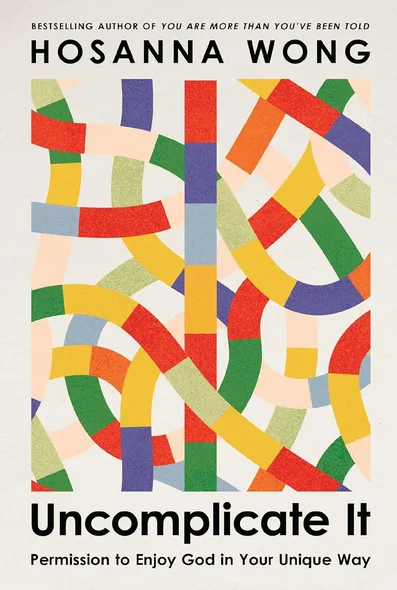
Uncomplicate It
What if connecting with God could be simpler—and more personal—than you ever imagined?
In Uncomplicate It, international speaker Hosanna Wong invites you to move past the lie that your relationship with God must look like someone else’s, or that it must look like it did years ago. Instead, she unpacks what God’s Word actually says about connecting with Him and offers you a permission slip to enjoy God in the unique way He’s created you to.
Leave a Reply