

About this episode:
How do we see God at work when life doesn’t go as planned? Laurie Polich Short shares powerful insights on living by faith—even when doors close, plans shift, or life takes unexpected detours.
Subscribe & Listen on:
 Apple Podcasts
 Spotify
TIMESTAMPS:

00:00 Biblical Stories of God’s Guidance and Faithfulness
01:44 Practical Ways to See God in Your Life
06:26 The Significance of Open and Closed Doors
11:07 The Practice of Piling Stones as Reminders
15:42 How to Recognize God’s Guidance Today
20:56 Living with Faith During Difficult Seasons
25:34 Sharing Your God Stories with Others
30:31 Laurie’s Bible study tools
Ellen Krause: Welcome back to the Coffee and Bible Time podcast. I am Ellen, your host, and today’s episode is for anyone who’s ever wondered, where is God in my life right now?
You know, we talk a lot about trusting God, following Him, and walking with Him. But sometimes, if we’re honest, it can feel hard to actually see him at work in our everyday lives, especially in seasons that feel confusing, unexpected, or just ordinary.
Well, in this episode, we’re talking about how to begin recognizing God’s presence in a more personal and tangible way. How to look back and see where he’s been faithful, how to notice where he might be moving right now, and how to build a faith that feels grounded even when life doesn’t make sense.
We’re joined today by Laurie Polich Short. Lori is a speaker, author, and Bible teacher who has spent years helping people connect the truth of scripture to their real everyday lives. She’s joining us today to teach us practical ways and biblical insight to help us start noticing and keeping track of God’s movement in our own stories.
Laurie, welcome to the show. I’m so excited to have you here.
Laurie Short: Thank you, Ellen. I’m excited to be here.
Ellen Krause: I feel like this is just a topic that everybody can relate to and everybody is curious about. Everybody is at different stages in their faith life.
But why don’t we just start with, for any listeners who may not know you yet, tell us a little bit about yourself and how you came to know the Lord.
Laurie Short: Well, I have an interesting story, being baptized as a baby in the Serbian Orthodox Church, believe it or not. My grandparents were immigrants.
And then it was my senior year in high school that I went to a Young Life camp for the very spiritual reason that my boyfriend at the time was going, and I wanted to see them. And that was where I heard for the first time about having a personal relationship with God.
And so from that point forward, I had no idea what God had in mind with my life. I always say it’s so funny because I set out to do ministry on the side. I was a theater arts major. I was planning on being an actress. Then I was going to maybe be a drama teacher because I started working with youth.
Well, eventually I ended up a youth pastor and spent many years training youth workers with an organization called Youth Specialties, and also speaking to kids and college students. And that was the bulk of my speaking career for a long time.
And then when my life kind of fell apart and God did some amazing things in the aftermath, I felt like I had more to say, more to write than just youth ministry helping books. And so that began kind of a second—I call it a second arm to my ministry—that I started writing more Christian life books and books particularly related to when life falls apart: where is God, faith in the dark, how to see your life differently, how to find things in God’s word that we don’t always see that can help us.
And so that has been what I’ve been doing lately. I’m so excited about this new book because now I’m finally inviting the reader into the same thing that people like you and I have been doing for many, many years.
You know, when you speak and people say, my goodness, your stories are so great, and I’m like, you have them too. It’s just that I make a living thinking about my stories. And so this felt like God wanted me to write to help readers excavate their own God stories and really see God in the things that had happened in their lives so that they could see him more in the time that they’re living right now.
Because we all know that God is invisible, and so we have to learn to see him in new ways. And I think when we look back and realize some things—I always call him the God of the rearview mirror because we see so much more of what he was doing when we look back—and I think that practice is so good.
And God has the word “remember” repeated over and over again in Scripture, to remember how God works so that you can trust Him when you don’t see what He’s doing, which is so much of our lives.
Ellen Krause: Right, right. Was there one specific moment where you really began to notice God’s movement and you felt like this was something that you were very passionate about helping others to do, or was it a gradual process?
Laurie Short: I think what really spurred me toward this book was just recognizing that so often we think we’re at the end of the story when we’re really in the middle.
And so often we give up. Many people even give up on God at that point. Well, you’re not doing what I wanted you to do. I’ve been praying about this for so long. I can’t believe that you would allow this to happen in my life, and not take the time to recognize and see what happens next in our story.
And that’s the benefit of looking back, is you realize, my goodness, that door that closed—that was so painful.
In my life, I went through a broken engagement when I was 42. So I was already late in the game, and everybody was so excited that I was finally getting married. And I was engaged for a year and a half because he got deployed.
And in the course of his deployment, his ex-wife began writing him. She had left him, but began having second thoughts. So when he came home, we broke up and he remarried his ex-wife.
And I always say that’s such an amazing story, when two people can find their way back together again. But honestly, I could not believe that something I’d wanted for so long, that was finally coming together, that God thought I was strong enough to use me essentially in that way.
People were like, well, isn’t it great that God used you to bring them back together? You know, in a sense, that was really true. But here I was having had to—my mom had those showers so fast, waiting to have them—and I had every gift on my registry. I had my bridesmaid dresses, my wedding dress, you know.
Yeah, it’s okay, because as I said, I was in the middle of my story.
And that is really where I developed the middle of the story theology, which for me was very poignant in the years between that and the time I finally did get married, which—I was 49—not exactly every girl’s dream, but it was God’s timing for me because of all the things that happened because of our union.
We raised a boy. His whole life changed. I was in a church and part of a community that I never would have been in. And all of that happened after my broken engagement.
And really, if you look at the story of Ruth, you know, if you just read the first paragraph of Ruth chapter one, you would go, I don’t even want to read this. This is just tragic. Everything, everyone dies. But that’s the beginning of the story.
And what I always say is if you are in an ending or something painful is happening, this is not where God is going to leave you. He’s either going to use that in ways you can’t imagine in your life—because we all know that pain is our biggest connector to other people—or he’s going to do something that you cannot imagine.
But the point is, we have to hold on. And that sometimes takes days and weeks and years, because God is not on our timeline.
I don’t know. I think that process led me to write this book, and it’s really eight ways to see God in your story. But I talk about open and closed doors. I talk about timing and coincidences, the times when we thought, when is this ever going to end?
But then looking back, we realize, oh, we needed that time for this to happen at just the right time. We see that in Joseph’s story. You could never have guessed what was going to happen next in his story, and yet he was led by a greater hand than his circumstances exactly where he needed to be.
But who could have ever guessed that journey? That’s so true in our own lives. And that’s why the value of seeing all the things that God has done that you’ve never taken the time to notice just grows your relationship with this God who is longing to know us.
Ellen Krause: It’s so incredibly helpful. You know, one of the stories in the Bible that you mentioned that was so impactful for me when I read it was the story of Leah, you know, the sister who was forced to marry Jacob and all he wanted was her sister.
Laurie Short: Yes.
Ellen Krause: Yet what you pointed out that I thought was so fascinating was that we see how her faith, her trust in God progresses in how she names her four children, which is—I had never noticed before. Why is that story still so powerful for us?
Laurie Short: Well, again, you wonder how much of it was conscious for Leah. And we only get a tiny window into her life when she’s naming her children.
I just picture what it must have been like to wake up in the morning next to a man who’s so disappointed to see you there, let alone how Jacob didn’t know until the morning. That story is so interesting. There must have been a lot of veils and a lot of wine involved.
But her whole life—and it was not her fault—her father traded her for her sister because he wanted to marry her off. To begin a marriage that way, I just can’t imagine.
So, you know, I always say pain visits every life. It just comes in different packages. And for Leah, it wasn’t in childbearing. She was able to have children so easily, whereas Rachel, the one that was loved, wasn’t. She even died in childbirth.
So Leah was having these babies, and you see her longing through that. Just every time she has a child, she says, maybe my husband will pay attention to me now. Maybe my husband will come—and your heart just breaks.
And then all of a sudden, her fourth son—all it says is she named him Judah. And she said, this time I will praise the Lord.
And what I say in the book is that she had somehow made that transition that we all have to make—from putting our eyes on something we want and don’t have, to something that God has given us.
And that transition is what allows us to stop worshiping the Santa Claus God, who we think is supposed to give us everything we want, and start worshiping the living God, who has bigger plans for your life than you can even imagine.
And as we know, Judah is so representative of that because he is the one that is in the genealogy of Jesus.
Ellen Krause: Thanks.
Laurie Short: So it’s so interesting, the subtlety of how God works. And that’s what I try to point out in the book, because I think we don’t always see those parts of the Bible that show us some huge truths about God. So certainly that was for me too.
Ellen Krause: Another one of those that you referenced was the practice of the Israelites piling stones as reminders of God’s faithfulness. How did that practice influence you?
Laurie Short: Well, you know, again, that was a huge part of this book, the two biggest influences in creating this resource.
But the first was the Footprints poem that many of us knew growing up. There’s a generation of people—I’ve talked to a lot of people—that don’t know that poem about the man on the beach looking back over his life.
When he sees two sets of footprints, he assumes God was with him in those times of his life. And when he sees only one, he thinks he’s alone. And he notices that they’re the most painful times of his life.
And so he cries out to God, where were you in my darkest moments? Which is a prayer so many of us have.
And God said, I didn’t abandon you. That was when I carried you.
There’s a perspective shift.
So it was the Footprints poem that led me into it, but the stone pile is what the Israelites did when God met them. They made these makeshift stone altars along the side of the road because they walked everywhere.
And I always like to picture other Israelites walking along the road and seeing these stone piles and thinking to themselves, God must have met someone in this place.
So I’ve always thought about that stone pile. And I actually put one in the book in the last chapter and invite the reader to make their own stone pile from one thing in each chapter that they saw God do in their lives.
And I think this is such a great practice because what I feel like is that now people don’t have to—they can put the book on their shelf—but they can just go to one page to remember, yes, I know God’s with me right now, even though I don’t see what he’s doing.
I’m in a wait, and maybe I need to wait like I did before, or maybe he’s going to do something else like he did before. And I think we need those reminders to keep us walking in faith.
Ellen Krause: Absolutely, absolutely. And they become part of your story that no one can deny. It’s your story and yours only to tell.
Well, you mentioned that you write about the 8 ways to observe God’s guidance. Can you walk us through maybe one or two of those that feel especially impactful to you right now?
Laurie Short: Well, I start the book with how we hear God, because I think that’s really important. There are books about just that—how we hear God—but I think it’s important to kind of jar the reader into thinking about how they’ve heard God in their lives.
Of course, we hear Him through His Word. But we also sometimes hear Him in a talk, where all of a sudden something—the volume gets turned up—and we go, wow, that just seems like it was for me. Or we read something, or maybe in nature you feel especially close to God and God’s communicated with you.
So I start with hearing God. And then I move into two different chapters that help you kind of look at the scope of your stories, like the open and closed doors.
We always think of God in the open doors, like when He answers a prayer, does something, and that’s usually what our testimonies are. But if we look back a little further, we might notice that there was a closed door that happened before that open door.
Like in my case, you know, the door closing on what I wanted so badly led to somebody calling me about a job that I never would have considered and a move that I never would have considered. And that was where God had the next chapter of my life.
A little bit like Ruth and Naomi, you know, moving somewhere else when it seemed crazy. I always laugh because Ruth—you know, people are saying, you’re never going to get married if you go to Israel. And that’s what people said to me because I was going to Santa Barbara, and everyone said, there’s no single people there.
So don’t put it past God to lead you places that you might think, this is crazy.
But sometimes we’re so focused on the door we want to see open that we might miss a door that is opening. And you have to pay attention to what is happening in your life, even if the thing you want is not happening, because one door could lead to another door that leads to another door that might even actually lead to the door you want. It’s just a different route.
And so that’s why it’s about walking with God.
And in timing and coincidence, I talk about long waits that you think, why is this happening? Poor Joseph in jail for two years after—I’m sure he kind of thought, my goodness, Pharaoh’s attendants are with me, they’re getting out. You know, I always like to picture him going, don’t forget me when you get back. We won’t.
And then for months, and then ultimately two years, until we know, looking back, it was the perfect time—because Pharaoh had a dream, and that is when the cupbearer remembered Joseph. And so that allowed Joseph to be released, and in a matter of moments, he was fulfilling the dream he had to be second in command of all the land.
So we see that.
We see that sometimes we showed up somewhere that somebody else was, or we moved somewhere that we met somebody. Those things that we call coincidences—I always call that a secular word for what God is doing in your life if you open your eyes.
But I think the chapter that really resonates with people is when your script gets flipped.
So much of life is not what we planned. And I give an illustration about being on a plane. I had already gone through so many delays, and suddenly the pilot—we were only an hour away from landing in LA, and I had my husband driving all the way down there—and he said, you know what, because we were in a holding pattern for so long, we’re not sure if we have enough fuel, and we’re going to land in Phoenix to refuel the plane.
And I had that feeling of being in the passenger seat going, no, we’re not. No, no, we’re not landing in Phoenix. I can’t land in Phoenix—and a bunch of passengers was there.
And it’s like, what are you going to do? Your plane is going to Phoenix.
And that is such an illustration of what happens in life when you go, wait, no, no, no, no, I’m not going here. This isn’t going to happen—this diagnosis, this breakup, this, you know, I can’t have a child and I want one so bad—this, whatever it is for you.
You say, I don’t want this, Lord. And yet that’s where your plane is going.
And I think that when your script gets flipped, it’s an opportunity to see God in a powerful way. I always say I was never so focused on the pilot—I don’t even notice the pilot most of the time—as when he was going a different direction than I wanted.
And it’s an opportunity to see: what does God have for me here? Who’s in charge of my life—am I, or did I say God was?
If God is in charge of my life, then He has a plan and a purpose for whatever He’s doing in this moment. And sometimes it’s something challenging and difficult that’s maybe going to change you. It’s maybe going to become your ministry that you didn’t know that God was going to use in your life.
I can’t tell you how many single people talk to me and ask me for prayer and ask for my story. You know, if I had gotten married at 25 and had my 2.5 kids the normal way, nobody would have asked that.
And so the things that we go through that are the most difficult often become the most powerful places that God uses in our lives.
So we look back and we can see that, but when we’re living it is when it’s hard. And that’s why I wrote this book, is to help people live by faith because of what God has done and is doing in their life right now.
Ellen Krause: Absolutely.
You know, I was given up for adoption when I was just a baby, and it wasn’t until later in life, after so many different things had happened, that it really became clear the more I learned. It was a closed adoption, but then it changed in the state of Illinois, and I could find out more information and this and that.
And it made me realize how blessed I was to get the parents who had a strong faith influence in my life.
Laurie Short: Hmm. Yes.
Ellen Krause: For growing up, it was always like, why don’t my parents want me? Because there’s always something like that. But I want to see how God works and reveals these things in His timing.
Laurie Short: Yes, and I mean, I couldn’t be a biological mom, and I dreamed of that.
And when I married my husband, he had a six-year-old, and his mom ended up meeting someone and moving to Australia. And so I really got an opportunity to be one of the moms in his life.
And I see now, because of the church that I went to work for, because of the broken engagement, this boy was raised in that church. And today he’s a Marine and leading worship at one of the biggest churches in Yuma, Arizona.
And all of that happened because my husband and I came together at what I thought was way too late.
I mean, I have to tell you, when I share my testimony to college students, you can see them go to prayer—no, God, please. You know, 49 is not any girl’s dream.
But for me—and I think, you know, one of the things that becomes clear in the book—is that we have to let go of the way that God answers our prayer.
Often He answers our prayer, but He may do it in a way that’s different than you prayed. And us letting go of—for instance, I got to be a mom, I just didn’t ever get to be a biological mom. That was a dream for me.
Like Leah probably had a dream of marrying someone who was madly in love with her—not the way it was.
And so all of us have these things in our lives that we would have preferred maybe not to be a part of our lives when they happened. But because this life is only part of the eternal story, we are here for a bigger purpose than ourselves.
And if we can really know that, then we want to spend our days here the way God wants us to, because He has a dream for our life here. And one day we’ll be with Him in glory.
I mean, the older I get, I realize how quickly life goes. It does—even if you’re young and you’re watching right now—life goes so fast, even when it seems so slow.
And we just need to lean in and live the seasons. It’s not putting on a smile when things are hard and faking it. It’s leaning in and living it.
I mean, I think about Job for that, because he cried and wrote the whole book, really—why? Why is this happening?
And at the end of the book, you know, he’s resolved by what God shows him about how big the world is and his part in a much bigger story. So he never knows why he suffered, but his pain is resolved. He ends up repenting.
And what’s beautiful about this story, I think, is that God ends up exalting Job over the godly friends that gave him all the spiritual advice, because Job was honest and he stayed with God. That is the point.
You don’t have to—I mean, look at Naomi when Ruth came to be with her. She was like, the Lord’s hand is against me. I’m in a pit. I’m going back. Don’t follow me.
It wasn’t like she was giving a great testimony when Ruth said, no, I want to come with you. Your people, my people, your God, my God. So she had seen in Naomi a real, vibrant faith.
And that is what people need from us. They need to see the struggle, but I’m not giving up.
I remember speaking in between the time of my broken engagement and the marriage. I was still speaking, and I really felt like if I shared my story—I said to God, people are going to walk away from you. They’re not going to come to you after this.
And I just felt God say, you think I don’t know where you’re at right now? No, just tell your story and see what happens.
And Ellen, that was where I developed this middle-of-the-story perspective, because I was telling my story. I didn’t have any idea what God was going to do.
I got to the broken engagement part. I looked up—everyone’s like, it’s horrifying—and I said, but you know what? I got up this morning and I’m still breathing, so God is not through with my story.
I don’t know if I’ll ever get married. I don’t know what He’s going to do, but I’m choosing to hold on to Him.
And you know what, Ellen? That’s a testimony. That’s the testimony people need.
Because, you know, the great stories—we need them too—but when you’re walking a season of hardship, you need to know that somebody held on when they couldn’t see what was going to happen.
I think that’s so much of our Christian lives. And that’s why faith is being sure of what you hope for and certain of what you do not see.
Ellen Krause: Yes, absolutely. And as we start to wrap up here, Lori, I just want you to talk really briefly about how your book so beautifully can help people document God’s presence in their lives a little bit.
Laurie Short: There are actual journaling spaces in the book, but I don’t want anybody to be intimidated by that. If you’ve never journaled, you don’t know what you’d write—there’s no pressure to write anything.
But I allow for space for you to write even a word or a sentence or a phrase, or if you’re a journaler, you might fill the spaces. But I am telling stories, referring to Bible passages, telling stories of friends as well as from my own life of how God actually works in these ways.
And I’m leading the reader through questions of reflection to be able to look back in their own life and see if something gets jarred—a memory gets jarred—that maybe they haven’t thought of for a long time.
A lot of people are telling me, oh my goodness, this book is unearthing things that I hadn’t thought about for so long—the parts of the stories that maybe you’ve told some of your stories, but you didn’t realize that there was even a bigger story or a connecting story.
And then at the end of the book, at the end of each chapter—this is really important—I have a moving forward section, which allows you to actually practice this in your life right now so that you can not only just look back on the past, but you can realize that these are ways God is still working in your life.
And then at the end of the book, I give some tips for how to recognize God’s work in your story and how to put things together. And I think that’s a very helpful section too, after the stone pile.
So it’s not just a look-back book. It’s a look back—remember so that you can trust—in new and different ways moving forward.
Ellen Krause: Incredible. I really want to do this book with my small group. We have this women’s group that we’ve been doing studies together, and I just think it would be so fun and interesting to hear about other people and what they’ve discovered and how they’ve seen that at work, as well as my own.
Laurie Short: Well, I should mention, too, that I have a study on RightNow Media, a video study that goes with the book and a leader’s guide. So you can absolutely do it in small groups.
There are even spouses doing it together because it really—I’m doing it with my husband right now—because some people just need that question, that prompt to cause them to think, yeah, I never thought about this before.
And it’s so faith-producing for people. And I think in your small group, you would get to know each other in a whole different way and be encouraged by each other. That’s the point, right?
We all want the stories to encourage each other. So that’s what I really hope this book will do, is just get passed around and cause people to share their testimonies—not just go and listen to other testimonies, but you have one too. And I really hope that this book will help you find that.
Ellen Krause: Yes, it truly will. Well, where can our listeners go to find out more about you and your new book, Tracking God in Your Life?
Laurie Short: So you can basically get the book anywhere. The book’s on Amazon. But also, the best way to get to know me is go to my website, laurieshort.com.
And I am primarily a speaker, so I speak at different conferences and events. And I’ve been doing some retreats with this book, which has been really so wonderful to actually give people the opportunity to do some of these exercises with me there.
But you don’t need me—do it with the book. And I really hope that you will check it out because it’s the only one of my books that I didn’t do an audio read on, just because I feel like people need it in their hands. They need this so that they can go back to it.
So often we can go back and listen to things, but it’s not the same as actually having something in your hands.
So laurieshort.com , also on Instagram—@lauriepshort—and that’s the same on Facebook if you’re on social media.
Ellen Krause: Perfect. We will make sure we include all those links in our show notes.
I was even thinking this would be something great for your kids to have too, as kind of a memoir of how God was at work in my mom’s life.
Laurie Short: Exactly. Exactly.
Yes, I even say that in the intro—if you’ve ever dreamed of writing a book about something that happened in your life, this is the perfect pre-book to do, to really excavate that story and have a frame of reference.
But yeah, I do know a mom who wrote me who said, I got it for my whole family, for my kids too. And because I think that as you get older and live more of life, you want some of these things documented because we do forget so much.
We are very forgetful people. Scripture makes that clear. We point at the Israelites and go, how could they forget? And then we think about ourselves right after church.
Ellen Krause: Yes, we are. Exactly, exactly.
Well, Laurie, I have to ask you some of our favorite questions here before I let you go. What is your go-to Bible and what translation is it?
Laurie Short: I’ve always gone to NIV, and NIV has gone through so many changes. It’s lovely. So you can get a lot of different translations within NIV, but I’ve always liked that the most.
However, I do like doing the side-by-side and enjoy what The Message has to offer, to infiltrate kind of different translations. Because I’m an excavator of verses, especially the ones that we don’t always see.
And so I love seeing how they’re translated. So often we think the Bible we were given was the original language. We don’t realize that, no, it’s a translation.
But I do like the NIV. I’m kind of partial to that one.
Ellen Krause: Yes. I actually have a quick funny story about that.
So I went to a library book sale and I found a brand-new, never-used NIV Bible, and it was like a dollar. You know, every book is a dollar or something like that—crazy. So I’m like, oh, this is so great because I had just retired my old one. I needed one.
So I’m all excited to use it. I go to put on the YouVersion app, because I have ADHD and I need to hear and see at the same time. Then I realized, wait, this NIV isn’t matching.
And as you said, even translations themselves change things. But now I’ve come to actually see it as a blessing because it’s almost like I’m getting extras, and then you’re there for things that they’ve changed. And I find it fascinating to see what they changed.
So anyway, do you have any favorite Bible journaling supplies that you like to use?
Laurie Short: Well, you know, I’m an old-fashioned older girl who likes the pen and the journal.
But that was really why I wrote this book, you know, was to give people something that they could practice—this lost art of writing with a pen, you know, in journaling.
And again, I want to say that I think the pressure of journaling—some people just can’t even do it because they get so like, I don’t know what I’d write. And I think God wants you to be freed up. It doesn’t have to look like anything. This is you—your thing.
So I think it’s a great practice to just get out your prayers, get out your thoughts, your feelings. It can be really therapeutic.
Ellen Krause: Absolutely, absolutely.
Okay, last question: what’s your favorite app or website for Bible study?
Laurie Short: I love BibleGateway.com because they will do that—you can take a piece of scripture and then you can look at it really quickly in a bunch of different translations, which I love to do because you get something different from each translation.
So I really love that.
Ellen Krause: Well, Laurie, thank you so much for being here and for sharing your heart and your wisdom with us. We’re so thankful for you.
Laurie Short: Thank you so much for having me, Ellen.
Ellen Krause: And for those of you who are listening, we just want to leave you with this encouragement from Psalm 77, where it says, I will remember the deeds of the Lord. Yes, I will remember your wonders of old.
Even if you can’t clearly see what God is doing right now, you can begin by remembering where He’s been faithful and trust that He’s still at work in your life.
Well, thank you so much for joining us on this episode of Coffee and Bible Time. Be sure and share this with someone who could really use some encouragement that God is speaking to them, and we’ll see you next time on the podcast.
Life rarely unfolds the way we expect. We pray, we plan, and we hope for certain outcomes—but often, God’s plan for us takes a different route. In a recent episode of The Coffee and Bible Time Podcast, speaker and author Laurie Polich Short shared powerful insights on living by faith and learning to recognize where God is actively guiding our lives, even in ways we don’t immediately understand.
“We always think of God in the open doors, like when he answers a prayer, does something, and that’s usually what our testimonies are. But if we look back a little further, we might notice that there was a closed door that happened before that open door.”
Laurie Short
This perspective is crucial for Christian women who want to see God at work in their everyday lives, trust Him in difficult seasons, and grow spiritually.
Recognizing God’s Patterns: Open and Closed Doors
One of the most powerful themes Laurie shared in the episode is the idea that God guides us not only through answered prayers but also through closed doors, delays, and unexpected detours. Too often, we focus exclusively on the “open doors”—the blessings, the breakthroughs, and the answered prayers—and we miss the lessons in the pauses or redirections.
“Sometimes we’re so focused on the door we want to see open that we might miss a door that is opening. And you have to pay attention to what is happening in your life, even if the thing you want is not happening…”
Laurie Short
Scripture reminds us of this principle throughout the Bible. In Joseph’s story (Genesis 41), he endured years in prison before the “door” to Pharaoh’s palace opened, ultimately leading him to save Egypt from famine. Like Joseph, we often can’t see the full picture in the moment—but God’s faithfulness is always at work.
Practical takeaway: Reflect on past seasons of disappointment or delay. Consider how God may have been guiding you through experiences you initially thought were setbacks. Journaling these moments helps you see the pattern of His guidance and strengthens your ability to live by faith in the present.
Seeing God in the Everyday
Another key insight Laurie shares is that God communicates in ways that go beyond formal prayers or extraordinary events. He can speak through Scripture, through conversations, in nature, or even through ordinary life events. Recognizing these moments requires attentiveness and intentional reflection.
“Of course, we hear him through his word. But we also sometimes hear him in a talk, where all of a sudden something, the volume gets turned up and we go, ‘Wow, that just seems like it was for me.’ Or we read something, or maybe in nature you feel especially close to God and God’s communicated with you.”
Laurie Short
Practical takeaway: Start a “God at Work” journal. Even writing a single word, sentence, or reflection can help you see how God is moving in your life. Laurie emphasizes that it doesn’t have to be perfect—it’s simply about documenting His presence.
Scripture encourages this practice in Psalm 77:11–12:
“I will remember the deeds of the Lord; yes, I will remember your wonders of old. I will ponder all your work, and meditate on your mighty deeds.”
By intentionally reflecting on where God has been faithful, you train yourself to recognize His guidance in the here and now, deepening your practice of living by faith.
When Your Script Gets Flipped
Life often goes in directions we don’t anticipate. Laurie shares a relatable story about being on a plane that unexpectedly had to refuel in Phoenix:
“I had that feeling of being in the passenger seat going, ‘No, we’re not landing in Phoenix.’ …This diagnosis, this breakup, this—you know, I can’t have a child and I want one so bad—whatever it is for you, you say, ‘I don’t want this, Lord.’ And yet that’s where your plane is going. And I think that when your script gets flipped, it’s an opportunity to see God in a powerful way.”
Laurie Short
This metaphor beautifully illustrates how unexpected circumstances can become opportunities for spiritual growth. When plans are disrupted, living by faith means trusting that God is still in control, even if His plan looks different than ours.
Practical takeaway: Shift your perspective from frustration to curiosity. Ask God, “What are You teaching me in this season?” Even moments of delay, loss, or confusion can become powerful testimonies of His faithfulness.
Living by Faith Today
Ultimately, living by faith is about trusting God in the present while recognizing His faithfulness in the past. It’s about seeing the closed doors as part of a bigger plan, embracing unexpected detours, and documenting His guidance so that your faith grows stronger over time.
“The things that we go through that are the most difficult often become the most powerful places that God uses in our lives.”
Laurie Short
By intentionally observing God’s presence, reflecting on past experiences, and documenting His work in your life, you can cultivate a practical, active faith that shapes how you respond to every season—joyful, difficult, or unexpected.
Key Takeaways
- Recognize God’s guidance not just in open doors but also in closed doors and unexpected detours.
- Keep a “God at Work” journal to document His faithfulness.
- Shift your perspective when life doesn’t go as planned—ask God what He is teaching you.
- Use tangible practices, like reflection prompts or stone piles, to remember His presence.
- Trust that living by faith means leaning into God’s plan even when you can’t see the full picture.
Living by faith is not about perfection or having all the answers—it’s about trusting God’s hand at work in your story. By reflecting, documenting, and paying attention, Christian women can grow spiritually, find peace in uncertainty, and strengthen their relationship with God every day.
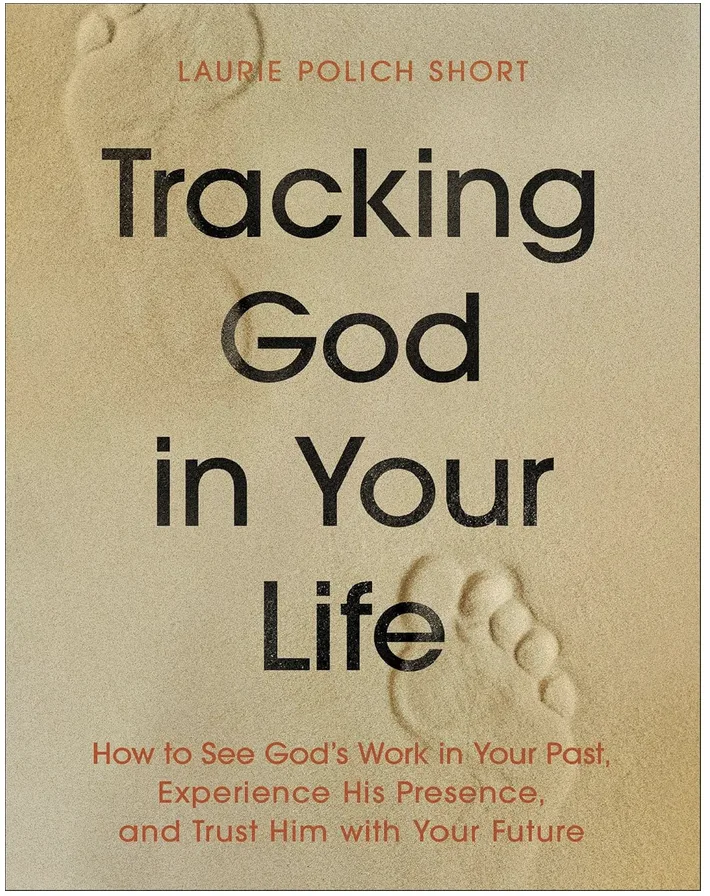
Tracking God in Your Life
In this interactive book, Laurie Polich Short guides you through eight ways to see God’s presence in your life by recording evidence of His love and care for you.
She shows you how to understand the doors that have opened and closed, how you ended up in different places than you planned, the difficulties you’ve endured and how those difficulties were used, and the unexpected people who were brought into your path.
Leave a Reply