

About this episode:
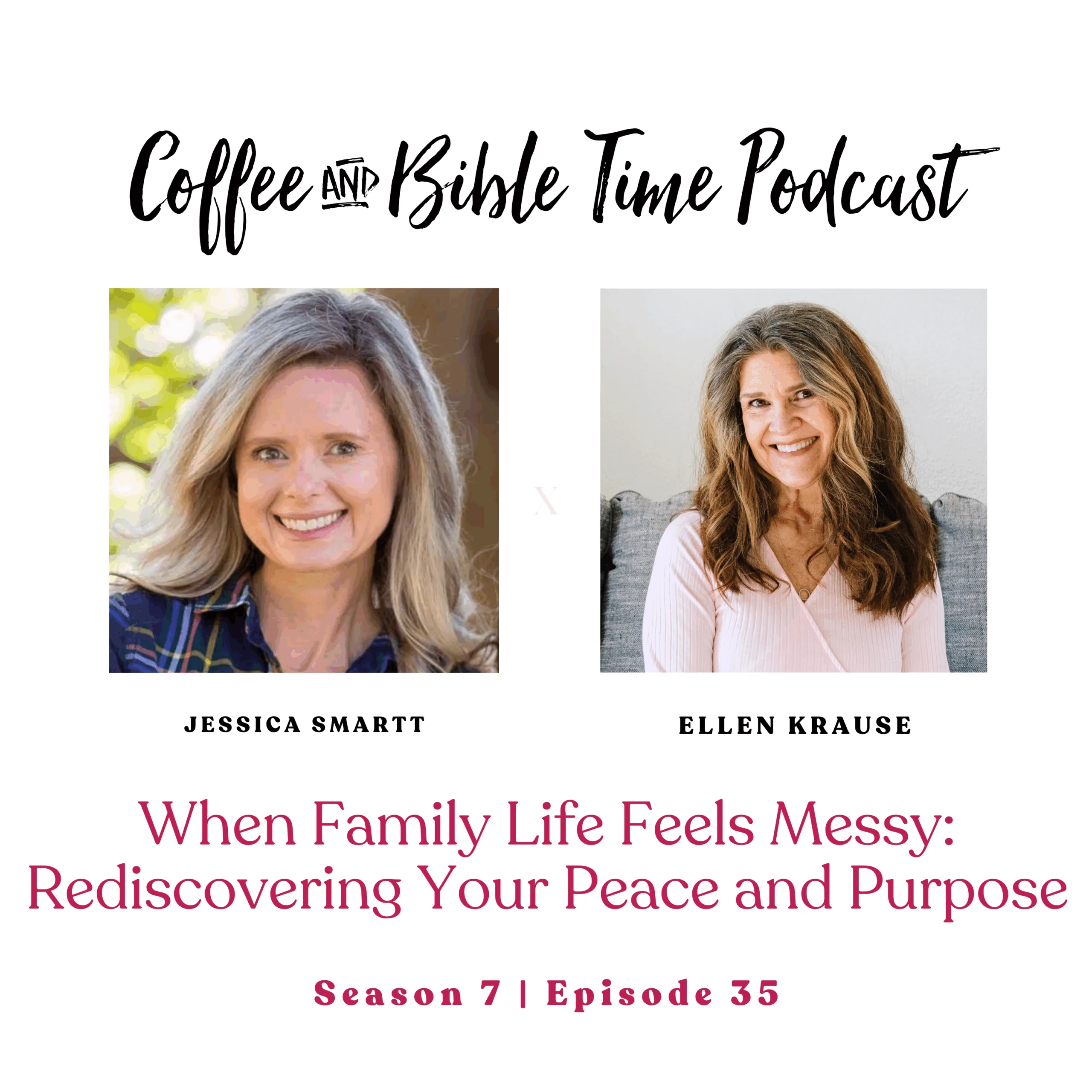
What if the key to a more peaceful family life isn’t doing more, but choosing less—and choosing it on purpose? Author and homeschool mom Jessica Smartt joins us to unpack how loving authority, slow tech, and small daily rituals can transform your home from frantic to grounded.
Subscribe & Listen on:
 Apple Podcasts
 Spotify
TIMESTAMPS:

02:10 When Motherhood Brings You To The End of Yourself
06:15 Facing the Family Life You Have
10:10 Being Authoritative Without Being Mean
15:10 Tech, Screens, and the Soul of Family Life
19:46 Redeeming Mistakes and Starting Fresh
21:10 Building Intentional Time
25:20 What Makes a Home
29:30 It’s Never Too Late
33:20 Resources, Bible Habits, and Closing Blessing
The Conversation Continues in our Community:
33:21 Dealing With Tense Family Moments
35:49 Spiritual Practices to Stay Grounded In Motherhood
Full Transcript
Ellen 0:04
The Coffee of Bible Time podcast, our goal is to help you delight in God’s Word and thrive in Christian living. Each week, we talk to subject matter experts who broaden your biblical understanding, encourage you in hard times, and provide life-building tips to enhance your Christian walk. We are so glad you have joined us. Welcome back to the Coffee and Bible Time podcast. I’m Ellen, your host, and I am so glad you are here with us today. We are going to talk about something that all of us, but especially parents, feel. How to build a family and home life that not only functions but flourishes. In a time when families are pulled in a hundred directions by schedules and screens and societal pressures, what does it look like to slow down, get intentional, and create a home that stands the test of time? Our guest today, Jessica Sparte, knows this struggle and this calling very personally. Jessica is a homeschooling mom of three who lives on a farm with her husband and a lively crew of animals. She’s passionate about encouraging everyday moms to build close-knit families and reclaim the beauty of childhood in a culture that often rushes right past it. Through her writing and ministry, Jessica shares not only practical wisdom, but also a deep heart for grace, connection, and purpose in family life. So whether you’re raising toddlers, teens, or navigating new seasons, her insight will remind you that it’s never too late to build a strong, meaningful home, no matter where you’re starting from. Jessica, it’s such a joy to have you with us today.Jessica 1:59
Thank you. That was really beautiful. I don’t know if you wove that all together or someone sent you, but I was like, wow, that was that’s just just captures it in a nutshell.
When Motherhood Brings You to the End of Yourself
Ellen 2:08
Oh, well, we have so much to talk about, and this is one of my most favorite topics of all. So let’s just kind of jump right into it. You know, parenting has a way of bringing us to the end of ourselves, as you so humorously uh tell us in your book in a number of ways. What did that moment of realizing you couldn’t do it alone look like for you?Jessica 2:37
Well, there was a lot of moments, and it was drug out along months, maybe even years. But I thought I would love being a mom, and I do. I thought it would be a lot easier than it was. And I’m used to kind of having my schedule and getting my sleep and doing all things, and so when I had my son, and it’s very hard, and you lose sleep and you die to yourself, and it he had some particular sickness and um allergies and colic and was just a difficult child, period, which a lot of mothers deal with just fine, but it really rocked our ship, and um, so that was round one, and then round two. I probably had some I undiagnosed postpartum depression, and I didn’t know how to deal with that and didn’t really have a good support system. So, and that man, that lot lock of sleep really can get to you depending on what your makeup is. But I’m one that, you know, it just it was like a torture technique. So there was a lot of bleak moments in those early years, um, and times when I thought, why did I want this? This is so hard. I clearly misunderstood God that this was my calling, um, and just feeling really inadequate just to care for my kids. You know, the idea of this interview ever happening and writing books was like so far conceptually from anything I could wrap my brain around, but a testimony of how God digs us out of those pits and even uses that those times in our ministry and in our life. Yeah, it looked like anxiety and depression. And I’m just really grateful I’ve learned a lot of tips and tools and have a good support system in place, and not that that isn’t ever presenting itself, but I name it, I know it, I’m like, okay, this is that voice again, you know. And of course, you just gain more confidence into motherhood. And now I have a 16-year-old, a 14-year-old, and an 11-year-old, and I’m reaping in a beautiful way those years of relying on the Lord and investing in my kids. Of course, our story is only halfway written, so I’m anxious to see the other side. But God has just been so good and faithful.Ellen 5:00
Oh, thanks for sharing your story. You know, one thing that you mentioned in the book was if you could just get through the first six months after having a baby, you’ve rocked it. Like I think sometimes we have such high expectations of what that mothering is going to look like. And even just something so simple is saying that give kind of it lets your shoulders down, like, okay, right? This is going to be a different time than I’ve ever experienced before, certainly when you have a newborn. But we’re we’re talking here today about all different stages and ages of family time. Let’s let’s talk about one thing that you had made clear was that before you can have the family that you want, you have to get real about the family that you have. So, why is it so important for moms to be honest about their capacity, health, and gifts when shaping their family’s culture?
Facing the Family Life You Have
Jessica 6:05
I mean, like you said, it can’t change if you don’t know what needs to change. And we’re often so busy and preoccupied. It’s not that we don’t care, but there’s just so many distractions. And so to sit and take the time, and it also takes some courage, I think, to be honest about how you’re really doing, how the kids are really doing what life is like in the house, what might need to change. And one ritual that I have just loved throughout my motherhood years is I have two planning days a year. Um, you know, I homeschool, so I’m like, this is my planning day. But I think every mom should do it because you’re running a production and there’s a lot of pieces, and you need to have those checkpoints where you can sit and step back and take the big angled view of like what is happening and where’s God calling me next. So I do it in August before we start the school year, and then around Christmas, over the Christmas break, and just get away with my Bible and my journal. And so I think I’m encouraging moms to have something along those lines before they dive into the book that maybe this is an opportunity God is wanting to bless you with, and not another burden and not something to fear, but just to take a deep breath and say, what’s happening in my family? What’s happening in my life? And a lot of times I think for moms today, it may involve a stripping down of some of the things that we’re committed to or that our family’s committing to because we are overcommitted and we’re trying to do too much. So making a l, and when I say we, I truly mean we. So making a list of all of the things that our family’s doing, and then looking back and saying, Well, would I really add back if it wasn’t already on my plate? What can I, what are of these things can only I do? And that list gets short, blessedly short. And that’s what the Lord is calling us to do. And so it’s the big rocks and the small rocks, and putting in the big rocks first, and then you can add. I literally have on my um thing a list of here’s my big rocks, here’s my small rocks, because I I need to remind myself what to really pour into. So the chapter goes into a lot of other things as well, uh, of like assessing your health and you know, looking at your kids and being like, are they doing okay? Like that’s a very obvious but often overlooked question. Like, are they okay? What do they need? Is somebody like going through something? Am I going through something? Because it’s great to do all the traditions and the vacations, and there’s so many ideas in the book, but I think stating the obvious, you gotta kind of like get the first things right and wrap your head around like and and again, this is where I um rely so much on God and his wisdom because he he will direct you personally. I wouldn’t even know what to tell you, but he he knows, he knows the things that maybe you need to let go of or deal with or whatever. So I don’t want it to be like it’s not like a depressing, like burdening, it more is just like, hey, maybe God’s giving you a gift to just take a minute and think about your life, which some of us don’t take time to do.Ellen 9:16
Right. And I think so often too that you know, you asked people in the book to sort of do that assessment yourself, write down everything you’re doing. So I was sitting there writing down everything, and I can just remember. I mean, my kids are are grown now, but I can remember going through that list and thinking, I’m doing a lot of things that I should be teaching them how to do. They’re capable too. Yes, which I love that not only are they helping, but they’re learning at the same time. And it’s it’s just can really help free you to have less stress and anxiety about that’s very true.Jessica 10:02
I’m not always good about that because I want it done my way.
Being Authoritative Without Being Mean
Ellen 10:07
Yes, my way or quickly, right? Because when they’re first learning, it’s not gonna be quick and fast and you know, just how we like it. But eventually, hey, it is it’s incredible. I mean, now I think about the time that I poured into my girls was just teaching them how to cook and do a meal plan and grocery shop and all of that, like now that they’re using they’re on their own and they they can do all those things. So it’s so important to feed in nice and early. Well, let’s talk a little bit about kids and authority and screens and all that stuff. It’s easy to feel like setting boundaries makes us the bad guy as parents, but you say that kids actually crave loving authority. So help us unpack what that means and how it plays out in real life.Jessica 11:02
Yeah, I mean, everybody functions better when there’s someone at the helm of the ship directing it. That’s just a life truth. And I think parents like know that, but it’s still speaking for myself too. There’s like this internal battle every time you have to assert your authority and call somebody out and hold their feet to the fire and give them the consequence. And we talk ourselves out of it. And I think it’s easy to make excuses or feel like, well, they, you know, here’s this list of extenuating circumstances that they’re going through. And that’s not helpful to our kids. You know, we want to grow kids that have self-control, that are a blessing to the world, that have self-discipline. And so we’re the ones that are teaching that. That’s where they’re going to learn it is from us. So I think I told, like, made like the funny comparison of like the dog trainer. There was like the show that my husband and I watched, and um, how uneasy the dogs are when their owner isn’t making them behave because they’re comforted when there’s a pack leader. And if there’s not, then they’re like uneasy and they have to kind of be one, but they don’t. So not that kids are dogs, you know, but it’s like there that’s a lesson there. Like we’re similar and we need to know someone is in charge. And that was very much my experience growing up is that my parents were not legalistic, there wasn’t a lot of rules. I don’t really remember, even like lots of talks about like, here’s what, you know, it just was more like assumed, like, you’re gonna go do the right thing. And there was a very firm, like, we knew that someone was gonna hold us accountable, we knew someone was watching, we knew someone was supporting us. Um, and that just gives you all the courage in the world. So I am trying very hard because I do think there’s so many amazing things that young moms are doing so much better than I was. But I do see a little bit of a reticence to take control sometimes. And I think there’s a hesitancy to, you know, discipline in a godly way because we’ve misunderstood it to mean that it’s unkind and we’re not listening to them or, you know, just we don’t know how to handle it. But I’m really trying to encourage parents to pick a few things that you’re like, this will not happen in our home, and to be very firm about it. And it is like, well, what do I even like? How do you enforce it? And what do you do? But it’s like, we are the ones that hold the keys, we are pay for the fruit snacks, and we don’t we have the remote and we are able to drive them to the places they want to go. So we hold the power, and it’s it’s a kindness to show that love and authority in a kind way, not mean and nitpicking, but to show love and authority hand in hand. That’s like the magic sauce, I think.Ellen 13:57
Absolutely, and you know, all of our children are so different. So for me, my first two children, I feel like it just went smooth as normal, you know. But then when I had my third child who was much more pushing back on authority, I wasn’t used to that. And we had had a speaker at our church who actually attended our church, and she came and did like a little site visit and just sort of helped me do exactly what you were saying, which was helping me reinstate my authority, if you will, with this child that was really challenging authority more than the other two. So it’s okay to get help when you need it.Jessica 14:50
Yeah, that’s awesome that she did that.
Tech, Screens, and the Soul of Family Life
Ellen 14:53
Yeah, so incredibly helpful, but that authority aspect is very important. And and speaking of that, what I’m hearing from more and more people is that technology is the biggest challenge for modern parents. What principles guide your approach to screen time? And how do you teach your kids to have healthy boundaries without completely isolating them from the digital world?Jessica 15:23
Yeah. Um, so principles, and then let’s come back to the second part of your question because that’s so good too. So don’t let me forget it. But I would say two main principles, and one is well, the title of my second book was Let Them Be Kids. And I think that guides a lot of my decisions, is um, our decisions. My husband is very much on the same page, and that we’re gonna give them a childhood and we’re gonna ground them in the really good things of life. And even as they receive technology, you know, this is our goal for my husband and I as well, that we look to the real world, to real faces, to real things, real nature, those real experiences to give us our life, capital L life. Like that’s where we find it, is not in screens. Screens are a tool and they are useful, um, but they’re a small part of life. And so the principle is, especially when they’re little, it should be a very, very small part of life. So without getting into a lot of like, this is okay and this much time, it’s like the overarching view of life is they should be exploring and making friends and playing out until it’s dark and digging in the dirt and being creative. And you know, we watch TV like probably, you know, five o’clock when I’m making dinner and they come in and they’re tired. I’m like, sure, you know, that’s fine. We’ll watch a movie. It’s not like I’m anti no screens in the house. That’s not been our approach, but it’s like that’s not gonna be a major part of our life. It’s gonna be a little small part. So we it was very hard. I mean, my oldest is 16 and just got a phone. When he was 15, he got like an Apple ID so he could text, and things changed a lot when he was able to do that because it was like, oh now, like I want to check and see if someone, you know, texted me. So I was glad it was grounded at a computer because then when he was out, he was truly out and you know, checking and face down. But that was a shift as well. But what what I thought was cool, you know, I I thought when I gave him the phone and he was 16, like, okay, this is the end, you know, this is I’m just so sad. And what was cool is the groundwork had been laid. He had already formed habits and friendships and stuff, and so it really didn’t change a lot because at that point he had developed well in all of the different spheres. So it was an encouragement to me. It was affirming of our choices, honestly. And I just want to be the voice that keeps saying, like, hang on, hey, if you haven’t given whatever fill in the blank it is, hang on. There, it’s earlier and earlier, especially for girls. It is so troubling. If I had a girl, I would be, I mean, there’s reasons to be wary for both genders, but uh the social media for girls, I just I can’t even wrap my head around it. And I think we as parents have to get really good and comfortable with making hard decisions for the good of our kids and saying, I acknowledge that this is hard for you, but it is more important that I do what I think is right. And I and then that means we suffer the consequences of hearing disappointment. And we didn’t actually experience that to be honest. Part of it is we homeschool, and so we were sheltered a little bit from that. Although he he did, I mean, he still plays on like a travel team, and he was the only one without a phone. But I think I can understand and sympathize that it does wear you down, and you start feeling like, well, they’re the only one, and it’s you know, putting a wedge between us. And I would just go back and say, like, what is the most important thing? And every parent can answer that for his or herself, but I think we’re gonna look back as a culture and really regret this period of how things were done. I think there’s gonna be some severe reorienting. I hope anyway, because it’s it’s very, it’s very unhealthy. It’s not helpful for kids. It um I’m in the mood to be ranty today, so sorry.
Redeeming Mistakes and Starting Fresh
Ellen 19:28
Oh no, no, that’s okay. You know, I think it is challenging, but it’s so encouraging to hear what you just said about your son in that he learned to enjoy, I want to say, the other fine things in life, right? Like just all the other things that the world has to offer. And then because he wasn’t exposed to it so much earlier, that was like just built in, right? That he would not need a lot of screen time to feel good.
Building Intentional Time
Jessica 20:04
That I think it’s possible that people are listening and have already maybe done something that they’re like, I wish I could redo that. And I just I just feel a calling to say you you can, you can change, you can redo. And you can’t undo, but you can pivot from what’s happening. And to be very specific, you can ungive something, you can delete, remove, take away. It’s hard, but you can do it. It has been done. I think children are more adaptable to that than we give them credit for, and maybe even than their parents are. And it it would just involve an apology and say, listen, I was wrong, and I am sorry, and I don’t blame you for being mad, but I know things now, and I can’t unknow this and I see it, and we’re gonna make a change here. And you might hate me for a while, and that’s fine, but I’m gonna do what I think God is calling me to do. So just a word of encouragement that whatever the fill in the blank is, if it’s an app or a show or you know, just too much of an iPad time, or if you’ve given a device to a kid and you know in your gut it’s not working, you can you can back that bus up.Ellen 21:19
Yep. You’re the mom, you’re the authority figure in the home, and certainly in conjunction with your spouse. Well, let’s shift gears a little bit. I think every mom knows the chaos of juggling packed schedules, growing kids, and just nonstop activity. But in the midst of all that, what are some practical ways that we can be intentional about creating both quality and quantity time with our kids?Jessica 21:51
Yeah, I mean, my first book was Memory Making Mom and kind of diving into like the rituals and anchors in our life. And so it can look different for every family, which is what’s so cool. But kind of picking yearly and weekly and daily rituals and traditions, I think is a great way to kind of it makes it happen, it makes the value lived out in your life. And you can’t do everything. There’s so many ideas, like take Christmas, for example, there’s a million and one things you could do. Um, but I was just telling yep, yes, somebody yesterday, as a rubric, you could kind of lay out, you know, you and your husband, or if your kids are old enough, like what are some values that are important to our family? Do you love nature? Do you love service? Do you love music? Do you love the arts? Do you love sports? Being active, faith, like what are the things that are important to your family? And then find traditions that reinforce those. Um, and meals are just a great way. Like, we, as crazy as our life has gotten with kids and different sports and all of that, we really try to do family dinner regularly, even if it’s once or twice a week. Um, of like we are all sitting down. I’ll try to make something a little more special and not, you know, get up the minute it’s over. But a weekly meal together, it can be breakfast, it can be Saturday morning breakfast, Sunday morning breakfast. Um, that’s a great first step. And or if you do it already twice, do it three times, you know, make it a little more special. Let somebody pick a dessert or do, you know, a theme night, or add on a movie, add on some questions or a game at the end. And then, yeah, like those yearly traditions, those are doing more, I think, than we understand at this point. We don’t have like the most traditions of anyone I know, but we have things that are important to us that are anchors, and it’s changed and shifted over the years. That’s okay too. But just implementing some of those rituals and routines, I think, is a huge help.
What Makes A Home
Ellen 24:02
Yes. Oh, and how they look forward to it. And I know even I, as a parent, look forward to those as well. I have kind of a funny little story um regarding just some of the things that you do with your kids when they’re young, like just investing in the little things. And when my kids were young, we did shrinky dinks, and they just loved doing that and you know, drawing on them, putting them in the oven, watching them get all little. Well, my daughter, who just got married, we had a bridal shower for her, and what was one thing that she wanted to do was shrinky dinks. So my other daughter got all the stuff for shrinky dinks, and they had the best time ever. In fact, when other grown-ups started coming during the wedding part, like they were sitting down and doing it. So I love that just um little things like that make memories, and it wasn’t screen time, it was just sitting together, drawing funny things, laughing. It doesn’t have to be like you say in the book, expensive, or it’s just um being intentional for sure. For sure. Well, let’s talk a little bit about making a home. You write that home is the place you can go when you don’t have the answer. Home is the place you can laugh through the tears, rest when you’re weary, hunker down, you’ve made a mess of things. Home is the place where you’re loved, where you’re safe. This kind of home, this kind of family is powerful. Strong families like this will save the world. And that that quote paints such a beautiful picture. What are some practical ways that our listeners can begin to build a home like you described?Jessica 26:46
Hmm. Um, I mean, practical ways, I think, is seeing your kids and developing a one-on-one relationship with them. So I have a chapter in there on connection. And um, you know, everybody has different, it’s not the same for every kid. You know, there’s the love language, the classic love languages, and those are helpful. But then I talk about even like noticing funny love languages and just little things that make them smile or tick. Because the main thing is the the description you just read is a deep, like, I’m known and I’m loved. And so that is not gonna come about without building a relationship with each member of your family. And kids are not dumb, like they can tell if you’re annoyed with them, they can tell, you know, if you like them, if you’re feeling warm, which we don’t always, that’s just life. So I would say like one-on-one dates and just noticing the little things that that kids love. You know, I have one that loves coffee and tea, my 14-year-old son. So if I’m heading to Trader Joe’s, I know that if I pick up a box of tea and coffee and set it on his pillow, that’s just gonna check his box. I mean, that’s a weird thing. Like, that’s not gonna be everybody. But really just taking the time to like notice and connect. And my parents did a really good job of kind of having something in common with each of us. Because again, it’s not fake, like manufactured, but they would find something in common with each of us so that we had like a thing to talk about. And you know, this is it’s not rocket science, but I think that’s where it starts is just taking time. It doesn’t always take a lot of time because even if like 10 minutes a day with each kid, that would be 30 minutes. Um, and even if you do that just once a week of just undivided time, you know, that’s built over the years, the months and the years and the decades, that’s solid investment.
It’s Never Too Late
Ellen 28:45
Yeah, and I know our children look forward to that special one-on-one time. They really do. I I’ve heard that advice so many times from uh mentors and just that, you know, even if it’s just going and, like you say, grabbing a coffee or coke or whatever they like to drink together and just talking, you’d be surprised how much more they might be willing to to open up. And I know another thing that we did when our kids were younger is we had what during the summer what we called our special day. And so we would let them pick like what’s the one like one thing you want to do with just mom, and then we did that.Jessica 29:30
And oh, that’s fun.Ellen 29:31
I remember well, we my youngest daughter, she loved jelly bellies, and we have a a jelly belly warehouse where you can do like this little tour there, it’s all free. You just go in, and she loved to do that, and even now they look back and remember their special days. That’s cute. You’re truly being special. Well, what are some common things that can undermine that sense of safety and love in the home that we should be on the lookout for? How can parents sort of course correct when things start to feel tense or disconnected?Jessica 30:10
Yeah, I think just back with what I just mentioned of you know, that our kids can see if we’re not doing well and we have negative feelings about our roles or our calling, um, that that’s gonna bleed out. And so I would just say to not let that bitterness or discontentment with your role uh to not let it grow and because it’s gonna come up, but uh to deal with that. A verse that um had just has been popping in my mind over the last year is a wise woman builds her house, but the foolish one tears it down with her own hands. And at first you’re like, why would Someone tear down their house, like that doesn’t even make sense. But yet I think we can with just being discontented with our relationships or where God has placed us to grow. So yeah, I would just say, you know, that phrase like happy wife, happy, happy life, and the mom is the thermostat of the home. So I just would say not allowing those negative feelings to exist without bringing them to the surface and dealing with them. And you know, your kids can tell if you enjoy being with them. So we don’t always, but we can come to the Lord and ask for his strength when we’re kind of in one of those ruts.Ellen 31:26
Right, right. And I guess the piece of advice that I would offer to moms is that there are different seasons and we are all wired completely differently. I mean, there’s gonna be seasons where some moms love being moms to infants. And some moms are gonna be like, I can barely get through this stage. So if you’re in one of those ones that seem so hard, there might be another one that, you know, God has just gifted you at, and you’re gonna love that stage. So just be encouraged that you’re not they’re they are gonna continue to grow as we as we are, but um you have the opportunity to sort of course correct if if you feel like things aren’t going as well as you would like. One thing I want to talk about is for single parents who might be listening to this, and I love how you encourage in the book that it’s never too late to build a strong family, even with a single parent or a blended family, or those that have come from a place of childhood wounds. So, what what encouragement would you give to a mom who feels like maybe they’re just starting from scratch and trying to figure out all of what this means themselves?
Resources, Bible Habits, and Closing Blessing
Jessica 32:52
Yeah, I love the the excerpt in my book from my single mom friend. And um she uh just from watching her, she’s just like so positive, even when it’s very hard. And I think I love also about her her sense of humor. And some of it, I I’m sure times just feel so desperate. It’s like, what else can you do but laugh? Um, and that’s such a good reminder for all of us, isn’t it? But um yeah, she just is really encouraging to find a support system, and I loved how she reminded us to focus on what we do have and to focus on the positive. And again, it’s such a good message for all of us. But I know of a lot of families that where the mom either was a functional single mom or was a single mom and still built wonderful, precious mam memories and a strong family. It’s hard, but through relying on the Lord, they were able to do that. So that’s just deeply encouraging.Ellen 33:54
Yes. Oh, so much so. Well, where can our listeners go to learn more about you and your new book, Come on Home?Jessica 34:04
Yeah, um, come say hi over on Instagram. I’m Jessica.smart with two Ts. And uh yeah, definitely pick up a copy of Come On Home. It’s on Amazon and wherever books are sold.Ellen 34:17
Fantastic. Okay, we will include links to those as well. Before you go, I have to ask our favorite questions. What Bible is your go-to Bible and what translation is it?Jessica 34:30
Well, I’m just an NIV because I’m stuck there. And those are the ones that that’s the version I grew up memorizing. So that’s what feels right in my head. But I love my uh everyday Bible. Read through the Bible in a year. So it has an old testament, a psalm, a proverb, and a new testament passage. And so I love that you know, it avoids like being stuck in Leviticus solely. Right, right. Um, I love the variety. Um, so yeah, that’s what I’m in right now. I’ll go back and forth, but that’s what I’m in right now.Ellen 35:02
Oh, wonderful. Okay, do you have any favorite Bible journaling supplies or anything that you just the prayer cards that I yeah, I’m really funny about now.Jessica 35:12
I I’ve been like, oh, I should underline verses. It would be great if I had this Bible to pass on. And maybe someday I will, but it just always feels like I shouldn’t be writing in my Bible. So just the prayer cards, really.Ellen 35:24
Okay, awesome. Lastly, what is your favorite app or website for Bible study tools?Jessica 35:30
I like the, and there’s a multiple of them, but the audio Bible. So if you know we have like, for example, if we had to get up early and I’m taking one of my kids to a sporting event, listening to the daily Bible reading. Um, and there’s a lot of different ones with different voices that um you can find one that you love, but that’s what I use sometimes to supplement.Ellen 35:52
Awesome, yes. I love like the ones that kind of go in character mode and make you feel like you’re really there. Those are really awesome. Well, Jessica, thank you so much for joining us today. This has just been so much fun to talk about all of these mom things. So we appreciate you.Jessica 36:11
Thanks for having me.Ellen 36:12
And to our listeners, whether you feel strong in your parenting or you’re barely hanging on, I hope this conversation has given you some encouragement and practical advice for navigating this phase of life. Remember, you don’t have to be perfect to build a meaningful home. You just have to be present, prayerful, and willing to start. If you’d like to connect more with Jessica and her work, be sure to check out the links we’ve put in the show notes. Thanks again for joining us today at the Coffee and Bible Time podcast. Until next time, may God bless your home and guide you in his love.
Hosted by Ellen Krause
When Motherhood Brings You to the End of Yourself
It’s easy to begin motherhood with big dreams of a beautiful family life—only to receive a harsh wake-up call when things are different than we imagine.
Author and homeschooling mom Jessica Smartt tells Ellen how early motherhood broke her sense of control, ushering in anxiety, depression, and the realization that she couldn’t do this alone. Yet through the exhaustion and emotional valleys, God met her with sustaining grace.
This moment of surrender didn’t end her story—it started a new one rooted in dependence and spiritual strength. When we’re honest about our limits, God reveals His limitless faithfulness.
“Other moms have probably experienced these things and dealt with it just fine. But it really rocked our ship.”
Jessica Smartt
Facing The Family Life You Have
Before we can create the family life we long for, we have to face the one we’re actually living.
Our first step is taking time for an honest self-assessment—looking at our health, our marriage, and our kids’ needs and removing what’s unnecessary without shame.
Family life doesn’t flourish by accident; it grows through intention, prayer, and decisive change. By stripping away the good-but-not-essential, we make space for what really matters.
“It takes time and courage to be honest about how you’re really doing.”
Jessica Smartt

5 Questions to Reset Your Family Life on Purpose
- What’s the actual atmosphere in our home right now?
Identifying tensions, imbalances, what’s working (and what’s not) is a great way to start noticing areas that require a second look. - How are my kids really doing—emotionally, spiritually, physically?
Checking in on sleep habits, nutrient intake, areas where your kids are withdrawing or excelling will give you insight into their needs. And if your answer to the question “how are my kids doing?” is “I don’t know“—it might be a good time to start planning a parent/kid date (keep reading for ideas!). - What’s my current capacity, and am I honoring it?
Moms tend to be the thermostats of the home—if we’re not okay, the rest of the family probably isn’t thriving, either. Noticing and adjusting to your own needs is as necessary as everything else. - What commitments are draining us that we could release?
Jessica suggests making a list of all your commitments, and then a list of the ones you’d commit to again today. The second list tends to be much shorter than the first. - What is God gently asking me to lay down or pick up?
No podcast episode, blog post, or author knows what you or your family needs. But God does. Go to Him with your lists (see number 4) and ask what is most important.
Being Authoritative Without Being Mean
Structure and safety are some of the greatest gifts of family life that we can offer our children.
Jessica reminds us that discipline isn’t about control: it’s about care. Kids crave structure, even when they resist it, because it creates consistency and security for them.
“We are the ones that hold the keys… and it’s a kindness to show love and authority in a kind way, not mean and nitpicking.”
Jessica Smartt
One of our responsibilities as parents is to teach our children the skills they will need to succeed as adults. That includes learning how to deal with disappointment, what healthy boundaries look like (with themselves and others), and treating others with kindness.
In a world of blurred boundaries and emotional exhaustion, choosing to lead with both strength and tenderness helps our homes feel safe and steady. Holding the line with grace is not only possible—it’s powerful.

5 Ways To Practice Loving Authority In Family Life
- Choose 2–3 non-negotiables for your home and enforce them consistently.
It’s okay to choose your battles. Just make sure they’re worthwhile and consistent. Confusion isn’t helpful for you or your kids. - Use calm, clear consequences—not threats or emotional reactions.
Maybe hitting leads to being set down instead of carried. Maybe not listening leads to shorter screen time. Whatever the issue and whatever the consequence, make sure it makes sense and isn’t chosen out of anger or frustration. - Remind yourself that holding boundaries is a form of love.
Your main job as a parent is not to make your kids happy: it’s to keep them safe. - Show affection to your kids, even when redirecting them.
Giving your kids a hug and telling them that you love them when you can tell they’re upset at a boundary reminds them that you’re still on their side. A clear explanation goes a long way, too! - Ask God daily for wisdom and gentleness as a leader in your home.
Ultimately, only God is the perfect Parent. He loves to grant His children wisdom (James 1:5)—don’t be afraid to ask for it!
Tech, Screens & the Soul of Family Life
One of the biggest issues parents face is the question of appropriate technology use. How much screen time should I give my kids, and at what age? Should I give my kid a phone?
It’s easy for disagreements about technology creep in and take over our family life—but it doesn’t have to. Jessica offers heartfelt, practical wisdom on how to keep screens in their place by focusing on what truly gives life: real connection, real play, and real presence.
She shares her family’s slow, intentional approach, reminding us that we can say no when it matters most. Family life flourishes when screens serve us, not the other way around.
“Screens are a tool and they are useful, but they’re a small part of life… especially when they’re little, it should be a very, very small part of life.”
Jessica Smartt
Redeeming Mistakes & Starting Fresh
If you’ve already handed over too much tech—or feel like you’ve messed up in any area of family life—take a deep breath. Jessica reminds us that nothing is beyond redemption. With humility, honesty, and courage, we can course correct and realign our homes with God’s best.
Family life doesn’t have to be perfect to be purposeful—just loving, listening, and willing to change.
4 Steps to Pivot in Family Life
- Recognize what’s not working
- Repent honestly and openly to your kids
- Reset expectations and boundaries
- Rely on God’s grace to rebuild trust and rhythms
Building Intentional Time
In a world of chaos and packed calendars, Jessica offers a refreshing call to intentional family life through simple traditions, mealtimes, and memory-making rituals.
Whether it’s Saturday morning breakfasts or theme nights, consistent rhythms become anchors that shape your children’s hearts. These aren’t just “extra” things—they’re how family life is formed, one sacred moment at a time.

5 Ideas For Intentional Family Time
- Weekly family dinners
Don’t rush to clean up afterward, and choose something to make it special—maybe a favorite meal or extra tasty dessert, family catch-up questions, or something else you know your kids will love. - Saturday morning pancakes
Choose one day a week that you can set aside for a slow morning together. Put on a favorite cartoon, whip out the chocolate chips, and start the day as a family. - Birthday rituals
Small traditions like balloons, the whole family sharing their favorite thing about the birthday boy/girl, or special crafts will create memories they’ll always cherish. - One special annual family outing
It doesn’t have to be expensive or even far—a trip to the museum followed by a dinner out is sometimes all it takes to form a memory that will last a lifetime. - End-of-day “special time”
For ten minutes at the end of each day, let each kid choose something they want to do with you before bed—whether that’s playing dolls, throwing a baseball, or giving updates on their video game progress. It’s a good way to stay involved in your kids’ lives and interests.
Want even more of this conversation? Bonus content is posted every week on the Coffee and Bible Time Community!
What Makes A Home
A peaceful home isn’t about perfect decor or argument-free halls—it’s about building a place of belonging.
Jessica reminds us that family life thrives when each child feels deeply seen and genuinely loved. From one-on-one dates to noticing the little things that light up your kids, the soul of the home is connection. Even small acts of thoughtfulness—like setting a favorite snack on a pillow—build a legacy of love.
“Home is the place you can go when you don’t have the answer. Home is the place you can laugh through the tears, rest when you’re weary, hunker down when you’ve made a mess of things. Home is the place where you’re loved, where you’re safe. This kind of home, this kind of family is powerful. Strong families like this will save the world.”
Come On Home: A Grace-Filled Guide to Raising a Family Who Loves (and Likes) Each Other
When Family Feels Frayed
Even in a loving home, family life can get off course. Resentment, discontentment, or simple exhaustion are things that can go unnoticed, but quietly erode connection.
Don’t let those feelings fester—bring them into the light. God invites us to rebuild with His strength, and even just naming the struggle is a great place to begin.
5 Heart-Checks for a Fraying Family Life
- Am I holding bitterness about my role at home?
- Have I spent personal time with the Lord recently?
- Do my kids feel like I enjoy them—or endure them?
- Have I asked for help or support if I’m struggling?
- What’s one small shift I could make this week?
It’s Never Too Late
Whether you’re parenting solo, starting new with a blended family, or coming from a place of deep wounds, Jessica offers this freeing truth: it’s never too late to build strong family life.
Through her friend’s story, she reminds us that with God’s grace, support systems, and a good sense of humor, a thriving home is still possible. Start where you are. Focus on what you do have. Even small, intentional steps toward connection can leave an eternal legacy.
“I know of a lot of families where the mom either was a functional single mom or was a single mom and still built wonderful, precious memories and a strong family.”
Jessica Smartt
The Wise Woman Builds Her House
Our world often feels chaotic or disheartening; don’t let your family life get torn down with discontentment or bitterness.
Instead, through surrender, prayer, and small daily choices, we can be women who build—who shape homes of peace, love, and strength. Whether you’re overwhelmed, weary, or wondering if it’s too late, know this: God can always begin something new in your family life.
The wise woman builds her house,
Proverbs 14:1
but with her own hands the foolish one tears hers down.
Resources
Jessica’s recommendations:
NIV One Year Bible
A Praying Life
Audio Bible [Google] [Apple]

Come on Home
We all have our own ideas of what a “strong family” is―but too often, the picture in our minds seems desperately far from our real lives. We long to build a home that our children want to come back to, a healthy environment where they can make mistakes and try again. We long for a place of unconditional love, a foundation to launch them into this crazy world without feeling lost or untethered.
But how? And what if you feel like it’s too late?
Beloved author of Memory Making Mom Jessica Smartt is right there with you in the trenches of parenting and family life. She has great news: a strong family culture has nothing to do with flawless behavior, a Pinterest-perfect home, or continual harmony. In Come on Home, Jessica will equip parents to create the family they long for, with the people in their actual homes. It’s never too late to build a strong family.
Enjoyed this Conversation? Go Deeper with the Coffee and Bible Time Community
If you love the Coffee and Bible Time Podcast, you’ll love what’s waiting for you inside our online Christian Community—a welcoming space where women like you are growing in faith, friendship, and love for the Word of God.
As a Community member, you’ll unlock exclusive podcast bonus features available only to members.
But that’s just the beginning. Here’s what you’ll experience when you join:
- Exclusive Podcast Content
Enjoy members-only extras from our podcast: bonus segments, deep-dive discussions, and faith-building resources to help you live out what you’re hearing each week. - Weekly Women’s Online Bible Studies
Gather with Ashley, Taylor, and Ellen on Google Meet for mentor-led studies that bring Scripture to life. Share insights, pray together, and grow alongside a supportive, Christ-centered community. - 12-Course Bible Study Academy
Access our entire library of guided in-depth Bible study courses—perfect for growing in individual study, small groups, or mentoring relationships. Each course is designed to help you learn how to read God’s Word and apply it with confidence. - Christ-Centered Community & Encouragement
Connect with women who share your heart for Jesus. Through prayer requests, discussion threads, and regular check-ins, you’ll find lasting friendship and spiritual support. - 1-on-1 Mentoring with Ellen
Receive personal, prayerful guidance for your current season—whether you’re seeking direction in faith, purpose, or prayer life. (Scheduling details available inside the Community.)
Let’s learn and grow together. Join the Coffee and Bible Time Community today!
Leave a Reply