


About this episode:
Every believer goes through times of distance from God. But how do we return to Him when that happens?
Lisa Whittle joins Ellen to share practical, Scripture-based answers to the question: how do you become closer to God? Learn the “Remember, Repent, Repeat” framework, discover small daily practices to reignite your love for Jesus, and hear how Bible study, journaling, and community can help you experience real spiritual revival—even in busy or challenging seasons.

 Apple Podcasts
 Spotify
TIMESTAMPS:
01:05 Returning to Wholehearted Faith
03:00 The Journey of Spiritual Revival
05:37 Understanding Spiritual Drift
09:06 The Process of Coming Back to God
11:50 The Impact of Community in Faith
16:19 The Abundant Life in Christ
20:30 The Importance of Remembrance
23:34 Exploring the Bible Study: Come Back to God
29:03 Lisa’s Bible Study Tools
Ellen Krause: Welcome back to the Coffee and Bible Time podcast. I’m Ellen, your host, and today we’re talking about returning to wholehearted faith when comfort, control, or spiritual weariness have quietly pulled us away from God.
Sometimes, it’s the small things—busyness, distractions, or trying to hold everything together ourselves—that slowly create distance in our relationship with Him. But throughout Scripture, we see that God is always calling His people back.
In the parable of the prodigal son, we see the father’s love for both the son who left and the one who stayed home, and his open invitation for both of them to come back to him when their hearts are distant.
Our guest today is Lisa Whittle. Lisa is a Bible teacher, ministry leader, and host of Jesus Over Everything podcast. As a pastor’s daughter and someone who has spent decades serving in ministry, she’s passionate about helping people pursue Jesus for life and build deep, resilient faith. She’s here to help us explore this topic and learn how to experience true soul revival right where you are.
Lisa, welcome to the show!
Lisa Whittle: Thanks so much. Good to be here.
Ellen Krause: I’m so glad you’re here. Why don’t we just start out by having you tell us a little bit about yourself and how you came to a place of needing spiritual revival yourself?
Lisa Whittle: Well, I’ve been in the church my whole life. My father was a pastor, and I’ve been married for 30 years, have three kids, and have been writing and speaking for, goodness, probably about 20–25 years.
And so, like most believers, I’ve been through ebbs and flows in my walk with the Lord and have myself been through dry spells in my relationship with Jesus.
Ellen Krause: Well, it seems like many believers today genuinely love God but find themselves feeling distant from Him or stuck in the same struggles. Why do you think so many of us are prone to drifting from God? And what does that look like for people?
Lisa Whittle: I think we just get complacent in our walk with the Lord, and we are easily discouraged by life in general.
I think there are spiritual highs in our life that we look for to be benchmarks of what we believe are signs that we are in good standing with the Lord or what is the real way a spiritual life should go. But a lot of times, they’re just spiritual experiences, and that’s not that they’re bad, but it’s just the things that we consider to be what we want our spiritual life to look like.
So rather than realizing and knowing that normal life happens and having this great expectation of living a life of just spiritual highs, we back off from daily disciplines that can really strengthen our faith and grow our faith in the Lord—things that create just a real pattern of faithfulness in our life and things that grow us in our relationship with God.
I think before we know it, we have drifted, because we are just human and we are overwhelmed by life. And we have this lofty expectation of what spiritual life should look like, and in reality, it is in staying close with the Lord—in prayer and in Bible reading and all the things that really create in us not only a depth of faith but an appetite for God.
So a lot of us just don’t stick around to develop that.
Ellen Krause: Sure. You know, I find for me that a couple of those times where, you know, you kind of unintentionally fall into that—I was thinking about how, like, if I go away on a trip, let’s say for a week, and I’m suddenly not in my normal schedule, or I remember when I had kids that were at school and then they would come back for the summer, I felt like that was another disruption.
And I always felt like when I had my schedule, I could be sticking to what I wanted to do, but really unintentionally just kind of getting away from that.
So I love that God is always giving us that invitation to come back. And even for people that have been following God for years, what would coming back look like for that person?
Lisa Whittle: I certainly think that as individuals, our relationship with the Lord all looks a little bit different, but I think there is certainly the Word of God, which gives us great guidelines and great insight into that soul revival—that coming back to God.
Revelation 2 is the place that has always informed me about that personally. It’s the place that you were talking about earlier, as I had that time in my life in 2012 when I was feeling particularly spiritually dry. The Lord gave me insight from Revelation 2, where, of course, the vision from John that he wrote about to the Ephesian church basically talks in chapter 2 about revisiting our first love and remembering our first love.
So that is sort of this three-part idea of coming back to God that I write about in Come Back to God, the Bible study: remember, repent, and repeat. And that’s something that’s been a simple way for me to remember a very thorough process that has been helpful to me—remembering our first love by recalling the history that I have with the Lord. For most of us, we just simply forget about God. We forget how good He is. We forget His character. We forget what He’s done for us in life, and that has us clinging to other things, forgetting that He is the one who is sufficient for our needs and making us somehow believe that we are self-sufficient in the reality that He is. And so it makes our passion for Him wane.
So it’s important for us to, one, remember who He is—go back to that, remember our first love. Second, repent, which is such an important practice in our spiritual lives. It doesn’t matter how long we’ve been a believer; all of us need to be in a constant state of repentance—not because we are paying penance to the Lord, or saying “woe is me,” or feeling shame—any of those things. It’s because repentance as a practice is critical. It’s all throughout the Word of God. It is the great “coming back” with our Lord. God told the Ephesians in Revelation 2, “Turn back to me again,” which is, again, something throughout Scripture. That phrase, “turn back to me again,” is said in other places, and it’s a sign that we, as a people, have turned away.
It was a sign that the Israelites had turned away, and we have turned away from God and turned to other things that have created idolatry in us, and that has created the drift. And so: remembering, repenting, and then repeating. It says in Revelation 2 to the Ephesians, “Do as you did at first.” And it’s not an act—a physical act—necessarily, because earlier in that chapter, He affirms the Ephesians for the good work that they have done. But this is a posture of the heart. It is about the heart activity of continually bringing God our whole heart as the great lover of our soul.
So this sort of practice of “remember, repent, repeat” is a way that we come back to God every day that allows us to have a revival of the soul. That has been an important practice for me in my life, and I think it’s really powerful for anybody who is a believer, no matter how long.
Ellen Krause: Yes, I feel so encouraged when you say you make it simple enough that we can actually put that in our minds and remember it. One of the things I actually wrote down when I was preparing for this that you said in your book—and I wrote it on my whiteboard because I want to remember it—is: “Here’s what I did with the life you gave me.”
And when I think about how much we have to be thankful for God, maybe we’ve gone through a period of disconnectedness, and maybe that’s part of the process of being transparent and real. How have you seen that in your own life? And just by you writing that, what were you feeling at the time?
Lisa Whittle: Well, you know, that sort of makes me emotional even thinking about that statement right now. You know, we’re all going to face the Lord one day, and I think we forget about the gift of life in the daily.
So, to look at our life in the scheme of the gift of it rather than the busyness of it, the challenge of it, or whatever it is—but remembering it as the gift that it is—and that one day we will see the Lord and say, “Here’s what I’ve done with the life that You gave me.”
We all want to be able to show something to God—not to prove to Him that we’re worth something; we are already worth something. We have great worth and value; we’re made in the image of God. But it’s critical to be able to say, “This life, I understood the assignment, God. Here’s what I did with it.” And that life was His, and that it was not wasted on our own ideas of what we thought had value, what we were running after and chasing—but that we understood it was a gift and that it was to be lived for Him.
Ellen Krause: As you’ve taught this study with different people and heard their feedback, what are some of the things that you’ve seen in this process of someone who has been struggling—wanting to have a soul revival—and going through your study, putting those pieces together? How has that been an encouragement to you, and how are you seeing changes in people’s lives through that?
Lisa Whittle: I think it’s always encouraging to me when light bulbs come on. You know, most of us go through our life and we don’t mean to make things into idols. We don’t mean to drift from God. We don’t mean to grasp our comforts, our control, our people-pleasing, and all of those things. We don’t mean to elevate those over God—that’s not what any good Christian would want to do.
But I think the Lord has allowed me to break down some concepts. I’m certainly not gifted in so many things, but I think in simple ways—sometimes that’s helpful to be able to help others think in simple ways about things that trip us up.
For others, to not have such a bottleneck about where their relationship with the Lord is, but to have things pointed out to them—“This is probably getting in your way, and here’s what Scripture says about how to overcome that”—that’s helpful. And so that really brings me a lot of joy because Satan’s tool is to get us not only distracted but also really discouraged and overwhelmed, believing that we can’t get past something. We can’t find our way back to God. That we are simply a bad person because we don’t feel close to God or we’re drifting.
And so we begin to go to this place of shame. For a lot of people, it is simply just not understanding what the issue might be. I find great joy in being able to write a study that helps people identify things and then process through them to get to the other side.
Ellen Krause: Absolutely. I’ve also found that doing this type of study in a small group setting with other women is so incredibly helpful in many different ways. How about for you? How have you seen that—going through a study like this with a small group—help you maybe see something, you know, if we need iron to sharpen iron or to hold us accountable? Tell me about your own experience with the small group settings.
Lisa Whittle: I mean, studying in community is critical. It’s very, very important. Another tool of Satan is isolation. And so if he can keep us not only to ourselves but feeling as if we are the only ones who have ever struggled with an idol of comfort, an idol of control, or wanting to please people—or any of these things that make us feel distant from God—then we go into this place of shame and further isolate. That’s just a cycle that believers can get into.
So when you get with other women, and you begin to study the Word of God together, share, and open up, that begins to strengthen you because you begin to realize: she also struggles with this, or she also feels similarly, or someone may share their story, their insights, and it begins to bring up other thoughts for you. It also helps teach you. We are all created as believers; we’re created as different bodies in the larger body of Christ with different gifts and abilities. We are all created to work together—not only to strengthen one another but also to use our gifts to further the Kingdom of God.
So it just makes sense that we would meet together, just like the early church, and help equip and strengthen one another. Studying the Bible together is just a very, very powerful thing that the Lord has allowed us to do, and we should never take that for granted.
Ellen Krause: Right, right, absolutely. Well, as we start to wrap things up a little bit here, was there any other part of this soul refreshment process that you would like to expound on a little bit further?
Lisa Whittle: Yeah. I mean, I think we often think that God is upset at us or mad at us, and that we need to come back to God to please Him. We forget the reality that coming back to God is for the good of our own soul—that the revival of the soul is so that we might live in the abundant life that He’s promised us. That life is not to be simply managed or held on by a thread. That’s not the life He’s called us to.
Yes, life is hard. We know that from John 16:33: in this world there will be trouble. But we also know He has overcome the world, and that we can have life—and life in the full. And that’s not just the life we will have in heaven, which will be our best, completed life, but the life He’s called us to here can have a measure of abundance as well.
So I think what I would say is that coming back to God is finding yourself. Coming back to God will change you. Some of the tangible ways that might happen: when you come back to God and bring Him your whole heart—which Scripture repeatedly calls us to do—not only will He be faithful to receive you and that heart, but there are effects in your life.
One, you begin to hear from God, I believe, much more clearly, which helps with decision-making. A lot of people say, “I don’t know what to do with my life,” or, “I don’t know what my purpose is.” Well, as you come back to God, as you remember, repent, repeat, and bring Him your whole heart, things become much clearer in your life because you are in alignment with the Lord once again. You are in that right relationship again.
Two, you have vibrancy in that relationship with the Lord. You have a passion to read the Word and come back to Him in prayer in a different way. You also, I believe, begin to have insights differently—when you are in right spirit with the Lord, when you’ve come back to Him, and we are in that relationship in a new way, the Lord begins to reveal things to us differently in our spirit. You have peace, confidence, and new levels of strength.
Again, it’s not a life of perfection, but there are benefits from God. He talks about that in Psalm 103 and Psalm 104—that there are benefits we experience as we come back to Him with our whole heart.
So it’s really important to know: this is not about just checking off a box. This is not about saying, “I need to come back to God because He has this expectation, and I want to please Him. I don’t want to make Him mad.” It’s about saying, “I want my life to be all that God has created for me, and I want to experience it fully.” And so it is for me that He says, “Come back to Me, so that you might have the life I have created you to have.”
Ellen Krause: And truly, it’s that—if we can get past ourselves, we eventually realize that letting go of whatever’s hindering us in our faith or our relationship with God leads to ultimate freedom, blessing, and an overflow that just can’t happen when there’s a boundary between us and Him.
I love that your three-step process starts with “remember.” I’ve done these timelines over the years, where you write down—even during the first quarter of your life—maybe before you’ve even come to Christ, and just seeing the blessings God has done in my life even when I wasn’t a believer yet was such an important part of my faith and growing in it.
What have you seen in terms of the “remembering” part, and what exercises can people do to help them remember those things?
Lisa Whittle: Remembrance is, first of all, critical, and it is a call from Scripture. This is not, at least, a Whittle idea. I mean, Deuteronomy is really a book of remembrance. It’s all about remembering so that we might recall the faithfulness of God. That’s the whole point of remembrance—remembering God’s faithfulness, remembering who He is.
It stirs a desire and passion within us to want Him more, which then creates a craving for His Word and for obedience and all of those things. So remembrance is really important. It also creates gratitude within us. It’s very hard to be discouraged about your life, frustrated with your life, or indifferent to your life when you remember what God has given you—even remembering that you were created on purpose and in the image of God.
Remembering is a spiritual practice. For me, even when I need to recalibrate my day, I remember what is true, what is real.
Ellen Krause: Yes.
Lisa Whittle: Because we live in an AI culture, a culture of discouragement, and a comparison culture, there are times throughout the day when I have to stop and say, “Lisa, remember what is true about God. He is good. He is faithful. He is all-knowing. He is King of Kings and Lord of Lords. He created you on purpose so that you might live life for the glory of God.”
Those things just recalibrate us during a day and time when we often don’t even know up from down. So remembering is critical.
Ellen Krause: Yeah, absolutely. I especially love when, perhaps in the moment, you completely disagree that God didn’t answer a prayer one way or the other. Then later, when you have the hindsight to see that God’s way was actually better, it’s such a powerful reminder. There are a few times in our lives we get those glimpses; many of them won’t happen until we’re in heaven. But it always reminds me, “Okay, Ellen, you might not agree with God right now. You need to trust that He has a purpose and a plan for the decisions He’s making. Remember that He was faithful, ultimately—it just might take a little time to see that.”
Lisa Whittle: Yeah, absolutely.
Ellen Krause: Well, Lisa, you’ve written an amazing Bible study—a succession Bible study on this topic to help women come to this place. Let’s maybe just briefly have you tell us how the Bible study is laid out and where people can find out more information about it.
Lisa Whittle: Sure. Come Back to God is a six-session video Bible study. You kick it off with a video for the group, if you do it with a group, though you can also do it individually—either way works fine. I teach each session, kicking off that week with teaching about what the week is about.
From there, you’ll have five days of individual work that you can dive into Monday through Friday, or however you want to do it. You dive into the Bible yourself. I ask some questions, provide prompts to help get you started, and include some charts and visuals. I’m really pleased with how it turned out. I think it’s a beautiful Bible study and will help you thoroughly work through everything we’ve talked about here—and many more things.
You can find it at lisawhittle.com—that’s where all my Bible studies, books, and resources are. It’s a Bible study that lets you dive into the Word yourself, which is the most exciting type of product I’ve ever put out. I love the Word of God.
Ellen Krause: Yes, it’s incredible. It definitely has depth. If you do this study, you’ll find a special place in your heart where your soul will be revived. You’ll just lean into God as you go through the process and trust Him throughout—and it will be an amazing blessing.
Ellen Krause: Well, Lisa, before I let you go, I want to ask our favorite questions here about Coffee and Bible Time. The first one is: what is your go-to Bible, and what translation is it?
Lisa Whittle: My go-to Bible is, believe it or not, right here—but it’s a very thick and well-loved 1996 version of the NLT Life Application Bible. (This is going to date me—some of your listeners weren’t even alive in 1996!)
Ellen Krause: Yeah.
Lisa Whittle: My preference is the NLT version, though I also like NIV and CSB. Those are some of my favorite versions.
Ellen Krause: Honestly, I think that might be the Bible I used too—the one I retired not too long ago because it got so heavy with all the notes I had put in there.
Lisa Whittle: Oldest version you’ve ever heard on your show!
Lisa Whittle: Yeah. It’s got so many of my notes in it—I just can’t give it up. I have so many Bibles in my house, it’s unreal. But I always save them when I get sent them by a company so I can give them out when I meet folks who need a Bible.
Ellen Krause: Yeah, that’s awesome. Do you have any favorite Bible journaling supplies? Do you like to Bible journal?
Lisa Whittle: I’m very, very basic—so this will be a very boring answer. I just have a pen, a favorite pen, and sometimes a pink highlighter. I do write in my Bible a lot. I was just given a neat journaling Bible, and I write in my Bible constantly, but I also take notes in different places. I’m kind of all over the map with that.
Ellen Krause: Okay. Lastly, what is your favorite app or website for Bible study tools?
Lisa Whittle: I personally use Logos and really enjoy it. There’s a free version and a paid version, and I’ve been using Logos for years for a lot of my research. I also have a lot of old-school, big commentaries and Greek study Bibles in my library. It would take a long time to list all the different reference books I use.
For online tools, I really enjoy Logos for citing and study, and it’s free. Another free resource I use a lot is Blue Letter Bible.org, which has Strong’s Concordance, commentaries, and dictionaries. It’s great for some basic digging into words and passages.
Ellen Krause: Yes. Absolutely. We love both of those. Well, Lisa, thank you so much for being here, for sharing your heart, and for encouraging others that if they’re struggling for that soul change, you’ve created something they can walk through to reach that place. Thank you for sharing that with us.
Lisa Whittle: Thank you! Thanks for having me, Ellen.
Ellen Krause: And to our listeners, I hope today’s conversation encourages you to reflect on your own walk with God. I hope it reminds you that it’s never too late to return to Him. His invitation is always open. If something in this episode resonated with you, we’d love to hear from you. You can leave a comment through the link in the show notes and share what stood out to you from today’s conversation. Thanks so much for listening. We’ll talk to you again soon on the Coffee and Bible Time podcast.
Even if you’ve been following Jesus for years, there are times in faith when we feel distant from God.
Things like busyness, grief, or striving to hold things together can slowly become idolatry, pulling your heart away from the intimacy God desires.
But as Ellen Krause and Lisa Whittle, a Bible teacher, speaker, and ministry leader, discuss in this episode of the Coffee and Bible Time Podcast, it is never too late to return to God and revive your soul.
If you’ve ever wondered how do you become closer to God, this conversation offers Scripture-based guidance, practical takeaways, and real-life encouragement from Lisa Whittle’s teaching.
Recognizing When You’re Drifting
Often, the first step in answering how do you become closer to God is recognizing when you’ve drifted.
But probably, if you’re reading this, you already know.
Maybe it’s been harder to pray or read your Bible—not only because you’re busy or overwhelmed, but because you simply don’t want to.
Maybe you’ve started to notice a shift in what you think about, the shows you watch, how you react to stressors—and it feels off from how you were when you were close to the Lord.
The truth is, we would never say we want to grow distant from God, but at some point or another, we all will.
“Like most believers, I’ve been through ebbs and flows in my walk with the Lord and have myself been through dry spells in my relationship with Jesus.”
Lisa Whittle
Drifting from God is not unusual. It’s been happening since the garden of Eden. And it will happen for all followers of Jesus, repeatedly.
Which is why it’s vital that we become quick to recognize when we start to drift.

5 Signs You’re Drifting From God
- You fall into sin more often
In Galatians 5:19-21, Paul lists the ‘works of the flesh’: “sexual immorality, impurity, lustful pleasures, idolatry, sorcery, hostility, quarreling, jealousy, outbursts of anger, selfish ambition, dissension, division, envy, drunkenness, wild parties, and other sins like these.”
Examine your heart. Are you struggling with any desires that could be defined as a ‘work of the flesh’? - You start to skip spiritual habits
When the things you do to connect with God start to become optional in your days and weeks, it’s a sign that you’ve either started to drift from God, or will start to drift soon.
(Note: spiritual habits look different in every season. We don’t all have the same time or schedules. But Scripture, prayer, and service of some form should be regular rhythms in the life of every believer.) - It’s harder to see the fruit of the Spirit
The famous list in Galatians 5 are what naturally occur in our life when we are listening to and obeying the Holy Spirit. So, when we start to notice a shortage of those fruit in our lives, it should make us take notice. - You feel sadder, more anxious, or more easily irritated than usual
We were made to be close with God. So when our relationship grows distant, we miss Him. Of course, our reasons for sadness, anxiety, and irritation are likely complex. But it’s worth examining the source of those emotions to see if we might be experiencing the disappointment that comes with trying to find satisfaction from something other than God. - You isolate from community
The Bible is clear that one of the ways that God meets with us is through other Christians (1 Corinthians 12). So when we start to skip group Bible study, avoid talking to friends at church, or stop meeting up with Christian friends, it’s a warning sign that something is wrong.
Recognizing the areas where we are drifting from God is essential when asking how do you become closer to God. It’s not about shame or failure—it’s about identifying the areas in life where busyness, distractions, or misplaced priorities have weakened your connection with Him.
“Remember, Repent, Repeat”: A Framework For Relationship
One of the most powerful answers to how do you become closer to God comes from Revelation 2:4–5a, where the Apostle John recounts the vision to the Ephesian church:
But I have this against you, that you have abandoned the love you had at first. Remember therefore from where you have fallen; repent, and do the works you did at first.
Revelation 2:4-5a
Lisa explains how this Scripture inspired her three-step process for returning to God:
Remember: Recall the history of God’s faithfulness in your life.
Repent: Turn away from distractions, idolatry, or misplaced priorities and reorient your heart toward Him.
Repeat: Make this practice a regular rhythm to continually draw nearer to God.
“Remembering God’s faithfulness, remembering who He is…stirs a desire and passion within us to want Him more. That then creates craving for His Word and for obedience and all of those things.”
Lisa Whittle
Practical takeaway: Keep a journal of God’s past faithfulness. Write down answered prayers, moments of guidance, or Scripture that encouraged you in difficult seasons. This simple act is a powerful way to practice how do you become closer to God in everyday life.
Daily Practices to Draw Near to God
A key part of understanding how do you become closer to God is realizing it’s not a one-time decision—it’s a daily lifestyle. Small, consistent habits help reorient your heart.
Prayer and Reflection: Even brief, intentional conversations with God throughout the day create intimacy.
Bible Study: Reading, journaling, praying, and meditating in Scripture develops spiritual discernment and passion.
Community: Small groups or accountability partners strengthen your faith and help you overcome isolation.
“Studying in community is critical…when you get with other women and you begin to study the Word of God together, that begins to strengthen you because you begin to realize: she also struggles with this.”
Lisa Whittle
Practical takeaway: Find a Bible study group or a spiritual accountability partner. This is one of the most effective ways to live out how do you become closer to God alongside others.
Remembering God’s Faithfulness
Remembrance is central to learning how do you become closer to God. Lisa shares how reflecting on His character and gifts recalibrates your heart:
“It’s very hard to be discouraged about your life or frustrated with your life…when you remember what God has given you and even remembering that you were created on purpose and created in the image of God.”
Lisa Whittle
The book of Deuteronomy is filled with admonishments from Moses to the Israelites to remember what God has done for them as they enter the promised land.
Psalm 42 and 77 include the psalmists comforting themselves in pain by remembering what God has done in the past. Recalling His faithfulness renews gratitude and trust, helping you grow spiritually.
Practical takeaway: Start or end each day by listing three ways God has been faithful. This habit keeps your focus aligned with how do you become closer to God in a practical, meaningful way.
Returning to Your First Love
Ultimately, the answer to how do you become closer to God is found in returning to your “first love”—a deep, wholehearted devotion to Christ. Lisa explains that this isn’t about perfection, but about transformation:
“Coming back to God will change you…you begin to hear from God much more clearly, which helps you with your decision-making. You have vibrancy in your relationship, insights in your spirit, and new levels of strength.”
Lisa Whittle
In John 10:10, Jesus tells us that He came so we “may have life and have it abundantly.” Returning to Him daily allows that promise to unfold.
Practical takeaway: Build a weekly rhythm using the Remember, Repent, Repeat framework. This simple structure gives a clear, actionable answer to how do you become closer to God.
Final Thoughts: How Do You Become Closer to God?
If you feel distant from God, His invitation is always open. When asking how do you become closer to God, start with these biblical steps:
- Recognize spiritual drift
- Practice daily remembrance and gratitude
- Engage in prayer, Bible study, and community
- Apply the Remember, Repent, Repeat framework
“It’s not about checking off a box…It’s about saying, ‘I want my life to be all that God has created for me, and I want to experience it fully.’”
Lisa Whittle
By taking these practical steps, you can revive your soul, deepen your relationship with Jesus, and experience spiritual vibrancy—even in the midst of life’s challenges.
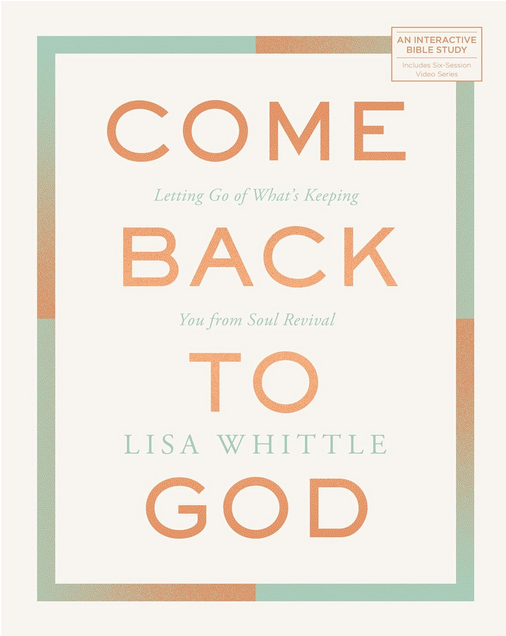
Come Back to God: Letting Go of What’s Keeping You from Soul Revival
Our souls long for less of us and more of God. For less of this broken world and more of Jesus’ abundant life. For revival.
Including video content with every session, this unique six-week Bible study shows us how surrendering to God—over comfort, control, popularity, even blessings—brings the renewed spiritual vitality we crave.
Leave a Reply