
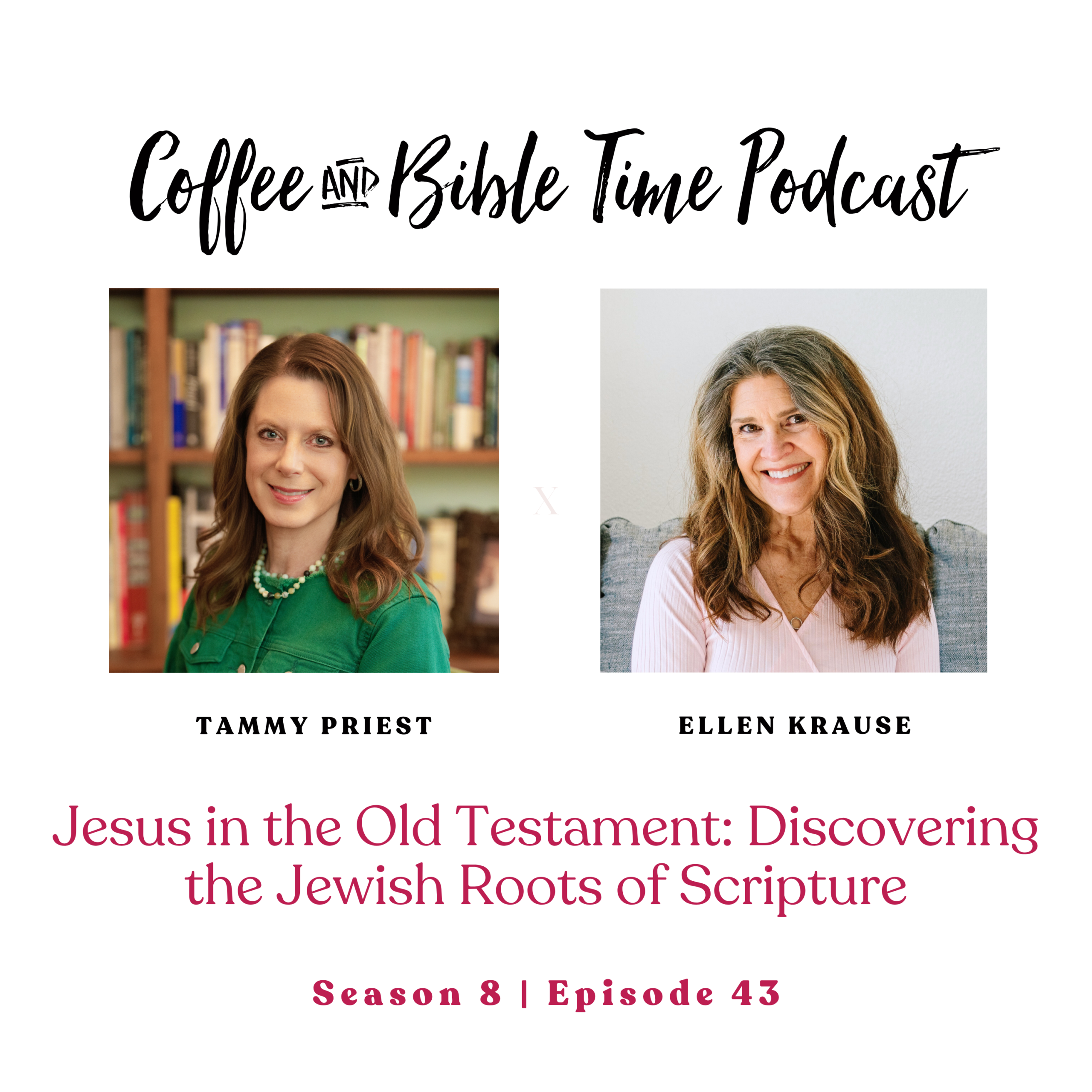

About this episode:
Leviticus. Exodus. Deuteronomy. What if these books became a source of wonder and worship instead of frustration and confusion?
In this episode of the Coffee and Bible Time Podcast, Ellen sits down with Tammy Priest, an author, teacher, and Jewish follower of Jesus, to hear how discovering Jesus in the Old Testament transformed her understanding of Scripture.
Tammy shares her powerful testimony and explains how understanding the Jewish context of the Bible can deepen our appreciation for God’s Word and His plan of redemption.

 Apple Podcasts
 Spotify
TIMESTAMPS:
00:00 Discovering Jesus as the Jewish Messiah
01:14 How the Old Testament Reveals Jesus as the Messiah
02:38 Following Jesus Without Leaving Your Jewish Heritage
05:14 Navigating Family Relationships as a Jewish Believer
08:26 Finding Jesus in the Old Testament
10:42 How the Old Testament Makes Jesus More Meaningful
11:34 Tammy’s Journey Through Israel With a New Testament
15:04 The Jewish Feasts and Their Deeper Meaning
17:13 Shavuot, Pentecost, and the Coming of the Holy Spirit
20:03 Sharing Jesus With Jewish Friends and Family
23:00 Resources and Bible Study Tools
Tammy Priest: When I heard God’s voice, I said, “Okay, I believe. I believe that Jesus is the Messiah,” but I didn’t really understand who He was or what He had done. And so I had to start getting to know Him.
Shortly after I became a believer, it was time for Yom Kippur, the Day of Atonement. The rabbi spoke from Leviticus 16 and talked about the high priest taking the blood of the perfect lamb into the Holy of Holies to make atonement.
In that moment, it finally clicked for me. Yeah, I believed in Jesus, but I hadn’t understood: How does my Jewishness combine with this? How do these two tie together?
I believed it was true, but I didn’t see how they were connected.
And in that instant, I just remember sitting there thinking, “Ohhh…it’s the atoning sacrifice of Jesus.” And that changed everything.
Ellen Krause: Welcome back to the Coffee and Bible Time Podcast. I’m Ellen, your host.
Imagine this: What if the Bible you’d been reading your whole life suddenly became a completely different book?
Not because the words changed, but because you began to understand Jesus in a way you had never known Him before.
Well, today we’re talking about how understanding our faith’s Jewish heritage can help us know Jesus better and transform the way we read our Bibles.
My guest today is Tammy Priest. Tammy is a Jewish follower of Jesus who grew up deeply rooted in her Jewish faith.
She was bat mitzvahed on top of Masada, led her synagogue’s youth group, and even taught Hebrew school. Her Jewish identity wasn’t something she was trying to leave behind. It was something she deeply loved.
But when Tammy was 21, she reluctantly attended a church service with some friends and experienced something that would change the entire direction of her life.
She is here today to share her story and teach us how to make deeper connections between the history we see in the Old Testament and what God is doing in our lives today.
Tammy, welcome to the podcast!
Tammy Priest: Thank you, Ellen. It’s so wonderful to be here with you today.
Ellen Krause: I am so excited for this conversation. Why don’t you start by taking our listeners back to that church service when you were 21? Tell us about that impactful day.
Tammy Priest: Yeah, you know, as you mentioned, I had no desire to be there. I was very against being there, as a matter of fact.
But through a long course of events, I ended up getting dragged along to this church service. I’d never been to a church service before, except for weddings.
And I’d never heard that voice before, but the second I heard it, I knew exactly who it belonged to. Even though it went against everything that I thought I knew, I said, “Okay.”
And it was amazing and terrifying at the same time.
Ellen Krause: What part of it was terrifying? Tell us about the amazing part.
Tammy Priest: Yeah. What was so terrifying to me was that I realized it was true, and I understood in that very moment what it would mean for my family relationships and all the people that I loved so much.
So that’s what made it scary. I wasn’t afraid to believe in Jesus, but I was afraid to make that belief known.
Ellen Krause: I’m sure just thinking about what your family’s reaction might be would be terrifying.
You’ve said that becoming a follower of Jesus has actually deepened your love for your Jewish heritage. So tell us more about that and what Christians should understand about it.
Tammy Priest: When we look at the Gospels from our modern Western context and don’t understand the ancient Jewish context of those moments, I think we lose the richness of the things Jesus was saying and doing.
As I started studying the Gospels, I would recognize these very significant moments and feasts and things in my life that I held very dear.
Just seeing the Jewishness of Jesus and how He met people—His brethren—in those very specific places was really impactful for me.
It let me know that I wasn’t leaving Judaism. I was embracing the Jewish Messiah.
Ellen Krause: Yes, absolutely.
You know, one of the things that really helped me gain more insight into that was watching The Chosen series.
Seeing Jesus live out the traditions of the Jewish faith—the visualization of that—enriched me so much. So I can only imagine, from your perspective, how incredible that must be.
Tammy Priest: Yeah, that’s one of the things that I wanted to help readers get a sense of.
I wanted them to see what it felt like to be in the hearts and minds and sandals of these people who were encountering Jesus, and what they were expecting, hoping, and thinking as He said certain things and did certain things.
Ellen Krause: Yes. Tammy, let’s compare and contrast your feelings before and after this process related to people making you feel that you had to choose between being Jewish or following Jesus.
So clearly, you were afraid when you got the information because you were worried—you had some preconceived ideas of how people would react. Tell us about that.
Tammy Priest: Yeah, it’s interesting. I never felt in those moments, or ever really, that I had to choose between being Jewish and being Christian because I felt like, well, it’s the most Jewish thing I could do to believe in the Jewish Messiah, who was the Christ.
The issue is, I think people don’t know what category to put me in.
In my community, I had rabbis who would not allow me to step onto a stage where I was supposed to be offering a blessing over a relative.
People said, “Either you’re Jewish or you’re Christian. If you believe in Jesus, you cannot be Jewish anymore.”
And of course, that’s not where I am at all. And that’s not where Jesus’ first followers were. They were fully Jewish and following Him, as I’m doing now.
Ellen Krause: How have your relationships been since that time? Have people seen the transformation in your life and started to understand the impact that Jesus has had on you?
Tammy Priest: I think so. It was really rough going for a while with a lot of my family.
The beauty is that God restored all of those relationships. No one has come to share my faith in Jesus, but all of those relationships have been restored.
The interesting thing is that my grandmother, who lived in Brooklyn, and I were very close. I was close to both my grandmothers, but it got to the point where she and I would talk about God.
We wouldn’t talk about Jesus, but she would have conversations with me about things in the Old Testament. It got to a point where she would sometimes call and ask me to pray for her.
What that told me was that, on some level, she understood that we were both worshiping the same God.
I had not left Adonai, and she believed that I was praying to the same God that she was praying to. I think that was just an incredible moment when I realized that that’s where we were.
But, like I said, no one in my family has proclaimed any kind of faith in Jesus at this point, but they’ve all been very encouraging and supportive of me in this effort.
My hope is that Jewish people who read this book will learn more about ancient Judaism—because I spent a lot of time in the Talmud and doing all sorts of research, making sure that as I was putting people into the hearts, minds, and sandals of first-century Jewish people, I was getting it right.
I learned a lot. And so it’s my prayer that if someone who’s Jewish picks up this book, maybe they would be interested in learning more about ancient Judaism.
Ellen Krause: I love that.
You know, it’s interesting because part of our family married into a Jewish family.
I can remember at one gathering we had, I had just been going through the book of Esther. It turned out that one of the family members’ mothers had been part of an organization called Hadassah.
I was able to share a little bit about this study, and he kind of looked at me like, “Wow, how do you know that?”
And so it is amazing that as Christians, if you really take the time to dig into the Old Testament, to learn about those Jewish traditions and just the history, you can actually have conversations like you said with your grandma.
Tammy Priest: And just piggybacking on that, that’s the way we get to have these kinds of gospel conversations with people: to have relationships with them.
Ellen Krause: Yes. Let’s talk a little bit about reading the Bible as a Messianic Jew.
Was there a particular Scripture passage or moment in the Old Testament that made you think, “Wait, I’ve been reading this differently than I am now”?
Tammy Priest: Yeah, interestingly, when I heard God’s voice, I said, “Okay, I believe. I believe that Jesus is the Messiah,” but I didn’t really understand who He was or what He had done. And so I had to start getting to know Him.
Just shortly after I became a believer, it was time for Yom Kippur, the Day of Atonement.
And so I went to the service on campus in Charlottesville, on Grounds, and the rabbi, of course, spoke from Leviticus 16 and talked about the high priest taking the blood of the perfect lamb into the Holy of Holies to make atonement.
In that moment, it finally clicked for me. I hadn’t understood.
Yeah, I believed in Jesus, but I hadn’t understood: How does my Jewishness combine with this? How do these two tie together? I believed it was true, but I didn’t see how they were connected.
And in that instant, I just remember sitting there thinking, “Ohhh…it’s the atoning sacrifice of Jesus.” And that changed everything.
I looked at Yom Kippur completely differently, and it helped me understand that connection.
Writing
Ellen Krause: That’s so incredible, Tammy, because my story of becoming a Christian is similar.
Even though I grew up in a Christian home my whole childhood, I got to this point where I was like, “I believe there’s a God, but I just didn’t understand what it was about Jesus.”
I just, I don’t know. I didn’t get it.
And it wasn’t until I learned about the Old Testament that I understood that God is a holy and perfect God, and why they did sacrifices so that they could be made sinless in the eyes of Christ through that sacrifice. And then it blew my mind.
That’s how I came to Christ, because I couldn’t do it without understanding the background and the reason why.
Tammy Priest: That’s so amazing.
Ellen Krause: I have to ask about the New Testament that you secretly brought to Israel.
So, tell us, you’ve gone back as a pilgrim. Tell us about that experience.
I loved the part in your book where you talked about going into the bathroom, sitting on the floor at night, stepping over people’s backpacks, and taking out that little New Testament.
Tell us about that experience.
Tammy Priest: I love this story because it just shows the kindness of God.
When we left that church service, I said to one of the people who was with me, “I need to talk to you when we get back.”
The only reason I knew to talk to this particular friend was because I knew he was a born-again Christian.
And the only reason I knew that was because people kind of made fun of him behind his back.
That’s a whole lesson for us: We need to be willing to put ourselves out there because you never know how it might anchor somebody and let them know that you’re a safe person to talk to.
So I went and talked to him afterward, and I said, “You’re not going to believe what happened.”
I told him what had happened, and of course, he’d been praying. I learned that all sorts of people had been praying for me that summer.
He said, “Well, I don’t want to tell you what to believe, so I want to give you a Bible.” It was basically like a little travel New Testament. He said, “I want you to read John first, and then read Romans, and you can come to me with any questions.”
So I started reading John, and I was reading it slowly because I was trying to savor every bit of it.
Exactly seven days from the day that I heard God’s voice in that little church, I left with my family to go back to the Holy Land with my whole extended family to celebrate my grandparents’ anniversary.
There were twelve, I think, of us—twelve or thirteen—and I was not ready to tell anybody what I had just experienced or that I believed in Jesus. That was not ready to happen yet.
So I snuck this little New Testament into my suitcase, and at night, when everyone would go to sleep, I would get up and tiptoe into the bathroom of our hotel room.
This was obviously in the days before cell phones, so I had this little book and a flashlight.
I would just sit there on the floor and read about Jesus. Then I would wake up in the morning and walk the same dust that He walked, look out over the Sea of Galilee, and go to all these places, like Capernaum.
I was experiencing the Gospel as I was learning it for the first time, and that was an incredible gift. I never had to try to put the two together in my mind. I was learning it while I was there, and that was incredible.
Ellen Krause: That is such a gift from God, to be able to be there while reading that for the first time.
It’s almost like God is saying, “Not only is the Holy Spirit coming into you, but I’m going to show you. I am going to show you where Jesus walked and where He ministered.”
That’s just—wow! What an incredible gift.
Well, your book, Jerusalem Calls really gets into the Jewish feasts.
I think one of the beautiful things about your book is showing Christians that the Old Testament feasts aren’t random, outdated traditions. They can actually really help us understand Jesus.
So why would you say a Christian woman today should care about learning about these feasts when perhaps they just seem a little bit historical, or she doesn’t really understand them?
Tammy Priest: Yeah, I think, you know, as we see Jesus meeting people where they are, we understand exactly what’s happening in that moment.
Then we see just how purposeful He is and just how much more incredible the things He was saying are.
One example that I give to people is when Jesus says, “I’m the light of the world.”
It’s not just kind of a saying like, “I’ll light your path with My presence or My wisdom,” or “I’ll help you. I’ll help guide you.”
It was a very Jewish way of saying, “I am God,” because God is the One who wraps Himself in light. God is the dawn of creation, and all these things.
In ancient Judaism in particular, if you said that you were the light of the world, that was claiming to be God.
And that’s why things like that, when you understand the context, just make what He said and did so much more powerful, which I think just increases your faith.
I’ve had women and men come up to me after maybe a Passover event that I lead or some other talk that I’ve given, and they’ve said, “I will never look at this passage the same way again. I will never take communion the same way ever again.”
That just lets me know God is working the way I prayed He would and that people are seeing the richness of Jesus’ words and His love and purposefulness for us.
Ellen Krause: Absolutely, absolutely. I’ve been to one of those Passover dinners that was put on by a Jewish man, a Messianic Jew, and I highly encourage anyone who ever gets an opportunity to do it. You should, because, like you said, Tammy, it’s such an incredible, eye-opening spiritual experience.
One of the feasts you get into in the book is Shavuot, which is connected to Pentecost in the New Testament.
There’s just this fascinating connection between the giving of the Torah and the coming of the Holy Spirit. Unpack that for us and help us understand what it reveals about God and His plan.
Tammy Priest: I think a lot of Christians don’t realize that Pentecost is an annual feast in Judaism. It was commanded back in the Exodus wilderness, and so every year we celebrate it as Shavuot.
In Hebrew, Shavuot means “weeks,” referring to the seven weeks between Passover and Shavuot, or Pentecost.
Pentecost means “fiftieth,” and so it refers to the fiftieth day after. There’s the Greek word for it and the Hebrew word for it.
The connection is that the fiftieth day after the Exodus was the day of the giving of the Law on Mount Sinai. Shavuot is that anniversary.
What’s so incredible—and this was definitely one of those moments where I read it and went, “This is unbelievable”—is that you have all these people in Jerusalem thinking back and worshiping and praising God for the day He gave the covenant on the mountain with fire, thunder, and flames.
Then suddenly, here they are worshiping, and the same thing happens again.
Now you’ve got these flames coming down on people, and suddenly, instead of the Spirit being above us, the Spirit was within people.
It was the giving of the Law on the mountain in stone. And now, on that particular Pentecost in the book of Acts, the Spirit was putting the covenant on people’s hearts, in people’s hearts.
That’s this amazing connection that I think most people don’t realize between the Pentecost of Acts and the Pentecost of the Old Testament.
Ellen Krause: Yes, I remember that was a mind-blowing learning experience when I first learned it, because I’ve actually done a study that goes through all of the Jewish feasts and the connections they have in the overarching story of the Bible and how it all fits in. It’s so fascinating.
What do you think we miss about Jesus when we read the Bible without understanding its Jewish context? Because maybe there are people here who just haven’t taken the time to look at the Old Testament.
What would you say to them?
Tammy Priest: I think, again, we miss the depth and the richness of all these things. When we just kind of look at something on the page, if we don’t understand it or don’t have any context for it, we kind of glide over it to the part that we do understand.
But when we grasp what was happening in those moments, we begin to understand. Why were people so angry during Jesus’ declaration on the last and greatest day? Things like that.
We suddenly see, “This is what they’re studying, and this is what they’re preaching about. This is what they’re doing with all this water.”
No wonder Jesus said it this way, and no wonder people reacted the way they did, because, again, He’s claiming to be God in a very Jewish way.
I think it just enriches our understanding of the Gospels, and for me, it just makes Jesus all the more amazing.
Writing
Ellen Krause: Yes, so true.
You know, so many of us have family members or friends who are Jewish and want to introduce them to Jesus. What advice would you give?
We want to maintain great family relationships and not shove things down people’s throats, but at the same time, we want them to know the Jesus that we know.
Tammy Priest: Underlying all of this is understanding that it’s the Holy Spirit who draws people.
We’re part of that work, but we don’t have to put pressure on ourselves to say exactly the right thing every time.
You know, you used the word “relationship,” and that is the key to all of this.
I talk in the book about feeling like a project, like people just wanted to check me off their list and say, “Well, I shared the Gospel.” But it’s all about relationship.
I encourage people to do things like this—Passover is a really good example.
You could say, “Hey, it’s Passover. Could you tell me more about Passover? Could you tell me about the Seder?
I follow Jesus, and the Last Supper was a Passover meal. I’d love to learn more about what that looks like.”
In doing that, you’re showing respect for that person and for their faith. You’re also showing, “Hey, we are connected.”
And that might spark some interest, maybe not in that very moment, but it sets a foundation for further conversations.
I had no idea that the Last Supper, which I didn’t know anything about, was a Passover meal. I think sometimes, especially in the South where I am, people just assume everybody knows who Jesus is, but not everybody does.
So I think just starting these curious conversations, as I like to call them, helps build relationships and show connection.
Ellen Krause: Yes, I totally agree. And like you said, if we just keep praying, God will do the work, right?
We’re doing our part by being a witness of Christ-like love and sharing where and when it’s appropriate, but God will do the work.
Well, as we wrap things up here, if you could leave our listeners with one thing to remember the next time they open their Bibles, one thing about Jesus, God’s Word, or the Jewish roots of your faith, what would you want that to be?
Tammy Priest: I would just encourage them to slow down and savor God’s Word. Sit with it and say, “Why is God doing this this way in this moment?” Just be willing to take it really slowly.
You know, we have a lot of Scriptures, and we have a lot of time, at least, to look at what these verses are telling us about who God is and who we are in Him.
If you have a question, don’t just gloss over it. Stop right there and start looking to see what God is communicating through that passage.
Ellen Krause: Absolutely. There are also a couple of great Bibles that I’m aware of, and I’m sure there are more, that can help if you’re listening and thinking, “I want to dig into that more.”
There are two Bibles I can think of. One is called the Complete Jewish Study Bible, and we’ll put a link in the show notes.
The other one is the Key Word Study Bible, which has various words underlined in either Hebrew or Greek so that you can look them up in the concordance in the back and see the original-language definition for each word.
Tammy Priest: Yeah.
Ellen Krause: So there are tools like that. And then, of course, Tammy, there’s your amazing book, Jerusalem Calls, where we get to walk along in your shoes. I especially love how you describe your experiences of going to Israel, what you’ve learned from the Old Testament, and how it still applies to our lives today.
Where can listeners go to learn more about you and your new book, Jerusalem Calls?
Tammy Priest: Yeah, they can go to my website, which is beginningwithmoses.com. They can also find me on Instagram, Substack, and a variety of other platforms like that.
Jerusalem Calls is available through all the major online booksellers, where you can find more descriptions of the book. So I would recommend starting with those places.
Ellen Krause: Excellent, absolutely. I’m so glad I got your book. In addition to the hard copy, I was also able to listen to you read it through Audible, so that’s an awesome option, too.
All right, Tammy. Before I let you go, I need to ask you some of our favorite questions here. What is your go-to Bible, and what translation is it?
Tammy Priest: This is my go-to Bible. It’s on my desk all the time. It was given to me by the couple who mentored me and adopted me as their spiritual daughter.
It’s an NIV Study Bible, and they gave it to me for my 21st birthday, just a few weeks after I met Jesus.
Ellen Krause: That’s so special. Okay, excellent Bible! Do you have any favorite Bible journaling supplies? Do you like to journal?
Tammy Priest: I do! I’ve got this little star highlighter and my multicolored pen that has six colors on it. These are my tools.
Ellen Krause: Fun! Okay, awesome.
Lastly, Tammy, what is your favorite app or website for Bible study tools?
Tammy Priest: My go-to is blueletterbible.com, and it’s also available as an app. For any passage, you can look at different translations, compare translations, look up the Hebrew and Greek, and do all those things. I think that’s a great place to start.
Ellen Krause: It sure is. Excellent resource!
All right, Tammy, thank you so much for being here and sharing your very personal story and your heart for God’s Word with us. Thank you so much.
Tammy Priest: Thank you, Ellen, for having me. It’s been such a joy to share today.
Ellen Krause: And this, our friends who are listening, is such a beautiful reminder that the more we understand the story and context of Scripture, the more we can see the incredible ways that it all points to Jesus.
If something from today’s conversation encouraged you or gave you a new perspective on Scripture, we would love for you to leave us a comment or review and let us know.
We read every comment, and maybe we’ll even share your thoughts on a future episode.
We will see you next time on the Coffee and Bible Time Podcast. Have a blessed day!
Struggling to Understand the Old Testament? Here’s How It Points to Jesus
Leviticus. Exodus. Deuteronomy. If you’ve ever avoided the Old Testament because it feels intimidating (or just plain boring), you’re not alone.
But while that hesitation is understandable, skipping these books can mean missing out on a deeper understanding of Jesus—and a renewed sense of wonder and worship.
Often, the key to understanding these passages is discovering their Jewish context—and how it helps us see Jesus in a whole new light.
On the Coffee and Bible Time Podcast, Ellen Krause talks with Tammy Priest, a Jewish follower of Jesus and author of Jerusalem Calls.
When Tammy came to believe in Jesus, her understanding of her Jewish faith was transformed. As she learned more, she discovered connections between the Old and New Testaments that changed the way she read the Bible.
Her testimony offers encouragement for Christians who want to understand Scripture more deeply, appreciate the Old Testament, and recognize how it points to Jesus.
When Tammy Discovered Jesus as the Jewish Messiah
Tammy grew up deeply rooted in her Jewish faith.
She had her bat mitzvah on top of Masada, participated in her synagogue’s youth group, and even taught Hebrew school. Her Jewish identity was something she deeply loved.
At 21, Tammy reluctantly attended a church service with friends. During that service, she heard God’s voice—and immediately recognized who was speaking to her.
Although believing in Jesus challenged everything she thought she knew, she realized it was true.
But there was still much she needed to understand.
As Tammy explains:
“I believed in Jesus, but I didn’t understand, how does my Jewishness combine? How do these two tie together? I believed it was true, but I didn’t see how they were connected.”
Tammy wasn’t interested in abandoning Judaism, or her Jewish heritage.
But she needed to discover how her newfound faith in Jesus connected with the Scriptures, traditions, and promises she had known throughout her life. She needed to see Jesus in the Old Testament.
That understanding began to take shape for Tammy during Yom Kippur, the Jewish Day of Atonement.
How Yom Kippur Helped Tammy Understand Jesus’ Sacrifice
Yom Kippur, also known as the Day of Atonement, is one of the holiest days in Judaism. It is a day of repentance and seeking atonement for sin, rooted in the biblical instructions found in Leviticus 16.
Shortly after becoming a believer, Tammy attended a Yom Kippur service where the rabbi taught from Leviticus 16. The passage describes the high priest’s role in making atonement for the people of Israel.
As Tammy listened to the teaching about the high priest and Israel’s need for a sacrifice to cover their sins, she began to see a connection she hadn’t fully understood before.
She remembers the moment when it finally clicked:
“It’s the atoning sacrifice of Jesus. And that changed everything.”
Tammy Priest
Tammy had believed Jesus was the Messiah, but now she was beginning to understand the significance of His sacrifice through the context of the Jewish Scriptures.
Passages about sacrifices, atonement, and worship can sometimes seem distant from our lives today, but this is one reason why understanding Jesus in the Old Testament can be so meaningful for Christians.
Learning about the original context helps us recognize that Jesus was the perfect fulfillment of an aching need and promised Savior who had been forecasted for centuries.
Why the Jewish Context of Scripture Matters
The Bible was written in particular historical and cultural contexts. When we read the Gospels only through our modern perspective, we can miss details that would have been significant to Jesus and the people around Him.
Understanding the Jewish context doesn’t mean every passage has a hidden meaning.
It means paying attention to the world in which Jesus lived, the traditions He observed, the Scriptures He knew, and the expectations of the people He encountered.
Tammy explains:
“When we look at the Gospels from our modern Western context and don’t understand the ancient Jewish context of those moments, then I think we lose the richness of the things Jesus was saying and doing.”
For example, Tammy discusses Jesus’ declaration, “I am the light of the world.”
John 8:12-20, NIV
12 When Jesus spoke again to the people, he said, “I am the light of the world. Whoever follows me will never walk in darkness, but will have the light of life.”
13 The Pharisees challenged him, “Here you are, appearing as your own witness; your testimony is not valid.”
14 Jesus answered, “Even if I testify on my own behalf, my testimony is valid, for I know where I came from and where I am going. But you have no idea where I come from or where I am going. 15 You judge by human standards; I pass judgment on no one. 16 But if I do judge, my decisions are true, because I am not alone. I stand with the Father, who sent me. 17 In your own Law it is written that the testimony of two witnesses is true. 18 I am one who testifies for myself; my other witness is the Father, who sent me.”
19 Then they asked him, “Where is your father?”
“You do not know me or my Father,” Jesus replied. “If you knew me, you would know my Father also.” 20 He spoke these words while teaching in the temple courts near the place where the offerings were put. Yet no one seized him, because his hour had not yet come.
If you read this without understanding the Jewish context, you might assume that the Pharisees were challenging Jesus simply because they were jealous, or thought that He should be more humble.
But in the biblical and Jewish context, light is associated with God’s presence and glory.
Jesus wasn’t offering mere guidance or encouragement. He was stating that He was God.
When we learn more about the context, we can better understand why Jesus said certain things, why people responded so strongly, and how His ministry fits into the larger story of Scripture.
Understanding Jesus in the Old Testament also encourages our faith. With the understanding of what Jesus was really saying, we know that His promises weren’t vague.
He was telling His followers that following Him meant that God would always be with them.
What the Jewish Feasts Reveal About Jesus
In her book Jerusalem Calls, Tammy explores the Jewish feasts and the connections they offer for understanding Jesus and the Bible. Two of the feasts discussed in the episode are especially helpful examples.
Yom Kippur: Understanding Atonement
Yom Kippur, the Day of Atonement, helped Tammy recognize the connection between the sacrificial system described in Leviticus and Jesus’ atoning sacrifice.
For Christians who find the early books of the Bible difficult to understand, learning about the purpose of these practices can provide valuable context.
For further study:
Shavuot and Pentecost: God’s Covenant and the Holy Spirit
Tammy also discusses the connection between Shavuot, a Jewish feast, and Pentecost in the book of Acts. This is the same celebration; Shavuot is the holiday’s name in Hebrew, and Pentecost is what it was called in Greek.
Tammy explains the traditional connection between Shavuot and the giving of the Law at Mount Sinai. Later, in Acts 2, Shavuot/Pentecost becomes the setting for the coming of the Holy Spirit.
At Sinai, God gave His covenant and Law to His people. At Pentecost, the Holy Spirit came upon the believers.
For further study:
How to Read the Old Testament With Fresh Eyes
You don’t need to become an expert in ancient history to benefit from understanding the Jewish roots of Scripture. You can begin with a few simple habits that help you slow down and engage with God’s Word more thoughtfully.
Tammy offers this encouragement to listeners:
“Slow down and just savor God’s word. Sit with it and say, why is God doing this this way in this moment?”
Tammy Priest
Here are a few ways to put that advice into practice.
1. Ask questions when a passage feels confusing.
Instead of skipping a difficult passage, pause and ask what is happening. Who is speaking? What is the historical setting? What would this event have meant to the original audience?
2. Look for connections across Scripture.
As you read the Old Testament, consider how its themes, promises, and practices relate to the New Testament. Pay attention to how Jesus and the apostles refer to the Scriptures and traditions of Israel.
3. Learn about the Jewish feasts and traditions.
Understanding Yom Kippur, Passover, and Shavuot can help provide context for passages that might otherwise seem unfamiliar. You don’t need to learn everything at once. Choose one topic and explore it as you encounter it in your reading.
4. Take your time.
You don’t have to rush through a reading plan just to check off a task. Spend time with a passage, look up unfamiliar words, and consider what it reveals about God’s character and His purposes.
5. Use reliable Bible study resources.
Study Bibles, Bible dictionaries, and original-language tools can help you explore historical context and the meaning of important words. The goal isn’t simply to collect information; it’s to understand Scripture more faithfully.
Bible Study Resources to Help You Get Started
During the conversation, Ellen shares a couple of resources for listeners who want to explore the biblical languages and Jewish context in greater depth.
You don’t need to use every resource at once. Start with the tool that best addresses your questions, and let your curiosity guide your study.
Discovering Jesus Throughout the Bible
Tammy Priest’s story reminds us that understanding Jesus in the Old Testament can transform how we read familiar passages.
If the Old Testament has ever felt intimidating or difficult to connect to your faith, take Tammy’s advice: slow down, savor God’s Word, and don’t be afraid to investigate your questions.
You may discover that a passage you’ve read many times has more depth and meaning than you realized.
Listen to the full episode of the Coffee and Bible Time Podcast to hear Tammy’s testimony, explore the Jewish roots of Christianity, and discover how understanding the Old Testament can help you see Jesus throughout Scripture.
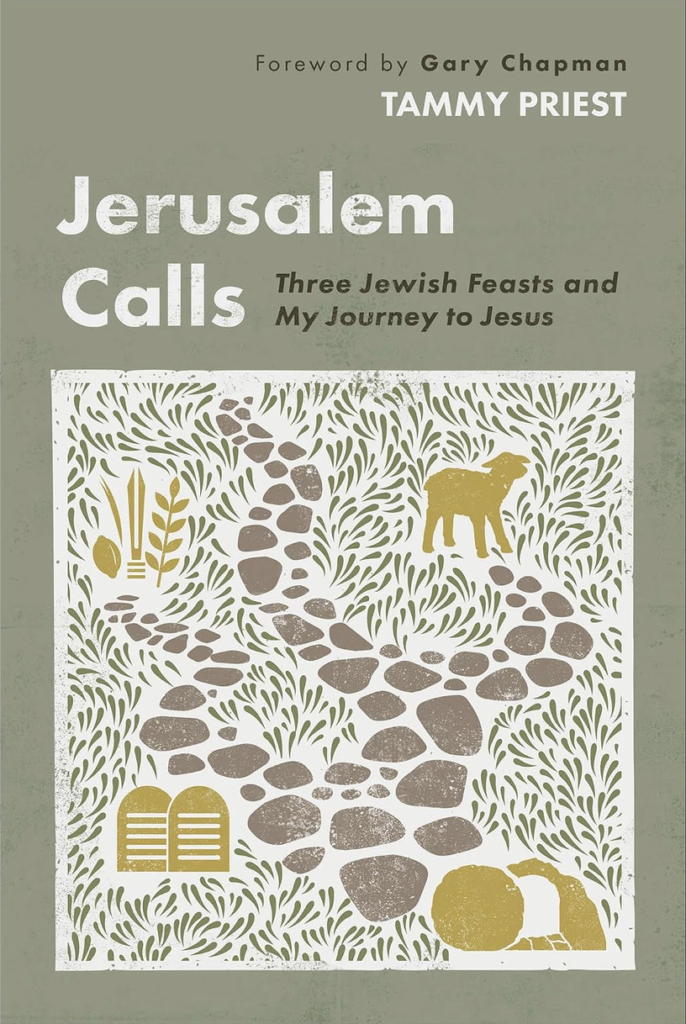
Jerusalem Calls: Three Jewish Feasts and My Journey to Jesus
In Jerusalem Calls, Tammy tells the remarkable story of how God drew her to himself—and opens up the three Old Testament pilgrimage feasts that shaped her Jewish childhood to reveal something she had never seen before: that each one points unmistakably to Jesus as Messiah.
More—though certainly not less—than an engaging true story of coming to faith in Jesus, Jerusalem Calls reveals new layers of meaning in the Old Testament feasts for both Christian and Jewish readers.
For Christians, it is a window into the Jewish roots of their faith that brings the New Testament alive in fresh ways.
For Jewish readers, it is an invitation to look at beloved traditions through new eyes—with honesty, tenderness, and deep respect for the heritage they represent.
Leave a Reply