
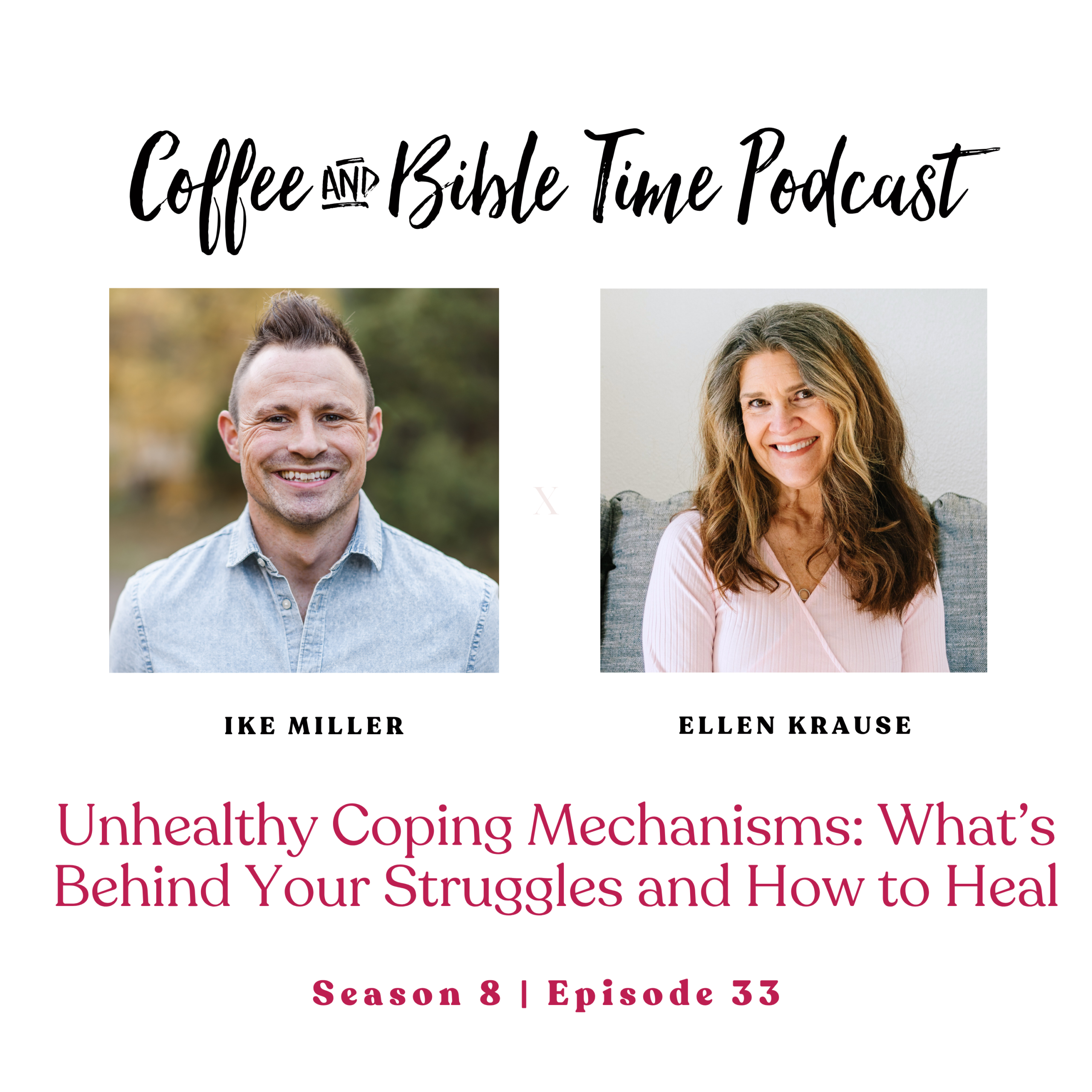

About this episode:
Why do we keep struggling with the same things—even when we genuinely want to change? Ellen Krause is joined by Pastor Ike Miller to talk about how Jesus meets us not only in our sin and brokenness, but also in the places underneath them.
You’ll learn how sin can sometimes disguise unhealthy coping mechanisms, what it means to “hit the wall” in your faith, and how to listen to your pain so you can begin getting to the root of what’s really going on.

 Apple Podcasts
 Spotify
TIMESTAMPS:
00:00 Why Pain Requires Healing at the Root
01:58 Jesus as Our Savior and Healer
03:15 How Pain Leads to Unhealthy Coping Mechanisms
05:30 The Power of Vulnerability in Healing
09:37 Three Ways Our Brokenness Shows Up
11:29 When Your View of God Keeps You Stuck
13:57 What It Means to Hit the Wall in Your Faith
17:17 What to Do When You Feel Stuck in Your Faith
20:21 How to Begin Healing Your Pain
22:57 Getting to the Root and Finding Freedom
Ike Miller [introduction]: Pain is much like a weed that you try to pull out of your yard or your garden. You can see the fruit of it on the surface, but dealing with what’s on the surface is not actually going to deal with it permanently. So sometimes with these things, you kind of have to dig down a little bit, and you have to keep going until you get to the root of it.
Ellen Krause: Hi friends, real quick, I wanted to encourage you with this exciting message one of our listeners shared with us.
In Kingsport, Tennessee, someone listened to my conversation last week with Kelly Kapic and said:
“Loved the episode. I have been working on slowing down and not having a full schedule.
Then in October, I was diagnosed with cancer, and I slowed way down.
God showed me so many things, and now I am cancer-free. I am continuing to work on being overwhelmed and learning to slow down.”
I just want to say thank you so much for sharing your journey with us. God certainly does get our attention when we are forced to slow down, and that is not a bad thing.
Well, I absolutely love hearing about what God is teaching all of you. I hope you’ll keep letting me know by leaving a comment, review, or chatting with us directly by clicking the send in fan mail link in the show notes.
All right, back to the conversation!
Ellen Krause: Welcome back to the Coffee and Bible Time podcast. I’m Ellen, your host. Many of us know Jesus as our Savior, but sometimes we forget that He is also our healer, the one who sees our pain, meets us in our brokenness, and is restoring all things.
Today we’re talking about what it means to know Jesus as the great physician, and how the healing He offers reaches into every part of our lives.
Our guest today is Pastor Ike Miller. Through his ministry, writing, and teaching, Ike helps people see the gospel not only as the forgiveness of sins, but as God’s plan to heal and restore his people and his creation.
Ike, welcome to the podcast!
Ike Miller: Ellen, thank you so much for having me. I’m so excited to be on and share about this and dig into this conversation.
Ellen Krause: Well, we are thrilled to have you.
Your work teaches us to think of Jesus not just as our Savior, but also as Jehovah Rafa, the God who heals.
You write that many of our sinful patterns are actually unhealthy attempts to cope with pain.
Ike Miller: Yeah, yeah.
Ellen Krause: Unpack that idea for us a little bit.
Ike Miller: You know, when I think about what happens when we come to Jesus, there is the initial coming to Jesus, recognizing his lordship, choosing to follow him.
When it comes to our sin in particular, because we’ve been taught to think of sin as something that solely needs to be repented of and then it’s forgiven, we kind of forget to realize, no, we also need to be rehabilitated out of that lifestyle.
And that doesn’t happen immediately. That is a journey.
Growing up with a father who was an alcoholic, I kind of have learned in my own journey the ways in which I coped as a child to deal with those circumstances.
And one of the things that I had to do was I had to manage how my dad felt.
And so you think about then kind of that becoming a way of life, fast forward 20 years, and I find myself exhausted and overwhelmed by the demand as a pastor of managing the feelings and emotions of everyone in my church.
And that being something that I think is a part of my role, but it’s also exacerbated by the fact that that’s how I’ve been trained to operate in the world: I’m safe when I’ve got everybody else’s feelings managed.
But what that can lead to, then, is I’m going to tell you what you want to hear, whether it’s true or not.
My inclination may be to kind of fudge on the details a little bit, or maybe tell a little white lie.
This kind of came to the surface for me one day when I realized that I had talked about an issue with one person in our church, and talked about it one way, and then talked about it with someone else slightly different.
And I was like, you know, if they get together, they’re gonna be like, “That’s not what he said to me.”
In that, my desire was not to lie. I didn’t want to be dishonest.
But in my attempts to cope with how do I make sure everyone’s happy with me, I was breaking God’s law. I was being deceptive, being dishonest.
And so I think when we are able to expand our definition of sin beyond just “outright rebellion against God” to “our best attempts at coping with the world”, it also helps us to see that sin isn’t just something to be punished, it’s something to be healed.
Ellen Krause: And truly, you know, you sharing your story at the beginning of the book that you wrote just really opens the door, I think, for all of us to be a little bit more open ourselves.
So as you and your wife Sharon walked through that season together, what did God teach you about healing that you don’t think you could have learned any other way?
Ike Miller: Yeah, you know, I think the thing that broke open in that season for me was the power of vulnerability.
You know, I share about my self-medicating with my medication and misusing that. And really what I was doing is I was numbing some feelings that I felt too ashamed to share, or I was afraid to share.
And in particular, it was around, you know, managing and being with our kids during COVID when we were all at home and, you know, 24-7, you were together.
And in that I was like, I’m having a really hard time, but Sharon, Sharon’s doing this, she’s doing it just fine. She’s managing, she seems to be doing okay.
So what’s wrong with me? Am I a bad father?
That was too painful of a thing for me to say out loud, to say, Sharon, I’m having a hard time, I need help.
And so it was easier for me to just numb my pain with medication—or misusing medication. There’s nothing wrong with medication, but misusing my medication.
And what really began to change things was when I was able to say that out loud.
To say, I’m afraid I’m becoming my own father.
And what a painful thing that was to say, but that allowed us to get to the root of it so we could actually begin healing it from its core.
And coming out of that, that has been the thing that when I think about challenges in our marriage, I go to, okay—not what’s wrong with Sharon, even if there are things that she could own, but what in me is hurting.
One of the things that I had to say to her at one point was, I really want more of your undivided attention.
And that’s a hard thing to admit. That feels very weak. That feels very like needy. But the alternative was my instinct was to go to blame. You’re not spending enough time with me. You’re so distracted by all the other things. And it makes it about her and things she needs to change versus what’s really going on in me.
But the other thing that that does is for her…it’s a lot easier to hear, I really want you to spend more time with me, than to hear you are doing this wrong and doing that wrong.
And so vulnerability in our relationships also makes it possible for those relationships to heal more easily.
Ellen Krause: Ugh, it’s so important. And I know for me personally too, having over the course of my life—I’m a lot older than you are—that I’ve been through the seasons of having to bring to surface things that are inhibiting me from living my life fully.
Ike Miller: Absolutely.
Ellen Krause: And I also have been encouraged by, and for me, a lot of it was with Christian counselors, just kind of—
Ike Miller: Mm-hmm.
Ellen Krause: —having that opportunity to set on the table what’s really going on and be honest.
Ike Miller: Yeah.
Ellen Krause: Because I can tell you, for me as well, it’s my tendency is to just want to keep everything okay, you know, on the outside, but internally I’m a mess.
Ike Miller: Absolutely. And I’ve played that same game, and what I’ve realized over time is eventually that pain is gonna come to the surface. One way or the other.
And it can either come to the surface because I choose to—to bring it to the surface and acknowledge it, or it pokes its head through in some ugly ways.
Ellen Krause: Right, right.
Ike Miller: And it’s just a better process to just bring those things to the surface.
Ellen Krause: Yeah.
Well, you described some things that sort of keep us stuck. You said that there’s three directions that our brokenness tends to flow.
Tell us what those are and how we can recognize them.
Ike Miller: You know, so one of the things that I kind of draw out in the book is how we feel our brokenness in different ways.
So to give you an example, I think that there are some of us who feel our brokenness most intensely in our relationship with God.
In the sense that we just feel that God is disappointed in us, that he is angry with us. And we feel that so intensely.
And so sharing the emphasis in the gospel on the ways that Jesus demonstrates his love for us, that he came near to us, is really powerful.
But for others of us, I think we feel our brokenness more as we look at our relationships and the world around us.
And maybe we’ve been through a marriage or two marriages or three marriages, and we’re just like, this pain is never ending. What does it take to heal this?
Or we look at our world and we see the division and the brokenness and we feel that on such—I mean, we all know those people who just feel that so intensely, you know?
And then there’s other of us that feel our brokenness most in ourselves, where we just beat ourselves up, we get down on ourselves, we get frustrated with ourselves, we feel worthless, we feel we like we don’t measure up, we’re constantly failing.
Then in those moments where we come to understand that the gospel wasn’t just about us escaping this world one day. This was about God meeting us in our world right now and transforming us.
Ellen Krause: Mm. And I’m sure that, yeah, each one of us can relate to one of those and see how our brokenness tends to flow.
Ike Miller: Absolutely.
Ellen Krause: You talk about the difference between a view of God that heals and one that actually leaves people feeling more wounded.
So what are some subtle ways that Christians can unknowingly embrace a view of God that keeps them stuck instead of helping them heal?
Ike Miller: Yeah, you know, we’re kind of told, if you just believe this enough, it will fix things.
And it leaves this sense of guilt for the believer because it’s like, I don’t know how to believe this any more than I do, and yet this isn’t going away.
And what I want to communicate through the book is that that healing is rarely instantaneous.
It is a journey, just like rehabilitation after a surgery. That surgery may have removed the cancer, but you may have to go through a journey of learning to walk again, you know?
And so there is believing these things, and then there’s living into the reality of what it means for us to really embrace this for our lives.
One of the things I say throughout the book, too, is that there is salvation in the sense that we are forgiven of the ways that we hurt one another in our brokenness.
But a part of what Jesus is doing in our sanctification is teaching us how to be the kind of human that Jesus was. That’s ultimately who we were created to be.
And so he is rehabilitating us to that. And that’s not going to happen overnight.
But when we tell people, or we preach in a way that tells people, this should happen overnight, that reinforces a lot of guilt and a sense of, I’m just not doing it right.
And that’s just an inaccurate picture of how growth happens and healing happens.
Ellen Krause: Right, right. And God uses those times, actually, to grow us.
Ike Miller: That’s right.
Ellen Krause: And so if we aren’t allowed to go through them, we wouldn’t be growing like we should.
Ike Miller: That’s exactly right. Yes, you’re exactly right. And that’s a powerful—I don’t want to skip past that.
That’s a powerful acknowledgement, because I think we want that instantaneous healing. We want it to just be immediate.
But actually, in my own story, as I came out of dealing with some addiction and dealing with the impact of growing up with an alcoholic parent, there are things that I learned through that journey that, if I had just been sort of healed instantaneously, I never would have learned.
And so there are gifts in that journey of it not being an immediate thing.
Ellen Krause: Absolutely. Well, Ike, you introduce a concept called “the wall” in faith development. Describe that to us.
Ike Miller: Yeah. Yeah.
You know, this comes from a book called The Critical Journey. And what the book attempts to do is explain some of the stages of faith that we experience as we go through this life and as our faith grows.
And it’s not a one-size-fits-all, but there are some similarities that are seen as you do this work.
And so the way that Janet Hagberg and Robert Guelich, they kind of created this, this is the way they lay it out.
The first stage is that moment of coming to a life-changing awareness of God, and discovering who God is and what Jesus has done for us and what that means for us.
And then stage two is sort of this just season of ravenous learning. We’re just like, I want to learn everything I can about this. I want to hear everything. I’m gonna listen to three podcasts at one time because I just wanna get it all, you know, kind of thing.
And then the third stage is taking it external, meaning living this out, getting involved in your church, serving, leading a Bible study, whatever it may be, but you begin to embody this and practice this faith externally.
But something that happens to many, if not all of us, is what I describe as the wall. And the wall is much like you would think. It’s hitting a wall.
Everything seems to be going along great in your faith, and suddenly a wall comes out of nowhere and you smash into it, right?
And this can be caused by a number of things. It can be caused by a death that we don’t know how to come to terms with. It can be a fall of a leader that we have put immense trust in, and it’s disillusioning to us. It can be a crisis of faith where we just finding we have so many questions and there’s no answers.
It can be struggling with a sin that distorts our understanding of God or whatever it may be, but there’s so many things that bring us to the wall.
And what’s interesting about the wall is it often can feel like I’m losing my faith, or I’m not trusting God anymore, or I don’t know if I believe in God anymore.
This is kind of often associated with the idea of a deconstruction in our faith, that I’m deconstructing.
What I want to recover is the sense that I actually think that deconstruction is a really important part of our journey.
And when we kind of communicate that it’s a loss of faith or, in our own insecurity, feel like we’ve got to provide all the answers versus giving space for people walking through that to kind of process, we end up saying, “You’re gonna have to go outside of the church to deal with that. You can come back once you have dealt with this.”
But in my own journey and in other people’s journeys, I actually think God sometimes brings us to the wall because there are things in our understanding of God that needs to change.
And there is no other way for us to do it until we are brought to a place of hitting a wall and saying, “I’ve got to change my understanding of this”, or “something about my idea of God has to shift.”
Ellen Krause: So someone listening to this might be having an aha moment, like “Oh my, I feel like I’ve hit the wall.” What advice would you give them?
Ike Miller: You know, when we first come to faith in God, we get a picture of who God is, an idea of God’s character or how God interacts with us as human beings.
And the nature of just us as humans is, we take that idea and we essentially kind of cast it into a mold. And that becomes our idea of God.
And that’s helpful because it gives us some definition, some clarity.
Where it’s unhelpful is it kind of says, ‘God has to be this one way’. And if God isn’t this way, then I don’t know what to do, or I don’t know how to function.
The reason I say God brings us to that wall is sometimes God’s like, “I gotta break out of this mold because I’m not just a statue. I am a living God.”
So what I would say to someone who is in that place of feeling like this is a crisis of faith:
rather than beating yourself up and saying, “why can’t I just believe?” Or “why can’t I just get to the other side of this?” Or “why can’t I just go back to a time when my faith was simpler and easier?”
Instead, be able to say,” okay, maybe, maybe there is something I am supposed to learn about who God is. And this is how I learn it.”
And that being more than, where is God? Actually, God’s right in the middle of it. It’s just God’s showing up in a different way because this isn’t how we’re used to God working.
Rather than beating yourself up and getting down yourself, recognize maybe God is interacting with me in a different way because He’s a living God and He’s going to move in different ways in our life.
And so, how do I be open to that? How do I receive what I can only learn this way?
Ellen Krause: Yes, absolutely. And just praying and asking God to—
Ike Miller: Mm. That’s right.
Ellen Krause: —give you wisdom and what, perhaps, yeah, you might be missing in your interpretation of who God is.
Ike Miller: You know, that’s interesting that you say that because I think, too, one of the shifts that often happens at the wall in our prayer life is, it also goes from us talking to God or at God to a more receptive listening to God kind of prayer.
And at first we kind of feel like that’s wrong.
Like, is this okay that I’m not saying a whole bunch?
But actually, there’s a beauty that happens in that communing with God and saying, “God, I’m gonna sit here and I’m just gonna be quiet in your presence.”
That, for me, is some of my most peaceful, restful, life-giving moments.
And so part of our journey hitting the wall is learning there’s things about my prayer life that God wants to expand as well.
Ellen Krause: Thank you for sharing that.
Well, as we start to wrap things up here, Ike, for the woman listening who knows she needs healing but doesn’t know where to begin, what are some practical ways that she can start inviting Jesus into her pain and allowing him to bring restoration into her life?
Ike Miller: This is probably more simple than what you might expect I’m about to say. And I don’t mean it’s easy, but it’s just not a formula or a long, involved process.
My encouragement for people is, you begin simply by sitting and listening to your pain.
And what I mean by that is, I think a part of the reason it’s hard for us to be still is because it allows things to come to the surface that we kind of just want to be too busy to deal with.
But for me, a way that I go about this is, I’ll sit down and I’ll just write in my journal. I’ll say, where am I today? Or what am I feeling today?
And just writing down what’s the first thing that comes to the surface.
“I’m feeling angry.” And then asking, what am I feeling angry about?
“Well, I’m frustrated because of this conversation that I had with this person.” Why am I frustrated with this conversation? What was frustrating about it?
“Well, they said this, and it made me feel this.” And then saying, well, why did it make me feel that?
And it’s just kind of this, like, process of investigating our interior worlds and listening to our pain.
The way that I talk about this is pain is much like a weed that you try to pull out of your yard or your garden.
You can see the fruit of it on the surface, but dealing with what’s on the surface is not actually going to deal with it permanently.
And so this process is more about, how do I really pull this up by the root, right? And so sometimes with these things, you kind of have to dig down a little bit, and you have to keep going until you get to the root of it.
So, for example, going beyond just “they did this to me”, asking the question, okay, what about that was so painful? What in me was touched on or triggered?
And then going down, and oftentimes then it gets to a, “when have I felt this before in my life?”
Well, it maybe was a relationship with a friend that betrayed us, or a parent, or a previous employer.
And we begin to realize, these there’s similar things going on here.
The root of this is, I struggle to feel valuable. And this triggered my sense of a lack of value.
And that doesn’t excuse the other person from what they treated you or how they treated you, but it does allow you to say, okay, I can do something about this that makes me less vulnerable to it in the future, to being hurt by it.
Ellen Krause: Such great advice. And I can assure you, if you’re listening, that getting to those roots, one way or the other is where the freedom comes.
And God wants to give us that freedom. If it’s a road we’re willing to walk, not that it’s gonna be easy, but I know personally I found such incredible healing and freedom.
Ike Miller: Yeah. Well, and to go back to the weed analogy, anybody who’s tried to maintain a garden, you know, just plucking it off at the surface, you’re like, man, I’m gonna be right back here next week pulling it up again.
And so it might be easier, but it doesn’t actually, you know, set you free from that weed.
Ellen Krause: Right. I have a funny story about that.
My husband’s a landscape architect, so he has a beautifully designed front yard with all of this ground cover. Well, anyone who has ground cover knows a lot of things like to creep into that and grow up.
Ike Miller: Yeah.
Ellen Krause: And in one summer, I was like, we need to get out there and weed that. And my husband goes, don’t worry, I’ll take care of it.
And his idea was taking the weed whacker and just zooming it all down. And I was like no, we gotta pull it out, pull them out!
So the quick fix sometimes does fix quickly, but those roots are still there. And it’s—it’s worth the investment. Worth the investment.
Ike Miller: That’s exactly right.
Ellen Krause: Before I let you go, tell our listeners where they can learn more about you, Ike, in your new book, Theology That Heals.
Ike Miller: Yeah, so the easiest place to go is my website, ikemiller.com, or check things out on Instagram at IkeFmiller.
And I would love to hear from anyone. I love following up with messages and conversations, and so feel free to reach out.
Ellen Krause: Okay, well, we will make sure we include those in our show notes.
Before I let you go, we have to rapid-fire our questions here.
What is your go-to Bible, and what translation is it?
Ike Miller: Yes. My go-to Bible is the CSB Study Bible. I have it right here. This is my baby. And it’s in CSB. .
Ellen Krause: All right. Excellent.
Do you have any favorite Bible journaling supplies? You did mention journaling.
Ike Miller: Yeah, so it’s not specific to Bible journaling, but I use the GoodNotes app on my iPad, and that’s where I go and I just journal and write and speak and connect with God through those words.
Ellen Krause: That’s so cool. Okay. Lastly, what is your favorite app or website for Bible study tools?
Ike Miller: It’s not a super beautiful or elaborate website, but BibleHub.Com is one that I find extremely helpful.
And so that is often the first place I go when I’m looking up a Greek word or a Hebrew word or kind of wanting to see where else it shows up in Scripture, that’s where I go.
Ellen Krause: Yeah, that’s a great website. Well Ike, thank you so much for joining us today and sharing both your wisdom and your own story with us.
Ike Miller: Yeah, thank you so much for having me. It’s been a pleasure.
Ellen Krause: And to our listeners, wherever you find yourself today, may you continue to bring your whole selves to Jesus, trusting that he is both our Savior and our healer.
Thank you for joining us, and we’ll see you next time on the Coffee and Bible Time podcast. Have a blessed day.
Why You Keep Struggling With the Same Things—and How Jesus Brings Healing
Have you ever found yourself struggling with the same reaction, behavior, or relationship pattern over and over again?
You may genuinely want to change, pray about it, and try to do better, yet somehow the same struggle keeps resurfacing.
What if the problem isn’t simply what’s happening on the surface?
In this conversation, Pastor Ike Miller explains how unhealthy coping mechanisms can develop as ways of managing pain and how Jesus invites us to go deeper.
Rather than simply trying to stop a behavior, we can learn to listen to our pain, uncover what’s underneath it, and allow God to bring healing at the root.
What Are Unhealthy Coping Mechanisms?
Ike Miller describes an important connection between pain, sin, and the ways we learn to cope. He explains that some sinful patterns can actually develop as unhealthy coping mechanisms—our attempts to deal with painful circumstances, emotions, or experiences.
That doesn’t mean our behavior isn’t sinful or that we’re excused from responsibility.
Instead, understanding what is underneath a behavior can help us recognize why a particular pattern has become so difficult to change.
“We also need to be rehabilitated out of that lifestyle. And that doesn’t happen immediately. That is a journey.”
Ike Miller
He shares from his own experience of growing up with an alcoholic father. As a child, he learned to manage his father’s feelings as a way of coping with his circumstances. Years later, that same pattern showed up in his ministry.
As a pastor, he found himself exhausted and overwhelmed by the responsibility of managing the feelings and emotions of people in his church.
He realized that underneath the behavior was a deeper belief: he felt safe when everyone else’s feelings were managed.
That could then lead to dishonesty or people-pleasing—not because he consciously wanted to lie, but because he had developed an unhealthy coping mechanism for dealing with the fear of disappointing others.
This is an important distinction. Sometimes what we need isn’t simply more determination to change our behavior. We need to understand what is driving it.
Don’t Just Treat the Symptoms—Get to the Root
One of the most memorable illustrations in the conversation compares pain to a weed.
Ike explains:
“Pain is much like a weed that you try to pull out of your yard or your garden.”
Ike Miller
You can see the fruit of the weed on the surface, but if you only deal with what you can see, the root remains.
The same can be true of unhealthy coping mechanisms.
Maybe the visible problem is anger. Maybe it’s people-pleasing, dishonesty, avoidance, shutting down, or constantly trying to keep everyone happy.
We can focus all our energy on stopping the behavior while never asking what is happening underneath it.
Ike says:
“Sometimes with these things you kind of have to dig down a little bit and you have to keep going until you get to the root of it.”
That doesn’t mean ignoring the behavior. It means asking a deeper question: What pain am I trying to manage through this behavior?
Try asking yourself:
These questions aren’t about blaming yourself. They’re about becoming honest enough to recognize what needs healing.
Vulnerability Can Become Part of the Healing Process
Another major theme in Ike’s story is vulnerability.
During a difficult season in his marriage, Ike realized that he had been using medication inappropriately to numb feelings he felt ashamed or afraid to express. He eventually had to become vulnerable enough to say what was really happening inside him.
He describes realizing:
“I’m afraid I’m becoming my own father.”
That was painful to acknowledge, but bringing it into the light allowed him and his wife to address the root of what was happening.
Ike also describes learning to replace blame with vulnerability.
Instead of saying, “You’re not spending enough time with me,” he learned to say:
“I really want more of your undivided attention.”
Those statements may sound similar, but they create very different conversations.
One places the focus entirely on what the other person is doing wrong. The other honestly communicates a need.
Vulnerability doesn’t mean every feeling is automatically correct or that another person has no responsibility for how they treated you. It means becoming willing to honestly examine what is happening inside of you.
What If You’re Stuck in Your Faith?
The conversation also explores a different kind of stuckness: what Ike calls “the wall” in faith development.
Sometimes a person can be growing in her faith, learning about God, serving, and feeling like everything is going well—until suddenly something happens that causes her to question everything.
It might be grief, disappointment, a crisis of faith, a leader’s failure, unanswered questions, or a struggle with sin.
Ike says that reaching this wall can feel like:
“I’m losing my faith, or I’m not trusting God anymore, or I don’t know if I believe in God anymore.”
But he challenges listeners to consider another possibility: perhaps the wall isn’t evidence that God has abandoned them.
Perhaps God is inviting them to grow.
Ike explains that when we first come to faith, we can develop a particular picture of who God is. Eventually, however, God may challenge that picture and invite us to understand Him more deeply.
Rather than immediately assuming something is wrong with you, Ike encourages you to ask:
“Maybe there is something I am supposed to learn about who God is.”
That’s an important perspective for anyone who has experienced a difficult season in her faith.
Healing Doesn’t Usually Happen Overnight
Another important message from this conversation is that healing is a process.
Ike compares spiritual healing to rehabilitation after surgery. Surgery may remove the cancer, but that doesn’t mean a person immediately knows how to walk again. Rehabilitation takes time.
In the same way, God can begin transforming an area of our lives without the entire process being completed overnight.
This matters because expecting instant change can create even more shame.
If you believe you should already be completely healed, you may look at your continued struggles and conclude that you’re failing.
But growth takes time.
“There are gifts in that journey of [healing] not being immediate.”
Ike Miller
The process itself can teach us things we would never have learned otherwise.
How to Begin Addressing Unhealthy Coping Mechanisms
So what can you actually do when you recognize an unhealthy pattern?
Ike offers a remarkably simple place to start: sit and listen to your pain.
He suggests journaling questions such as, “Where am I today?” or “What am I feeling today?” Then, instead of stopping with the first answer, continue asking questions.
For example:
I’m angry.
Why am I angry?
I’m frustrated about a conversation I had.
Why was that conversation frustrating?
Something they said made me feel a certain way.
Why did that affect me so deeply?
As you continue asking questions, you may begin to discover connections to earlier experiences.
Ike describes this as:
“Investigating our interior worlds and listening to our pain.”
The goal isn’t to excuse unhealthy behavior. It’s to understand what is underneath it so that you can begin responding differently.
Jesus Meets Us at the Root
The central message of this conversation is that Jesus doesn’t simply want us to become better at managing our symptoms.
He meets us in our brokenness.
He meets us in our pain.
He meets us in the places where we’ve developed unhealthy coping mechanisms.
And He invites us toward healing and restoration.
Getting to the root may not be quick or easy. It may require vulnerability. It may mean confronting things you’d rather avoid. It may even lead you through a season where your understanding of God is challenged.
But you don’t have to run from those places.
You can bring them to Jesus.
And as you learn to listen to what’s happening beneath the surface, you may begin to recognize that the struggle you’ve been trying so hard to eliminate is pointing you toward something that needs to be healed.
Practical Takeaways
If you’re ready to begin addressing unhealthy coping mechanisms in your own life, start small:
Jesus is not only our Savior. As Ike reminds us, He is also our healer. And sometimes the path toward healing begins by becoming willing to stop, listen to our pain, and let Him show us what’s happening beneath the surface.
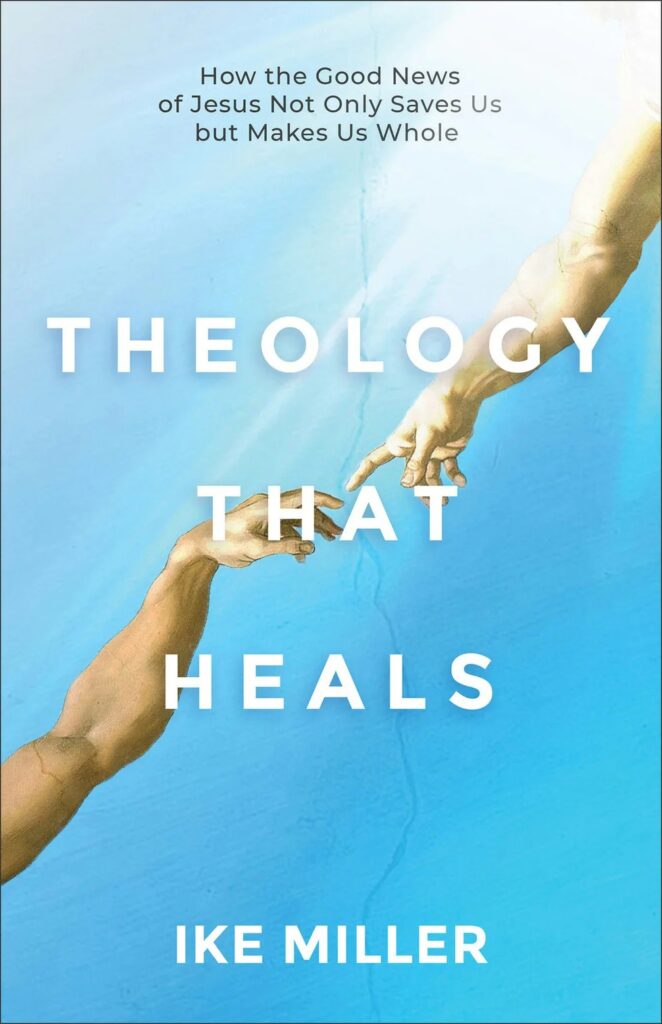
Theology That Heals: How the Good News of Jesus Not Only Saves Us but Makes Us Whole
Volatile relationships. Mental health battles. The restless, fruitless pursuit of satisfaction. These are not problems that exist alongside the Christian life—they are the very places Jesus came to reach.
In Theology That Heals, pastor and theologian Ike Miller invites us to broaden our understanding of the Gospel—to see Jesus not only as Savior but as the Great Physician who entered our broken world, shared our struggles, and has the power to bring complete restoration to our souls.
Leave a Reply