
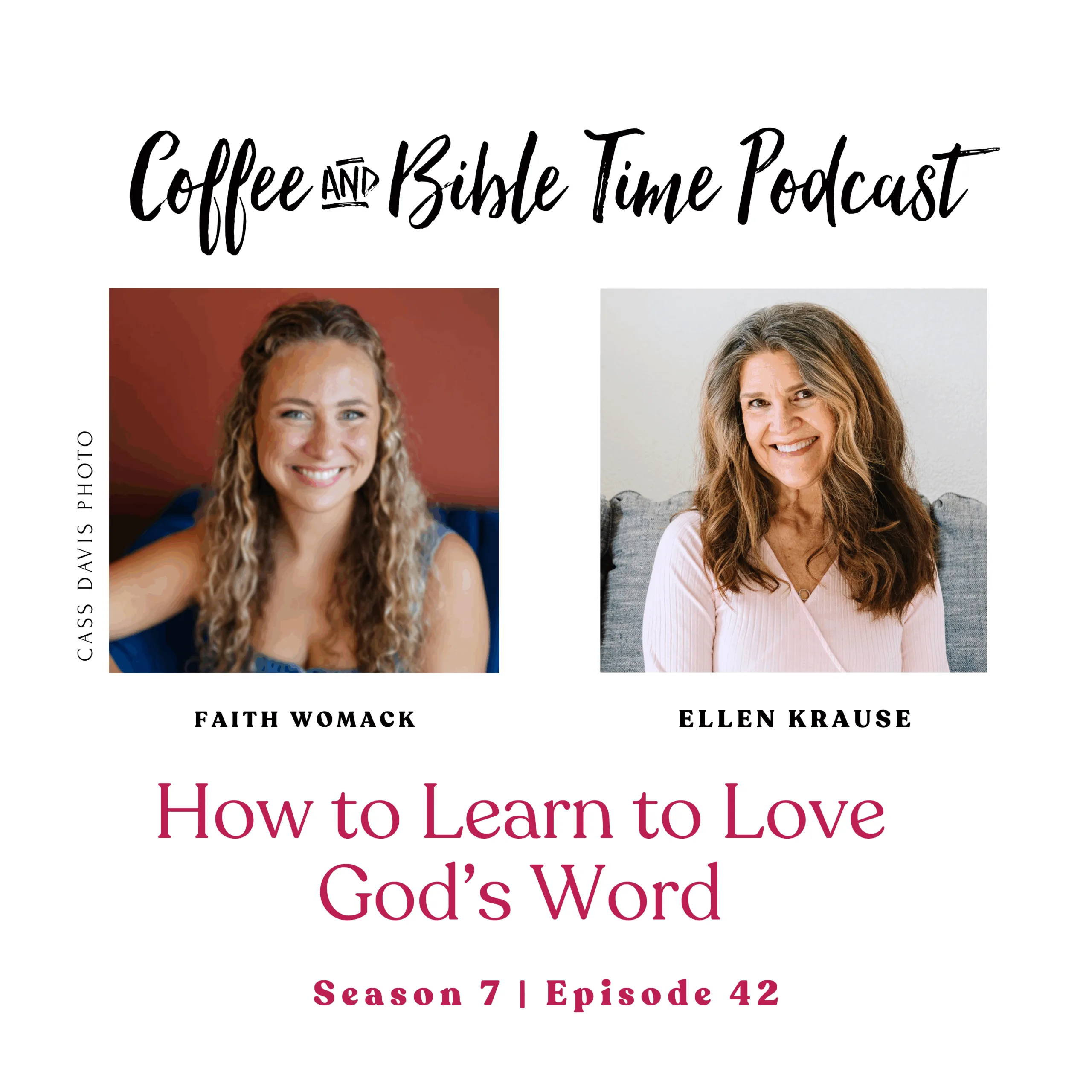

About this episode:
Understanding Scripture doesn’t have to feel confusing, dull, or out of reach. In this episode, Faith Womack invites us to rethink how we read the Bible—not as a book about us, but as God’s story of redemption and revelation. Because when we stop hunting for quick personal answers and start looking for who God is, everything changes.
Subscribe & Listen on:
 Apple Podcasts
 Spotify
TIMESTAMPS:
00:02 Seeing God Instead of Ourselves in Scripture
04:03 Misused Scripture in Faith’s Story
06:40 Discovering Joy in Lifelong Study of God’s Word
11:12 Why Hermeneutics Matter
13:30 How Culture and Assumptions Distort God’s Word
16:27 Finding Jesus in the Depth and Patterns of Jonah
18:38 Seeing God’s Character Before Seeking Application
20:05 The Biggest Study Mistake: Ignoring Context
23:30 Practical Tools for Making Bible Study Exciting
25:28 Letting the Old Testament Illuminate Jesus Clearly
29:18 Guest Favorites & Closing
The Conversation Continues in our Community:
33:07 How Faith Keeps Her Study Engaging
32:59 What Impartial Love Looks Like in Community
35:38 Resisting the Urge to Compare
Full Transcript
[00:00:00] Faith Womack:
People typically get mad at me for saying this, but the Bible isn’t about us. It’s for us, but we’re not the main character. And so we’re pretty narcissistic in our hermeneutic a lot of the time. A lot of the time we’re looking for ourselves, when really so much richer Bible study comes from looking at: What is God revealing about Himself here in this passage of scripture?
[00:00:20] Faith Womack:
The Bible as a story of God redeeming His people for His glory is actually really good news. It’s really life-giving. And—spoiler—there’s going to be very rich application from that for every season of your life. But it doesn’t come first from opening up the Bible and being like, “God, what do you have for me today?” It’s rather, “God, what are you revealing about Yourself today?”
[00:00:40] Ellen:
Welcome back to the Coffee and Bible Time podcast. I’m Ellen, your host, and I am so glad that you’re here today because we’re tackling something most of us would never say out loud but have definitely felt. Have you ever secretly thought that the Bible was boring? You want to love scripture. You know God’s Word is supposed to give life, but sometimes it feels confusing or distant…
[00:01:00] Ellen:
…or hard to connect with. Well, today’s conversation is here to say: we’ve all been there, but it doesn’t have to stay that way. Our guest today, Faith Womack, has made it her mission to change the way we approach God’s Word. Known online as “The Bible Nerd,” Faith has reached millions across TikTok and YouTube by helping believers see that scripture isn’t dead, old, or boring at all.
[00:01:20] Ellen:
It’s alive, powerful, and deeply relevant. With a background in biblical and theological studies, Faith brings both scholarship and warmth to everything she teaches. And today, she’s sharing practical ways to reawaken your passion for God’s Word and to see that serious Bible study isn’t boring at all—but one of the most exciting adventures of your life.
[00:01:40] Ellen:
Faith, welcome to the Coffee and Bible Time podcast. I’m so excited to have you back with us.
[00:01:45] Faith Womack:
Thank you, Ellen. Thank you for having me.
[00:01:47] Ellen:
You are so welcome. And for those of you who don’t know Faith or her ministry, we have just been partnering a while. Faith is such a godly, incredible woman who’s also on YouTube and is an amazing Bible teacher. I just love that we’re on this mission together to help people know God and make Him known. And why don’t you start, Faith, just by telling us—
[00:02:05] Faith Womack:
Yeah.
[00:02:06] Ellen:
—about—you’ve talked about how growing up, you’re so vulnerable in your book—that scripture was often misused or weaponized. How did you move from that experience, which really could have taken you a whole other direction, to discovering the beauty and truth of God’s Word for yourself?
[00:02:20] Faith Womack:
Yeah, I grew up in a household where scripture was severely misused for my detriment. And I think it made me, by God’s grace and mercy, more curious about truth—like capital-T Truth. Like, How do I discover truth? And if God says that His Word is truth, why do some people take this Bible verse to mean this and other people take it to mean that? And how do I discern how to read it and interpret it faithfully? And so…
[00:02:40] Faith Womack:
When I look back, I just see God’s hand of redemption over my heart—pulling me out of some really broken situations and saying, “There’s another way.” Like, you don’t have to walk away from scripture and just wholeheartedly throw away your trust. You can dig a little bit deeper and ask those hard questions and maybe even help others along the way. And so, yeah, it really came from education. And I know a lot of people want to roll their eyes toward that, you know, like…
[00:03:00] Faith Womack:
“You don’t have to academically study the Bible.” Like, the Holy Spirit totally works in, through, and despite academics. And so it was my first week of college, and I’m sitting there in orientation lectures. I believe it is now—he was the dean when I was there, but he’s now the president of Covenant College—I believe he was the one sharing in a chapel talk about the way we handle and treat scripture. And my mind was blown. I remember walking out, my hands were shaking, and I picked up my little flip…
[00:03:20] Faith Womack:
…cell phone and I called my dad and I was like, “You will never believe what I just learned. Like, low-key, you’ve been kind of misusing scripture and twisting it.” And he would have nothing to do with it. Through years and years of trying to redeem the brokenness, I just saw someone who really didn’t want to faithfully handle scripture—he wanted scripture to mean what he wanted scripture to mean. And so that set me on a lifelong journey of asking, Why do…
[00:03:40] Ellen:
Hmm.
[00:03:41] Faith Womack:
…people knowingly misuse scripture? Why do they choose laziness over faithfulness? And is there any value in doing the hard work to treat it faithfully—or is this just not worth it? And the more I dug, the more richness I found through studying things like hermeneutics and theology. I saw that there’s so much more depth to scripture than just a surface-level misuse of it. And so that kind of sent me onto the path of…
[00:04:00] Faith Womack:
…where I am today. And I’m so grateful that God is the God who redeems the brokenness and turns it to be for His glory, right? So, yeah.
[00:04:10] Ellen:
Absolutely. There’s just such a power in the manipulation or twisting of God’s truth that it bears such a heavy burden when you don’t know what the truth is—because it really holds a power against you. And so I just love how God worked in your life that way to say, “No, I am going to find out what…
[00:04:30] Ellen:
…the truth is.” Was there a particular moment, Faith, when God helped you see that studying scripture could actually be exciting—not just, “I’m going to school,” or discipline—but you actually delighted in it?
[00:04:40] Faith Womack:
I really—I mean, I don’t even know. I feel like it was little steps along the way. I started, you know, mornings and evenings doing my Bible studies as a little sixth grader, I believe it was. Yeah—mornings and evenings, I started doing my Bible studies. And I would do Nancy Leigh DeMoss—now she’s Wolgemuth—I would do her devotionals every morning and evening, and go through things like Lies Young Women Believe and all those kinds of ones. And little by little, I just saw that there was so much good…
[00:05:00] Faith Womack:
…coming from it. Like, it was life-giving. It was like my anchor, my lifeline. And so when it came to studying the Bible academically—as degrees, in graduate school, things like that—it was like, What else am I going to take out student loans to learn? My parents were like, “You have to get a degree,” so I was like, “If I’m taking out student loans, I’m going to learn what I want to learn.” And, again by God’s grace, that just opened up a whole new world for me. But I don’t know if it was any exact turning point. I think it was…
[00:05:20] Faith Womack:
…going to a circle—I am a big proponent for—my, I loved Moody, where your daughters went. I liked the idea of going there, but I ended up going to Covenant because I was afraid of the cold weather up there. I’m not as tough as Ash and Taylor. But yeah, so I went to Covenant, and then my professors just gave me room to ask the hard questions. They gave me room to wrestle and turn back to scripture and say, “It really looks like God changed His mind here—what is truly going on?”
[00:05:40] Ellen:
It is brutal.
[00:05:41] Faith Womack:
Ask those hard questions, go to scripture—and still hold it in really high regard. You still hold to inerrancy and infallibility. And so I think it was giving myself room to love the Lord, love the Word, and still be a student—not try to master it. I think a lot of times in Christian circles, we think we have to have it mastered. Like, “Well, we’ve been a Christian this long, so we need to know who all the people are and have all these Bible verses memorized,” and it becomes like a checklist or performance mentality. But really…
[00:06:00] Faith Womack:
…what set me on this journey was realizing that I am a student of the Word for my whole life. And I guess maybe the turning point—I talk about this in my book—was actually graduation morning. My husband and I got married before we graduated, so I got to walk the stage as a Womack right before him, which was so special. And we both studied the same degree, so we got to walk together. I remember standing there in line, fixing his cap and robe and…
[00:06:20] Faith Womack:
…getting kind of nervous, and then turning around and it just hit me: Wait a second—what have I done? What have I learned? You know, I didn’t walk away with necessarily a ton more Bible verses memorized or be the best Sunday school student ever. I’m a stronger theologian and exegete, but if anything, I’ve learned how to study and wrestle with scripture. I’ve learned that this really is a lifetime of study—that I’m not going to master it with a degree or anything like that. And that was actually…
[00:06:40] Faith Womack:
…that probably sounds a little depressing to someone listening, but it was actually super life-giving. Like, this isn’t something you check the box on or complete or master. I’ve barely scratched the surface of the surface, and I get to go on this lifelong journey of loving the Word and finding so much life in it. And obviously then that led to me doing seminary and all those things. But I think it’s those kinds of little…
[00:07:00] Faith Womack:
…small moments of realizing just how rich scripture is that propels you in a different direction in life altogether.
[00:07:10] Ellen:
You know, I bet similar to you—being a student and hearing other people ask good questions—I know for me that moment of excitement for scripture came when I was in a small group with other women mentors who knew their Bible frontwards and backwards. They knew to ask questions that I never would have thought to ask…
[00:07:30] Ellen:
…and that made me so curious—so thirsty to want to know more. I love that. Being a student—whether that’s in a university or just a small group with other women—can bring out this excitement for God’s Word and help you see that it’s really not boring at all.
[00:07:50] Ellen:
Well, there’s a word that Bible students know, but some people haven’t heard of—or they’ve heard it but don’t know what it means. When we’re talking about hermeneutics, that word alone just sounds intimidating. How would you explain it, and why should everyday Christians care about it?
[00:08:10] Faith Womack:
Yeah.
[00:08:11] Faith Womack:
Yeah, so hermeneutics is the study of how we read, interpret, and therefore apply scripture to our lives. You don’t get to exegesis—like, “What does this mean for us today?”—before first becoming aware of what your hermeneutic is. And so hermeneutics, in general, is the study of: How do we read and treat the Bible? My hermeneutic is going to be very different from an atheist’s hermeneutic, because they view it as false and I view it as true. So we’re going to come into the text very differently.
[00:08:30] Faith Womack:
And I think that’s one of the biggest misconceptions Christians have with the Bible—we don’t realize all our presumptions. “I believe this is true; I believe this book is going to teach me this one lesson.” You know, we go to Jonah and think, “This is going to teach us about following God’s plan.” Or we go to Ruth and think, “This is going to teach me how to be a good daughter-in-law.” We come into the text with assumptions about what it means or says or its purpose. Hermeneutics breaks that down. Do you believe it’s true?
[00:08:50] Faith Womack:
Do you believe it’s trustworthy? How are you making assumptions about the genre? Is it telling a story that’s hyperbolic or very historical and literal? Is it a poem or a song—meaning nothing should be taken literally? All of those things. My book is kind of an intro to hermeneutics, and that’s really what I view my niche as. A lot of people think of me as the girl who writes in her Bible, but that’s just a tool…
[00:09:10] Faith Womack:
…of my studies of how to faithfully read the Bible. And so I love hermeneutics. And yeah, I think it really opens up the reader and makes the Bible less mysterious and scary. Like, “How will I ever know truth?” When we just break it down and go, “Well, who was it written by, and when, and to whom?” Those simple questions open up a whole new world.
[00:09:30] Faith Womack:
Instead of approaching it as though it’s written for me right now—to discern who I’m supposed to date or marry or what house to buy—we see it as written by a very real historical person in a very real historical time for a very real historical purpose. And that takes you so much deeper.
[00:09:50] Ellen:
Yes, and it’s just so critical to understanding scripture in the correct context. And you write about how culture can distort our understanding of scripture.
[00:10:00] Ellen:
How do you see that misconception affecting how readers are trying to understand scripture?
[00:10:10] Faith Womack:
Yeah, I’ve gotta be careful because when I get too comfortable—which I am with you, Ellen—I can start sounding like I’m dogging on the church. And I love the church. I’m a pastor’s wife—the church is my love. But I do think in our church cultures, or even what I’d call broader Christian culture, we tend to treat different passages of scripture almost like little Band-Aids to problems or…
[00:10:30] Ellen:
Hmm.
[00:10:31] Faith Womack:
…like masters of a topic. If you want to learn about soteriology—salvation—you go to Romans. If you want to learn about following God and not turning from His calling, you read Jonah. If you want to read about God conquering pagan gods, you read Ezekiel and the prophets of Baal, or the plagues and Pharaoh in Exodus. There are certain passages we expect certain things from, like I mentioned earlier…
[00:10:50] Faith Womack:
…and because of that, we blind ourselves to what’s actually there. In my book I give several examples, but I’ve mentioned Jonah twice, so let’s stick with Jonah. Jonah goes into the belly of a fish because he wasn’t obedient to God—but what we miss when we jump to that is all throughout the book he’s being described in relation to his distance from God. He moves from God’s presence to get away from Nineveh. Then he goes to the belly of a fish God appoints…
[00:11:10] Faith Womack:
…then he’s spit up toward Nineveh. Then he’s angry with God. There are all these beautiful literary elements describing his locational closeness to God—which reflect his relational closeness. When Nineveh repents, Jonah is furious because his heart is far from God’s heart. He says, “I knew You were loving and kind, merciful and gracious,” quoting Exodus 34:6–7—God’s self-revelation to Moses. It’s a major passage—echoed all throughout scripture. Jonah flips it on God as a complaint. It’s kind of funny.
[00:11:30] Faith Womack:
And then he gets angry and the book ends really weird. I argue in my book that this is meant to point our eyes forward to the better prophet—Christ—who wasn’t begrudging about bringing repentance. He came willingly in the incarnation. Jonah was so suicidal at the thought of going to Nineveh that he told the sailors, “Just throw me over.” But Jesus fully went—to the point of dying…
[00:11:50] Faith Womack:
…for our redemption. Both were asleep on a boat. Both went into a lowly place for three days. But one went willingly and one went begrudgingly. One fought for the repentance of souls; one resisted it. There is so much richness in scripture when we look at literary patterns, authorship, recipients. And I’m trying not to go too deep or talk too long—but there is so much more than the surface.
[00:12:10] Faith Womack:
Again, I love Sunday School and VBS—really important things. But we kind of end our biblical wrestling there. I think there are a lot of immature Christians today. We go to VBS and think, “Okay, I’ve mastered Jonah.” We watch the VeggieTales Jonah movie and think, “Cool, got it.” But there’s so much more—if only we dig a little deeper. If only we really read it.
[00:12:30] Ellen:
Mm-hmm. No, that’s just so absolutely true. And if you’re listening to this and wondering, “How do I even find out that information?” I would just love to suggest something you probably skip past: in your own Bible, at the beginning of any book, there will generally be an introduction that gives…
[00:12:50] Ellen:
…this contextual information. So don’t skip past it. Actually read it—because then you’re going to get information that sets the stage for what God is communicating in that book. Faith, I love that you’ve called that out as so important. Well, a lot of people see the Bible as a rule book, and that can make reading it feel really heavy. People want to push that away.
[00:13:10] Ellen:
What’s a healthier way to think about God’s law?
[00:13:20] Faith Womack:
Yeah, so I argue in my book that the Bible is the story of God redeeming His people for His glory. A story all about God redeeming His people. We all say, “Yes, that’s true,” but we go to scripture looking for ourselves. We say, “God, what do You have for me today? What are You telling me to do about this situation?” At the end of the day, we’re looking for ourselves. And people get mad at me for saying this, but the Bible isn’t about us. It’s for us, but we’re not the main character…
[00:13:40] Faith Womack:
…and we’re pretty narcissistic in our hermeneutic. We’re often looking for ourselves, when really richer Bible study comes from looking at What is God revealing about Himself? It’s actually super life-giving to stop jumping to application and look first at what’s there in scripture. The Bible as a story of God redeeming His people for His glory is really good news. And—spoiler—there’s going to be very rich application for every problem of your life. But it doesn’t come first from saying, “God, what do You have for me today?” but…
[00:14:00] Faith Womack:
…“God, what are You revealing about Yourself today?”
[00:14:10] Ellen:
Yes, absolutely. And once you’ve taken the time to do that—to see what God is saying and teaching us about Himself—you realize God is so much bigger, so much greater. He can handle the burdens we bring to Him. When you know His character and what He’s…
[00:14:20] Faith Womack:
Yeah.
[00:14:21] Ellen:
…capable of, it puts everything into a greater perspective—how big He is and how small our problems are in comparison. Well, Faith, what’s the biggest mistake you see people making when they sit down to study the Bible?
[00:14:30] Faith Womack:
If I’ve got a Bible nerd listening in, she’s chuckling right now because she knows what I’m about to say: context. We jump over context. We love to cherry-pick Bible verses and plaster them on bracelets or on a Hobby Lobby poster—love Hobby Lobby, by the way—but we take verses out of context. And the problem isn’t just that it’s “wrong.” It’s that we’re robbing the verse of its richness.
[00:14:50] Faith Womack:
If you know the context deeply, then sure, put it on a necklace. That’s great. But so many of us are biblically illiterate or spiritually immature, and all we know are those random verses. And that leads to misuse. Philippians 4:13 is a huge example. We take it as, “I can do anything I set my mind to.” Very new-agey, manifest-your-reality kind of thing. But in context, Paul is saying…
[00:15:10] Faith Womack:
…“You’ve been concerned for me because I’m in prison—and thank you—but I’ve learned that in all my sufferings, God is enough for me. I can be high or low, beaten or starving, sick beyond all measure—but the Lord is enough. Therefore, I can do all things through Christ who strengthens me.” It’s about endurance in suffering—not gym class or state championships.
[00:15:30] Faith Womack:
When we take it out of context, we rip out all the depth. There’s so much more richness—imprisonment for the gospel, contentment in suffering. It blows the shallow interpretation out of the water. And that’s true for so many verses.
[00:15:50] Ellen:
Right, right. And as you indicated at the start of this conversation, it may not always be weaponized, but sometimes scripture is weaponized—used manipulatively or hurtfully. So understanding…
[00:16:10] Faith Womack:
Mm-hmm.
[00:16:11] Ellen:
…context is just so crucial. What are some practical steps someone can take to make Bible study more energizing—and to incorporate context in a way that excites them about what they’re learning?
[00:16:30] Faith Womack:
Yeah, I think a lot of us think the Bible’s boring because we just frankly don’t understand it. There’s the spiritual battle—the enemy wants us to think it’s boring because he doesn’t want us to pick up our sword for battle. Of course he wants us unarmed. Once we get past that, a lot of us struggle because we’re confused by it. So first: understand the meta-narrative. It’s the story of God redeeming His people for His glory. Creation, fall, redemption, consummation.
[00:16:50] Faith Womack:
The New Testament isn’t isolated from the Old. There’s intertextuality everywhere. Once you see the big story, certain texts start making sense. I encourage people to grab a Bible dictionary. Not a normal dictionary—a Bible dictionary. It will give you Old Testament and New Testament definitions for names, places, concepts—because repetition matters. Patterns matter. “Oh, that same thing happened here and here.” You want to know that stuff.
[00:17:10] Faith Womack:
I tell people: every time you’re reading the Bible and you encounter any person, place, or thing you don’t understand, stop and look it up. In my book I talk about commentaries, about the notes I take in my Bible so I can build on what I learned years ago. Scripture comes alive when you check yourself. Most of us rob ourselves of richness because we’re not willing to dig.
[00:17:30] Faith Womack:
And to those who worry, “I don’t want to rob myself of the Holy Spirit working in me,” I want to encourage you: we need a bigger view of God. God works in, through, and despite the resources. He works through our questions. Through our digging. The academic study of the Word is not separate from the spiritual work of the Word. They are interconnected. But a lot of us are lazy in our wrestling with scripture. We need to see that it’s life-giving—and not that hard.
[00:17:50] Faith Womack:
You don’t have to be super nerdy to get deep, life-changing insight.
[00:18:10] Ellen:
Right, right. That’s so true. I just want to elaborate on that and encourage our listeners: if you’re one of those people who thinks, “The Old Testament is old; I’ll just read the New Testament,” I was that person too. But I was raised Christian, with Christian parents, Christian school—I knew all the facts. Yet it wasn’t until I understood that God required a sacrifice, that I understood why Jesus matters…
[00:18:30] Ellen:
…not just because someone told me. The illumination that comes from seeing the whole Bible’s story can be life-changing. Maybe you’re listening and struggling and thinking, “I have so many questions.” It’s the perfect time to dig deeper.
[00:18:50] Faith Womack:
Amen. Yeah.
[00:18:51] Ellen:
Well, Faith, what a joy. Where can people go to learn more about your new book No More Boring Bible Study, and where can they find you?
[00:19:00] Faith Womack:
Yeah, on all my socials I’m Bible Nerd Ministries. I post Bible study content, tips, advice, my journey through books I’m reading or things I’m studying in scripture. And the book is everywhere books are sold—No More Boring Bible Study. You can even search my name. I love being on YouTube…
[00:19:20] Faith Womack:
…and being on there with you guys. I’ll be sharing more updates there about the book and where it’s found. We just got news that it’ll be in some pretty cool places starting in December. Depending on when this airs, we’ll be in Walmarts across the nation. So we’re excited about that. But yeah—No More Boring Bible Study is everywhere.
[00:19:40] Ellen:
Fantastic. All right, we will make sure we include links to all of Faith’s contacts in our show notes. Before we go, I have to ask you our favorite question here: What Bible is your go-to Bible, and what translation is it?
[00:19:50] Faith Womack:
Yeah, so my go-to Bible—my main Bible—is ESV. But my favorite Bible translation is probably the NIV or the NET.
[00:20:00] Ellen:
Okay, awesome. Do you have any favorite Bible journaling supplies that you like to use?
[00:20:10] Faith Womack:
Oh yeah, definitely. Fine-tip pens—there are a million different types—but a really, really fine-tip pen, like .03 or .02. As fine as you can find—that’s my favorite. And then colored pencils—really underrated in the Bible journaling community. Everyone will send you to the fancy ones, but a colored pencil is something you can find anywhere if you’re on the go. They’re my tried-and-true favorite tool.
[00:20:30] Ellen:
Awesome—and they make them erasable now! So if you’re like me and want to erase, you definitely can. Well, Faith, thank you so much for being here, for sharing your passion for God’s Word. This has been such an awesome reminder that the Bible truly is not boring—it’s our approach that needs to change. And that’s…
[00:20:50] Faith Womack:
Yes.
[00:20:51] Faith Womack:
Hmm.
[00:20:52] Faith Womack:
Mm.
[00:20:53] Ellen:
…such a freeing truth for all of us who’ve ever struggled to stay engaged with God’s Word. So thank you so much for being here.
[00:21:00] Faith Womack:
Yeah, thanks for having me.
[00:21:01] Ellen:
And to our listeners, I hope today’s conversation reignited some curiosity about scripture—that you’ll pick up your Bible this week not out of guilt or obligation, but out of genuine anticipation to meet with God. He still speaks through His Word. And when we slow down and study with intention, we find not just information—but transformation.
[31:49] Ellen:
We’ll see you next time on the Coffee and Bible Time podcast. Thanks for joining us.
How Understanding Scripture Can Transform Your Faith
If you’re a Christian, you most likely love the Bible (or at least know that you’re supposed to).
You probably have verses on display around your house, on your clothes, maybe even in a sticker on your water bottle—but when it comes down to actually reading and understanding Scripture? Now that’s a different story entirely.
We know God’s Word is living, active, and relevant for our lives (Hebrews 4:12, 2 Timothy 3:16), but sometimes our lived experience doesn’t seem to match.
That’s why Mentor Mama (Coffee and Bible Time Podcast host Ellen Krause) sat down with Faith Womack to learn how a deeper approach to understanding Scripture can awaken joy, clarity, and confidence in our study of God’s Word.
Faith—known online as “The Bible Nerd”—is passionate about helping believers move beyond surface-level reading and into understanding Scripture through rich, life-giving study.
Faith’s story is marked by redemption: she grew up in a home where Scripture was misused, yet God used that brokenness to give her a hunger for truth. Today, she helps millions rediscover the beauty of the Bible.
Below are three big takeaways from the conversation that can help you deepen your own journey of Understanding Scripture.
The Bible Is About God
One of the subtlest, but most impactful shifts we can make when it comes to understanding Scripture is realizing that the Bible is not about us. It’s about God.
“People typically get mad at me for saying this, but the Bible isn’t about us. It’s for us, but we’re not the main character.”
Faith Womack
How many times have you opened your Bible asking, “God, what do You have for me today?” But according to Faith, the better question is: “God, what are You revealing about Yourself today?”
When we shift the focus from self to God, something beautiful happens. Scripture becomes richer, deeper, and more life-giving. As Faith puts it:
“The Bible as a story of God redeeming his people for his glory is actually really good news… and spoiler, there’s gonna be very rich application from that for every season of your life.”
Faith Womack
Understanding Scripture begins with seeing the grand story of creation, fall, redemption, and restoration—and finding our place within His story, rather than forcing Him into ours.
This is not to say that the Bible isn’t practical—it is (more on that later)! But if we turn to it the same way we might reach for a self-help book, we will be let down. Because the Bible is so much more than self-help.
Key Scriptures:
• Psalm 19
• Luke 24:27
Context Is Everything
The other big mistake people make when trying to understand Scripture? Skipping the context.
“[When] we take our Bible verses out of context…we’re robbing it of its richness.”
Faith Womack
A well-known example is Philippians 4:13—a favorite verse for many athletes, students, or high-achievers. By itself, the verse reads:
13 I can do all things through him who strengthens me.
Philippians 4:13
It’s beautiful, right? And many quote it to mean “I can achieve anything,” but let’s read back a few verses.
10 I rejoiced in the Lord greatly that now at length you have revived your concern for me. You were indeed concerned for me, but you had no opportunity. 11 Not that I am speaking of being in need, for I have learned, in whatever situation I am, to be content. 12 I know how to be brought low, and I know how to abound. In any and every circumstance, I have learned the secret of facing plenty and hunger, abundance and need. 13 I can do all things through him who strengthens me.
14 Yet it was kind of you to share my trouble. 15 And you Philippians yourselves know that in the beginning of the gospel, when I left Macedonia, no church entered into partnership with me in giving and receiving, except you only.
Philippians 4:10-15
These verses were written by a specific man, to a specific group of people, for a specific reason. They were written by Paul, and he wasn’t writing an autobiography about how he won the Olympic gold medal. Rather, he was thanking a church for supporting him in a time of distress, and telling them how he was doing.
“In the context… Paul is saying he can be beaten, starving, sick… but the Lord is enough for him.”
Faith Womack
Philippians 4:13 is still a beautiful verse. But with context, it takes on a different meaning—one that deepens and enriches our lives.
When we learn the historical, cultural, and literary context of the Bible, our understanding of Scripture will start to grow exponentially.
3 Tips For Finding Context
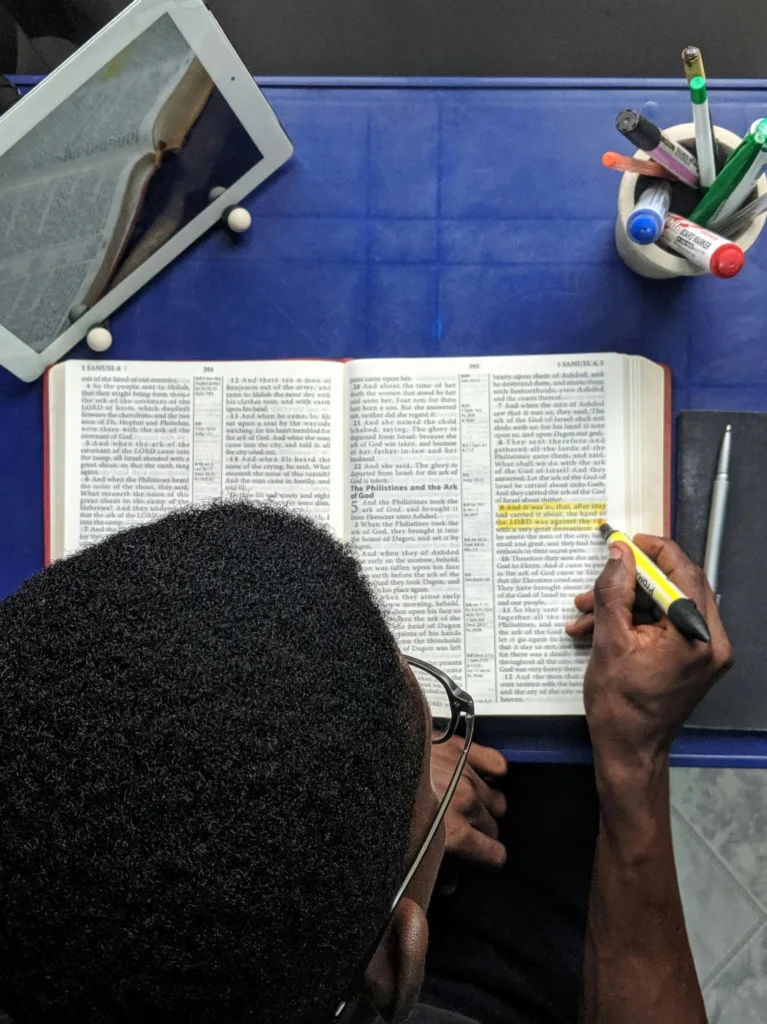
3 Tips For Finding Context:
- Read the introduction to each book of the Bible—it will tell you who it was written by, who was originally reading it, where they lived, and what was going on at the time.
Tip: if your Bible doesn’t have book introductions, try using the ESV app instead. - Use a Bible dictionary to look up people, places, and key terms
Tip: click here to see some of our favorite tools. - Notice the genre of the book—poetry, narrative, prophecy, or letters.
Tip: for deeper learning, try taking the In-Depth Bible Study Academy course on understanding context.
Bible Study Is an Invitation to Know God
Deep study, though requiring effort, ultimately leads to delight.
“I’ve barely scratched the surface… and I get to go on this lifelong journey of loving the Word and finding so much life in it.”
Faith Womack
Don’t be afraid to dig deeper into understanding Scripture. Tools like commentaries, study Bibles, and theological resources are not in competition with the Holy Spirit. They’re gifts God uses to illuminate His Word.
If reading the Bible feels boring, Faith says it may simply be unfamiliar. But the more we learn the story, patterns, themes, and threads woven throughout the Bible, the more alive it becomes.

4 Practical Ways to Enrich Your Bible Study
4 Practical Ways to Enrich Your Bible Study:
- Understand the big storyline of Scripture
- Study with others—mentors, small groups, or Bible classes
- Learn to ask good questions
- Embrace being a lifelong student
Key Scriptures:
• Psalm 119:18
• 2 Peter 1:20–21
A Final Word
Faith reminds us that understanding Scripture is not about mastering information—it’s about knowing the God who speaks through His Word. When we slow down, explore context, ask better questions, and focus on God’s character, we discover that Bible study isn’t boring at all. It’s one of the most exciting and life-changing journeys we can take.
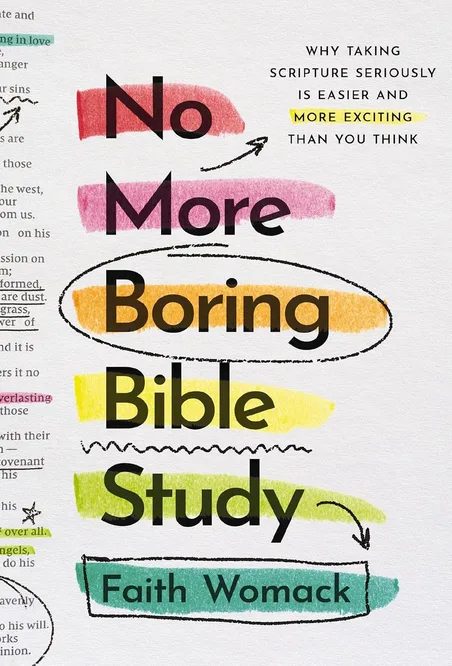
No More Boring Bible Study
The Bible can feel overwhelming, but studying it is easier and more exciting than you think.
In No More Boring Bible Study, you will:
- Learn quick, easy study methods
- Get energized by the story of Scripture
- Grasp new concepts that bring the Bible to life
- Have fun (yes!) doing close study
- Grow closer to God
Learning to read and study the Bible is life-changing. It’s time to free yourself from the guilt of not getting it. Make your Bible study exciting again!
Enjoyed this Conversation? Go Deeper with the Coffee and Bible Time Community
If you love the Coffee and Bible Time Podcast, you’ll love what’s waiting for you inside our online Christian Community—a welcoming space where women like you are growing in faith, friendship, and love for the Word of God.
As a Community member, you’ll unlock exclusive podcast bonus features available only to members.
But that’s just the beginning. Here’s what you’ll experience when you join:
- Exclusive Podcast Content
Enjoy members-only extras from our podcast: bonus segments, deep-dive discussions, and faith-building resources to help you live out what you’re hearing each week. - Weekly Women’s Online Bible Studies
Gather with Ashley, Taylor, and Ellen on Google Meet for mentor-led studies that bring Scripture to life. Share insights, pray together, and grow alongside a supportive, Christ-centered community. - 12-Course Bible Study Academy
Access our entire library of guided in-depth Bible study courses—perfect for growing in individual study, small groups, or mentoring relationships. Each course is designed to help you learn how to read God’s Word and apply it with confidence. - Christ-Centered Community & Encouragement
Connect with women who share your heart for Jesus. Through prayer requests, discussion threads, and regular check-ins, you’ll find lasting friendship and spiritual support. - 1-on-1 Mentoring with Ellen
Receive personal, prayerful guidance for your current season—whether you’re seeking direction in faith, purpose, or prayer life. (Scheduling details available inside the Community.)
Let’s learn and grow together. Join the Coffee and Bible Time Community today!
Leave a Reply